The Atlas·CR

CR

National Museum of Costa Rica, San José — 4 works · museum site ↗ · 250 CE–1550 60000 BCE2020

Seen from San José, history is above all sculpture, then faith & ritual objects — a collection opened wide onto other worlds — a window more than a mirror (4 of 4 works are from other civilisations).

Sculpture 2 Ritual 1 Craft 1
Carved stone monolith (Monolito Bagaces)
N° 306·II · The Classical World
Carved stone monolith (Monolito Bagaces)
Unknown
c. 250–750 CE (1700–1200 BP) · breccia tuff (stone)
Pre-Columbian Costa Rica

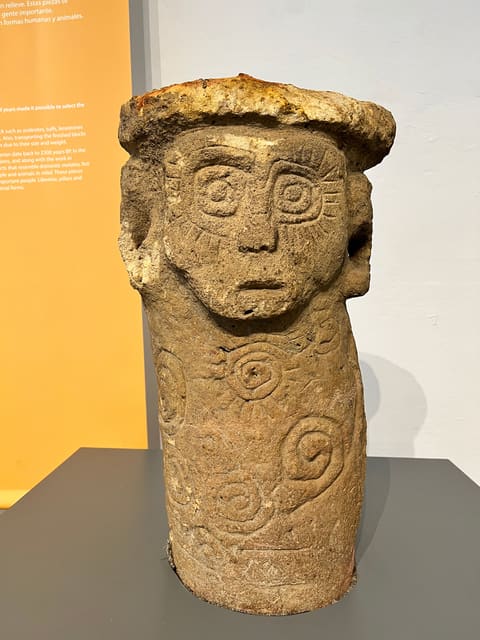
Translated from Spanish: The Memorias en Piedra display presents pillars and monoliths with human and animal figures, flying-panel metates, tenoned figures, barrels, petroglyphs and spheres — about 40 sculptures from the National Museum’s archaeological collection, outstanding for their symbolism and aesthetic quality. The pictured Monolito Bagaces, a stone pillar with an anthropomorphic face and spiral reliefs (breccia tuff, from Guanacaste), is one example.

“Monolito Bagaces con decoración antropomorfa. Tipo de roca: toba brechosa. Origen: Guanacaste. Temporalidad: 1700-1200 a.P.” In the museum’s words — museocostarica.go.cr ↗ · quotation verified against the live page

Meanwhile — Byzantine Jewellery Treasure Europe · Beirut, Byzantine Period (late 5th–early 6th century A.D.)
Pre-Columbian musical instruments of the Diquís (ocarinas)
N° 394·III · Faith and Empire
Pre-Columbian musical instruments of the Diquís (ocarinas)
Unknown
c. 800–1550 CE · ceramic (clay)
Diquís (Pre-Columbian Costa Rica)

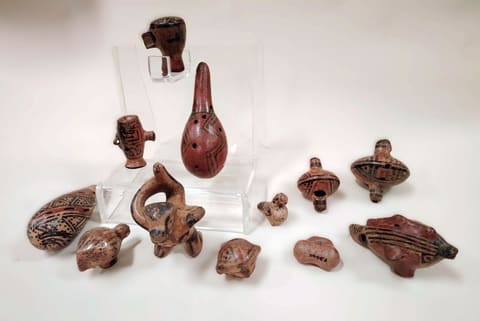
Translated from Spanish: The fascinating musical instruments of the Diquís archaeological subregion, made between 800 and 1550 CE, bear witness to a rich musical tradition and to the skill and knowledge of their makers. Because of Costa Rica’s climate few organic instruments survive, but the clay ones have endured — ocarinas, whistles, drums and rattles in an astonishing diversity of forms, some more than 2000 years old.

“Le invitamos a descubrir los fascinantes instrumentos musicales de la subregión arqueológica del Diquís, elaborados entre los años 800 y 1550 d. C. Estos instrumentos no solo dan testimonio de una rica tradición musical, sino también de la habilidad y conocimiento de quienes los crearon.” In the museum’s words — museocostarica.go.cr ↗ · quotation verified against the live page

Meanwhile — Lewis Chessmen Europe · c. 1150–1200

Ritual flying-panel metate (metate de panel colgante)
N° 1199·Undated
Ritual flying-panel metate (metate de panel colgante)
Unknown
Pre-Columbian, Central Region · volcanic stone
Central Region, Costa Rica

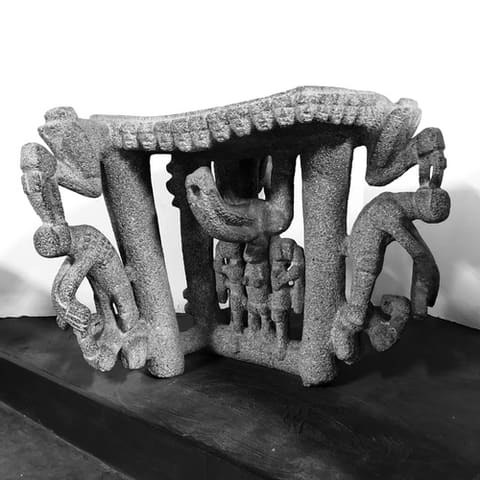
Translated from Spanish: Domestic metates or grinding stones served to grind and process food, especially maize; inspired by them, artisans made stone objects of great symbolic importance and sculptural skill that show very few traces of use. The so-called "hanging-panel" (flying-panel) metates of the Central Region carry mythic-religious compositions with masked human figures and animals.

“Los metates doméstico o piedras de moler sirvieron para triturar, moler o procesar alimentos, especialmente el maíz. Inspirados en ellos, se elaboraron objetos en piedra de gran importancia simbólica y destreza escultórica, que presentan muy pocas huellas de uso.” In the museum’s words — museocostarica.go.cr ↗ · quotation verified against the live page
Stone spheres of the Diquís (esferas de piedra)
N° 1213·Undated
Stone spheres of the Diquís (esferas de piedra)
Unknown
Pre-Columbian, Diquís subregion · stone (gabbro / granodiorite)
Diquís (Pre-Columbian Costa Rica)

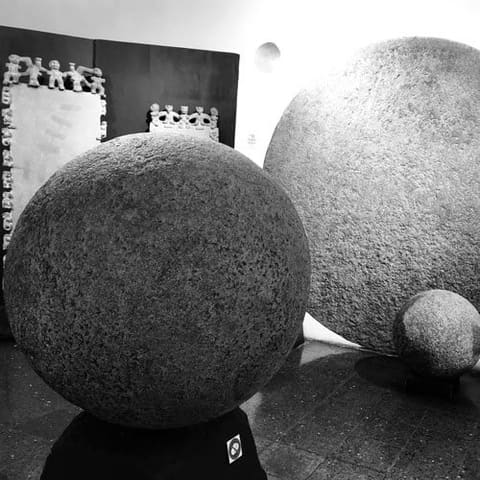
Translated from Spanish: Perfectly rounded stone spheres, among the most striking works of ancient Costa Rica, made over roughly a thousand years by cultures of the country’s southeast; the greatest concentration lies in the alluvial plain of the Térraba and Sierpe rivers (Diquís). The National Museum holds several in its collection, and the pictured examples are on view among its stone sculpture.

“Las esferas de piedra son uno de los elementos más llamativo de los pueblos antiguos de Costa Rica. Fueron elaboradas a lo largo de mil años por culturas que habitaron la zona sureste del país. La mayor concentración de estos objetos se encuentra en la planicie aluvial formada por los ríos Térraba y Sierpe.” In the museum’s words — museocostarica.go.cr ↗ · quotation verified against the live page