The Atlas·LB

LB

National Museum of Beirut, Beirut — 17 works · museum site ↗ · 9000 BCE – 1516 60000 BCE2020

Seen from Beirut, history is above all faith & ritual objects, then sculpture — a collection opened wide onto other worlds — a window more than a mirror (15 of 17 works are from other civilisations).

Ritual 4 Sculpture 4 Craft 4 Power 3 Invention 1 Stories 1
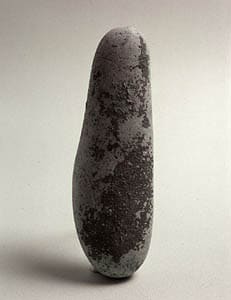
Idol (pebble)
N° 006·I · The First Makers
Idol (pebble)
Unknown (Neolithic, Byblos)
Byblos, Neolithic Period (9,000–4,000 B.C.) · pebble (stone)
Neolithic (Byblos)

A carved-pebble idol from Byblos, dated by the National Museum of Beirut to the Neolithic period. The museum describes it as one of the earliest known human figures attested in Lebanon, its face rendered simply by two incised lines.

“This pebble is one of the earliest known human figures attested in Lebanon. The face is represented by two incised lines.” In the museum’s words — beirutnationalmuseum.com ↗

Meanwhile — Necklace of Animal-Tooth Pendants from the Donkalnis Shaman’s Grave Europe · 6377–6221 BCE
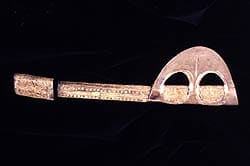
Fenestrated Axe
N° 080·I · The First Makers
Fenestrated Axe
Unknown (Phoenician, Byblos)
Byblos, Middle Bronze Age (2000–1500 B.C.) · gold
Phoenician (Byblos)

A gold fenestrated (openwork) ceremonial axe from Byblos, held by the National Museum of Beirut and dated by the museum to the Middle Bronze Age. According to the museum it was discovered together with other ceremonial weapons — daggers and arrows — in the Obelisk Temple of Byblos, as offerings presented to the warrior city gods Reshef and the goddess Anat. (The museum's excerpt preserves its own spelling, "axes wee discovered.")

“These fenestrated axes wee discovered together with other ceremonial weapons like daggers and arrows, in the Obelisk Temple of Byblos.” In the museum’s words — beirutnationalmuseum.com ↗

Meanwhile — Statue of Amenemhat III Egypt & Nubia · second half of the 19th century BC

Pectoral of King Ip Shemou Abi
N° 081·I · The First Makers
Pectoral of King Ip Shemou Abi
Unknown (Phoenician, Byblos)
Byblos, royal tombs, Middle Bronze Age (2000–1500 B.C.) · gold and semi-precious stones
Phoenician (Byblos)

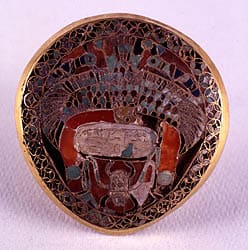
A gold-and-semi-precious-stone pectoral from the royal tombs of Byblos, held by the National Museum of Beirut and dated by the museum to the Middle Bronze Age. Part of the funerary offerings placed in the tomb of the king of Byblos, it shows what the museum calls clear Egyptian influence — a falcon with spread wings and a cartouche inscribed with the king's name in Egyptian hieroglyphs. (The museum's excerpt preserves its own spelling, "whith spread wings.")

“This pectoral was part of the funerary offerings placed in the tomb of the king of Byblos. Clear Egyptian influence is attested in the representation of the falcon whith spread wings” In the museum’s words — beirutnationalmuseum.com ↗

Meanwhile — Statue of Amenemhat III Egypt & Nubia · second half of the 19th century BC

Statuette, gilded bronze
N° 082·I · The First Makers
Statuette, gilded bronze
Unknown (Phoenician, Byblos)
Byblos, Middle Bronze Age (2000–1500 B.C.) · gilded bronze
Phoenician (Byblos)

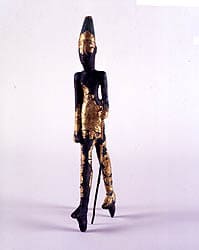
A gilded-bronze votive figurine from Byblos, held by the National Museum of Beirut and dated by the museum to the Middle Bronze Age. It belongs to a group of offerings found beneath the Obelisk Temple at Byblos — usually male, nude figurines wearing a helmet or a conical headdress resembling the Egyptian crown, which the museum reads as evidence of the close relationship between Egypt and Byblos.

“This figurine belongs to a group of offerings which were found under the Obelisk Temple in Byblos. These are usually male and nude figurines wearing a helmet or a conical headdress which resembles the Egyptian crown.” In the museum’s words — beirutnationalmuseum.com ↗

Meanwhile — Statue of Amenemhat III Egypt & Nubia · second half of the 19th century BC

Sarcophagus of King Ahiram
N° 135·I · The First Makers
Sarcophagus of King Ahiram
Unknown (Phoenician, Byblos)
Byblos, royal tombs, 10th century B.C. · limestone
Phoenician

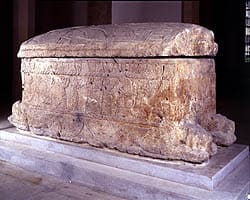
The limestone sarcophagus of King Ahiram of Byblos, which the National Museum of Beirut presents as the "Masterpiece of the National Museum." Recovered from the royal tombs of Byblos and dated by the museum to the 10th century B.C., it is carved with reliefs — a funerary banquet scene showing the king enthroned and receiving a procession of offering-bearers, with mourning women on the narrow sides — and still shows traces of red paint. Its Phoenician inscription, which begins on the coffin tub and continues on the cover and carries a curse against anyone who would disturb it, is described by the museum as "the oldest text written with the Phoenician alphabet."

“Masterpiece of the National Museum, this sarcophagus is characterized by the reliefs and inscription decorating it. Traces of red paint can still be seen.” In the museum’s words — beirutnationalmuseum.com ↗

Meanwhile — Da Ke Ding (large bronze cauldron of Ke) East Asia · Western Zhou dynasty, late 10th century BCE

Anthropoid Sarcophagus (Ford Collection)
N° 175·II · The Classical World
Anthropoid Sarcophagus (Ford Collection)
Unknown (Phoenician / Greek-influenced)
Ayn el Helwe (near Sidon), 5th century B.C. · marble
Phoenician (Greek-influenced)

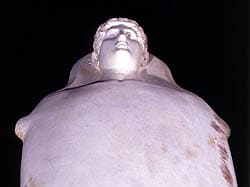
A marble anthropoid sarcophagus from Ayn el Helwe near Sidon, held by the National Museum of Beirut and dated to the 5th century B.C. Developed from the Egyptian mummy-case form, it has a head sculptured in the Greek style on its cover. The museum states it belongs to the Ford Collection, discovered in 1901 in Sidon.

“has a head sculptured in the Greek style on its cover. It belongs to the Ford Collection which was discovered in 1901 in Sidon.” In the museum’s words — beirutnationalmuseum.com ↗

Meanwhile — Necklace with a Gorgon's Head Near East · Magharet Tabloun (near Sidon), 5th century B.C.

Necklace with a Gorgon's Head
N° 176·II · The Classical World
Necklace with a Gorgon's Head
Unknown (Phoenician, Sidonian)
Magharet Tabloun (near Sidon), 5th century B.C. · gold
Phoenician (Sidonian)

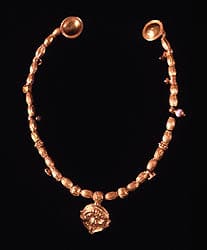
A gold necklace decorated with a gorgon's head (the museum spells it "gorgone's head"), from Magharet Tabloun near Sidon, held by the National Museum of Beirut and dated to the 5th century B.C. The museum records that it was found in the tomb of a woman whose high social rank is attested by the quality and wealth of the objects buried with her.

“This jewellry was found in the tomb of a woman whose high social rank is attested by the good quality and the wealth of the objects buried with her.” In the museum’s words — beirutnationalmuseum.com ↗

Meanwhile — The Grimani jug Greek world · ca. 450 B.C.

Statuette of a Child with a Phoenician Inscription
N° 177·II · The Classical World
Statuette of a Child with a Phoenician Inscription
Unknown (Phoenician, Sidonian)
Sanctuary of Eshmun, Bustan esh Sheikh (near Sidon), 5th century B.C. · marble
Phoenician (Sidonian)

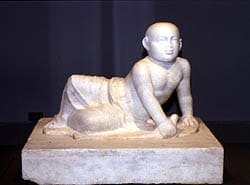
A marble statuette of a child (a so-called Eshmun "temple boy"), held by the National Museum of Beirut and dated to the 5th century B.C. The museum states it was discovered in the sanctuary of the healing god Eshmun at Bustan esh Sheikh near Sidon, dedicated by the parents in thanks for the healing of their child; its Phoenician inscription records the donor as Baalshillem, son of king Banaa, king of the Sidonians.

“This statuette was discovered in a sanctuary dedicated to the healing god Eshmun. This offering was dedicated to the god by the parents, to thank him for the healing of their child” In the museum’s words — beirutnationalmuseum.com ↗

Meanwhile — The Grimani jug Greek world · ca. 450 B.C.

Tribune of Eshmun
N° 204·II · The Classical World
Tribune of Eshmun
Unknown (Greek sculpture made in Phoenicia)
Sanctuary of Eshmun, Bustan esh Sheikh (near Sidon), ca. 350 B.C. · marble
Phoenician / Greek (Hellenistic)

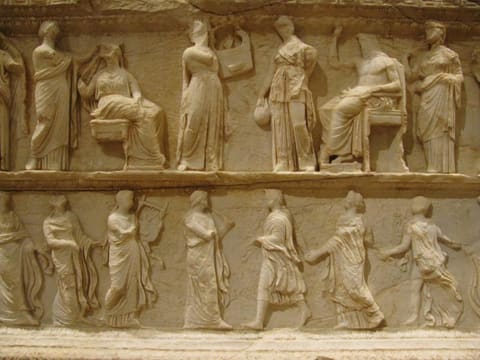
A marble "tribune" from the sanctuary of Eshmun at Bustan esh Sheikh near Sidon, held by the National Museum of Beirut and dated by the museum to about 350 B.C. The museum notes that some scholars consider it an altar; it is an example of Greek sculpture made in Phoenicia, with reliefs in two registers — an upper register showing an assembly of the gods with Apollo at the centre holding a cithara, and a lower one showing a procession of dancers and musicians.

“This "tribune" which is considered by some scholars to be an altar is an example of Greek sculpture made in Phoenicia. It displays sculptured reliefs arranged in two registers” In the museum’s words — beirutnationalmuseum.com ↗

Meanwhile — Zagreb Mummy Egypt & Nubia · 4th century BCE, Egyptian Late Period; C14-dated to c. 390 BCE

Statue of Venus
N° 212·II · The Classical World
Statue of Venus
Unknown (Hellenistic)
Beirut, Hellenistic Period (late 4th–1st century B.C.) · marble
Hellenistic

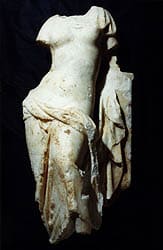
A marble statue of Venus, held by the National Museum of Beirut and dated by the museum to the Hellenistic period. The museum states it was uncovered in the Beirut Central District excavations and clearly shows Greek characteristics that continued to influence local art until the 1st century B.C.

“This statue was uncovered in Beirut Central District excavations. It clearly shows Greek characteristics which continued to influence local art until the 1st c. B.C.” In the museum’s words — beirutnationalmuseum.com ↗

Meanwhile — Rosetta Stone Egypt & Nubia · 196 BC

Painted Tomb from Tyre
N° 279·II · The Classical World
Painted Tomb from Tyre
Unknown (Roman)
Burj esh Shemali (near Tyre), 2nd century A.D. · wall painting (painted tomb)
Roman

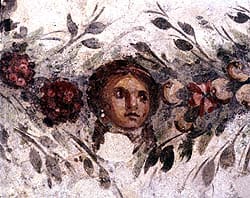
A painted Roman tomb from Burj esh Shemali near Tyre, dated by the National Museum of Beirut to the 2nd century A.D. The museum states the tomb was discovered in 1938 as part of the Roman necropolis of Tyre and, to preserve it, was removed and reconstituted in the National Museum of Beirut; its walls are painted with mythological scenes related to the realm of death. The recorded image shows a human figure detailed from the painted tomb.

“Discovered in 1938, this tomb was part of the Roman necropolis of Tyre. In order to preserve it, it was removed and reconstituted in the National Museum of Beirut.” In the museum’s words — beirutnationalmuseum.com ↗

Meanwhile — Gold necklace with medallion and scent-flask from Mtskheta Near East · 2nd century AD

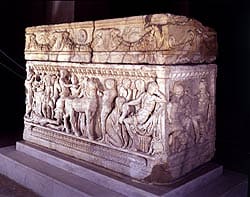
Sarcophagus with the Legend of Achilleus
N° 280·II · The Classical World
Sarcophagus with the Legend of Achilleus
Unknown (Roman)
Tyre, 2nd century A.D. · marble
Roman

A marble sarcophagus carved with the legend of Achilles, from the Roman necropolis of Tyre, held by the National Museum of Beirut and dated to the 2nd century A.D. The museum notes that scenes from the Iliad depicting episodes of the Trojan war were often used to adorn the sarcophagi of the Roman necropolis of Tyre, and describes this relief as of excellent workmanship, in the tradition of classical Greek art. (The museum's excerpt preserves its own spelling, "episods.")

“Scenes from the Iliad representing episods of the Trojan war were often used to adorn the sarcophagi of the Roman necropolis of Tyre.” In the museum’s words — beirutnationalmuseum.com ↗

Meanwhile — Gold necklace with medallion and scent-flask from Mtskheta Near East · 2nd century AD

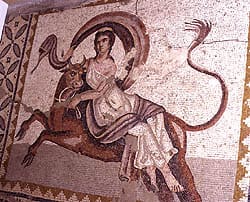
The Abduction of Europe (mosaic)
N° 298·II · The Classical World
The Abduction of Europe (mosaic)
Unknown (Roman)
Byblos, 3rd century A.D. · mosaic (stone tesserae)
Roman

A Roman mosaic depicting the abduction of Europe, from Byblos, held by the National Museum of Beirut and dated by the museum to the 3rd century A.D. Its central emblema represents Europe, daughter of the Tyrian king, being carried off by Zeus in the shape of a bull; the museum links the scene to the legend of her brother Cadmos, who searched for her and transmitted the Phoenician alphabet to the Greeks.

“The emblema represents Europe, the daughter of the Tyrian king, being abducted by Zeus in the shape of a bull.” In the museum’s words — beirutnationalmuseum.com ↗

Meanwhile — Varvakeion Athena Greek world · AD 200-250 (copy of a 438 BC original)

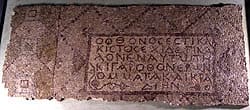
The Jealousy Mosaic
N° 312·II · The Classical World
The Jealousy Mosaic
Unknown (Byzantine)
Beirut, Byzantine Period (395–636 A.D.) · mosaic (stone tesserae)
Byzantine

A Byzantine floor mosaic with a Greek inscription, from a rich house at the heart of Byzantine Beirut, held by the National Museum of Beirut. The museum records the inscription — "Envy is an evil; it has beauty however / it eats out the eyes and the heart of the envious" — and explains that its purpose was to protect the inhabitants of the house against envy and evil.

“it has beauty however/ it eats out the eyes and the heart of the envious, was to protect the inhabitants against envy and evil.” In the museum’s words — beirutnationalmuseum.com ↗

Meanwhile — Iron Sword with a Silver Inlay Inscription East Asia · Kofun period, 5th–6th century

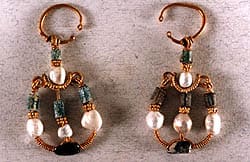
Byzantine Jewellery Treasure
N° 325·II · The Classical World
Byzantine Jewellery Treasure
Unknown (Byzantine)
Beirut, Byzantine Period (late 5th–early 6th century A.D.) · gold, pearls and semi-precious stones
Byzantine

A hoard of Byzantine gold jewellery — including a gold-and-semi-precious-stone ring, a gold bracelet with ibex heads, and gold, pearl and semi-precious-stone earrings — held by the National Museum of Beirut. The museum states the jewels belong to a treasure dated to the end of the 5th or the beginning of the 6th century A.D., hidden in a jar buried under the floor of a Byzantine villa in Beirut that had probably been rebuilt after the strong earthquake of 551 A.D.

“These jewels belong to a treasure dated to the end of the 5th c. or the beginning of the 6th c. A.D. They were hidden in a jar buried under the floor of a byzantine villa in Beirut” In the museum’s words — beirutnationalmuseum.com ↗

Meanwhile — Carved stone monolith (Monolito Bagaces) Americas & Oceania · c. 250–750 CE (1700–1200 BP)

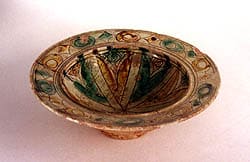
Glazed Sgraffito Bowls
N° 474·III · Faith and Empire
Glazed Sgraffito Bowls
Unknown (Islamic, Crusader–Mamluk period)
Tyre, 12th–13th century A.D. · terracotta (sgraffito glazed ware)
Islamic (Crusader–Mamluk period) · Ayyubid–Mamluk

Glazed deep bowls of sgraffito ware from Tyre, held by the National Museum of Beirut and dated by the museum to the 12th–13th century A.D. The museum explains that this pottery — known as sgrafiato — is slipped, incised and then glazed with various colours, decorated with floral, geometrical and figurative patterns, and that the type developed on Lebanese sites from the Crusader period until the Mamluk period.

“Known as sgrafiato, this pottery is slipped, incised and then glazed with various colors. Floral, geometrical and figurative patterns were used for decoration.” In the museum’s words — beirutnationalmuseum.com ↗

Meanwhile — Aquamanile Europe · 12th–13th centuries

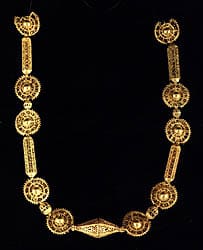
Mamluk Jewellery
N° 521·III · Faith and Empire
Mamluk Jewellery
Unknown (Islamic, Mamluk)
Lebanon, Mamluk Period (1289–1516 A.D.) · gold, enamel and semi-precious stones
Islamic (Mamluk) · Mamluk

A set of Mamluk-period gold jewellery from Lebanon — a necklace, a bracelet, an inscribed ring, a gold-and-enamel necklace and a buckle — held by the National Museum of Beirut and dated by the museum to the Mamluk period (1289–1516 A.D.). The museum states the pieces show the skill of the goldsmiths of the period, combining geometrical and figurative patterns with calligraphy, using techniques such as filigree and repoussé.

“This jewellry shows the skill of the goldsmiths of the Mamluk Period. These objects combine geometrical and figurative patterns with calligraphy.” In the museum’s words — beirutnationalmuseum.com ↗

Meanwhile — Kalpawreksa Relief South Asia · 14th–15th century