National Museum of the History of Ukraine, Kyiv — 29 works · museum site ↗ · 20000 BCE – 1917
Seen from Kyiv, history is above all craft & design, then writing & invention — a collection kept mostly in its own tradition, with a few glances abroad (2 of 29 works are from other civilisations).
22,000–20,000 years before present (Upper Paleolithic) · flint
Upper Paleolithic
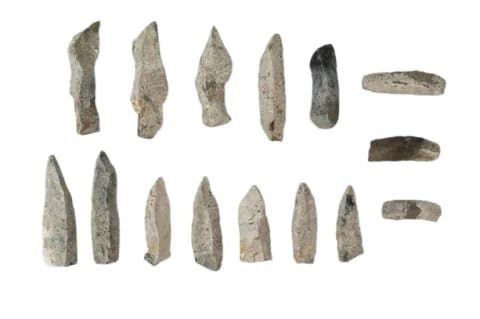
Flint points and microliths from the Upper Paleolithic site at Pushkari in the Chernihiv region, which the museum dates to roughly 22,000–20,000 years before present. They open the museum’s online archaeology exhibit.
“Flint products (points, microliths). 22,000 - 20,000 YBP. Upper Paleolithic. Ukraine, Chernihiv region, Pushkari village.”
In the museum’s words — nmiu.org ↗ · quotation verified against the live page
N° 003·I · The First Makers
Female figurines carved from mammoth ivory
Unknown
15,000 years before present (Upper Paleolithic) · mammoth ivory
Upper Paleolithic
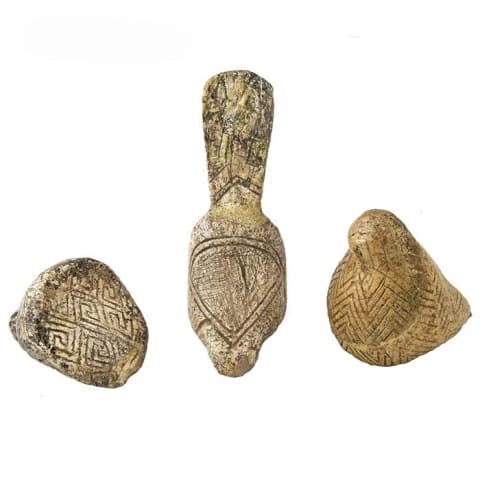
Stylised female figurines carved from mammoth ivory, from the Upper Paleolithic settlement at Mizyn in the Chernihiv region; dated by the museum to about 15,000 years before present.
“Female figurines (stylized) made of mammoth tusk. 15,000 YBP. Upper Paleolithic period. Ukraine, Chernihiv region, Mizyn village.”
In the museum’s words — nmiu.org ↗ · quotation verified against the live page
N° 004·I · The First Makers
Ornamented bracelet of mammoth ivory from Mizyn
Unknown
15,000 years before present (Upper Paleolithic) · mammoth ivory
Upper Paleolithic
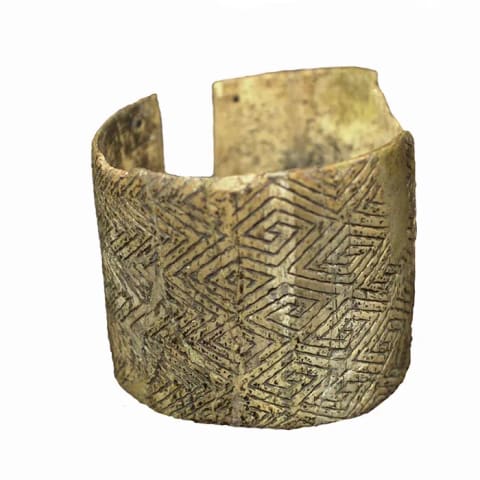
An engraved bracelet cut from a plate of mammoth ivory, from the Upper Paleolithic settlement at Mizyn in the Chernihiv region; dated by the museum to about 15,000 years before present.
“Ornamented bracelet made of mammoth tusk plate. 15,000 YBP. Upper Paleolithic. Ukraine, Chernihiv region, Mizyn village.”
In the museum’s words — nmiu.org ↗ · quotation verified against the live page
N° 014·I · The First Makers
Ornamented stone vessel of the Surska culture
Unknown
Late 6th – early 5th millennium BCE · stone
Surska culture · Neolithic
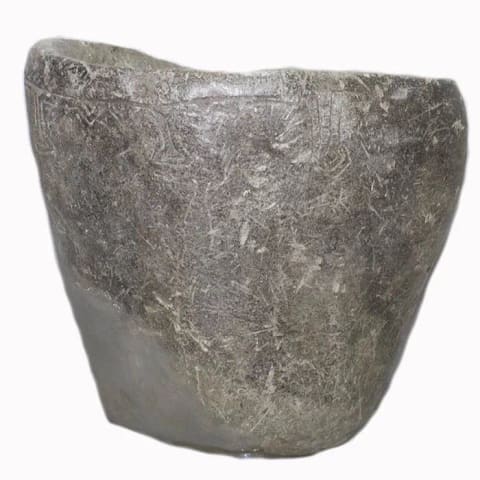
An ornamented stone vessel of the Surska archaeological culture, from Kizlevyi Island in the Zaporizhzhia region; dated by the museum to the late 6th–early 5th millennium BCE.
“Ornamented stone vessel. Surska archaeological culture. Late 6th - early 5th millennium BCE. Zaporizhzhia region, Kizlevyi Island.”
In the museum’s words — nmiu.org ↗ · quotation verified against the live page
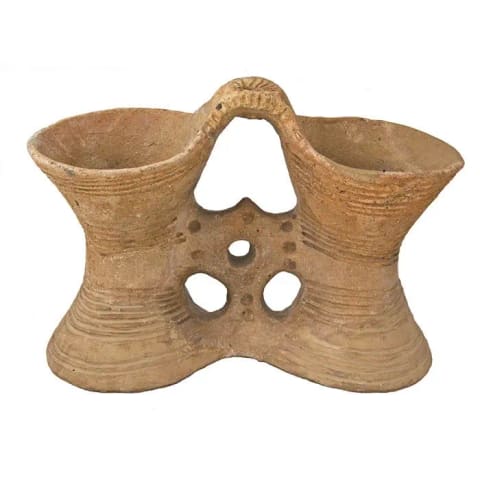
Binocular-shaped vessel from Khvoika’s excavations
Unknown
Late 5th millennium BCE
Chalcolithic
A binocular-shaped vessel recovered in Vikentii Khvoika’s excavations in the Kyiv region; dated by the museum to the late 5th millennium BCE.
“Binocular-shaped vessel from Vikentii's Khvoika's excavations. Late 5th millennium BCE. Kyiv region.”
In the museum’s words — nmiu.org ↗ · quotation verified against the live page
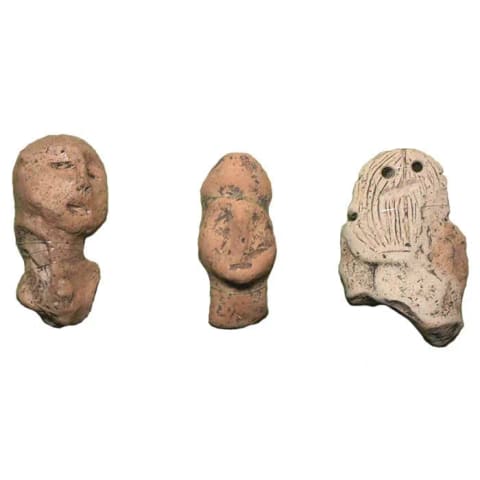
Anthropomorphic figurines of the 4th millennium BCE
Unknown
First half of the 4th millennium BCE
Chalcolithic
Anthropomorphic figurines of the first half of the 4th millennium BCE, from the Chalcolithic sites of Volodymyrivka (Kirovohrad region) and Sushkivka (Cherkasy region).
“Anthropomorphic plastics. First half of the 4th millennium BCE, Volodymyrivka village, Kirovohrad region, and Sushkivka village, Cherkasy region.”
In the museum’s words — nmiu.org ↗ · quotation verified against the live page
Meanwhile — Ubaid Clay PotNear East · Ubaid period, early 4th millennium BC
N° 031·I · The First Makers
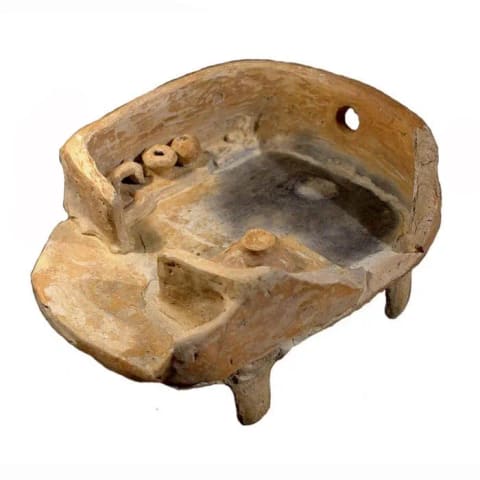
Model of a temple with polychrome painting
Unknown
First half of the 4th millennium BCE
Chalcolithic
A model of a temple decorated with polychrome painting, dated by the museum to the first half of the 4th millennium BCE.
“Model of temple with polychrome paintings. First half of the 4th millennium BCE.”
In the museum’s words — nmiu.org ↗ · quotation verified against the live page
Meanwhile — Ubaid Clay PotNear East · Ubaid period, early 4th millennium BC
N° 073·I · The First Makers
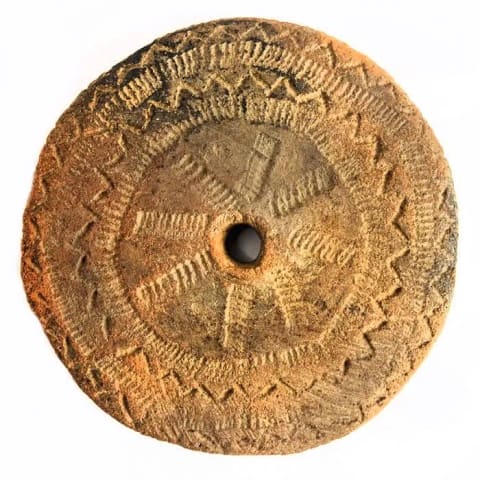
Disk-calendar of the Middle Dnipro culture
Unknown
Late 3rd – early 2nd millennium BCE
Middle Dnipro culture · Bronze Age
A disk-calendar of the Middle Dnipro culture, from Bortnychi village in the Kyiv region; dated by the museum to the late 3rd–early 2nd millennium BCE.
“Disk-calendar. Middle Dnipro culture. Late 3rd - early 2nd millennia BCE. Bortnychi village, Kyiv region.”
In the museum’s words — nmiu.org ↗ · quotation verified against the live page
Meanwhile — Jade Gui TabletEast Asia · Late Longshan culture, 2200–1900 BCE
N° 113·I · The First Makers
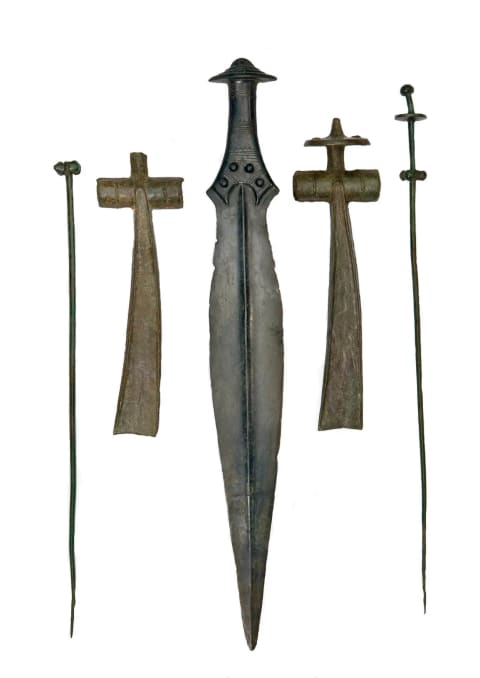
Hoard of bronze objects of the Stanivska culture
Unknown
14th–12th centuries BCE · bronze
Stanivska culture · Bronze Age
A hoard of bronze objects — a sword, pins, war hammers and spiral handguards — of the Stanivska culture, from Khudlove village in the Zakarpattia region; dated by the museum to the 14th–12th centuries BCE.
“Hoard of bronze objects: sword, pins, war hammers, spiral handguards. Stanivska culture. 14th - 12th centuries BCE. Khudlove village, Zakarpattia region.”
In the museum’s words — nmiu.org ↗ · quotation verified against the live page
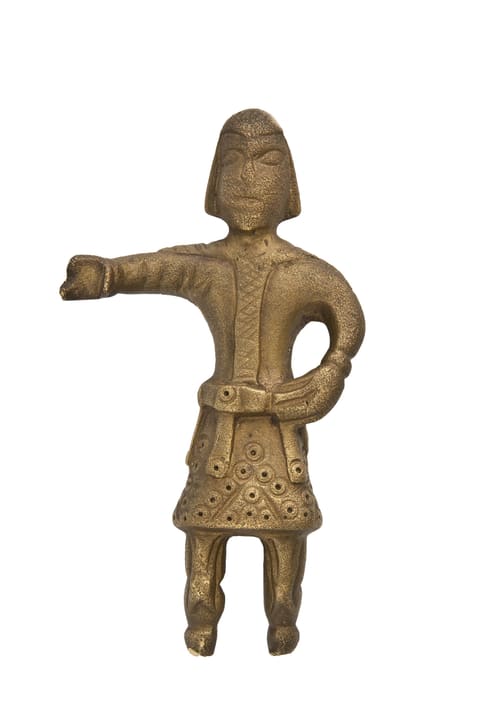
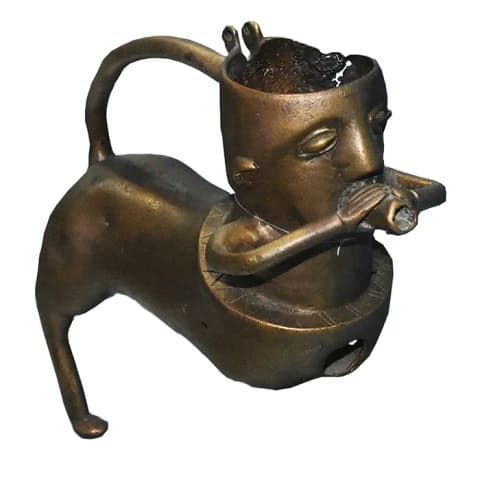
A bronze statuette of a warrior from Khorol in the Poltava region; dated by the museum to the 7th–8th centuries CE.
“Bronze statuette of a warrior. 7th - 8th centuries. Khorol, Poltava region.”
In the museum’s words — nmiu.org ↗ · quotation verified against the live page
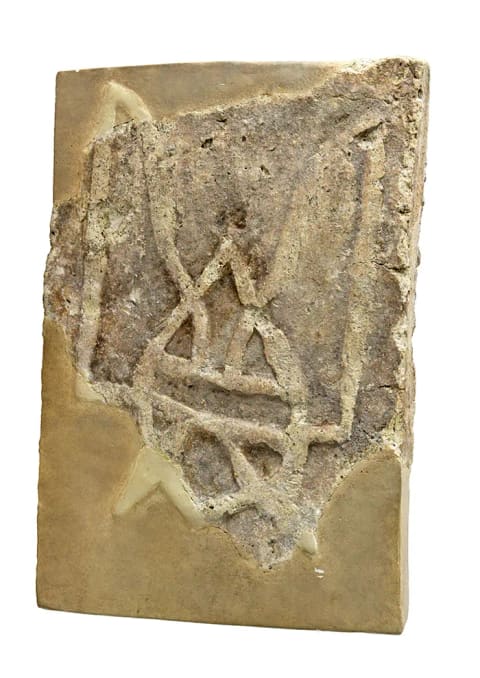
A plinth — a flat fired brick of the Kyivan Rus period — bearing the image of a trident, from 10th-century Kyiv.
“Plinth with the image of trident. 10th century. Kyiv”
In the museum’s words — nmiu.org ↗ · quotation verified against the live page
Meanwhile — Celadon EwerEast Asia · China, Five Dynasties–Song dynasty, 10th century
N° 414·III · Faith and Empire
Relief of the Hodegetria
Unknown
Late 10th – early 11th centuries
Kyivan Rus
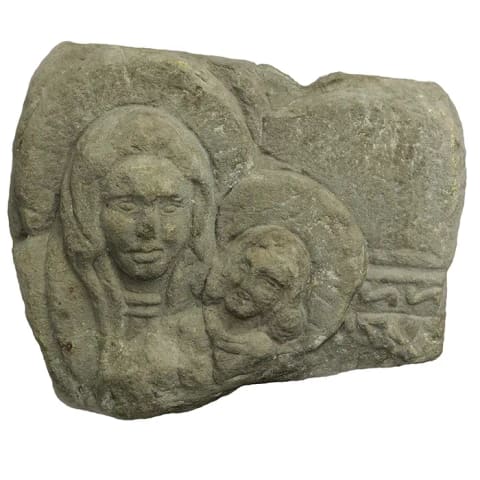
A relief depicting the Hodegetria — the Mother of God holding the Christ Child — dated by the museum to the late 10th–early 11th centuries.
“Relief depicting the Hodegetria (Mother of God holding the Child Jesus). Late 10th - early 11th centuries.”
In the museum’s words — nmiu.org ↗ · quotation verified against the live page
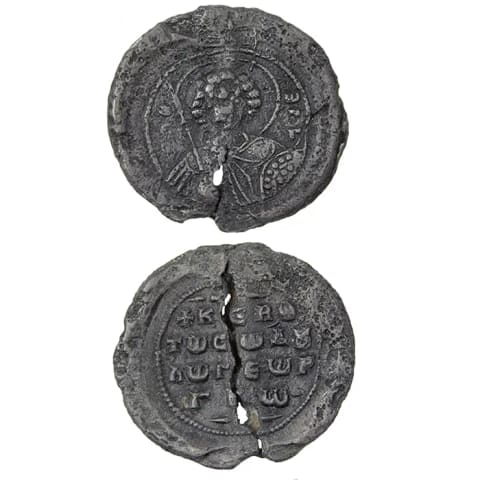
A molybdobull — a hanging lead seal — of Prince Yaroslav the Wise, from 11th-century Kyiv.
“Molybdobull, lead seal of Prince Iaroslav the Wise. 11th century, Kyiv.”
In the museum’s words — nmiu.org ↗ · quotation verified against the live page
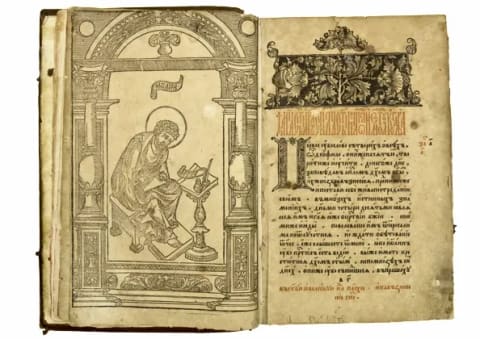
An Apostle (the liturgical book of the Acts and Epistles), printed after 1595 at the Mamonychi printing house in Vilnius. It is the first work in the museum’s online “Written notes” exhibit of old printed books and documents.
“Apostle (book). After 1595. Vilnius. Mamonychi printing house”
In the museum’s words — nmiu.org ↗ · quotation verified against the live page
Workshop of Printing house of the Kyiv-Pechersk Lavra
1637
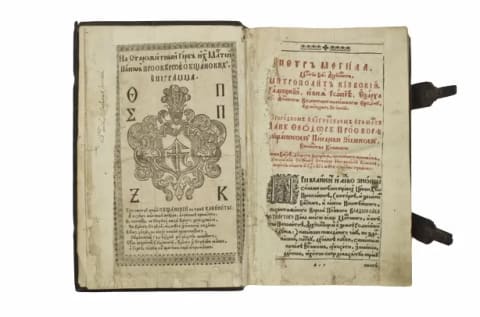
A Didactic Gospels (a collection of homilies on the Gospel readings), printed in 1637 at the printing house of the Kyiv Cave Monastery (Kyiv-Pechersk Lavra).
“Didactic Gospels. 1637. Kyiv. Printing house of the Kyiv Cave Lavra”
In the museum’s words — nmiu.org ↗ · quotation verified against the live page
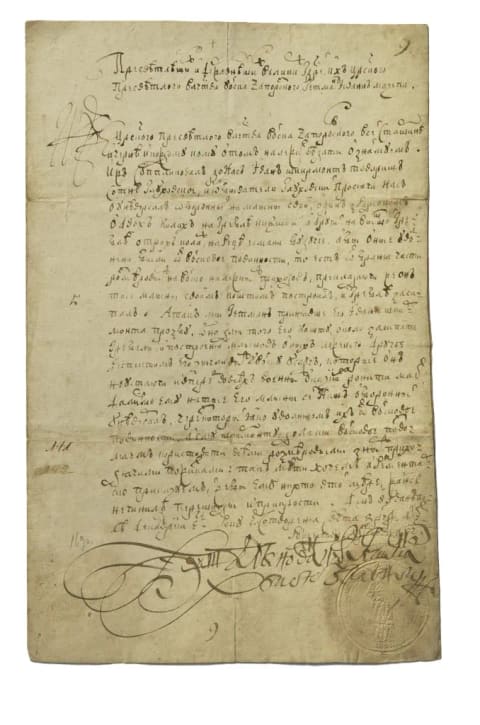
A universal (charter) issued by Hetman Ivan Mazepa in 1690 at Hlukhiv, exempting Ivan Shkirmont from military tax on two mills he had built at his own expense.
“Hetman Ivan Mazepa's universal to Ivan Shkirmont exempting him from military tax on two mills built at his own expense. 1690. Hlukhiv”
In the museum’s words — nmiu.org ↗ · quotation verified against the live page
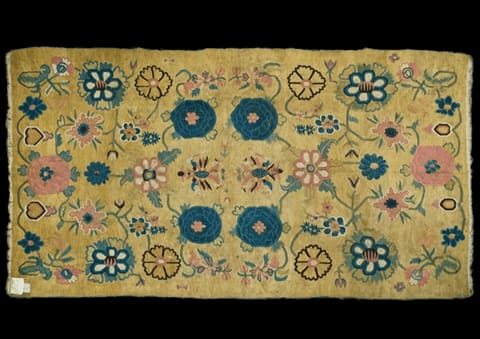
A carpet from the burial place of Hetman Danylo Apostol at Velyki Sorochyntsi in the Poltava region; dated by the museum to the late 18th century.
“Carpet from the burial place of Hetman Danylo Apostol in the village of Velyki Sorochyntsi. Late 18th century. Ukraine, Poltava region”
In the museum’s words — nmiu.org ↗ · quotation verified against the live page
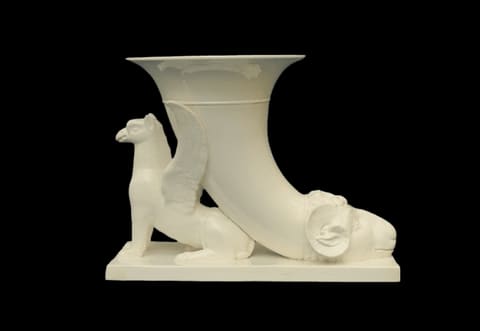
A decorative faience vase in the form of a rhyton, made in the 1820s at the Kyiv-Mezhyhiria faience factory in Ukraine.
“Decorative vase «Riton». 1820s. Ukraine. Kyiv-Mezhyhiria faience factory”
In the museum’s words — nmiu.org ↗ · quotation verified against the live page
Workshop of Andrii Miklashevskyi’s porcelain factory
1840s · porcelain
Ukrainian
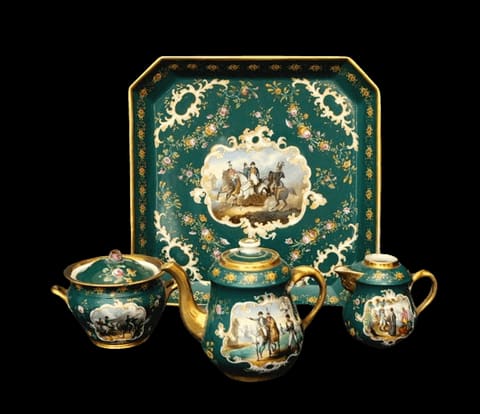
A porcelain “Egoist” tea set (a service for a single person) made in the 1840s at Andrii Miklashevskyi’s porcelain factory in Volokytyne, Ukraine. It is the first work in the museum’s online “Decorative landmarks” exhibit.
“Egoist tea set. 1840s. Ukraine, Volokytyne village, Andrii Miklashevskyi’s porcelain factory”
In the museum’s words — nmiu.org ↗ · quotation verified against the live page
Meanwhile — Te Hau ki TūrangaAmericas & Oceania · Built in the early 1840s
N° 965·VIII · The Restless Century
Taras Shevchenko, “Kobzar” (1893 Lviv edition)
Taras Shevchenko (1814-1861)
1893
Ukrainian
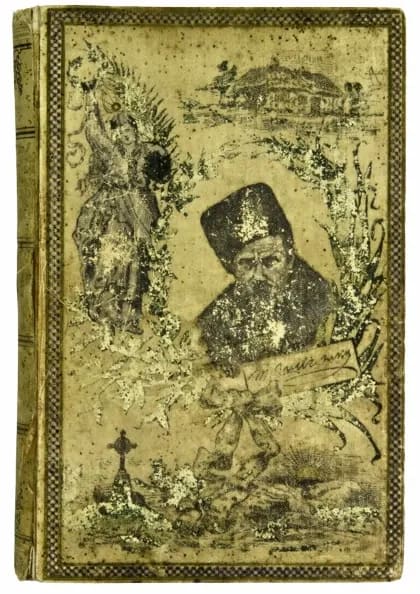
An 1893 Lviv edition of the “Kobzar” by the Ukrainian poet Taras Shevchenko (1814–1861), printed in Lviv three decades after his death.
“Taras Shevchenko. "Kobzar". 1893. Lviv”
In the museum’s words — nmiu.org ↗ · quotation verified against the live page