The Atlas·GB

United Kingdom

British Museum, London — 14 works · museum site ↗ · 1279 BCE – 2004 60000 BCE2020

Seen from London, history is above all sculpture, then craft & design — a collection opened wide onto other worlds — a window more than a mirror (12 of 14 works are from other civilisations).

Sculpture 8 Craft 4 Invention 1 Power 1
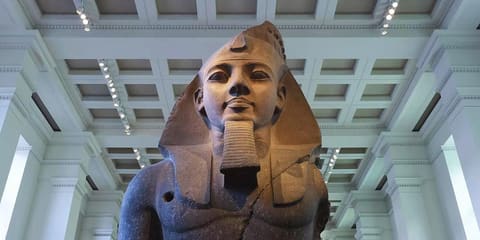
Bust of Ramesses the Great
N° 118·I · The First Makers
Bust of Ramesses the Great
Unknown
1279–1213 BC · granite
Ancient Egyptian · 19th Dynasty (New Kingdom)

A colossal 7.5-tonne granite bust of the pharaoh Ramesses II (r. 1279-1213 BC), originally part of a larger statue in the Ramesseum temple at Thebes; press coverage of its transport to Britain is thought to have inspired Shelley's sonnet Ozymandias.

“This colossal bust is of the Egyptian pharaoh Ramesses II, who reigned from 1279–1213 BC.” In the museum’s words — britishmuseum.org ↗

Meanwhile — Hoard of bronze objects of the Stanivska culture Europe · 14th–12th centuries BCE
Sophilos Vase
N° 166·II · The Classical World
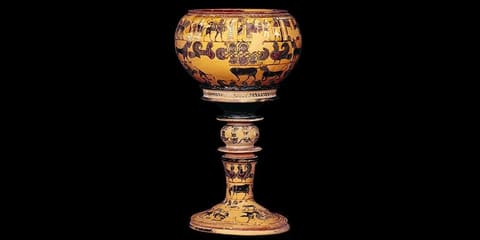
Sophilos Vase
Sophilos
c. 580 BC · ceramic (black-figure)
Ancient Greek (Attic) · Archaic Greece

A black-figure ceramic wine-bowl (dinos) and stand made in Athens around 580 BC to hold wine mixed with water for a feast, signed by its painter Sophilos and decorated with scenes from Greek myth including the wedding of Peleus and Thetis, parents of the hero Achilles.

“The vessel takes its name from the artist who made it – it is inscribed with the words 'Sophilos made me'.” In the museum’s words — britishmuseum.org ↗

Meanwhile — Walking Lion from the Processional Way of Babylon Near East · 604–562 BC (reign of Nebuchadnezzar II)

The Parthenon Sculptures
N° 186·II · The Classical World
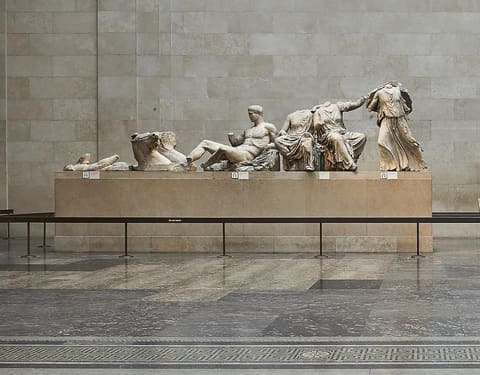
The Parthenon Sculptures
Attributed to Pheidias (c. 480–430 BC)
438–432 BC · marble
Ancient Greek (Attic) · Classical Greece

Marble sculptures - from the pediments, metopes, and frieze - that once adorned the Parthenon on the Athenian Acropolis, the temple dedicated to the city's patron goddess Athena Parthenos and decorated under the design of the sculptor Pheidias.

“Carved about 2,500 years ago, these ancient Greek sculptures adorned the Parthenon, a temple on the Athenian Acropolis (the ancient citadel on a rocky hill in the city).” In the museum’s words — britishmuseum.org ↗

Meanwhile — Sword from Pereshchepyne Europe · 5th – early 4th centuries BCE

Rosetta Stone
N° 230·II · The Classical World
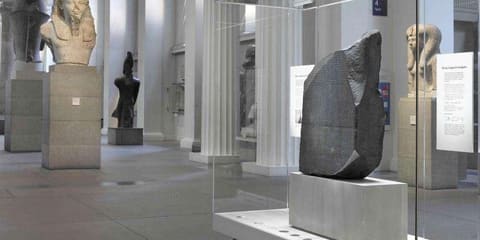
Rosetta Stone
Unknown
196 BC · granodiorite
Ptolemaic Egyptian · Ptolemaic Period

A granodiorite stela inscribed in 196 BC with a priestly decree in three scripts - hieroglyphs, Demotic, and Ancient Greek - whose parallel texts gave scholars the key to finally decipher ancient Egyptian hieroglyphs.

“The key that unlocked ancient Egyptian hieroglyphs, the Rosetta Stone is one of the Museum's most famous objects.” In the museum’s words — britishmuseum.org ↗

Meanwhile — Statue of Venus Greek world · Beirut, Hellenistic Period (late 4th–1st century B.C.)

Crouching Venus
N° 276·II · The Classical World
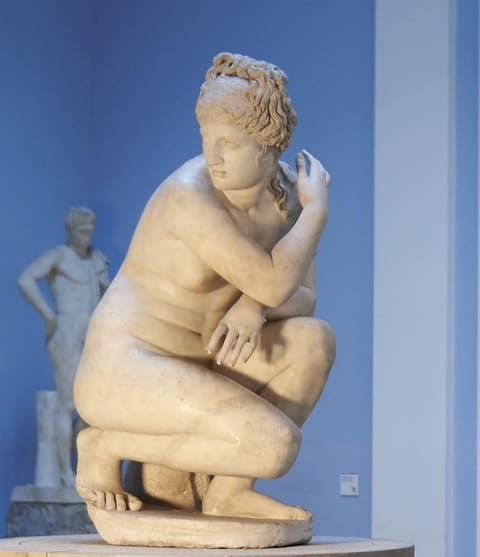
Crouching Venus
After Unknown (Roman copy after a Greek original)
2nd century AD · marble
Roman · Roman Imperial period

A 2nd-century AD Roman marble version (on long-term loan from the Royal Collection) of a much earlier, lost Greek statue of Aphrodite/Venus, shown crouching as though surprised while bathing.

“This sculpture, from the second century AD, is a Roman version of a much earlier Greek statue of the goddess Aphrodite, or Venus to the Romans.” In the museum’s words — britishmuseum.org ↗

Meanwhile — Gold necklace with medallion and scent-flask from Mtskheta Near East · 2nd century AD

The Piranesi Vase
N° 286·II · The Classical World
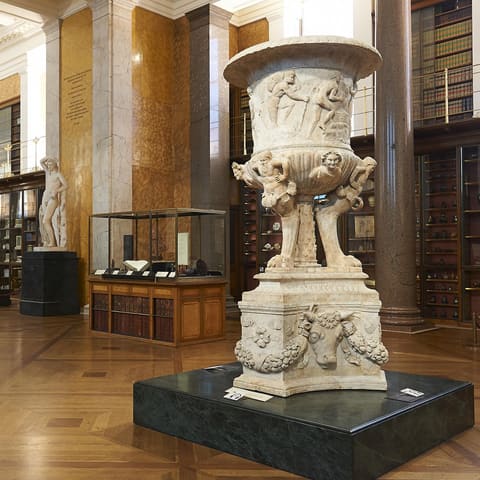
The Piranesi Vase
Attributed to Giovanni Battista Piranesi (1729–1778)
2nd century AD, restored 18th century · marble (ancient fragments with 18th-century restoration)
Roman (ancient fragments); Italian (18th-century restoration)

A 2.7-metre marble vase assembled in the 1700s by the Italian engraver and antiquarian Giovanni Battista Piranesi from ancient Roman marble fragments - reportedly found at Hadrian's Villa in Tivoli - restored and incorporated into one of his elaborate decorative pastiches.

“This 2.7-metre tall vase was constructed in the 1700s from a great number of classical fragments and modern additions.” In the museum’s words — britishmuseum.org ↗

Meanwhile — Ceramic icon of St. Theodore from Patleina Europe · Late 9th - 10th c.

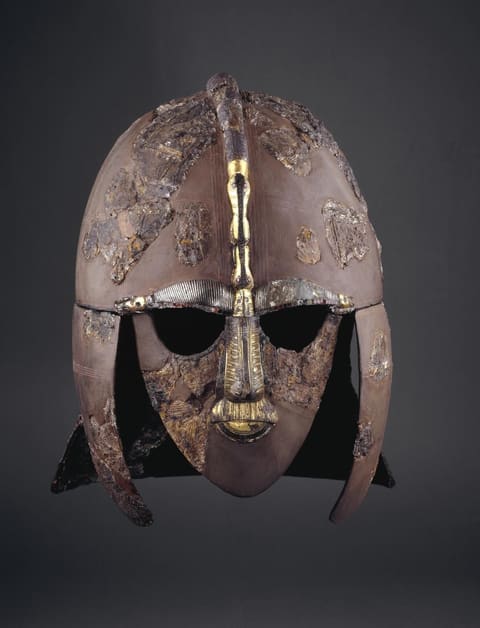
The Sutton Hoo Helmet
N° 352·III · Faith and Empire
The Sutton Hoo Helmet
Unknown
c. AD 610-635 · iron, tinned copper alloy
Anglo-Saxon · Anglo-Saxon (early medieval)

An iron ceremonial helmet, its face mask forming a dragon whose wings become the eyebrows and tail the moustache, found wrapped in cloth beside the head of the person buried in the c. AD 610-635 Anglo-Saxon ship burial at Sutton Hoo, Suffolk - one of the most lavish grave assemblages ever discovered in Europe.

“The iconic Sutton Hoo helmet was wrapped in cloth and laid near the left side of the dead person's head. It's a piece of truly breathtaking artistry, functional and beautiful, with a vaulted cap and deep cheek-pieces.” In the museum’s words — britishmuseum.org ↗

Meanwhile — Devi South Asia · First half of the 7th century

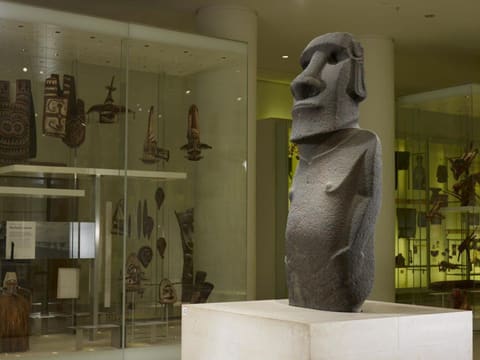
Hoa Hakananai'a
N° 448·III · Faith and Empire
Hoa Hakananai'a
Unknown
c. 1000–1200 AD · basalt
Rapa Nui

A basalt moai known as Hoa Hakananai'a, carved around AD 1000-1200 in the ceremonial village of Orongo on Rapa Nui (Easter Island) - one of the island's famous ancestor statues, believed to embody the 'living faces' of deified forebears.

“This statue, known as Hoa Hakananai'a, comes from the ceremonial village of Orongo on Rapa Nui (Easter Island).” In the museum’s words — britishmuseum.org ↗

Meanwhile — Antler-Reinforced Composite Bow East Asia · 11th–12th century

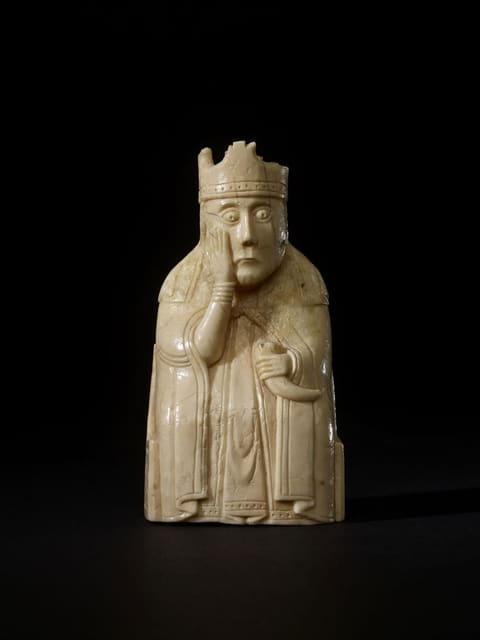
Lewis Chessmen
N° 486·III · Faith and Empire
Lewis Chessmen
Unknown
c. 1150–1200 · walrus ivory and sperm whale tooth
Norse (Scandinavian) · Medieval Europe

A group of intricately carved 12th-century chess pieces in walrus ivory and whale's tooth - kings, queens, bishops, knights, and pawns with famously expressive faces - found on Scotland's Isle of Lewis in 1831 and believed to have been carved in Trondheim, Norway around 1150-1200.

“The chess pieces were found on the Isle of Lewis in Scotland, but it's not certain where they were from or how they got to the island. However, a popular theory is that they were made in Trondheim in western Norway around 1150–1200.” In the museum’s words — britishmuseum.org ↗

Meanwhile — Pre-Columbian musical instruments of the Diquís (ocarinas) Americas & Oceania · c. 800–1550 CE

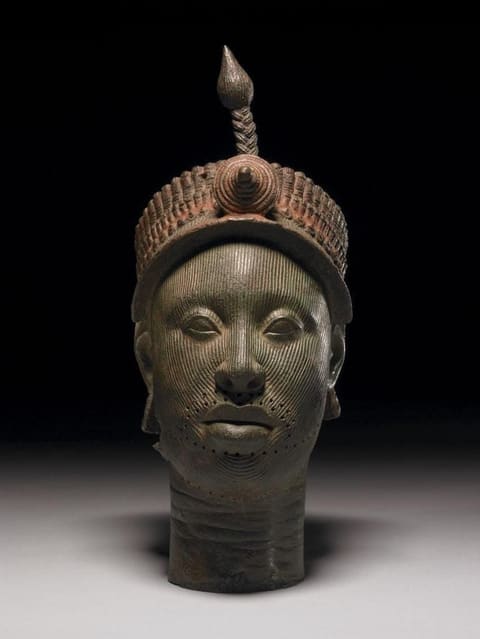
The Ife Head
N° 526·IV · Toward the Renaissance
The Ife Head
Unknown
1300 – early 1400s · brass
Yoruba (Kingdom of Ife)

A naturalistic brass head, roughly 600 years old, most likely depicting an Ooni (sacred king) of the West African Kingdom of Ife - regarded as the cultural and spiritual homeland of the Yoruba-speaking peoples - prized for its strikingly lifelike style.

“It is considered to most likely depict an Ooni, a sacred king of the West African Kingdom of Ife.” In the museum’s words — britishmuseum.org ↗

Meanwhile — West Mexican Effigy Pipe Americas & Oceania · Late Postclassic (c. 1200–1521 CE)

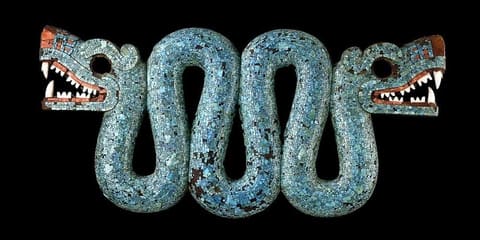
Aztec Double-Headed Serpent
N° 559·IV · Toward the Renaissance
Aztec Double-Headed Serpent
Unknown
1400–1521 · cedro wood, turquoise and shell mosaic
Aztec (Mexica)

A ceremonial pectoral in the form of a double-headed serpent, carved from cedro wood and covered with roughly 2,000 pieces of turquoise and shell mosaic - likely worn or carried in religious ceremonies honoring the feathered serpent god Quetzalcoatl.

“Created in what is now Mexico in the 15th or 16th century, this extraordinary double-headed serpent sculpture is made of about 2,000 pieces of turquoise over a wooden base.” In the museum’s words — britishmuseum.org ↗

Meanwhile — The Death of the Virgin Europe · ca. 1462

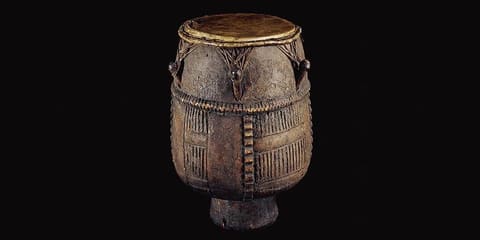
The Akan Drum
N° 795·VII · The Age of Reason
The Akan Drum
Unknown
early 18th century · wood and animal skin
Akan

A wooden drum with an animal-skin head, probably made by an Akan craftsperson in the region of present-day Ghana in the early 18th century, then carried to colonial Virginia - likely aboard a slave ship - making it the earliest surviving African-American object in the British Museum's collection.

“This wooden drum is the earliest African-American object in the British Museum.” In the museum’s words — britishmuseum.org ↗

Meanwhile — Portrait of Shin Im East Asia · Joseon Dynasty (early 18th century)

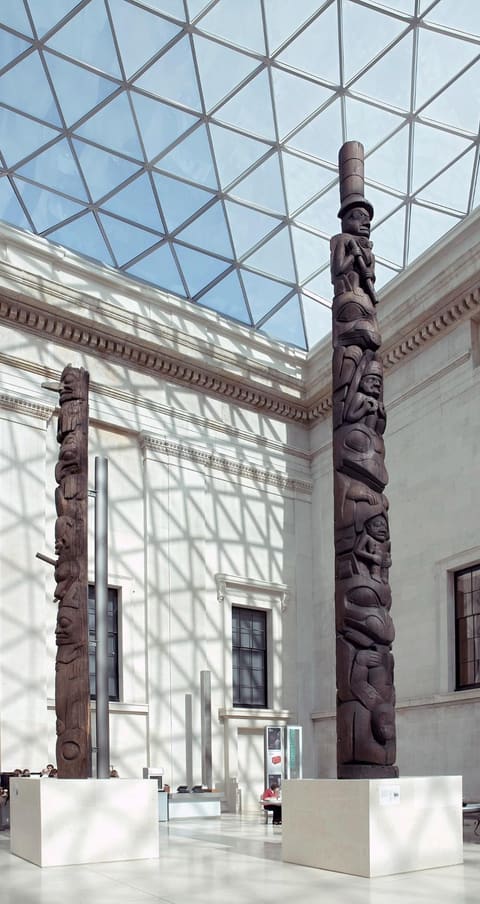
Haida House Pole
N° 893·VIII · The Restless Century
Haida House Pole
Unknown
c. 1850 · carved wood
Haida

A 15-metre carved wooden Haida totem pole made around 1850, which once stood before a clan house in the village of Kayung in British Columbia, its crests marking ancestral identities and each family's rights to stories and property.

“This pole was made around 1850 and once stood at the front of a clan house in the village of Kayang, British Columbia, Canada.” In the museum’s words — britishmuseum.org ↗

Meanwhile — Oryx Figurine Islamic world · 1800–1900 CE (19th century)

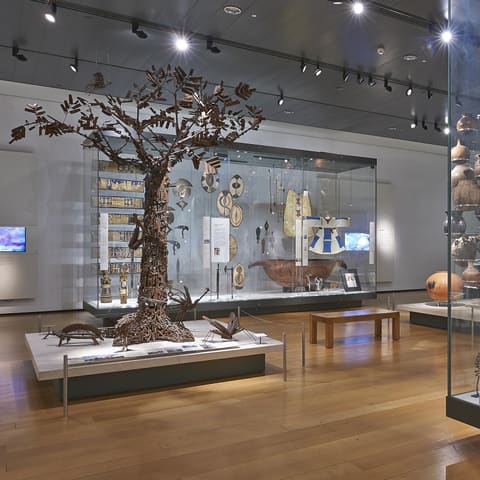
Tree of Life
N° 1099·IX · Into Our Time
Tree of Life
Cristóvão (Kester) Canhavato, Hilario Nhatugeuja, Adelino Mate and Fiel dos Santos
2004 · welded decommissioned firearms (metal sculpture)
Mozambican

A sculpture commissioned by the British Museum in 2004 and made by four Mozambican artists from decommissioned AK-47 rifles, pistols, and rocket-propelled grenade launchers collected under the 'Transforming Arms into Tools' scheme that followed Mozambique's civil war.

“This powerful sculpture was made for the British Museum in 2004 by four artists, Cristóvão (Kester) Canhavato, Hilario Nhatugeuja, Adelino Mate and Fiel dos Santos, working with decommissioned weapons in Mozambique.” In the museum’s words — britishmuseum.org ↗

Meanwhile — Sky Woman Americas & Oceania · 2001