The Atlas·MN

MN

National Museum of Mongolia, Ulaanbaatar — 13 works · museum site ↗ · 3000 BCE – 1920 60000 BCE2020

Seen from Ulaanbaatar, history is above all craft & design, then treasure & power — a collection opened wide onto other worlds — a window more than a mirror (13 of 13 works are from other civilisations).

Craft 6 Power 5 Sculpture 2
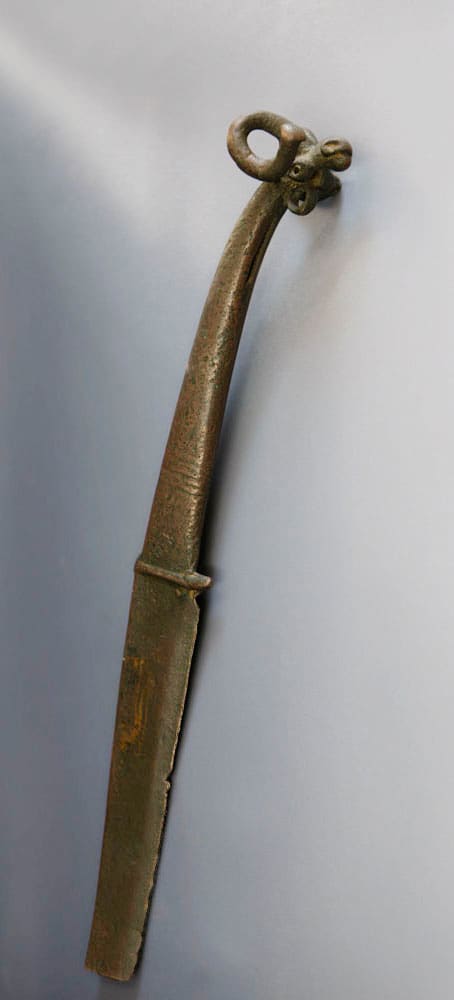
Bronze Sword with Argali-Head Pommel
N° 048·I · The First Makers
Bronze Sword with Argali-Head Pommel
Unknown
Bronze Age (museum-stated c. 3000 BCE – 700 CE) · bronze
Bronze Age

Translated from Mongolian: A cast-bronze sword whose hilt is crowned by a finely modelled argali (wild sheep) head with curling horns and a small ring loop at the neck for hanging; the tip of the blade is broken and lost. The museum calls it a classic example of animal-style art and notes that finds of this type are very rare in the archaeology of Mongolia and neighbouring countries. It was given to the museum in 1984 by Dorjiin Mönkhchimeg of Darvi, Khovd Province, and designated a 'priceless heritage' object by Government of Mongolia Resolution No. 124 of 2003.

“Энэхүү сэлмийг цутгуурын аргаар хийсэн бөгөөд сэлэмний бариулын орой дээр угалзарсан эвэртэй аргалын толгойг маш урнаар дүрслэн гаргаж, толгойн багалзуур хэсэгт өлгөх зориулалттай жижиг цагирган сэнж хийсэн.” In the museum’s words — nationalmuseum.mn ↗ · quotation verified against the live page

Meanwhile — Warrior Krater Greek world · 12th century BC
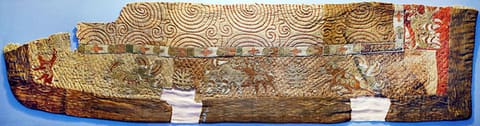
Xiongnu Embroidered Felt Rug from Noyon Uul
N° 218·II · The Classical World
Xiongnu Embroidered Felt Rug from Noyon Uul
Unknown
Xiongnu period, 3rd century BCE – 1st century CE · felt, silk, wool
Xiongnu · Xiongnu Empire

Translated from Mongolian: A felt rug found in 1924 in grave 6 of the Xiongnu royal necropolis at Noyon Uul (Batsümber, Töv Province). The felt ground is faced with red silk and bordered with dark-brown silk; wool thread embroiders standing trees, and between them pairs of animals locked in combat. The museum notes the rug once floored a corridor of the tomb, was found about 2.6 × 1.95 m, and that one part is now held in the Hermitage in Russia while the other is at the National Museum of Mongolia. Designated a 'priceless heritage' object by Government of Mongolia Resolution No. 241 of 1995.

“Тодорхойлолт: Энэхүү ширдэгийн эх бие нь эсгийгээр хийгдсэн. Эсгийг улаан торгоор бүрж, ногоон, улбар шар хээтэй хар хүрэн торгоор эмжсэн.” In the museum’s words — nationalmuseum.mn ↗ · quotation verified against the live page

Meanwhile — Aphrodite, Pan and Eros Greek world · c. 100 BC

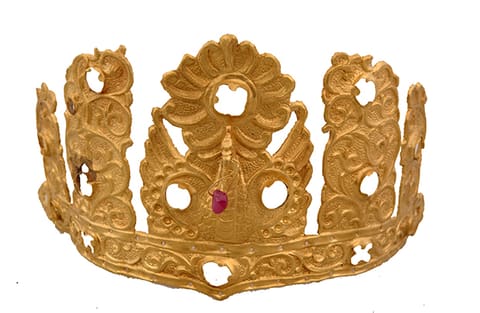
Gold Crown (Altan Titem)
N° 333·III · Faith and Empire
Gold Crown (Altan Titem)
Unknown
6th–8th century · gold
Turkic · Türkic Khaganate

Translated from Mongolian: A gold crown whose centre carries a repoussé bird with spread wings and a stout beak gripping a precious stone; the bird's feathers and wings are engraved. The crown is ornamented throughout with scrolling plant motifs and pierced with many settings that once held gemstones. Dated to the 6th–8th century and designated a 'priceless heritage' object by Government of Mongolia Resolution No. 241 of 1995.

“Шинж байдал: Титэмний голд жигүүрээ дэлгэсэн, бахим хошуутай, хошуундаа эрдэнийн чулуу зуусан шувууг товойлгож хийсэн. Шувууны өд жигүүрийг сийлж гаргасан. Титэм дээр ургамлын дүрстэй хээгээр угалзруулан чимэглэжээ.” In the museum’s words — nationalmuseum.mn ↗ · quotation verified against the live page

Meanwhile — Statue of the Goddess Durga South Asia · 7th century CE (Champa culture)

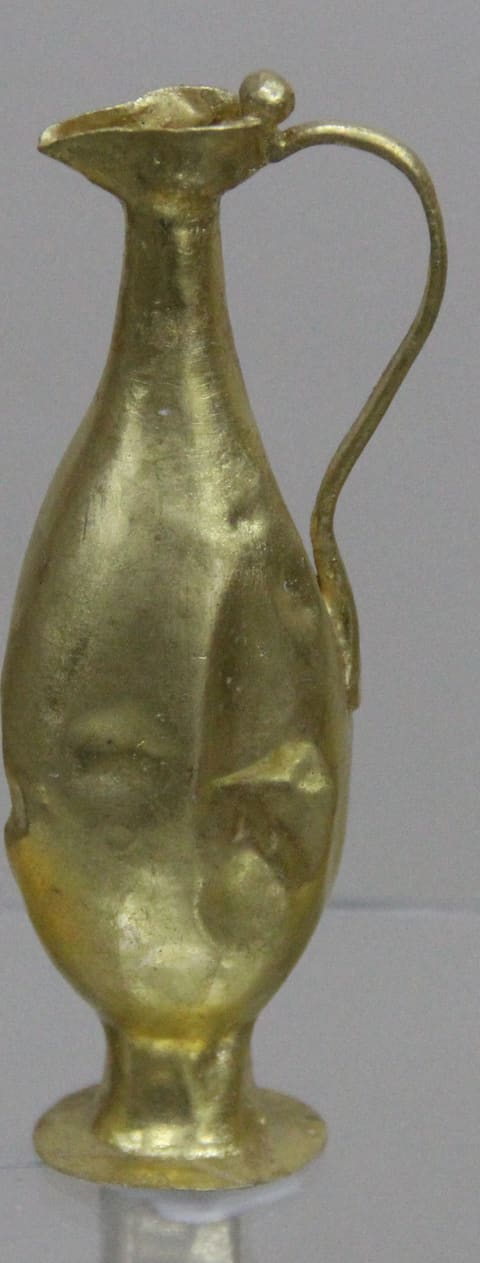
Gold Ewer (Altan Dombo)
N° 334·III · Faith and Empire
Gold Ewer (Altan Dombo)
Unknown
6th–8th century · gold
Turkic · Türkic Khaganate

Translated from Mongolian: A gold ewer with a bulging body, tall narrow neck and pinched mouth; its handle is formed from twisted gold worked into a loop, and a small round gold stopper sits at the mouth. The lower body and the underside of the spout are dented inward. Dated to the 6th–8th century and designated a 'priceless heritage' object by Government of Mongolia Resolution No. 241 of 1995.

“Шинж байдал: Цүлхэгэр бөөртэй өндөр нарийн хүзүүтэй, хавчиг амсартай. Цувимал алтыг гогцооруулан бариул хийжээ. Савны амсарт бөөрөнхий алтан тээг хийсэн байна. Уг савны бөөр болон хошууны доод хэсэг цөмөрч дотогш хонхойсон” In the museum’s words — nationalmuseum.mn ↗ · quotation verified against the live page

Meanwhile — Statue of the Goddess Durga South Asia · 7th century CE (Champa culture)

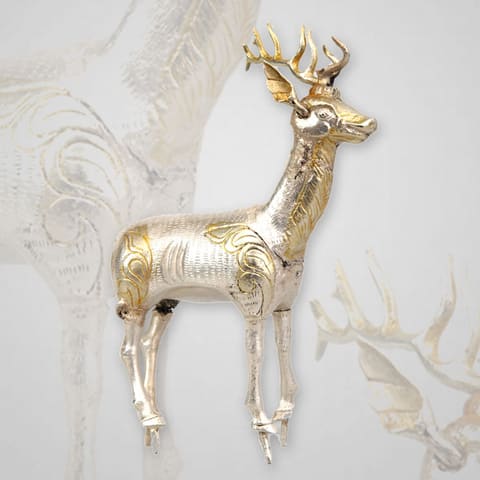
Silver Deer (Möngön Buga)
N° 335·III · Faith and Empire
Silver Deer (Möngön Buga)
Unknown
6th–8th century · silver, gold
Turkic · Türkic Khaganate

Translated from Mongolian: A silver figure of a stag standing upright with its neck stretched up; its antlers, head, ears, neck, tail and parts of the body are gilded. Wing-like plant-and-flower motifs are chased and gilded on the shoulders and haunches. One antler is broken; the other has six tines and is unsoldered. Dated to the 6th–8th century and designated a 'priceless heritage' object by Government of Mongolia Resolution No. 241 of 1995.

“Шинж байдал: Хүзүүгээ дээш сунган цэх зогсож буй дүрслэлтэй бугын эвэр, толгой, чих, хүзүү, сүүл, их биеийн зарим хэсгийг алтаар шарсан. Босоо далбагар өрөөсөн чихтэй.” In the museum’s words — nationalmuseum.mn ↗ · quotation verified against the live page

Meanwhile — Statue of the Goddess Durga South Asia · 7th century CE (Champa culture)

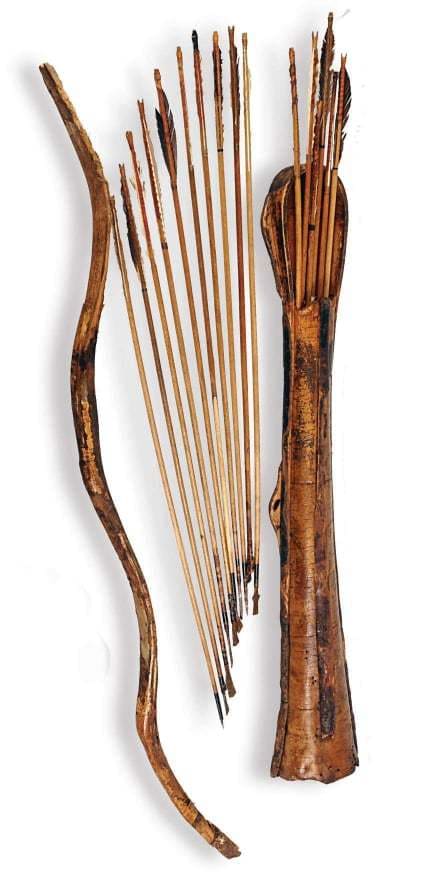
Antler-Reinforced Composite Bow
N° 447·III · Faith and Empire
Antler-Reinforced Composite Bow
Unknown
11th–12th century · birch bark, deer antler

Translated from Mongolian: A bow, matching medieval bows in form, now without its string, covered in birch bark and reinforced with glued strips of deer antler. It was found in 1999 in the same cliff burial at Bömbögör, Bayankhongor Province, alongside a saddle, arrows, a quiver and a whip, and was designated a 'priceless heritage' object by Government of Mongolia Resolution No. 241 of 1995.

“Шинж байдал: Дундад зууны нумтай хэлбэр хийц адилхан. Хөвчгүй, хусны үйсээр бүрсэн. Бугын эврээр хийсэн наалттай.” In the museum’s words — nationalmuseum.mn ↗ · quotation verified against the live page

Meanwhile — Hoa Hakananai'a Americas & Oceania · c. 1000–1200 AD

Leather-Covered Wooden Saddle
No image in the collection — see the museum’s page
N° 449·III · Faith and Empire
Leather-Covered Wooden Saddle
Unknown
11th–12th century · wood, rawhide, leather

Translated from Mongolian: A wooden saddle with two wide rounded bows covered in thin hide; the seat between the bows is 25 cm long and 33 cm wide, and two iron rings are set at the front for attaching gear. The museum notes its form resembles saddles of the Mongol Empire period. It was found in 1999 in a cliff burial at Bömbögör, Bayankhongor Province, from which a bow, arrows, a quiver and a whip were also recovered, and was designated a 'priceless heritage' object by Government of Mongolia Resolution No. 124 of 2003.

“Тодорхойлолт: Эмээлийн бүүргүүдийг битүү нимгэн ширээр бүрсэн.” In the museum’s words — nationalmuseum.mn ↗ · quotation verified against the live page

Meanwhile — Hoa Hakananai'a Americas & Oceania · c. 1000–1200 AD

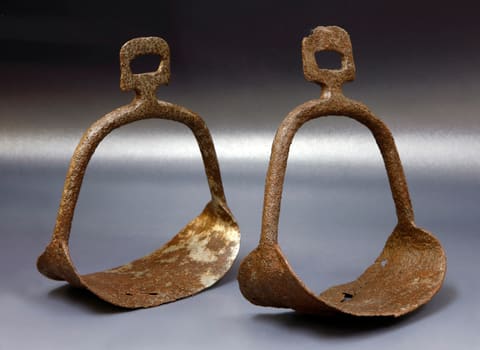
Pair of Iron Stirrups
N° 450·III · Faith and Empire
Pair of Iron Stirrups
Unknown
11th–12th century · iron

Translated from Mongolian: A pair of cast-iron stirrups with a rib-like profile and upright rectangular loops; parts of the tread plates have worn away. They were found in 1999 in the cliff burial at Bömbögör, Bayankhongor Province, together with a saddle, bow, arrows and quiver, and were designated a 'priceless heritage' object by Government of Mongolia Resolution No. 124 of 2003.

“Шинж байдал: Хавирган хэлбэртэй төмөр дөрөө. Босоо дөрвөлжин сэнжтэй, тавагны зарим газраар сэлтэрч алга болсон. Эдгээр дөрөөнүүдийг төмрөөр цутгаж хийсэн.” In the museum’s words — nationalmuseum.mn ↗ · quotation verified against the live page

Meanwhile — Hoa Hakananai'a Americas & Oceania · c. 1000–1200 AD

Sword with Its Scabbard
No image in the collection — see the museum’s page
N° 451·III · Faith and Empire
Sword with Its Scabbard
Unknown
11th–12th century · iron sword; birch-wood and hide scabbard

Translated from Mongolian: A sword together with its scabbard from the 11th–12th-century cliff burial at Bömbögör, Bayankhongor Province. The blade was cast in a mould then forged, curving slightly and double-edged for 14 cm from the tip; its 11 cm hilt is fitted with a birch-wood grip held by four-lobed leaf-shaped mounts and iron nails. The scabbard is made of two thinned birch pieces joined around the blade, covered with hide and bound with iron bands. Designated a 'priceless heritage' object by Government of Mongolia Resolution No. 124 of 2003.

“Хуйг хийхдээ нимгэлж зассан хоёр хус модыг сэлэм орох зайтайгаар эвлүүлэн түүнийхээ гадуур арьсаар бүрж наагаад хуйны амсраас доохон 1.2 см зайд 0.7 см өргөнтэй нимгэн төмрөөр бэхлэн бөгжилж, түүнээс доош 25.” In the museum’s words — nationalmuseum.mn ↗ · quotation verified against the live page

Meanwhile — Hoa Hakananai'a Americas & Oceania · c. 1000–1200 AD

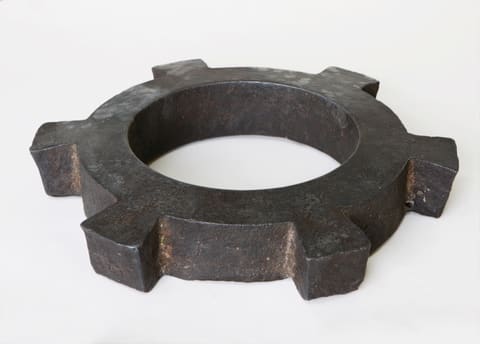
Cast-Iron Cart-Hub (Tsön) from Kharkhorum
N° 501·III · Faith and Empire
Cast-Iron Cart-Hub (Tsön) from Kharkhorum
Unknown
13th–14th century · cast iron
Mongol · Mongol Empire

Translated from Mongolian: A six-sided cast-iron hub (tsön) for a cart wheel, which the museum says was cast at Kharkhorum in the 13th–14th century and describes as the largest solid cart-hub found in Mongolia. It was recovered in 1949 from the ruins of the Mongol imperial capital. Designated a 'priceless heritage' object (Хосгүй үнэт) by Government of Mongolia Resolution No. 241 of 1995.

“Цөн хэмээх нь Монгол орноос олдсон хамгийн том цул цөн.” In the museum’s words — nationalmuseum.mn ↗ · quotation verified against the live page

Meanwhile — Vân Bản Bell South Asia · Trần dynasty, 13th–14th century

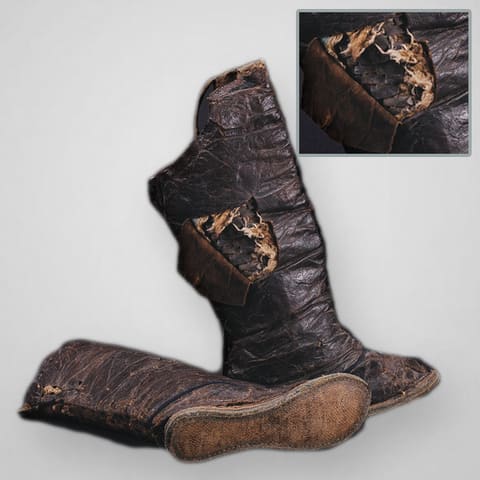
Iron-Plated Leather Boots (Yaltsan Gutal)
N° 567·IV · Toward the Renaissance
Iron-Plated Leather Boots (Yaltsan Gutal)
Unknown
15th–16th century · leather, iron plates
Mongol

Translated from Mongolian: Brown leather boots lined with iron plates, with lacing straps at the top of the shaft, described by the museum as a priceless historical-cultural relic that documents Mongol military dress. They were preserved by a family in Arkhangai Province across seven generations before entering the collection in 1953. Designated a 'priceless heritage' object by Government of Mongolia Resolution No. 241 of 1995.

“Шинж байдал: төмөр ялтсан дотортой, хүрэн савхин гутал. Түрийн дээр сойж уях тасман татууртай.” In the museum’s words — nationalmuseum.mn ↗ · quotation verified against the live page

Meanwhile — Temptations of St. Anthony Europe · c. 1500

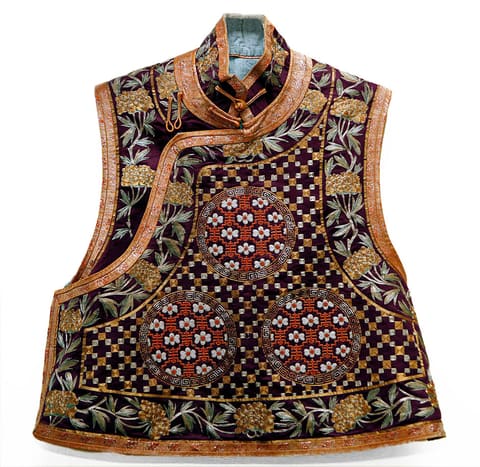
Embroidered Satin Vest (Khantaaz)
N° 914·VIII · The Restless Century
Embroidered Satin Vest (Khantaaz)
Unknown
Late 19th - early 20th century · Silk satin (püüsüü), pearl, coral
Mongolian

Translated from Mongolian: A woman's vest (khantaaz) of brown satin worked with gold and silver thread, designated a 'Priceless Treasure' by Government Resolution 124 of 2003. Three round medallions are sewn in gold thread on the front and on the back, each centred on Chinese characters strung in small coral; the vest has a blue silk lining, six-petalled flowers strung in small white coral along the lanz motifs, and its collar and hems are bordered with two wide bands of red brocade. The museum's note says it was probably worn by a wealthy woman in the late 19th or early 20th century and is made to a high artistic standard.

“Хүрэн пүүсүү гадартай, алт мөнгөн утсан хээтэй. Ар өвөр талдаа гурав гурван дугуй хээг алтан утсаар оёсон, дугуй хээний дунд нь ханз үсгэн хээг жижиг шүрээр хэлхэж оёсон.” In the museum’s words — nationalmuseum.mn ↗ · quotation verified against the live page

Meanwhile — Le Lit Europe · 1890s

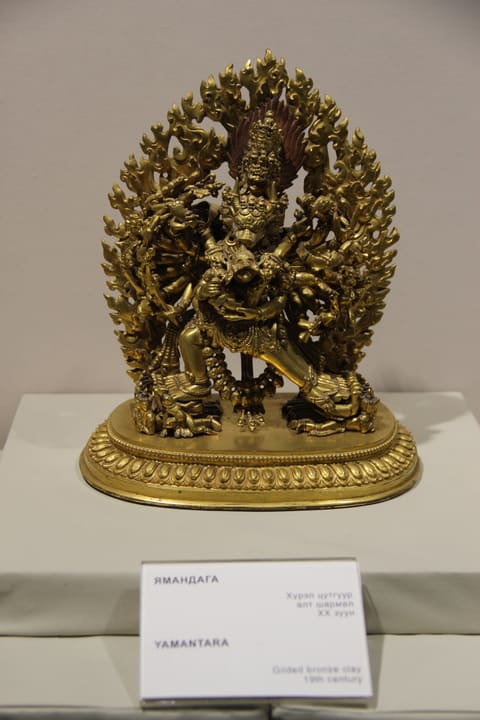
Gilt-Bronze Yamantaka (Yamandag)
N° 915·VIII · The Restless Century
Gilt-Bronze Yamantaka (Yamandag)
Unknown
late 19th – early 20th century · gilt bronze
Mongolian

Translated from Mongolian: A cast-bronze, gilded figure of Yamantaka on a 37-petal lotus base. It has an ox head among eight faces and thirty-four arms; four humans and seven gazelles are beneath its right foot, four humans and eight birds beneath its left, and it embraces its consort Yum (a female deity) before it. The museum notes Yamantaka is one of the principal wrathful protector deities long venerated in Tibet and Mongolia. Dated to the late 19th – early 20th century and designated a 'priceless heritage' object by Government of Mongolia Resolution No. 124 of 2003.

“Үхэр тэргүүнтэй 8 нүүртэй, урдаа Юм буюу эмэгтэй бурхан тэвэрч байгаагаар урласан.” In the museum’s words — nationalmuseum.mn ↗ · quotation verified against the live page

Meanwhile — Le Lit Europe · 1890s