National Museum of Vietnamese History, Hanoi — 19 works · museum site ↗ · 2500 BCE – 1946
Seen from Hanoi, history is above all writing & invention, then craft & design — a collection opened wide onto other worlds — a window more than a mirror (19 of 19 works are from other civilisations).
Đông Sơn culture, c. 2500–2000 BCE (museum dating) · Bronze
Đông Sơn
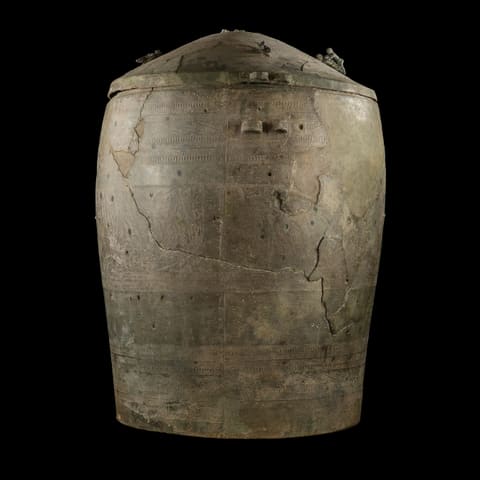
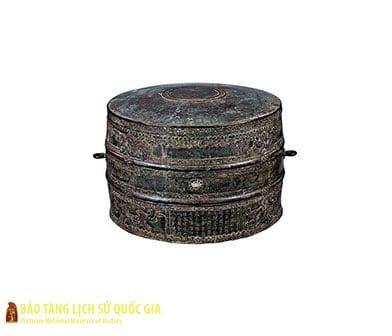
A large Đông Sơn bronze storage jar (inv. LSb.32967), about 90 cm tall, whose truncated-cone cover carries a 12-ray sun and four figurines of copulating couples symbolising the Đông Sơn people's wishes for fertility. When excavated it held ashes and human bones, showing it also served as a burial container; the body bears 25 bands of serrated, tangent-circle and Lạc-bird motifs plus six war-boats. Found at Đào Thịnh, Yên Bái, in 1961; National Treasure, 2012.
“The Đào Thịnh jar is one of the largest bronze jars with diversified and distinctive decorations discovered in Vietnam so far.”
In the museum’s words — baotanglichsu.vn ↗ · quotation verified against the live page
Meanwhile — Jade Cong TubeEast Asia · Late Liangzhu culture, 2500–2000 BCE
N° 065·I · The First Makers
Hoàng Hạ Bronze Drum
Unknown
Đông Sơn culture, c. 2500–2000 BCE (museum dating) · Bronze
Đông Sơn
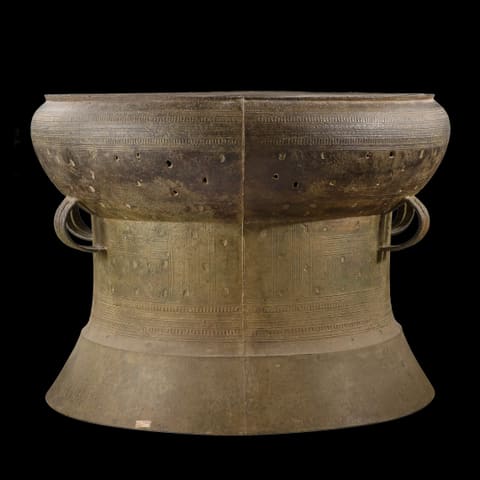
A Đông Sơn bronze drum (inv. LSb.5723) the museum groups with the finest of its kind alongside the Ngọc Lũ, Sông Đà and Cổ Loa drums. Its tympanum has a 16-ray sun surrounded by fifteen pattern bands and scenes of stilt houses, dancers, drummers and Lạc birds, with six boats and warriors around the barrel. Found at Hoàng Hạ village, Phú Xuyên, in 1937; designated a National Treasure in 2012.
“Such unique and vivid decorations on the Hoàng Hạ drum not only reflect the rich material and spiritual life of the Đông Sơn people who practiced wet-rice agriculture”
In the museum’s words — baotanglichsu.vn ↗ · quotation verified against the live page
Meanwhile — Jade Cong TubeEast Asia · Late Liangzhu culture, 2500–2000 BCE
N° 067·I · The First Makers
Ngọc Lũ Bronze Drum
Unknown
Đông Sơn culture, c. 2500–2000 BCE (museum dating) · Bronze
Đông Sơn
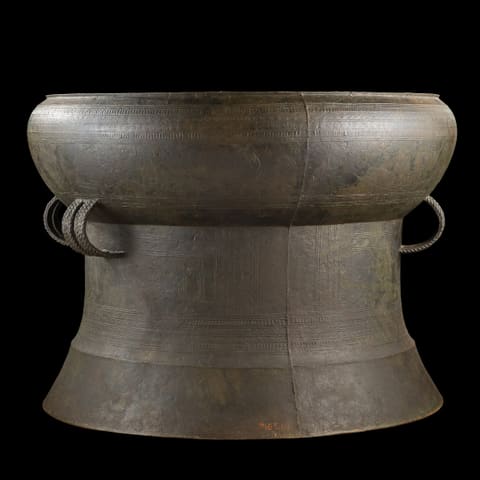
The museum's flagship Đông Sơn bronze drum (inv. LSb.5722), its tympanum centred on a 14-ray sun ringed by sixteen concentric bands of daily-life and festival scenes — drummers, rice-pounders, deer and birds moving counter-clockwise — with war-boats and disguised dancers on the barrel and body. Accidentally unearthed during embankment work at Ngọc Lũ in 1893 and transferred by the École Française d'Extrême-Orient to the former Louis Finot Museum (now this museum) in 1903; designated a National Treasure in 2012.
“The Ngọc Lũ drum is one of the most typical and finest bronze drums of the Đông Sơn culture.”
In the museum’s words — baotanglichsu.vn ↗ · quotation verified against the live page
Meanwhile — Jade Cong TubeEast Asia · Late Liangzhu culture, 2500–2000 BCE
N° 068·I · The First Makers
Việt Khê Boat-shaped Coffin
Unknown
Đông Sơn culture, c. 2500–2000 BCE (museum dating) · Wood (ironwood)
Đông Sơn
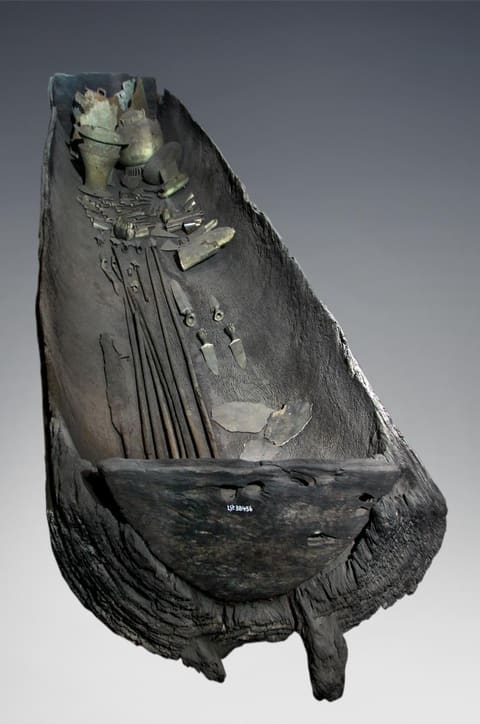
A 4.76 m boat-shaped coffin (inv. LSb.38456) hollowed from a single ironwood trunk, evidence of Đông Sơn burial custom in the Northern Delta. Besides decayed woven goods it held over 100 objects — mostly bronze utensils, tools, weapons and musical instruments, including a bronze ladle with a pan-pipe-player figurine — some weapons deliberately bent or cut as offerings to the dead. Found at Việt Khê (Ngọc Khê village), Hải Phòng, in 1961; National Treasure, 2013.
“the coffin also contains over 100 objects, most of which are made of bronze, including household utensils, tools, weapons and musical instruments”
In the museum’s words — baotanglichsu.vn ↗ · quotation verified against the live page
Meanwhile — Jade Cong TubeEast Asia · Late Liangzhu culture, 2500–2000 BCE
N° 255·II · The Classical World
Lạch Trường Bronze Lamp (Kneeling-Man Lamp)
Unknown
First centuries CE (Đông Sơn culture) · Bronze
Đông Sơn
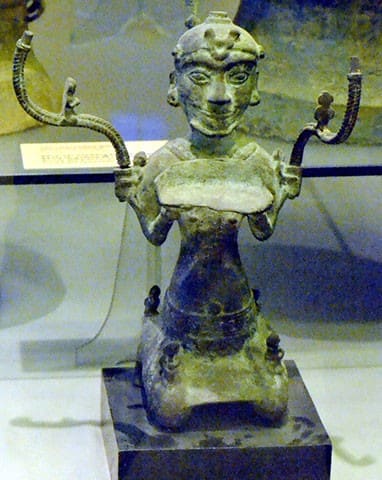
A bronze oil lamp in the form of a kneeling man holding a bowl, found in a brick tomb of the first centuries CE at the Lạch Trường estuary, Thanh Hóa, in 1953 by the Swedish archaeologist O. Janse. The kneeling figure has a bearded, curly-haired, prominent-nosed appearance often read as foreign, with small human figures set on his arms and head; the museum counts it among the treasures of the Đông Sơn culture alongside the Ngọc Lũ and Hoàng Hạ drums. National Treasure of Vietnam.
“The bronze lamp has originality because at the same time it is a lamp and a statue, kneeling men with hands carrying bowl for burning.”
In the museum’s words — baotanglichsu.vn ↗ · quotation verified against the live page
Meanwhile — PlateNear East · 2nd to 1st century AD
N° 301·II · The Classical World
Võ Cạnh Stele
Unknown
3rd–4th century CE · Sandstone
Champa
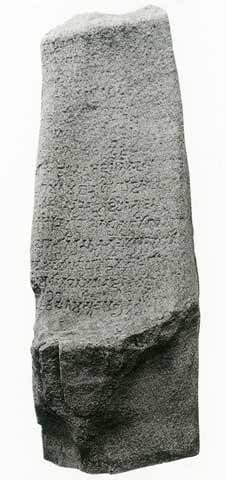
A four-sided sandstone stele of the 3rd–4th century CE bearing a Brahmi-script Sanskrit inscription — partly in the Vasantatilaka verse metre — that speaks of a king of the Sri Mara line who founded an early Champa dynasty. Originally standing near a ruined brick tower at Võ Cạnh, Nha Trang, it was brought to the former Louis Finot Museum (now this museum) in 1910. The museum presents it as the earliest evidence in Southeast Asia of the introduction of Sanskrit and Indian religious thought. National Treasure of Vietnam.
“The Vo Canh stele is the earliest evidence of the introduction of Sanskrit language and religious thought (Buddhism) from Indian into Champa.”
In the museum’s words — baotanglichsu.vn ↗ · quotation verified against the live page
Meanwhile — Ivory dollsRome · Second half of the 3rd century AD
N° 348·III · Faith and Empire
Statue of the Goddess Durga
Unknown
7th century CE (Champa culture) · Bronze (copper-tin-lead alloy)
Champa · Champa Kingdom
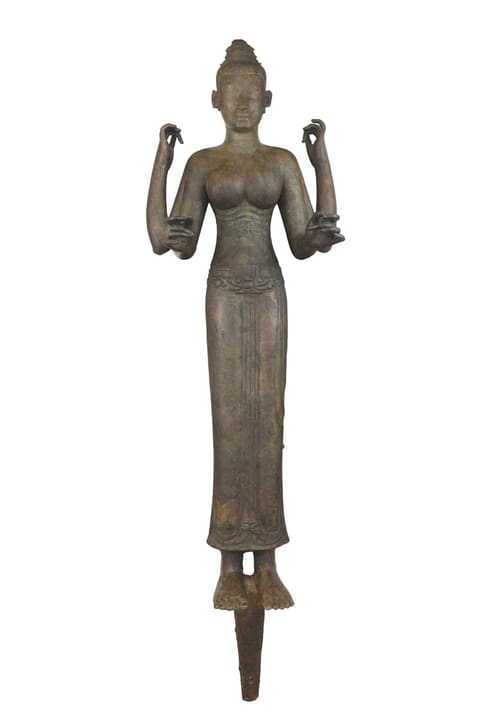
A four-armed bronze statue of the Hindu goddess Durga, cast in a copper-tin-lead alloy and standing 191 cm overall (the near-life-size figure 157 cm), which the museum dates to the 7th century CE and attributes to the Champa culture in the My Son E1 style. Illicitly removed from Vietnam and trafficked abroad, it was repatriated under the 1970 UNESCO Convention, arriving in Hanoi on 21 February 2024, and was designated a National Treasure in 2025.
“It is a large freestanding sculpture with a total height of 191 cm (the figure of the goddess alone measures 157 cm, approximately life-size).”
In the museum’s words — baotanglichsu.vn ↗ · quotation verified against the live page
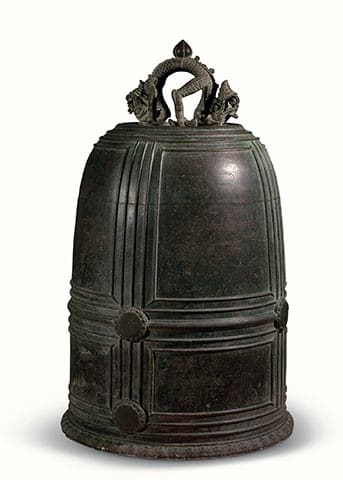
A Trần-dynasty bronze temple bell (inv. LSb.18165), about 127 cm high and 300 kg, from Vân Bản pagoda in the Đồ Sơn area of Hải Phòng, recovered from the sea by fishermen in 1958. Its handle is a pair of joined-body dragons; the mouth is ringed with 52 lotus petals in relief and the body carries a Chinese-character inscription recording the pagoda's founding. National Treasure of Vietnam.
“A bronze bell was found by local fishermen on a summer morning 1958, in coastal area of Do Son port.”
In the museum’s words — baotanglichsu.vn ↗ · quotation verified against the live page
1377, reign of King Trần Duệ Tông, Trần dynasty · Bronze
Đại Việt (Vietnamese) · Trần dynasty
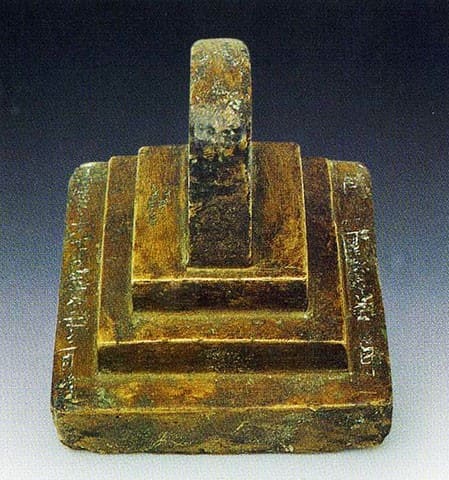
A bronze administrative seal (inv. LSb.25266) of the Môn Hạ Sảnh, the chancellery closest to the throne in the Trần court, cast in 1377 under King Trần Duệ Tông. Its 7.3 × 7.3 cm face bears the four seal-script characters "Môn hạ sảnh ấn"; the side inscription gives the casting date. Found at Hương Khê, Hà Tĩnh, in 1962; National Treasure, 2012.
“Today, the seal is being demonstrated in Vietnam National Museum of History.”
In the museum’s words — baotanglichsu.vn ↗ · quotation verified against the live page
Meanwhile — Gede RuinsAfrica · Swahili town, 12th–17th century
N° 581·IV · Toward the Renaissance
Blue-and-White Vase with Swan Design
Unknown
Mid-to-late 15th century, Lê sơ dynasty · Glazed ceramic (blue-and-white / hoa lam ware)
Vietnamese · Lê sơ dynasty
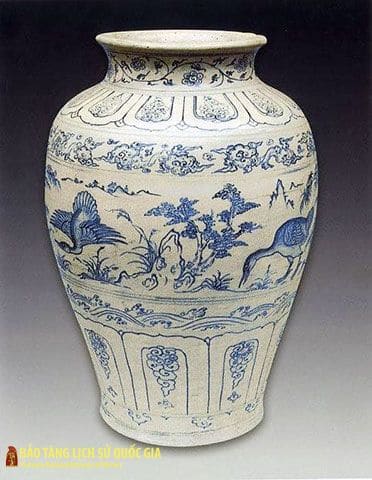
Translated from Vietnamese: A unique Vietnamese blue-and-white (hoa lam) ceramic vase painted with swans in landscape settings, a representative piece of the 15th-century peak of Vietnamese underglaze-blue ware. It comes from the Cù Lao Chàm shipwreck off Quảng Nam — a cargo of more than 240,000 objects dated by scholars to the mid-to-late 15th century, Lê sơ period — which the museum holds and displays. National Treasure of Vietnam.
“Chiếc bình gốm hoa lam vẽ thiên nga là chiếc bình gốm thuộc sưu tập độc bản trong tàu cổ Cù Lao Chàm khai quật vào năm 1999 – 2000 mà Bảo tàng Lịch sử Quốc gia được lưu giữ và trưng bày.”
In the museum’s words — baotanglichsu.vn ↗ · quotation verified against the live page
Tứ Kỳ Pagoda Stone Incense Pillar (Cây hương chùa Tứ Kỳ)
Unknown
1666, Cảnh Trị reign, Lê Huyền Tông, Lê Trung Hưng period · Stone
Đại Việt (Vietnamese) · Lê Trung Hưng (Restored Lê)
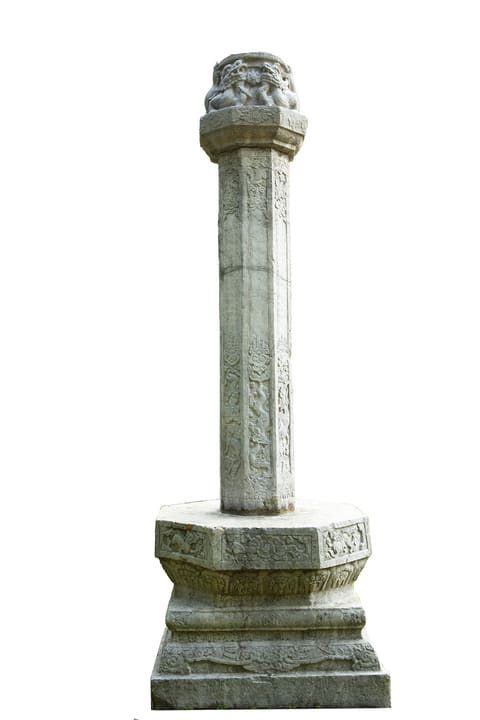
Translated from Vietnamese: A carved stone incense pillar (cây hương) erected in 1666, in the Cảnh Trị reign of King Lê Huyền Tông, at Tứ Kỳ pagoda (Linh Tiên tự) in Hanoi. Total height 270 cm, accession LSb.32856; recognised as a National Treasure by Decision 2198/QĐ-TTg of 25 December 2021. Moved to the Vietnam National Museum of History in 1959 and now displayed at the museum's No. 1 Tràng Tiền building.
“Năm 1959, cây hương được chuyển về Bảo tàng Lịch sử Việt Nam (nay là Bảo tàng Lịch sử quốc gia) và hiện được trưng bày tại Bảo tàng số 01 Tràng Tiền”
In the museum’s words — baotanglichsu.vn ↗ · quotation verified against the live page
1679 (4th year of the Vĩnh Trị reign, Lê Hy Tông) · Stone
Đại Việt (Vietnamese) · Restored Lê dynasty
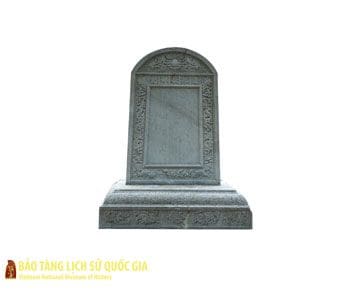
A stone stele erected in 1679, the fourth year of the Vĩnh Trị reign under King Lê Hy Tông, at the Nam Giao Temple in the Thang Long citadel. Its semi-circular upper part is decorated with two dragons contemplating the sun, the edges carry dragon and mythical-animal motifs, and the body's Chinese inscription records the construction of the temple where the king performed the annual rituals to heaven and earth at the Lunar New Year.
“Nam Giao Temple stele is a precious artefact from the Restored Le dynasty which is still in existence.”
In the museum’s words — baotanglichsu.vn ↗ · quotation verified against the live page
Gold Seal 'Đại Việt Quốc Nguyễn Chúa Vĩnh Trấn Chi Bảo'
Unknown
1709, reign of Lord Nguyễn Phúc Chu · Gold
Vietnamese · Nguyễn Lords (Đàng Trong)
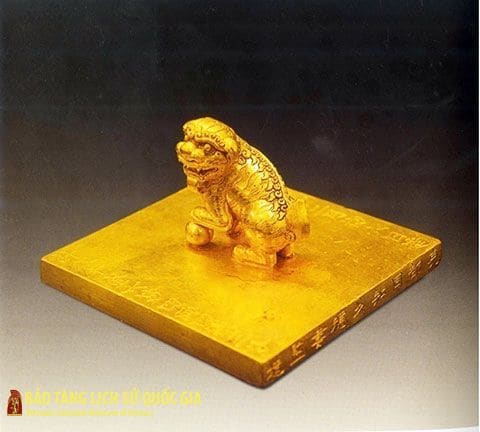
Translated from Vietnamese: The dynastic gold seal "Đại Việt Quốc Nguyễn Chúa Vĩnh Trấn Chi Bảo", cast in 1709 under Lord Nguyễn Phúc Chu and the earliest-dated seal of the Nguyễn line, weighing about 2,350 g. Its handle is a pearl-playing qilin (kỳ lân); the seal face bears four raised seal-script characters and the sides carry Chinese inscriptions recording the gold content and the casting date. Handed to the government in 1945 and now held and displayed by the museum. National Treasure of Vietnam.
“Bảo tàng Lịch sử Quốc gia hiện đang lưu giữ và trưng bày chiếc ấn vàng”
In the museum’s words — baotanglichsu.vn ↗ · quotation verified against the live page
Meanwhile — Damascus RoomIslamic world · dated 1119 AH/1707 CE
N° 851·VIII · The Restless Century
Cảnh Thịnh Bronze Drum
Unknown
1800, 8th year of the Cảnh Thịnh reign, Tây Sơn dynasty · Bronze
Đại Việt (Vietnamese) · Tây Sơn dynasty
A bronze drum modelled on the form of a traditional leather drum, cast in 1800, the 8th year of Emperor Cảnh Thịnh of the Tây Sơn dynasty. Its body is divided by relief lines into registers decorated with Bodhi leaves, T-shaped motifs and the four sacred animals — dragon, unicorn, tortoise and phoenix — and carries a 222-character Chinese inscription recording donations for the casting, tied to Nành (Linh Ứng) pagoda in Gia Lâm, Hanoi. National Treasure of Vietnam.
“Inspired by the shape of the traditional leather drum, this is a unique example of the creative art of the Tay Son period.”
In the museum’s words — baotanglichsu.vn ↗ · quotation verified against the live page
Jade Seal 'Đại Nam Thụ Thiên Vĩnh Mệnh Truyền Quốc Tỷ'
Unknown
1847, reign of Emperor Thiệu Trị, Nguyễn dynasty · White jade
Vietnamese · Nguyễn dynasty
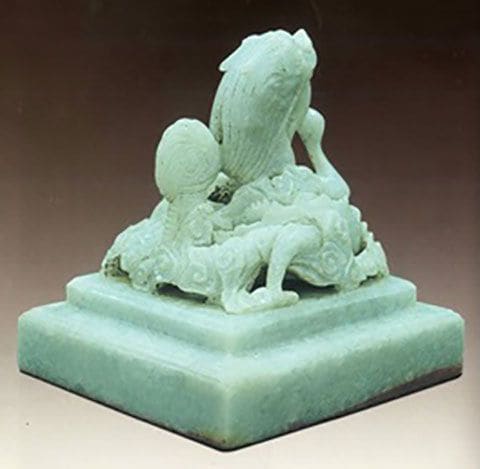
Translated from Vietnamese: A white-jade imperial seal carved for Emperor Thiệu Trị and completed in 1847, its face bearing nine seal-script characters, "Đại Nam thụ thiên vĩnh mệnh truyền quốc tỷ", and a coiled five-clawed dragon handle; it measures 14.5 cm high with a roughly 13 cm square face. The largest and most prized jade seal in the museum's Nguyễn-dynasty treasure collection, it was used at the annual Nam Giao heaven-worship rite in Huế. Recognised as a National Treasure in 2017 and held at the museum.
“Đây là ngọc tỷ quan trọng bậc nhất trong bộ sưu tập Bảo vật của triều Nguyễn hiện lưu giữ tại Bảo tàng Lịch sử Quốc gia.”
In the museum’s words — baotanglichsu.vn ↗ · quotation verified against the live page
The original 1927 edition of Đường Kách Mệnh ("Revolution Road"), compiled from Nguyễn Ái Quốc's (Hồ Chí Minh's) training lectures for young Vietnamese cadres and printed in Guangzhou, then secretly brought into Vietnam. The 101-page quốc-ngữ text sets out revolutionary theory, organisation and the ethics expected of revolutionaries; the museum presents it as the foundational text of modern Vietnamese political thought, central to the founding of the Communist Party of Vietnam in 1930. National Treasure of Vietnam.
“This unique original edition of the book is 101 pages in length, 15cm x 22cm in size, and is printed in black ink on stencils.”
In the museum’s words — baotanglichsu.vn ↗ · quotation verified against the live page
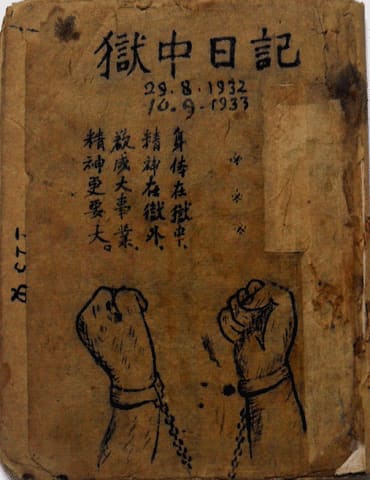
Prison Diary (Ngục trung nhật ký / Nhật ký trong tù)
Hồ Chí Minh
August 1942 – September 1943 · Dó paper
Vietnamese
The original Prison Diary (registration BTCM 6698), composed by national leader Hồ Chí Minh from August 1942 to September 1943 while imprisoned in Guangxi province, China, by the Kuomintang. It has 82 pages of white dó paper carrying 133 poems written in Chinese characters, 126 of them in the Tang 'thất ngôn tứ tuyệt' quatrain style; the museum presents it as one of the most precious legacies he left to the nation.
“It has 82 pages made of white do paper. The text comprises 133 poems writen in Chinese characters, of which 126 of Tang”
In the museum’s words — baotanglichsu.vn ↗ · quotation verified against the live page
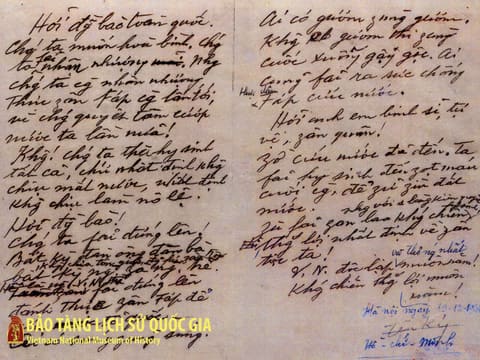
Handwritten Draft of President Ho Chi Minh's "Appeal to National Resistance"
Hồ Chí Minh
19 December 1946 · Ink on paper
Vietnamese
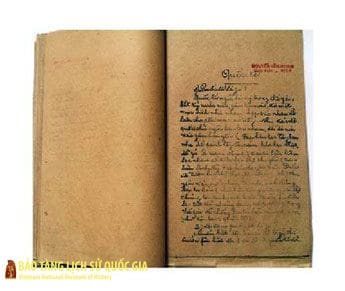
The handwritten draft of the Appeal to National Resistance, written by President Hồ Chí Minh on 19 December 1946 in the house of Nguyễn Văn Dương in Van Phuc village, Ha Dong, on two ivory-colored unlined pages of 13.5 × 20.5 cm. Alongside Hồ Chí Minh's own brown-ink text it carries corrections in blue ink by Trường Chinh, General Secretary of the Communist Party of Vietnam; the appeal rallied the nation to resist French colonial rule.
“written by President Ho Chi Minh in the house of Mr. Nguyen Van Duong in Van Phuc village, Ha Dong district, Ha Tay province (now Ha Dong district, Hanoi), on two 13,5cm x 20,5cm ivory-colored unlined pages”
In the museum’s words — baotanglichsu.vn ↗ · quotation verified against the live page
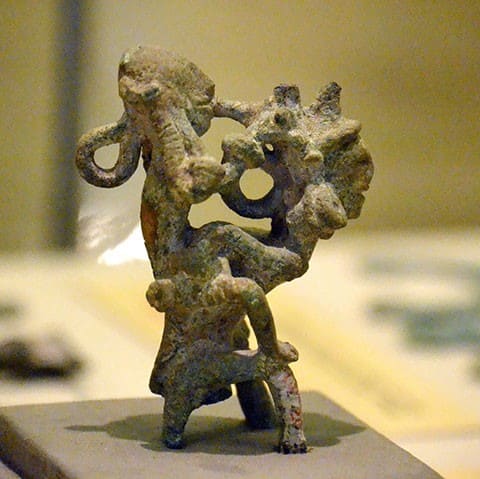
Statue of Two Men, One Playing a Pipe on the Other's Back
Unknown
Đông Sơn culture (estimated centuries BCE) · Bronze
Đông Sơn
A small Đông Sơn bronze statue (8.5 cm high) of one man carrying another on his back, the rider blowing a pipe (khèn) while the carrier steps as if dancing, his loincloth's trailing end forming a third support. Cast in a single piece in an earthen mould, it is regarded by the museum as a masterpiece among Đông Sơn bronze statues; found at the Đông Sơn site in Thanh Hóa. National Treasure of Vietnam.
“The statue is rather small: 8.5 cm in height, 9.5 cm in width and 9.5 cm in thickness.”
In the museum’s words — baotanglichsu.vn ↗ · quotation verified against the live page