The Atlas·SI

SI

National Museum of Slovenia, Ljubljana — 30 works · museum site ↗ · 60000 BCE – 1920 60000 BCE2020

Seen from Ljubljana, history is above all treasure & power, then sculpture — a collection split between its own tradition and other worlds (7 of 30 works are from other civilisations).

Power 10 Sculpture 7 Craft 5 Invention 4 Observation 2 Ritual 1 Sacred 1
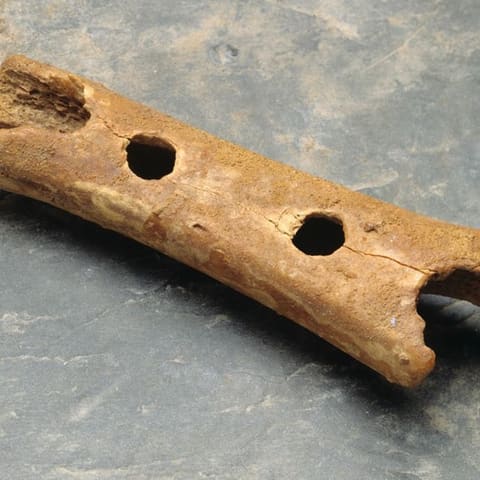
Neanderthal flute
N° 001·I · The First Makers
Neanderthal flute
Unknown
60,000 years before present (Palaeolithic) · Bone of a cave bear
Neanderthal · Palaeolithic (Old Stone Age)

A flute made from the left thighbone of a young cave bear and pierced with four holes, found in the Divje babe cave near Cerkno; the museum presents it as the oldest known musical instrument in the world (about 60,000 years old) and the only one definitely made by Neanderthals.

“The oldest musical instrument in the world, a 60,000-year-old Neanderthal flute is a treasure of global significance. It was discovered in Divje babe cave near Cerkno and has been declared by experts to have been made by Neanderthals.” In the museum’s words — nms.si ↗ · quotation verified against the live page
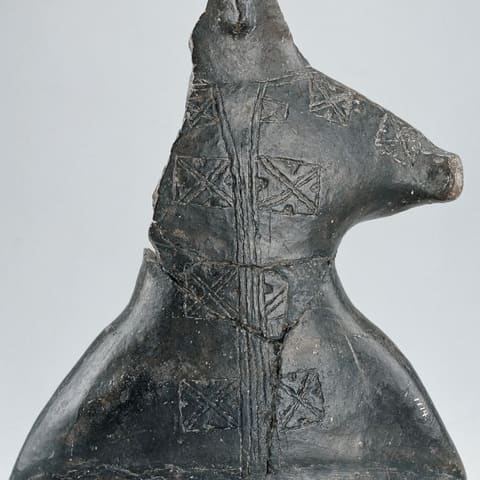
Idol from the Ljubljansko barje (Ljubljana Marshes)
N° 042·I · The First Makers
Idol from the Ljubljansko barje (Ljubljana Marshes)
Unknown
Third millennium BC · Fired clay
Ljubljana Marshes pile dwellers

A fired-clay vessel modelled as a simplified human figure in an embroidered dress, from the pile dwellings near Ig on the Ljubljana Marshes; the museum reads it as a cult object, its cross motif (repeated fourteen times) a prehistoric symbol of light, sun and life.

“One of many artefacts discovered in the area of pile dwellings near Ig is a vessel made from fired clay in the form of a simplified human figure ornamented with an embroidered dress.” In the museum’s words — nms.si ↗ · quotation verified against the live page
Meanwhile — Karas vessel from Shengavit Near East · Early Bronze Age, 3rd millennium BC

Two appliqués
N° 115·I · The First Makers
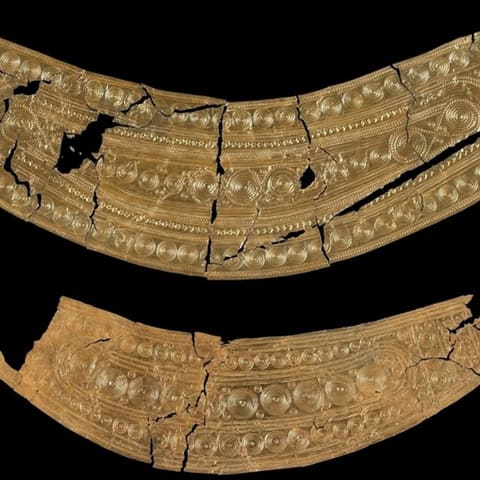
Two appliqués
Unknown
13th or 12th century BC · Gold
Late Bronze Age

Two thin gold sewn-on ornaments from a Late Bronze Age hoard offered to the gods on the shore of Lake Bled; the museum describes them as the oldest gold objects found in the territory of Slovenia, their markings noting the solar and lunar year.

“The small perforations visible on the edges of ornaments that were made of thin gold metal, suggest the ribbons were secured to something, most likely stitched to a traditional garment, possibly headgear.” In the museum’s words — nms.si ↗ · quotation verified against the live page
Meanwhile — Statuette of a woman-idol from Metsamor Near East · Late Bronze–Early Iron Age, 13th–12th centuries BC

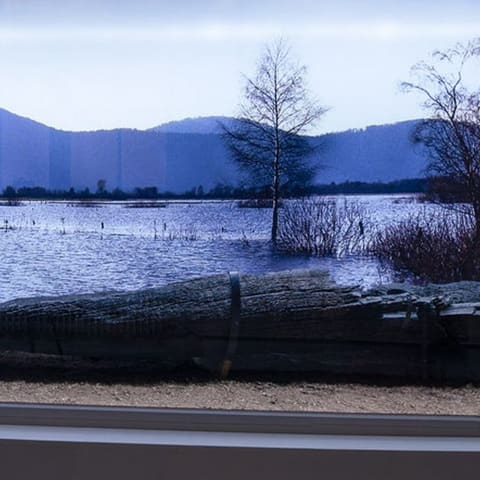
Dugout canoe from the Ljubljansko barje (Ljubljana Marshes)
N° 142·I · The First Makers
Dugout canoe from the Ljubljansko barje (Ljubljana Marshes)
Unknown
9th century BC · Oak
Bronze-to-Iron Age transition

A dugout canoe over nine metres long, hollowed from a single oak trunk and preserved in the anaerobic conditions of the Ljubljana Marshes; once presumed to be the work of pile dwellers, it is now dated to the Bronze-to-Iron Age transition (9th century BC), and the museum notes it is the only dugout canoe on museum display in Slovenia.

“In Slovenia, this is the only dugout canoe that can be seen in a museum. This more than 9 m long boat was dug out of a single oak trunk.” In the museum’s words — nms.si ↗ · quotation verified against the live page
Meanwhile — Miniature sculpture of a chariot Near East · Early Iron Age, 9th century BC

Egyptian mummy
N° 157·II · The Classical World
Egyptian mummy
Unknown
about 680 BC · Painted wood (coffin) and human remains
Ancient Egyptian · Late Period, 25th Dynasty

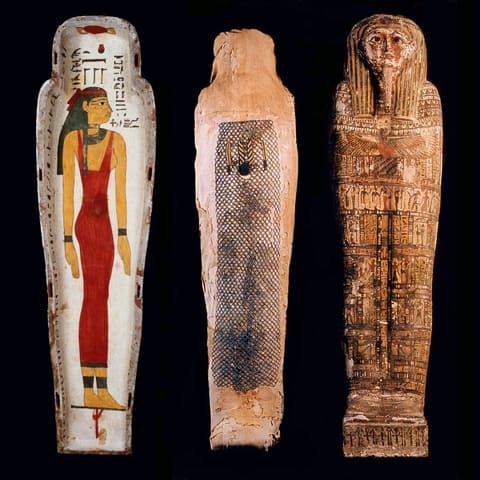
The painted anthropomorphic wooden coffin and mummy of Akesuita, a priest in the temple of Amon at Karnak who died around the age of 40; donated in the 1840s by Anton Lavrin, the Austrian consul in Egypt, to the museum's predecessor, it is, per the museum, the only ancient Egyptian coffin with a human mummy in Slovenia, dated to about 680 BC.

“It is the only ancient Egyptian coffin with a human mummy in Slovenia.” In the museum’s words — nms.si ↗ · quotation verified against the live page
Meanwhile — Bronze Pan (basin) of Zi Zhong Jiang East Asia · Spring and Autumn period (early), 8th–7th century BCE

Gold jewellery of the Stična princess
N° 159·II · The Classical World
Gold jewellery of the Stična princess
Unknown
Late 7th or 6th century BC · Gold sheet, bronze, organic material
Hallstatt (Dolenjska group, Early Iron Age) · Early Iron Age (Hallstatt)

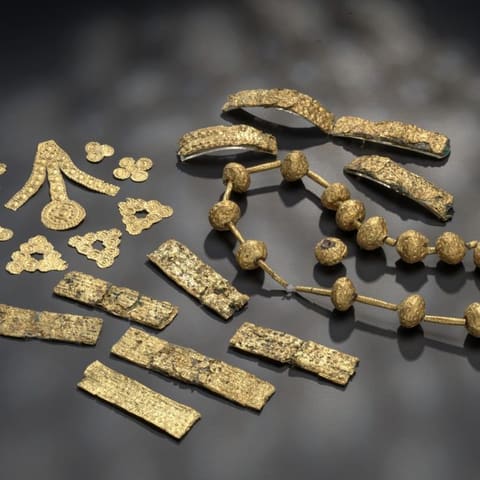
Translated from Slovenian: Gold attire — a diadem, tree- and clover-shaped appliqués of thin gold sheet, and a beaded necklace — buried with an 18-to-25-year-old high-status woman ("princess") at Stična in the Dolenjska region; the museum reads her sumptuous Early Iron Age (Hallstatt) grave-dress, worn only by the highest social rank, as following the fashion of Scythian aristocratic women.

“Razkošna oprava stiške kneginje nakazuje, da so se pripadnice dolenjske elite zgledovale po modi skitskih aristokratinj.” In the museum’s words — nms.si ↗ · quotation verified against the live page
Meanwhile — Marble torso of a kouros Greek world · 570-560 B.C.

Vače Situla
N° 171·II · The Classical World
Vače Situla
Unknown
Early 5th century BC · Bronze sheet
Hallstatt (Iron Age situla art) · Early Iron Age (Hallstatt)

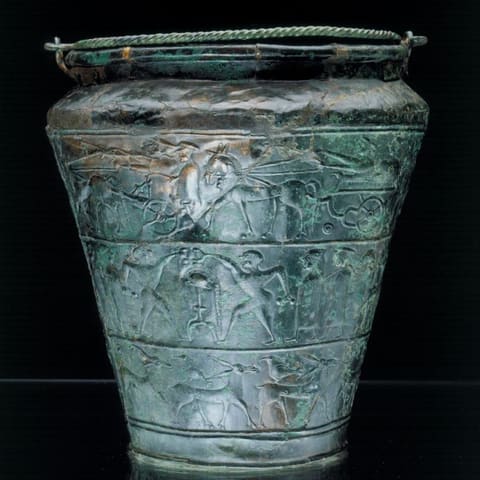
A bronze-sheet situla (a bucket-shaped ritual vessel) from a wealthy warrior's grave at Vače near Litija, decorated in repoussé and chasing with three figural friezes of people and animals; the museum ranks it among the finest works of Iron Age situla art and notes it was crafted by a skilled local artisan.

“It was placed in the grave of a wealthy warrior, together with his helmet, two spears, battle-axe, a bracelet and a military belt.” In the museum’s words — nms.si ↗ · quotation verified against the live page
Meanwhile — Bronze He (pouring vessel) of King Fuchai of Wu East Asia · Spring and Autumn period (late), reign of King Fuchai of Wu (r. 495–473 BCE)

Silver braided torc
N° 226·II · The Classical World
Silver braided torc
Unknown
2nd–1st century BC · Silver
La Tène (Late Iron Age) · Late Iron Age (La Tène)

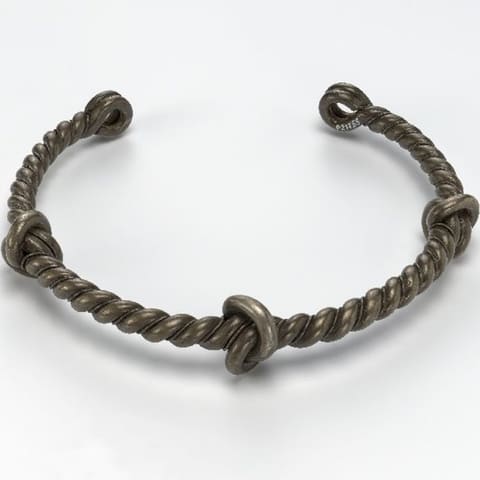
Translated from Slovenian: An extremely rare silver braided neck-ring (torc) with three knots, found at Berlotov rob in the Tolmin uplands; such woven Late Iron Age torcs were usually of bronze, and the museum notes silver examples are known only from the Posočje region. It was most likely an offering to a female deity at an Iron Age cult site.

“Izjemno redke so srebrne različice s tremi vozli, kakršna je bila odkrita na Berlotovem robu na Tolminskem.” In the museum’s words — nms.si ↗ · quotation verified against the live page
Meanwhile — Bronze Bell ("Dōtaku") East Asia · Yayoi period, 2nd–1st century BC

Boundary stone
N° 245·II · The Classical World
Boundary stone
Unknown
Last third of the 1st century BC to early 1st century AD · Aurisina/Nabrežina limestone
Roman · Roman (Augustan)

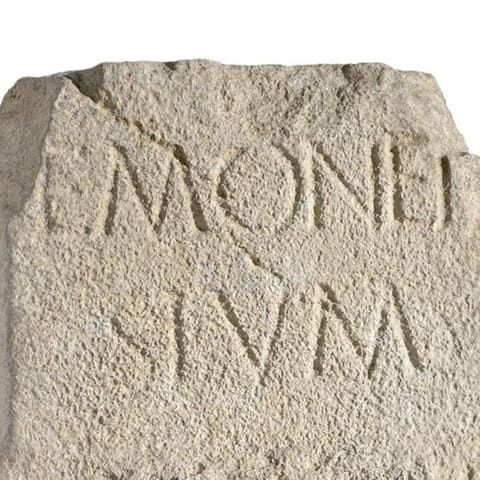
A polished limestone Roman boundary marker recovered from the bed of the Ljubljanica at Bevke, inscribed FINIS with AQVILEIENSIVM and EMONENSIVM on its two broader faces; the museum reads it as evidence that Emona (today's Ljubljana) belonged administratively to Italy rather than to Illyricum or the later province of Pannonia.

“The upper part, 30 cm high and smoothly polished, of the boundary has three inscriptions: FINIS (delimitating line) on the upper panel and AQVILEIENSIVM ([territory] of Aquileia) and EMONENSIVM ([territory] of Emona) on either side.” In the museum’s words — nms.si ↗ · quotation verified against the live page
Meanwhile — Coin of King Juba II Africa · 25 BCE – 23 CE

Imperial stone inscription
N° 270·II · The Classical World
Imperial stone inscription
Unknown
End of AD 14 or beginning of AD 15 · Marble
Roman · Roman (Julio-Claudian: Augustus and Tiberius)

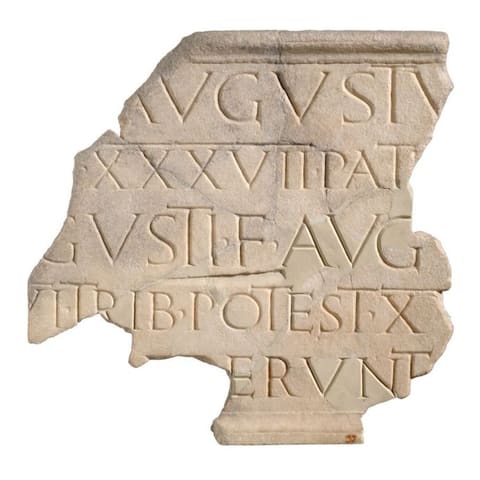
Fragments of a large marble plaque bearing a Latin building inscription that names the emperors Augustus and Tiberius; the museum connects it with the construction of the Roman colony of Emona and dates it to the end of AD 14 or the beginning of 15.

“The fragments of a marble plaque with a Latin inscription suggest that the first Roman Emperor Augustus and his successor Tiberius ordered the erection of a public building, perhaps a walled fortification in the city, and a plaque was fixed on this structure.” In the museum’s words — nms.si ↗ · quotation verified against the live page
Meanwhile — Sarcophagus and Cartonnage of the Priest Hor-Djehuti and the Mummy of an Unknown Woman Egypt & Nubia · 2nd half of the 1st century BC – 1st half of the 1st century AD (Roman Period)

Emona citizen
N° 275·II · The Classical World
Emona citizen
Unknown
First third of the 2nd century AD · Gilded cast bronze
Roman · Roman (Trajanic period)

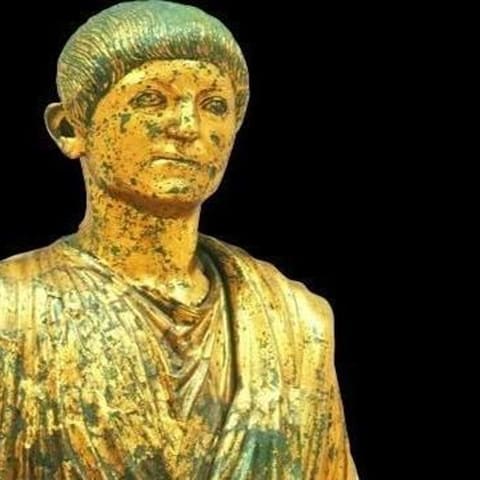
A gilded cast-bronze funerary portrait statue of a toga-clad young man of the Trajanic period, once set atop a roughly five-metre column monument; found in 1836 at the Kazina site in central Ljubljana, the museum describes it as the only surviving column monument in the entire Roman Empire raised for a private citizen rather than a member of the imperial family.

“The statue was discovered in 1836 during the digging of foundations at the Kazina building site in the centre of Ljubljana.” In the museum’s words — nms.si ↗ · quotation verified against the live page
Meanwhile — Lạch Trường Bronze Lamp (Kneeling-Man Lamp) South Asia · First centuries CE (Đông Sơn culture)

Ivory dolls
N° 305·II · The Classical World
Ivory dolls
Unknown
Second half of the 3rd century AD · Ivory
Roman · Roman (3rd century)

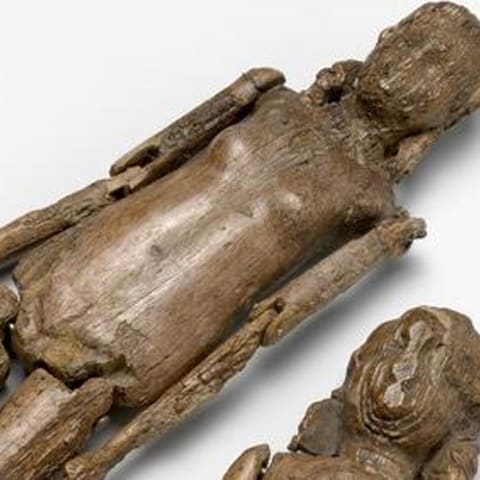
A pair of jointed ivory dolls with movable shoulders, elbows, hips and knees, buried in the grave of a girl from a wealthy Emona family; the museum notes they are exceptionally rare survivals from the Roman period, probably carved in Rome, and dated by their hairstyle to the 3rd century.

“These jointed figurines (movable shoulder, elbow, hip and knee joints) were most likely crafted in Rome itself and painted with vivid colours.” In the museum’s words — nms.si ↗ · quotation verified against the live page
Meanwhile — Emaciated Buddha head and torso South Asia · 3rd-4th centuries

Prestige of the Germanic world – Jewellery and ornaments
N° 328·III · Faith and Empire
Prestige of the Germanic world – Jewellery and ornaments
Unknown
6th century AD · Gold, silver, bronze, garnet, glass, stone
Germanic (Migration Period) · Migration Period

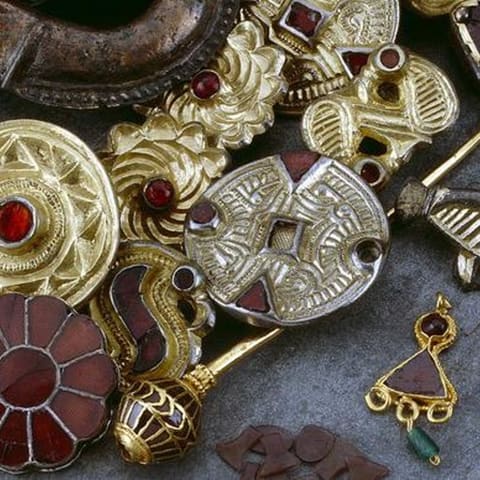
Migration-period jewellery and dress ornaments of gold, silver, bronze, garnet and glass from the Lajh cemetery at Kranj (ancient Carnium), worn by Germanic women in the 6th century; the museum notes that the garnets inlaid in the gilded brooches and belt buckles came from as far away as India or Sri Lanka.

“According to analyses, the garnets used for the decoration of objects discovered at the Slovenian excavation sites originated from India or Sri Lanka.” In the museum’s words — nms.si ↗ · quotation verified against the live page
Meanwhile — Effigy of a Tlalchichi dog (Colima) Americas & Oceania · 200–900 CE

Wooden traps
N° 338·III · Faith and Empire
Wooden traps
Unknown
Early Middle Ages · Wood
Early medieval · Early Middle Ages

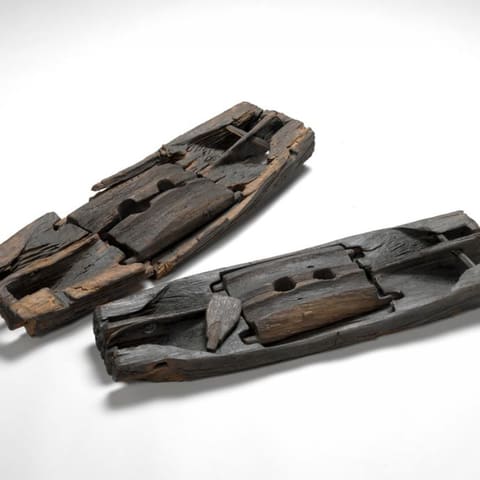
Two wooden leg-hold traps for large wild game such as red deer, recovered from the Ljubljana Marshes and dated to the Early Middle Ages; the museum highlights them as the only find of their kind in the wider area and notes that the trap technology remained essentially unchanged from the Bronze Age into modern times.

“The traps are incredibly interesting due to their technology, which has remained the same since the Bronze Age up to modern times.” In the museum’s words — nms.si ↗ · quotation verified against the live page
Meanwhile — Maya Cylindrical Vase Americas & Oceania · Late Classic (c. 600–900 CE)

Sword from the Ljubljanica
N° 553·IV · Toward the Renaissance
Sword from the Ljubljanica
Unknown
Beginning of the 15th century · Steel, brass
Medieval European (Passau) · Late Middle Ages

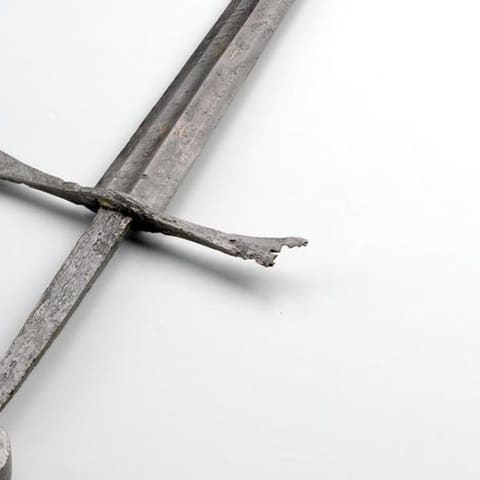
Translated from Slovenian: A double-edged medieval knight’s sword of the early 15th century recovered from the bed of the Ljubljanica River, which has yielded several dozen High and Late Medieval swords; the museum calls it perhaps the finest of its class, its steel blade inlaid in brass with paired Latin crosses and the Passau wolf mark. Housed at the museum’s Metelkova branch.

“V rečni strugi Ljubljanice je bilo najdenih več deset mečev iz visokega in poznega srednjega veka.” In the museum’s words — nms.si ↗ · quotation verified against the live page
Meanwhile — Chimú bimetallic ceremonial bowl (Cuenco Bimetálico Chimú) Americas & Oceania · Chimú, Imperial Era (1300 – 1532 CE)

The Holy Kinship
N° 641·V · The Renaissance
The Holy Kinship
Master of Spiš (Master of Okoličné)
1510 · Tempera on wood
Central European Gothic (Spiš, present-day Slovakia) · Late Gothic

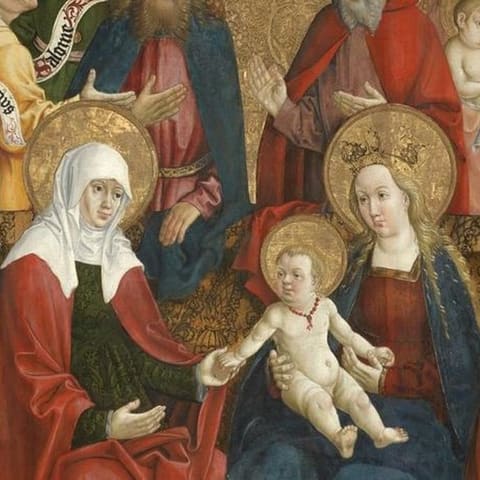
Translated from Slovenian: A late-Gothic panel painting of the Holy Kinship (the relatives of Christ), dated 1510, tempera on wood; St Anne and the Virgin with the Christ Child form the centre, surrounded by Anne’s daughters and some twenty-five relatives whose names appear on scrolls, with children’s games among the telling details. The museum attributes it to an unknown Master of Spiš (also called the Master of Okoličné) from present-day Slovakia. Housed at the museum’s Metelkova branch.

“Osrednji liki slike so sv. Ana in Marija z Jezusom v naročju.” In the museum’s words — nms.si ↗ · quotation verified against the live page
Meanwhile — Salt Cellar Africa · first quarter of the 16th century

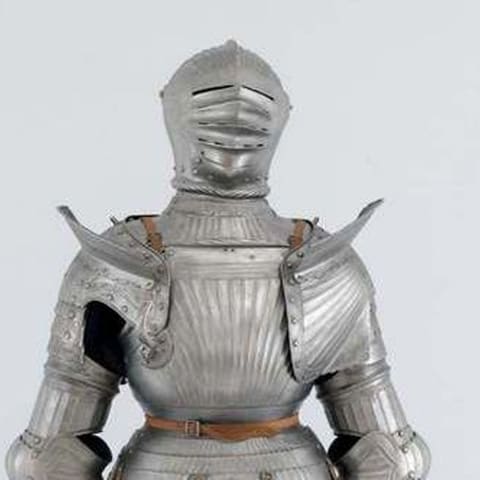
Suit of armour by Valentin Siebenbürger
N° 662·V · The Renaissance
Suit of armour by Valentin Siebenbürger
Valentin Siebenbürger
1530s · Iron, brass, leather
German (Nuremberg) · Renaissance (Maximilian style)

The only original, almost wholly preserved knight's suit of armour in Slovenia, made in the 1530s in the ribbed Maximilian style by the acknowledged Nuremberg master armourer Valentin Siebenbürger; weighing about 24 kg, it was acquired in 1935 from the collection of Baron Hans Kometer and today forms the core of the arms-and-armour display at the museum's Metelkova building.

“The armour was obtained from the former collection of Baron Hans Kometer from Puchenstein Mansion (Bukovje) near Dravograd in 1935.” In the museum’s words — nms.si ↗ · quotation verified against the live page
Meanwhile — Manuscript Page from the Golestan of Sa’di Islamic world · 1526–1530

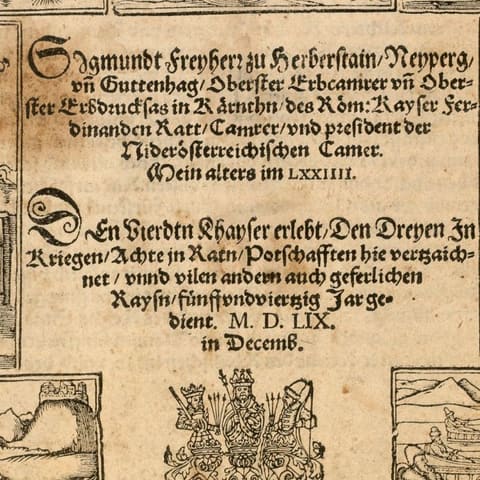
Autobiography of Sigismund (Žiga) Herberstein
N° 680·V · The Renaissance
Autobiography of Sigismund (Žiga) Herberstein
Sigismund (Žiga) Herberstein (1486–1566)
1559 · Paper (printed book)
Carniolan (Habsburg Renaissance) · Renaissance

Translated from Slovenian: The 1559 printed autobiography of Baron Sigismund (Žiga) Herberstein (1486–1566), the Vipava-born Habsburg statesman and diplomat; in it he recounts his diplomatic missions through Russia, Turkey and other lands. Its title page bears fifteen small woodcuts of contemporary rulers, Herberstein’s travels and his coat of arms. Held in the museum’s Library.

“V njej je popisal svoja doživetja z diplomatskih popotovanj po Rusiji, Turčiji in drugih deželah.” In the museum’s words — nms.si ↗ · quotation verified against the live page
Meanwhile — Pine Forest East Asia · Azuchi-Momoyama period, 16th century

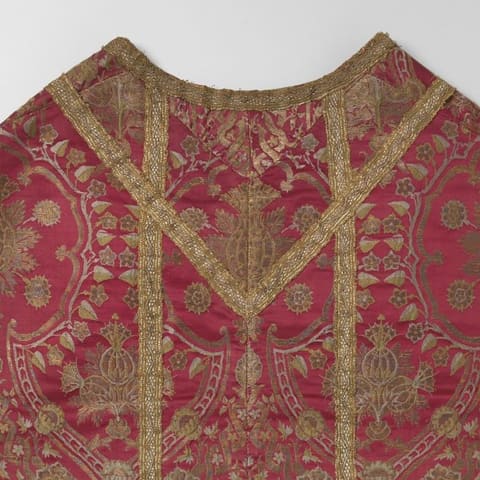
Hasan’s cloak
N° 690·V · The Renaissance
Hasan’s cloak
Unknown
Last third of the 16th century, reworked mid-17th century · Silk brocade with silk and silver thread
Ottoman Turkish

Translated from Slovenian: A Mass chasuble made from the red silk-brocade cloak of the Ottoman commander Hasan Pasha Predojević, taken as war booty at the Battle of Sisak, where he fell defeated on 22 June 1593; a parchment note sewn inside records its origin. Bishop Tomaž Hren had the captured cloak refashioned into vestments in 1655 for the feast of St Achatius, kept in memory of the Christian victory. Housed at the museum’s Metelkova branch.

“Turško oblačilo je bilo del bogatega vojnega plena bitke pri Sisku in edino izmed vseh predmetov, ki se je ohranilo do današnjih dni.” In the museum’s words — nms.si ↗ · quotation verified against the live page
Meanwhile — Judith and her Maidservant with the Head of Holofernes Europe · c. 1608–1612

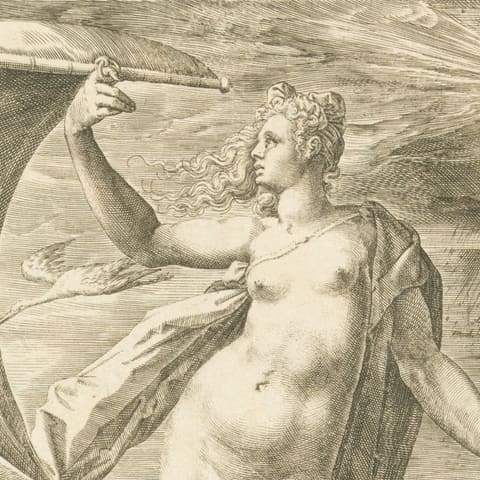
Hendrick Goltzius (?), Fortuna
N° 705·V · The Renaissance
Hendrick Goltzius (?), Fortuna
Workshop of Hendrick Goltzius (1558–1617)
Late 16th century (not before 1594) · Engraving on paper
Dutch (Haarlem Mannerism) · Mannerism (Haarlem school)

Translated from Slovenian: A late-16th-century copperplate engraving of Fortuna (labelled Rhamnusia), the ancient goddess of luck and fate, shown as a nude balancing on a sphere and a shell as she sails the winds of fickle fortune; made after a drawing by, and in the workshop of, the Haarlem virtuoso Hendrick Goltzius (1558–1617) — an attribution the museum marks uncertain — and cut by an unsigned engraver (not before 1594). The museum calls it one of its greatest treasures and, on current research, the only surviving impression of the lost plate. Kept in the Graphics Cabinet, by arrangement.

“List je izjemno redek, glede na obstoječe stanje raziskav velja celo za edini preživeli odtis virtuozno vrezane in v viharjih časa izgubljene grafične plošče.” In the museum’s words — nms.si ↗ · quotation verified against the live page
Meanwhile — Tachi Sword East Asia · Japan, Momoyama period, dated 1598 (Keichō 3)

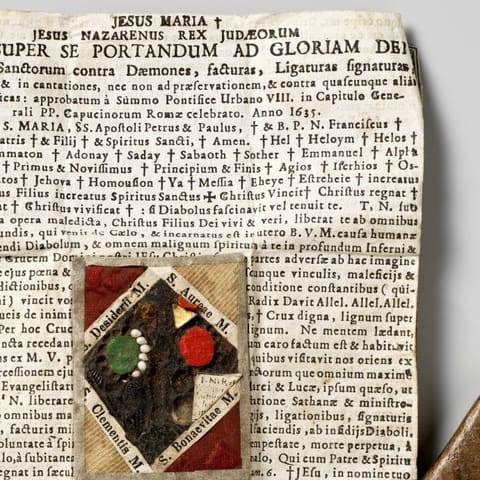
Breverl
N° 718·VI · The Baroque Age
Breverl
Unknown
17th century · Paper (folded sheet with copperplate engravings)
Central European (Catholic folk devotion) · Baroque

Translated from Slovenian: A "breverl" (from the Latin breve) — a folded paper sheet layered with written charms, magical sayings and holy images, worn as a protective amulet against misfortune and to bring luck. The National Museum of Slovenia acquired this 17th-century example in 2000; the museum notes it is a type not previously represented in Slovenian museum collections and rare even elsewhere in Catholic Europe. Housed at the museum’s Metelkova branch.

“Leta 2000 je Narodni muzej Slovenije pridobil breverl, predmet, kakršen še ni poznan v zbirkah slovenskih muzejev.” In the museum’s words — nms.si ↗ · quotation verified against the live page
Meanwhile — Writing Box, Pontoon bridge design in "maki-e" lacquer East Asia · Edo period, 17th century

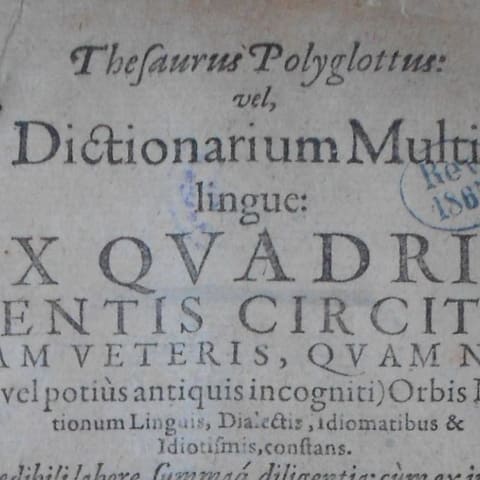
Megiser’s multilingual dictionary
N° 728·VI · The Baroque Age
Megiser’s multilingual dictionary
Hieronymus Megiser (1554/1555–1619)
1603 · Paper (printed book)
German (Renaissance humanism) · Renaissance

Translated from Slovenian: Hieronymus Megiser’s Thesaurus polyglottus, a polyglot dictionary of some four hundred languages printed in 1603 in Frankfurt am Main; the museum highlights it because the Slovenian language appears in it on an equal footing with the other world languages. Megiser (1554/55–1619), a German linguist and polymath, drew the Slovenian words from Protestant books and from Styrian, Prekmurje and Carinthian dialects. Held in the museum’s Library.

“Slovenski jezik je v tej publikaciji enakovreden drugim svetovnim jezikom.” In the museum’s words — nms.si ↗ · quotation verified against the live page
Meanwhile — Aleppo Room Islamic world · 1600–01 and 1603

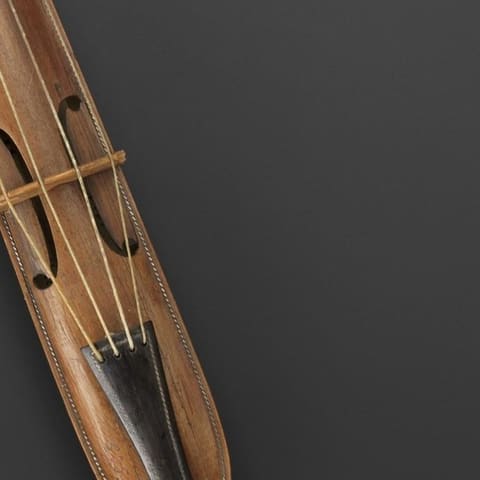
Pochette (pocket violin)
N° 788·VI · The Baroque Age
Pochette (pocket violin)
François Saraillac
1679 · Wood, leather, silver wire
French (Baroque) · Baroque

Translated from Slovenian: A pochette or pocket violin — the smallest member of the violin family, carried by dancing-masters in their coat pockets — made in 1679 in Lyon by the French luthier François Saraillac. The museum notes it is his only known surviving instrument of this type, and the oldest dated bowed string instrument in Slovenian public collections. Housed at the museum’s Metelkova branch.

“Kolikor je danes znano, gre za edini njegov ohranjeni tovrstni inštrument.” In the museum’s words — nms.si ↗ · quotation verified against the live page
Meanwhile — Nam Giao Temple Stele South Asia · 1679 (4th year of the Vĩnh Trị reign, Lê Hy Tông)

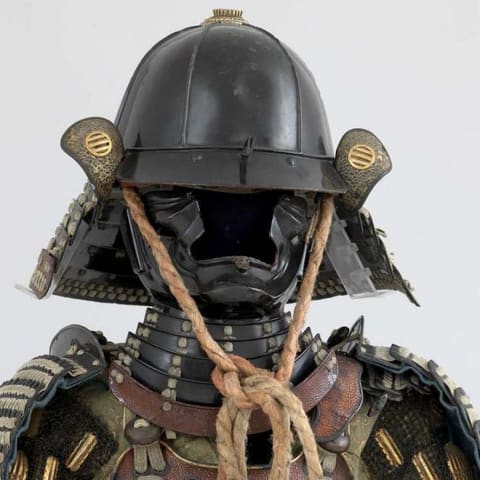
Samurai armour
N° 799·VII · The Age of Reason
Samurai armour
Unknown
Edo period (18th century) · Iron, brass, leather, textile, lacquer
Japanese (Edo period) · Edo period

Translated from Slovenian: A Japanese samurai armour of the Edo period (18th century), built in the go mai do style with a cuirass of vertically arranged iron plates finished in black urushi lacquer; the museum describes it as the only almost entirely preserved samurai armour in Slovenia, acquired by purchase in 1961. Housed at the museum’s Metelkova branch.

“Edini skorajda v celoti ohranjen primerek samurajskega oklepa na Slovenskem je v zbirko Narodnega muzeja prišel z odkupom leta 1961.” In the museum’s words — nms.si ↗ · quotation verified against the live page
Meanwhile — Glass bracelets, Al Huailah Islamic world · 1700–1800 CE (18th century)

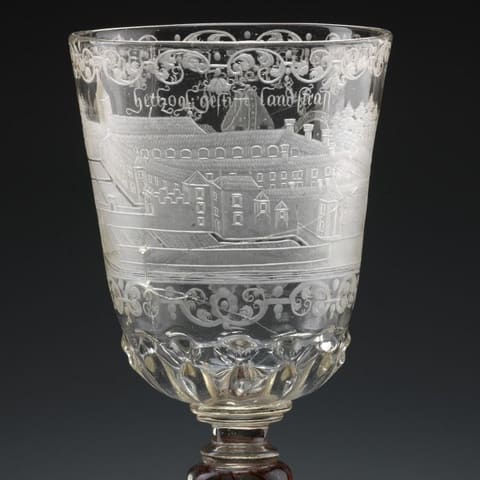
Kostanjevica goblet
N° 815·VII · The Age of Reason
Kostanjevica goblet
Unknown
1749 · Colourless blown and cut glass
Bohemian or Silesian (Baroque) · Baroque

Translated from Slovenian: A sumptuous Baroque covered goblet of colourless cut glass, made in 1749 (probably in Bohemia or Silesia) for Taufferer, abbot of Kostanjevica, and engraved with a veduta of his monastery; the museum ranks it among the most important pieces in its glass collection. Housed at the museum’s Metelkova branch.

“Kostanjeviški pokal je okrašen z veduto samostana.” In the museum’s words — nms.si ↗ · quotation verified against the live page
Meanwhile — Silver Bowl with Design in Relief, Depicting the Tale of a Golden Deer South Asia · Qing Dynasty, 18th century

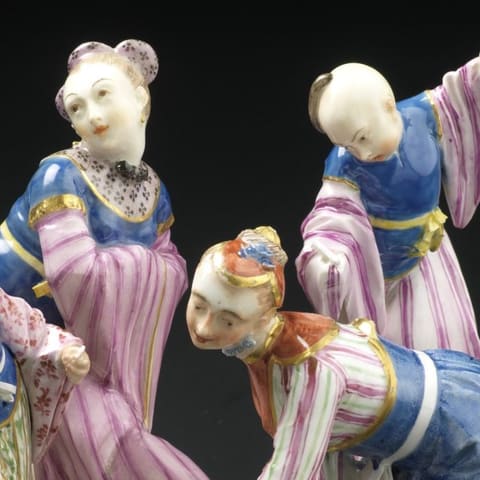
Figurines of Chinese
N° 825·VII · The Age of Reason
Figurines of Chinese
Franz Anton Bustelli
Around 1763 · Glazed and painted porcelain
German porcelain (Chinoiserie, Rococo) · Rococo (Chinoiserie)

Translated from Slovenian: Porcelain figurines of four Chinese, made around 1763 by Franz Anton Bustelli, modeller of the Nymphenburg Royal Porcelain Manufactory near Munich and one of the most celebrated of European porcelain designers; they belonged to a larger chinoiserie table centrepiece used as dessert-course decoration on festive 18th-century tables. Housed at the museum’s Metelkova branch.

“Figurine štirih Kitajcev je izdelal eden najslavnejših evropskih oblikovalcev porcelana, Franz Anton Bustelli.” In the museum’s words — nms.si ↗ · quotation verified against the live page
Meanwhile — Revolving Vase with Swimming Goldfish East Asia · Qianlong reign, Qing dynasty, 1736–1795

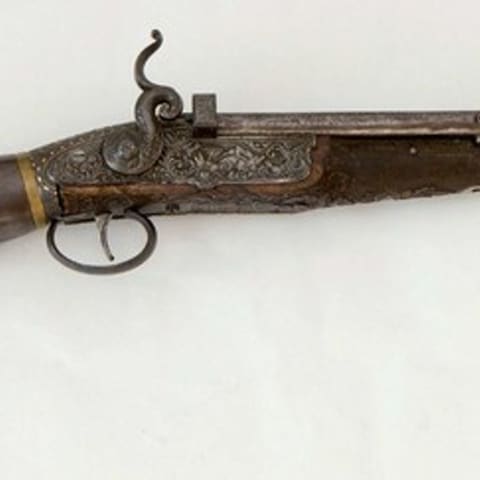
Girardoni-system repeating air rifle
N° 869·VIII · The Restless Century
Girardoni-system repeating air rifle
Workshop of Johann Contriner
c. 1820 · Steel, brass, wood
Austrian (Viennese gunsmithing)

Translated from Slovenian: A repeating air rifle of the Girardoni system, made around 1820 in the workshop of the noted Viennese master Johann Contriner and ranked by the museum among the finest examples of the type. The system — a rifled barrel, a 20-ball repeating magazine and an air reservoir doubling as the butt — was devised in 1780 by the Tyrolean clockmaker and gunsmith Bartholomäus Girardoni, and was the first and only air rifle designed specifically for military use. Housed at the museum’s Metelkova branch.

“Girardonijeva repetirka je bila prva in edina zračna puška, zasnovana posebej za vojaško uporabo.” In the museum’s words — nms.si ↗ · quotation verified against the live page
Meanwhile — Simón Bolívar Americas & Oceania · c. 1822

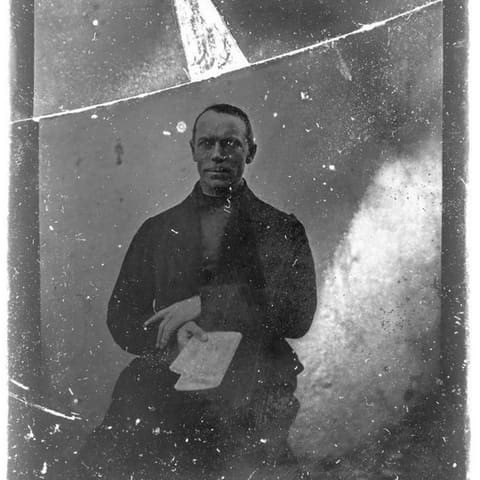
Janez Avguštin Puhar, Self-portrait
N° 894·VIII · The Restless Century
Janez Avguštin Puhar, Self-portrait
Janez Avguštin Puhar (1814–1864)
1850s or early 1860s · Glass, photographic emulsion
Slovenian

A full-figure photographic self-portrait on a glass plate by Janez Avguštin Puhar (1814–1864), the priest celebrated as the first Slovenian photographer and inventor; made with the glass-plate process he invented in 1842 (for which a Paris academy named him inventor of photography on glass), the museum dates the self-portrait to the 1850s or early 1860s.

“In the spring of 1842, he invented a process of photographing on a glass surface.” In the museum’s words — nms.si ↗ · quotation verified against the live page
Meanwhile — Ivory carving of Durga slaying Mahishasura South Asia · Indian art, 24th–25th Buddhist century (c. 18th–20th century CE)

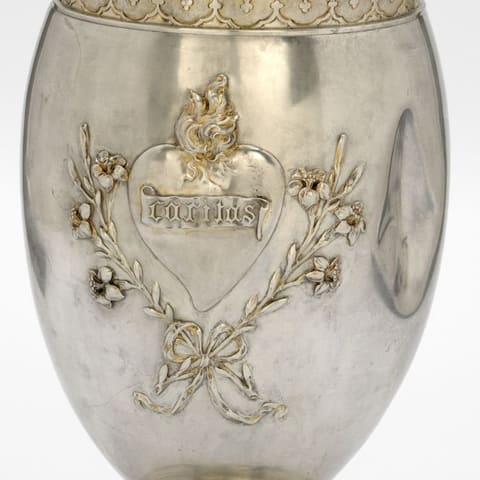
Urn with the heart of Brother Gabriel Giraud
N° 980·VIII · The Restless Century
Urn with the heart of Brother Gabriel Giraud
Unknown
1899 · Silver (lid sealed with lead)
Viennese (silverwork)

Translated from Slovenian: A silver urn, made in Vienna in 1899, said to contain the heart of Brother Gabriel Giraud (Camille Giraud, 1836–1899), the Lyon-born founder of the Trappist monastery at Rajhenburg (Brestanica); on his death two doctors removed the heart and sealed it in the urn. Still sealed with lead and unopened at the museum, it was X-rayed by the museum’s experts, who found no organic material but confirmed the interior holds liquid. Housed at the museum’s Metelkova branch.

“V Narodnem muzeju Slovenije hranimo srebrno žaro, v kateri naj bi bilo shranjeno srce brata Gabrijela Girauda, ustanovitelja trapistovskega samostana v Rajhenburgu.” In the museum’s words — nms.si ↗ · quotation verified against the live page
Meanwhile — Retrato del Sr. Juan Carlos Muñoz Americas & Oceania · 1899

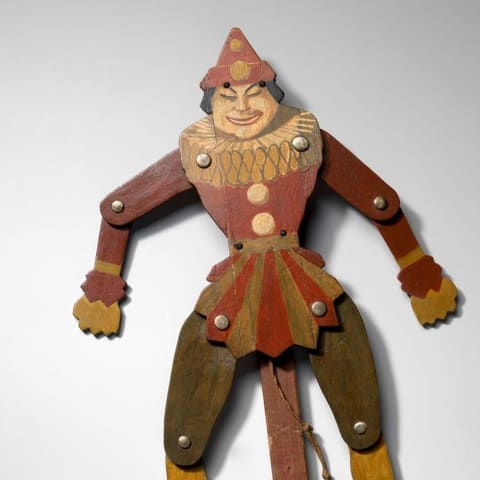
Kopitljaček (jumping jack)
N° 983·IX · Into Our Time
Kopitljaček (jumping jack)
Unknown
Beginning of the 20th century · Wood
Central European (folk toy)

Translated from Slovenian: A "kopitljaček" (jumping jack), a flat wooden puppet with movable arms and legs joined at the back by a string that makes them jump when pulled; dated to the early 20th century and of Central European make. The museum notes the toy’s long history, traceable back to ancient Egypt, and that in the German-speaking world it is known as a Hampelmann. Housed at the museum’s Metelkova branch.

“Kopitljaček je igrača z dolgo zgodovino, ki ji lahko sledimo vse od starega Egipta.” In the museum’s words — nms.si ↗ · quotation verified against the live page

Meanwhile — The hilltop Americas & Oceania · circa 1908