The Atlas·MX

MX

Museo Nacional de Antropología, Mexico City — 16 works · museum site ↗ · 1200 BCE – 1521 60000 BCE2020

Seen from Mexico City, history is above all craft & design, then sculpture — a collection opened wide onto other worlds — a window more than a mirror (16 of 16 works are from other civilisations).

Craft 10 Sculpture 4 Power 2
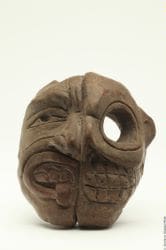
Mask of Duality (Tlatilco)
N° 124·I · The First Makers
Mask of Duality (Tlatilco)
Unknown
Middle Preclassic (c. 1200–800 BCE) · ceramic
Tlatilco · Middle Preclassic

Translated from Spanish: A mask representing the duality of life and death: on one side a human skull with the eye socket and teeth visible, and on the other the face of a man. A Middle Preclassic piece from Tlatilco.

“MÁSCARA QUE REPRESENTA LA DUALIDAD VIDA-MUERTE. POR UN LADO SE OBSERVA POR UN LA LADO UN CRÁNEO HUMANO CON LA CUENCA OCULAR Y LOS DIENTES VISIBLES, Y POR EL OTRO EL ROSTRO DE UN HOMBRE CON LOS DIENTE” In the museum’s words — mna.inah.gob.mx ↗ · quotation verified against the live page

Meanwhile — Mumienbrett und Innerer Sarg des Nes-pauti-taui Egypt & Nubia · 21st Dynasty, before 969 BC
The Acrobat of Tlatilco
N° 125·I · The First Makers
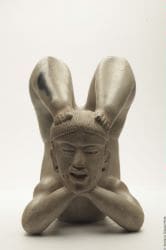
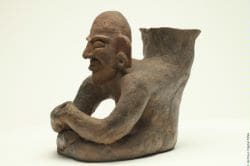
The Acrobat of Tlatilco
Unknown
Middle Preclassic (c. 1200–800 BCE) · ceramic
Tlatilco · Middle Preclassic

Translated from Spanish: A hollow figurine of an adult male shown in a contortionist's exercise, touching his head with his feet and resting his chin on his hands, with signs of deformation. From the Preclassic village of Tlatilco.

“FIGURILLA HUECA QUE REPRESENTA A UN INDIVIDUO ADULTO DEL SEXO MASCULINO, QUE EN UN EJERCICIO DE CONTORSIÓNISMO, TOCA CON LOS PIES SU CABEZA Y APOYA LA BARBILLA SOBRE LAS MANOS.” In the museum’s words — mna.inah.gob.mx ↗ · quotation verified against the live page

Meanwhile — Mumienbrett und Innerer Sarg des Nes-pauti-taui Egypt & Nubia · 21st Dynasty, before 969 BC
Huehuetéotl, the Old Fire God (Cuicuilco)
N° 202·II · The Classical World
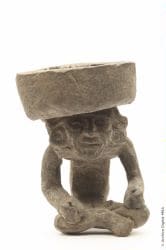
Huehuetéotl, the Old Fire God (Cuicuilco)
Unknown
Late Preclassic (c. 400 BCE–150 CE) · ceramic
Cuicuilco · Late Preclassic

Translated from Spanish: An anthropomorphic figurine of the god Huehuetéotl, represented as a naked, hunched old man seated and carrying a conical brazier on his back, arms resting on his knees. From Cuicuilco, Mexico City.

“FIGURILLA ANTROPOMORFA DEL DIOS HUEHUETEOTL. REPRESENTADO COMO UN ANCIANO DESNUDO, EN POSICIÓN SEDENTE, ENCORVADO, CARGANDO SOBRE SU ESPALDA UN BRASERO CÓNICO.” In the museum’s words — mna.inah.gob.mx ↗ · quotation verified against the live page

Meanwhile — The Antikythera Mechanism Greek world · 2nd half of the 2nd century BC

Huehuetéotl Brazier (Teotihuacan)
N° 302·II · The Classical World
Huehuetéotl Brazier (Teotihuacan)
Unknown
Classic period (c. 200–650 CE) · ceramic
Teotihuacan · Classic

Translated from Spanish: A solid anthropomorphic figurine of the god Huehuetéotl; the body and the brazier were modelled while the head was mould-made, shown seated with the legs crossed and the arms flexed. Teotihuacan, Classic period.

“FIGURILLA ANTROPOMORFA SÓLIDA DEL DIOS HUEHUETEOTL. TANTO SU CUERPO, COMO EL ANAFRE FUERON MODELADOS, PERO LA CABEZA FUE MOLDEADA.” In the museum’s words — mna.inah.gob.mx ↗ · quotation verified against the live page

Meanwhile — The Pietroasa Treasure („Cloșca cu puii de aur”) Europe · buried around the mid-5th century AD

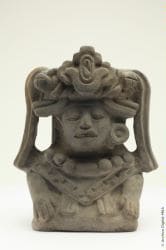
Zapotec Funerary Urn (Goddess 2J)
N° 337·III · Faith and Empire
Zapotec Funerary Urn (Goddess 2J)
Unknown
Classic (c. 500–900 CE) · ceramic
Zapotec · Classic (Monte Albán IIIB–IV)

Translated from Spanish: A female anthropomorphic urn representing the goddess 2J or Nochicahua, kneeling with the hands on the knees, the 2J glyph on the headdress and dental mutilation, adorned with circular ear-spools, a single-strand necklace of spherical and tubular beads, a skirt and a quechquemitl. Zapotec, Monte Albán.

“URNA ANTROPOMORFA FEMENINA, REPRESENTA A LA DIOSA 2 J O NOCHICAHUA, HINCADA, CON LAS MANOS SOBRE LAS RODILLAS, PRESENTA EL GLIFO 2J EN EL TOCADO, SE APRECIA MUTILACION DENTARIA, VA ATAVIADA CON OREJERAS CIRCULARES. COLLAR DE UN HILO DE CUENTAS ESFÉRICAS Y TUBULARES, PORTA FALDA Y QUECHQUEMITL.” In the museum’s words — mna.inah.gob.mx ↗ · quotation verified against the live page

Meanwhile — Bronze statuette of a warrior Europe · 7th–8th centuries CE

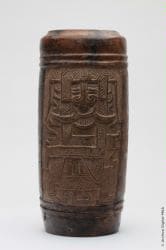
Maya Cylindrical Vase
N° 350·III · Faith and Empire
Maya Cylindrical Vase
Unknown
Late Classic (c. 600–900 CE) · ceramic
Maya · Late Classic

Translated from Spanish: A straight-walled vase with circular mouth and a bevelled rim with a medial moulding; the exterior shows, in two panels, two stylised standing anthropomorphic figures with crossed arms and separated legs, wearing headdresses and adorned with a mask, pectoral, bracelets and anklets. Maya, Late Classic.

“VASO DE CUERPO RECTO, BASE Y FONDO RECTOS, BOCA CIRCULAR, BORDE EN BISEL CON MOLDURA MEDIAL. EN EL EXTERIOR DEL CUERPO SE REPRESENTA EN 2 PANELES A 2 PERSONAJES ANTROPOMORFOS ESTILIZADOS DE PIE, CON LOS BRAZOS CRUZADOS Y LAS PIERNAS SEPARADAS. CON TOCADO, ATAVIADOS CON MÁSCARA, PECTORAL, BRAZALETES Y AJORCAS.” In the museum’s words — mna.inah.gob.mx ↗ · quotation verified against the live page

Meanwhile — Wooden traps Europe · Early Middle Ages

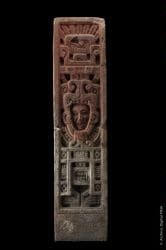
Stela of Quetzalcóatl (Xochicalco)
N° 367·III · Faith and Empire
Stela of Quetzalcóatl (Xochicalco)
Unknown
Epiclassic (c. 650–900 CE) · stone
Toltec · Epiclassic

Translated from Spanish: A rectangular stela whose principal image is the god Quetzalcóatl emerging from the jaws of a serpent, with a cartouche bearing the glyph 7 Reptile-Eye in the upper part. From Xochicalco, Morelos; the museum labels it Toltec-era, Epiclassic.

“ESTELA RECTANGULAR CON LA REPRESENTACIÓN PRINCIPAL DEL DIOS QUETZALCÓATL EMERGIENDO DE LAS FAUCES DE UNA SERPIENTE, EN LA PARTE SUPERIOR HAY UN CUADRETE CON EL GLIFO 7 OJO DE REPTIL.” In the museum’s words — mna.inah.gob.mx ↗ · quotation verified against the live page

Meanwhile — Ku Sun Tie (Bitter Bamboo-shoots), handscroll East Asia · Tang dynasty, by Huaisu (737–799)

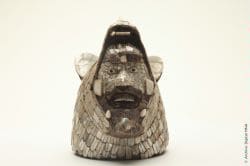
Coyote Warrior (Guerrero Coyote)
N° 416·III · Faith and Empire
Coyote Warrior (Guerrero Coyote)
Unknown
Early Postclassic (c. 900–1150 CE) · ceramic (Plumbate ware)
Toltec · Early Postclassic

Translated from Spanish: A hollow anthropomorphic figurine of a personage wearing a helmet in the form of a feathered coyote; the museum records that it was made from a mould of Plumbate-type ceramic. A Toltec piece from Tula, Hidalgo.

“FIGURILLA HUECA ANTROPOMORFA, EN LA QUE SE REPRESENTA UN PERSONAJE ATAVIADO CON UN YELMO EN FOMA DE COYOTE EMPLUMADO.” In the museum’s words — mna.inah.gob.mx ↗ · quotation verified against the live page

Meanwhile — Grave number 56 from Luistari, Eura Europe · Viking Age; buried after 1018, early 11th century

Huastec Effigy Vessel
N° 419·III · Faith and Empire
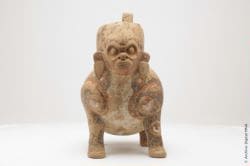
Huastec Effigy Vessel
Unknown
Postclassic (c. 900–1521 CE) · ceramic
Huastec · Postclassic

Translated from Spanish: A vessel representing a quadruped with a monkey's face wearing ear-spools; the mouth of the vessel is on the top of the head and the tail forms the tubular spout, the body decorated with circles and curved lines painted in orange, red, white, black and brown. Huastec.

“VASIJA QUE REPRESENTA UN CUADRUPEDO CON CARA DE MONO, ATAVIADO CON OREJERAS. LA BOCA DE LA VASIJA SE UBICA EN LA PARTE SUPERIOR DE LA CABEZA Y ES DE FORMA CIRCULAR CON EL BORDE REDONDEADO. LA COLA DEL CUADRUPEDO ES LA VERTEDERA DE LA VASIJA Y ES DE FORMA TUBULAR. EL CUERPO ESTA DECORADO CON CÍRCULOS Y LÍNEAS CURVAS PINTADAS DE ANARANJADO, ROJO, BLANCO,NEGRO Y CAFÉ.” In the museum’s words — mna.inah.gob.mx ↗ · quotation verified against the live page

Meanwhile — Cross of Dom Sancho I Europe · 1213

West Mexican Effigy Pipe
N° 503·III · Faith and Empire
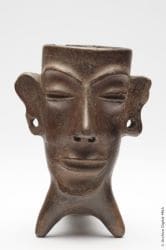
West Mexican Effigy Pipe
Unknown
Late Postclassic (c. 1200–1521 CE) · ceramic
West Mexico · Late Postclassic

Translated from Spanish: A zoomorphic pipe with a conical-cylindrical body on two solid conical supports, the bowl cylindrical with a circular mouth; decorated with an applied anthropomorphic face with arched brows, closed eyes, straight nose, half-open mouth and perforated ear-lobes. West Mexico, Late Postclassic.

“PIPA ZOOMORFA DE CUERPO CILÍNDRICA CÓNICO, CON DOS SOPORTES SÓLIDOS CÓNICOS EN LA BASE DE LA CAZOLETA, LA CUAL ES CILÍNDRICA CON BOCA CIRCULAR Y BORDE REDONDEADO. COMO DECORACIÓN TIENE APLICADA UNA CARA ANTROPOMORFA CON CEJAS ARQUEADAS, OJOS CERRADOS, NARIZ RECTA, BOCA SEMIABIERTA Y OREJAS CON LOS LOBULOS PERFORADOS.” In the museum’s words — mna.inah.gob.mx ↗ · quotation verified against the live page

Meanwhile — The Ife Head Africa · 1300 – early 1400s

Ehécatl, God of Wind
N° 513·III · Faith and Empire
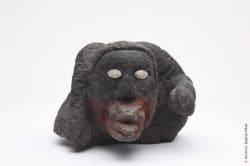
Ehécatl, God of Wind
Unknown
Late Postclassic (c. 1250–1521 CE) · stone
Mexica (Aztec) · Late Postclassic

Translated from Spanish: A sculpture representing Ehécatl, god of wind, hunched with the head inclined forward and the legs flexed, wearing a maxtlatl and a buccal mask in the form of a bird's beak. From Ecatepec.

“ESCULTURA EN LA QUE SE REPRESENTA A EHÉCATL DIOS DEL VIENTO. ESTÁ ENCORVADO CON LA CABEZA INCLINADA HACIA EL FRENTE.Y LAS PIERNAS FLEXIONADAS.” In the museum’s words — mna.inah.gob.mx ↗ · quotation verified against the live page

Meanwhile — Beautiful Madonna from Wrocław Europe · c. 1390

Mask of Chalchiuhtlicue
N° 514·III · Faith and Empire
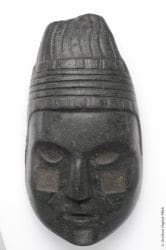
Mask of Chalchiuhtlicue
Unknown
Late Postclassic (c. 1250–1521 CE) · stone
Mexica (Aztec) · Late Postclassic

Translated from Spanish: A representation carved in stone of the goddess of the waters; the face has scarification on the cheeks and wears a band-and-feather headdress, with a human figure and a glyph incised on the back. Mexica.

“REPRESENTACIÓN TALLADA EN ROCA DE LA DIOSA DE LAS AGUAS. EL ROSTRO TIENE ESCARIFICACIONES EN POMULOS, LLEVA UN TOCADO DE BANDA Y PLUMAS.” In the museum’s words — mna.inah.gob.mx ↗ · quotation verified against the live page

Meanwhile — Beautiful Madonna from Wrocław Europe · c. 1390

Stone Box of Motecuhzoma II
N° 515·III · Faith and Empire
Stone Box of Motecuhzoma II
Unknown
Late Postclassic (c. 1250–1521 CE) · stone
Mexica (Aztec) · Late Postclassic

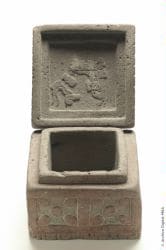
Translated from Spanish: A lidded box with straight body, base and floor; the interior bears the numeral-and-glyph 5 Serpent and the lid 11 Flint, with pairs of quincunxes on the sides. The catalogue names it for the Mexica ruler Motecuhzoma II; from Texcoco.

“CAJA CON TAPA DE CUERPO RECTO, BASE RECTA Y FONDO RECTO. EN EL INTERIOR MUESTRA EL NUMERAL Y EL GLIFO 5 SERPIENTE, Y EN LA TAPA EL 11 PEDERNAL. EN LOS COSTADOS TIENE REPRESENTADOS PARES DE QUINCUNCES.” In the museum’s words — mna.inah.gob.mx ↗ · quotation verified against the live page

Meanwhile — Beautiful Madonna from Wrocław Europe · c. 1390

Xipe Tótec
N° 516·III · Faith and Empire
Xipe Tótec
Unknown
Late Postclassic (c. 1250–1521 CE) · ceramic
Mexica (Aztec) · Late Postclassic

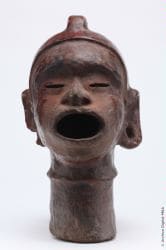
Translated from Spanish: An anthropomorphic sculpture representing the head of Xipe Tótec, 'Our Lord the Flayed One'; the top of the head has a handle and the underside a cylindrical tenon. Mexica.

“ESCULTURA ANTROPOMORFA EN LA QUE SE REPRESENTA LA CABEZA DE XIPE TOTEC, "NUESTRO SEÑOR EL DESOLLADO".” In the museum’s words — mna.inah.gob.mx ↗ · quotation verified against the live page

Meanwhile — Beautiful Madonna from Wrocław Europe · c. 1390

Xiuhtecuhtli, God of Fire
N° 517·III · Faith and Empire
Xiuhtecuhtli, God of Fire
Unknown
Late Postclassic (c. 1250–1521 CE) · basalt
Mexica (Aztec) · Late Postclassic

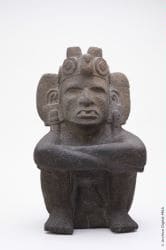
Translated from Spanish: A representation of Xiuhtecuhtli, god of fire, seated with arms crossed over the knees and legs flexed, with dental mutilation and bare chest, wearing a headdress. Carved in basalt; from the Templo Mayor of Mexico City.

“REPRESENTACIÓN DE XIUHTECUHTLI, DIOS DEL FUEGO. ESTA SENTADO CON LOS BRAZOS CRUZADOS SOBRE LAS RODILLAS, Y LAS PIERNAS FLEXIONADAS. TIENE MUTILACIÓN DENTARIA, Y EL PECHO DESNUDO.” In the museum’s words — mna.inah.gob.mx ↗ · quotation verified against the live page

Meanwhile — Beautiful Madonna from Wrocław Europe · c. 1390

Xochipilli
N° 518·III · Faith and Empire
Xochipilli
Unknown
Late Postclassic (c. 1250–1521 CE) · stone
Mexica (Aztec) · Late Postclassic

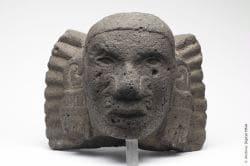
Translated from Spanish: A sculpture of a human head; the male personage represented has been identified as Xochipilli, ornamented with a butterfly nose-ornament (yacapapalotl) and feather ear-spools with a central tie. A Mexica stone sculpture.

“ESCULTURA DE CABEZA HUMANA. EL PERSONAJE MASCULINO REPRESENTADO SE HA IDENTIFICADO COMO XOCHIPILLI, ESTÁ ORNAMENTADO CON NARIGUERA DE MARIPOSA (YACAPAPALOTL), OREJERAS DE PLUMAS CON ATADURA CENTRAL,” In the museum’s words — mna.inah.gob.mx ↗ · quotation verified against the live page

Meanwhile — Beautiful Madonna from Wrocław Europe · c. 1390