N° 027·I · The First Makers
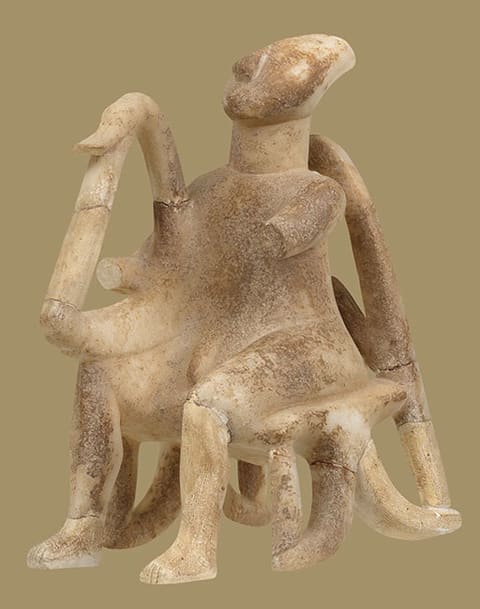
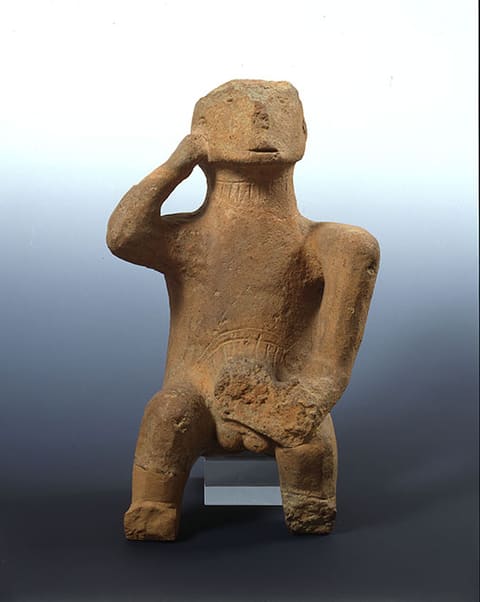
The Karditsa "Thinker"
Unknown
4500-3300 BC (Final Neolithic) · clay
Neolithic Greek · Final Neolithic
A large seated clay figure of a man, his pose suggesting deep thought, from Karditsa in Thessaly. It is exceptional for its size within a wider Neolithic tradition of male figurines with exaggerated genitalia, thought to be linked to a fertility cult.
“This example of a Neolithic rendering of an enthroned ithyphallic male belongs to a well-known iconographic type, but is unique because of its size. It belongs to a group of figurines that continues the Middle Neolithic tradition of male statuettes with protuberant phalluses, which may be linked to a fertility cult.” In the museum’s words — namuseum.gr ↗
Meanwhile — Painted Pottery Jar with Stork, Fish and Stone Axe Design East Asia · Neolithic, Yangshao Culture (c. 5,000-3,000BC)