National Museum of Serbia, Belgrade — 18 works · museum site ↗ · 6000 BCE – 1915
Seen from Belgrade, history is above all faith & ritual objects, then treasure & power — a collection split between its own tradition and other worlds (8 of 18 works are from other civilisations).
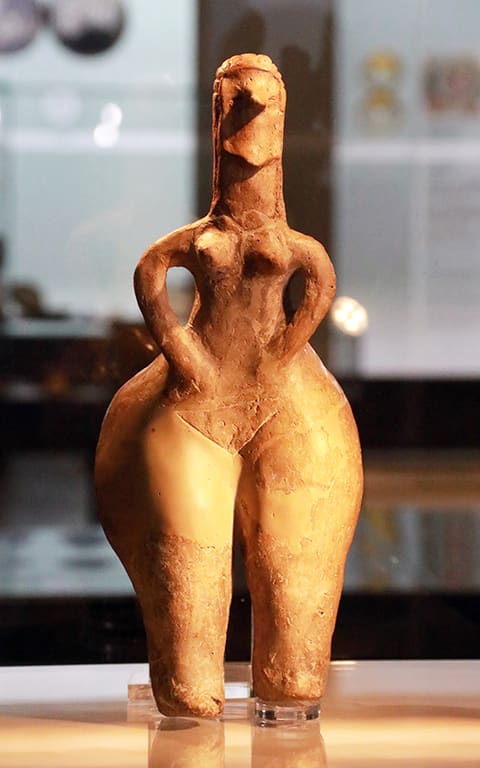
Early Neolithic (first half of the 6th millennium BCE) · Fired clay
Early Neolithic (Danube) · Neolithic
Translated from Serbian: an Early Neolithic monumental figurine of fired clay, discovered in 1989 at the Donja Branjevina site near Odzaci in southern Backa and nicknamed the 'Red-Haired Goddess'. The museum's page presents it as an important and exceptional prehistoric object added to the National Museum's permanent display at the end of November 2019.
“У питању је Црвенокоса богиња , ранонеолитска монументална фигурина од печене глине.”
In the museum’s words — narodnimuzej.rs ↗ · quotation verified against the live page
N° 206·II · The Classical World
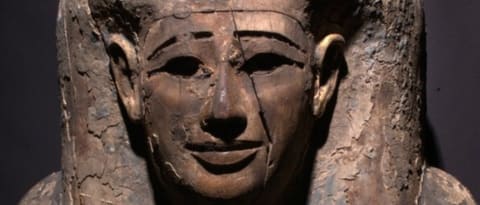
Mummy of the priest Nesmin (the Belgrade Mummy)
Unknown
Ancient Egyptian; the priest Nesmin lived c. 350-300 BCE · Mummified human remains with linen wrappings and resin
Ancient Egyptian
Translated from Serbian: the mummy of the ancient Egyptian priest Nesmin, better known as the Belgrade Mummy. According to the museum it was bought in Luxor in 1888 by the nobleman Hadzi Pavle Ridjicki of Mokrin and donated to the National Museum 'for the Serbian people'; Nesmin ('he who belongs to the god Min') served in the temple of the fertility god Min at Akhmim and lived approximately between 350 and 300 BCE. Wrapped in many layers of linen with amulets and a Book of the Dead papyrus scroll preserved unrolled beneath the left arm, the mummy has, since 2 April 2019, been on permanent display again in the National Museum in Belgrade.
“Мумија староегипатског свештеника Несмина, познатија као Београдска мумија, од 2. априла 2019. године поново се налази у Народном музеју у Београду.”
In the museum’s words — narodnimuzej.rs ↗ · quotation verified against the live page
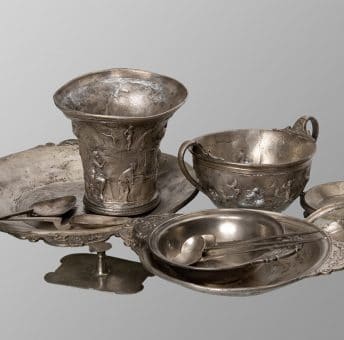
Translated from Serbian: a hoard of Roman silver vessels from Jabucje near Lazarevac. In its Collection of the Roman Imperial Period the museum singles it out among the standout works of Roman art and applied art; the museum's catalogue image dates the hoard to the first half of the 1st century CE.
“Издвајају се предмети из оставе сребрног посуђа из Јабучја, остаци цеви оргуља од сребра и кости из Голупца, те дела римске портретне уметности – портрет Трајановог оца са Трајановог моста код Костола и бронзана статуета Херакла из Тамнића код Неготина.”
In the museum’s words — narodnimuzej.rs ↗ · quotation verified against the live page
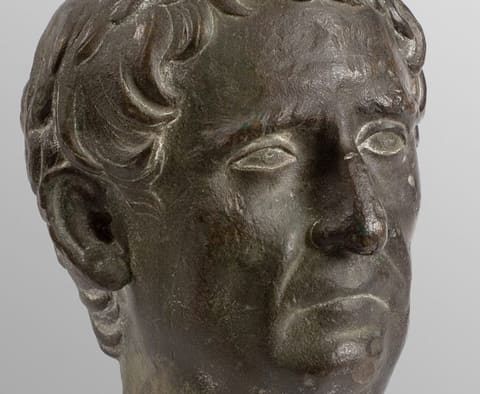
Translated from Serbian: a bronze portrait identified by the museum as the father of Emperor Trajan, from Kostol (Pontes) near Trajan's Bridge on the Danube. The museum lists it among the works of Roman portrait art that stand out in its Collection of the Roman Imperial Period; its catalogue image dates the portrait to the end of the 1st century CE.
“Издвајају се предмети из оставе сребрног посуђа из Јабучја, остаци цеви оргуља од сребра и кости из Голупца, те дела римске портретне уметности – портрет Трајановог оца са Трајановог моста код Костола и бронзана статуета Херакла из Тамнића код Неготина.”
In the museum’s words — narodnimuzej.rs ↗ · quotation verified against the live page
Roman, end of the 1st / beginning of the 2nd century CE · Bronze
Roman · Roman Imperial period
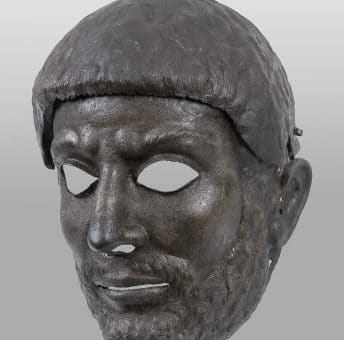
Translated from Serbian: a bronze mask from a Roman parade helmet, from Kostol (Pontes) on the Danube. The museum's Collection of the Roman Imperial Period highlights the parade helmet-masks from Kostol and Smederevo among the military objects that reflect the importance of the Roman army in the province of Upper Moesia; its catalogue image dates this mask to the end of the 1st / beginning of the 2nd century CE.
“Такви су посебно сребрни војни појас из Текије, парадни шлемови-маске из Костола и Смедерева и пекторал из Ритопека.”
In the museum’s words — narodnimuzej.rs ↗ · quotation verified against the live page
Bronze statuette of Hercules from Tamnic (Hercules Epitrapezios)
Unknown
Roman, first half of the 3rd century CE · Bronze
Roman · Roman Imperial period
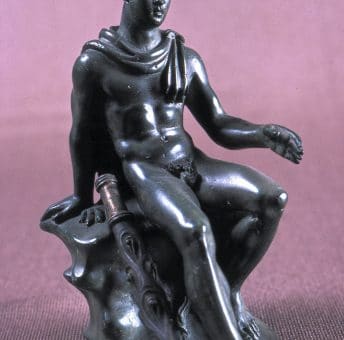
Translated from Serbian: a bronze statuette of Hercules from Tamnic near Negotin, which the museum names among the standout works of Roman art in its Collection of the Roman Imperial Period. The museum's catalogue image identifies it as a Hercules Epitrapezios and dates it to the first half of the 3rd century CE.
“Издвајају се предмети из оставе сребрног посуђа из Јабучја, остаци цеви оргуља од сребра и кости из Голупца, те дела римске портретне уметности – портрет Трајановог оца са Трајановог моста код Костола и бронзана статуета Херакла из Тамнића код Неготина.”
In the museum’s words — narodnimuzej.rs ↗ · quotation verified against the live page
Meanwhile — Varvakeion AthenaGreek world · AD 200-250 (copy of a 438 BC original)
N° 295·II · The Classical World
Remains of a Roman organ (pipes from Golubac)
Unknown
Roman, first half of the 3rd century CE · Silver and bone
Roman · Roman Imperial period
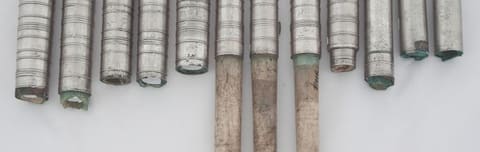
Translated from Serbian: the surviving pipes, of silver and bone, of a Roman organ (hydraulis/organum) from Golubac (Cuppae). The museum names them among the standout finds in its Collection of the Roman Imperial Period; its catalogue image dates them to the first half of the 3rd century CE.
“Издвајају се предмети из оставе сребрног посуђа из Јабучја, остаци цеви оргуља од сребра и кости из Голупца, те дела римске портретне уметности – портрет Трајановог оца са Трајановог моста код Костола и бронзана статуета Херакла из Тамнића код Неготина.”
In the museum’s words — narodnimuzej.rs ↗ · quotation verified against the live page
Meanwhile — Varvakeion AthenaGreek world · AD 200-250 (copy of a 438 BC original)
N° 299·II · The Classical World
Roman pectoral from Ritopek
Unknown
Roman, 3rd century CE · Brass and enamel
Roman · Roman Imperial period
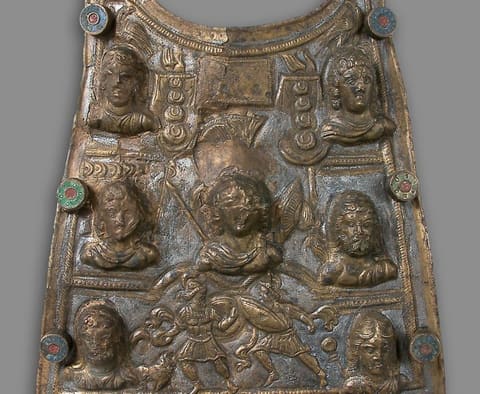
Translated from Serbian: a Roman military pectoral from Ritopek (Castra Tricornia), which the museum highlights among the parade military objects of its Collection of the Roman Imperial Period. Its catalogue image records the pectoral as brass and enamel and dates it to the 3rd century CE.
“Такви су посебно сребрни војни појас из Текије, парадни шлемови-маске из Костола и Смедерева и пекторал из Ритопека.”
In the museum’s words — narodnimuzej.rs ↗ · quotation verified against the live page
Meanwhile — Varvakeion AthenaGreek world · AD 200-250 (copy of a 438 BC original)
N° 309·II · The Classical World
The Jonah Sarcophagus
Unknown
4th century CE
Late Roman / Early Christian · Late Roman
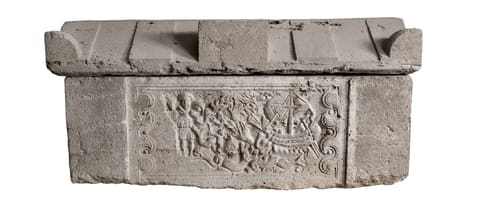
Translated from Serbian: a 4th-century sarcophagus discovered in the late 19th century at Dorcol, carved with two scenes of the Old Testament prophet Jonah (cast into the sea and disgorged by the whale) beside a frontal figure of the Good Shepherd. The museum describes it as one of the earliest monuments bearing Christian symbolism from the territory of Roman Belgrade (Singidunum), and states that it belongs to the National Museum's collection.
“Јонин сарофаг из IV века један је међу најранијим споменицима са хришћанском симболиком са територије римског Београда (Singidunim).”
In the museum’s words — narodnimuzej.rs ↗ · quotation verified against the live page
Late 12th century (1180s) · Parchment (illuminated manuscript)
Serbian medieval · Nemanjic period
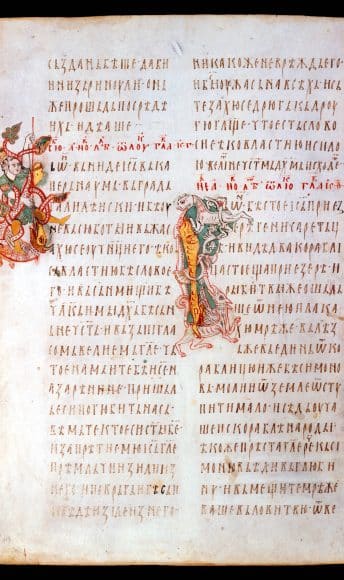
Translated from Serbian: the Miroslav Gospel, an illuminated Serbian Cyrillic Gospel book of the late 12th century (the museum's image caption dates the shown page 149 to the 1180s, written on parchment). The museum calls it one of the most valuable cultural treasures in its Collection of Serbian Medieval and Byzantine Art, and notes that since 2005 it has been inscribed on UNESCO's Memory of the World register.
“Једно од највреднијих културних добара у Збирци је Мирослављево јеванђеље (крај 12. века), које се од 2005. године налази на UNESCO листи Памћење света.”
In the museum’s words — narodnimuzej.rs ↗ · quotation verified against the live page
The Ohrid Double Icon of the Virgin Hodegetria and the Annunciation
Unknown
Mid-14th century
Byzantine (Ohrid) · Byzantine
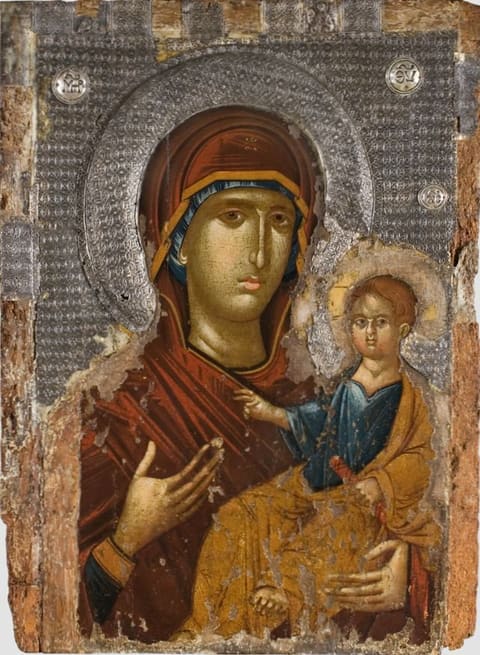
Translated from Serbian: a mid-14th-century double icon from Ohrid depicting the Virgin Hodegetria and the Annunciation. In its Collection of Serbian Medieval and Byzantine Art the museum notes that most of its icons date from the 14th century, and singles out this Ohrid double icon of the Virgin Hodegetria and the Annunciation as one to be especially highlighted.
“Већина икона која припада Збирци датира из 14. века, од којих би посебно требало истаћи охридску Двојну икону Богородице Одигитрије и Благовести.”
In the museum’s words — narodnimuzej.rs ↗ · quotation verified against the live page
Imperial Doors from a church in Ohrid (Carske dveri)
Unknown
End of the 15th century
Post-Byzantine · Post-Byzantine
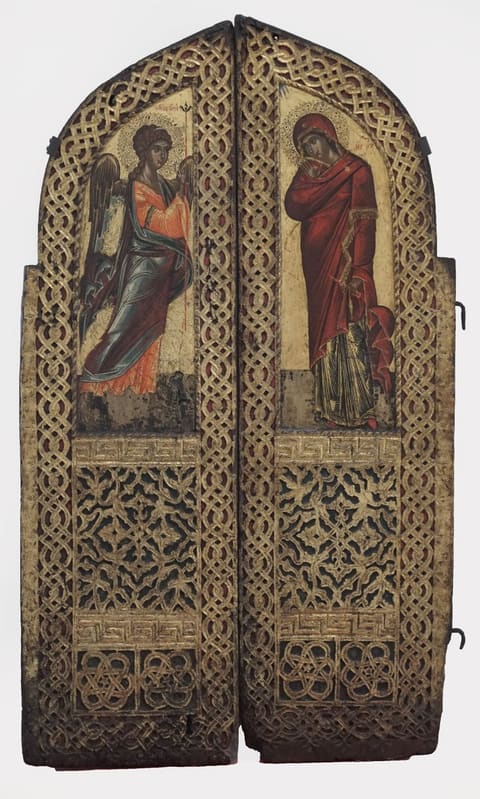
Translated from Serbian: the Imperial Doors (Royal Doors of an iconostasis) of the late 15th century, from an unknown church in Ohrid. In its Collection of Post-Byzantine Art the museum singles them out as a work of exceptional artistic value.
“Треба издвојити и остварење изузетне уметничке вредности, Царске двери с краја 15. века, које потичу из непознате цркве у Охриду.”
In the museum’s words — narodnimuzej.rs ↗ · quotation verified against the live page
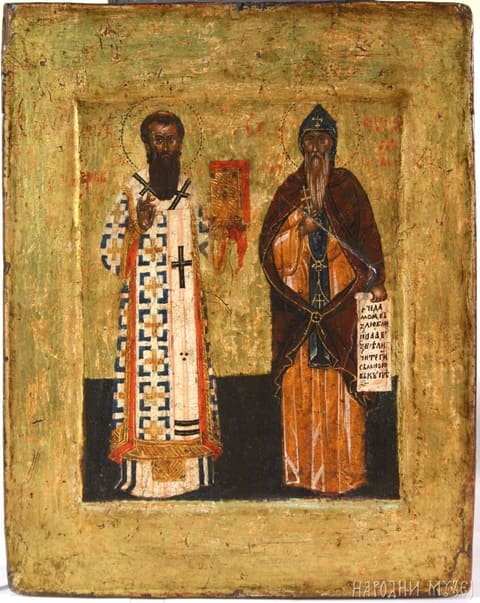
Translated from Serbian: an icon of Saints Simeon and Sava, the two founding saints of the medieval Serbian church. In its Collection of Serbian Medieval and Byzantine Art the museum highlights this Icon of St Simeon and St Sava as a standout work from the second half of the 16th century.
“Из друге половине 16. века истиче се Икона св. Симеона и св. Саве.”
In the museum’s words — narodnimuzej.rs ↗ · quotation verified against the live page
No image in the collection — see the museum’s page
N° 719·VI · The Baroque Age
Icon of Serbian rulers by Avesalom Vujicic
Avesalom Vujicic
17th century
Serbian (post-Byzantine) · Post-Byzantine (Ottoman period)
Translated from Serbian: an icon by the prominent 17th-century painter Avesalom Vujicic on which, alongside general Christian saints, the Serbian rulers Stefan the First-Crowned, Stefan Decanski, Uros the Weak and Prince Lazar are painted as rulers with the halo of martyrs. The museum highlights it in its Collection of Post-Byzantine Art among the icons depicting Serbian rulers and saints.
“Међу њима се издваја икона истакнутог сликара 17. века, Авесалома Вујичића, на којој су, уз општехришћанске светитеље, насликани Стефан Првовенчани, Стефан Дечански, Урош Нејаки и кнез Лазар, српски владари са ореолом мученика.”
In the museum’s words — narodnimuzej.rs ↗ · quotation verified against the live page
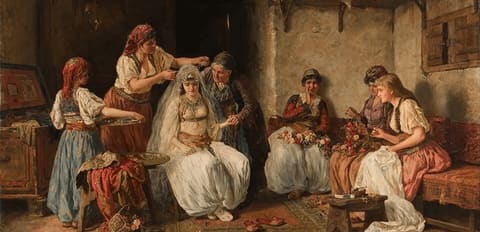
The Adornment of the Bride by Paja Jovanovic (Kicenje neveste)
Paja Jovanovic (1859-1957)
First half of the 1880s
Serbian (academic realism) · Academic realism
Translated from Serbian: 'The Adornment of the Bride' (Kicenje neveste), described by the museum as one of Paja Jovanovic's best-known works, painted during the artist's intensive travels in the Balkans in the first half of the 1880s and purchased for the National Museum in 1935. The museum notes it also appears in the literature under the titles 'Nevesta', 'Kite mladu' and 'Oprema mlade'.
“Кићење невесте је једно од најпознатијих дела Паје Јовановића.”
In the museum’s words — narodnimuzej.rs ↗ · quotation verified against the live page
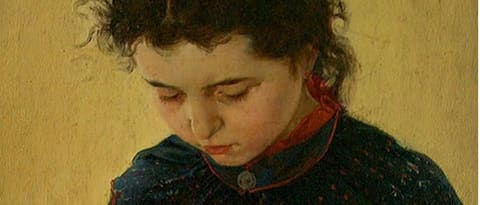
Translated from Serbian: 'Diligent Hands' (Vredne rucice), an 1887 painting by Uros Predic of a girl knitting a stocking, modelled - according to the museum - on Marija 'Mica' Mokranjac as a child. She bequeathed the painting to the National Museum in Belgrade; the museum describes it as an exceptional masterpiece of 19th-century Serbian realist painting that today holds a place of honour in its permanent display, where the public can still see it.
“Пре одласка са овог света, Марија Мица Мокрањац завештала је слику „Вредне ручице“ београдском Народном музеју”
In the museum’s words — narodnimuzej.rs ↗ · quotation verified against the live page
The Gospel Writer by Djordje Krstic (Pisac jevandjelja)
Djordje Krstic (1851-1907)
c. 1907 (left unfinished at the artist's death) · Oil on canvas
Serbian (realism) · Realism
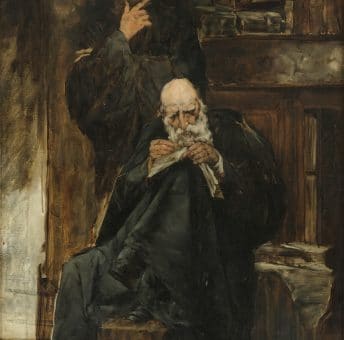
Translated from Serbian: 'The Gospel Writer' (Pisac jevandjelja), a painting of two monks in a monastery cell that Djordje Krstic left unfinished on his easel at his death; the museum values its free brushwork and the passages of bare canvas left uncovered. It stood in the Krstic family home on Dorcol until 1911, when it was purchased, with some forty other works and studies by Krstic, for the collection of the National Museum of Serbia.
“Слика „Писац јеванђеља“ је стајала у дому Крстићеве породице”
In the museum’s words — narodnimuzej.rs ↗ · quotation verified against the live page
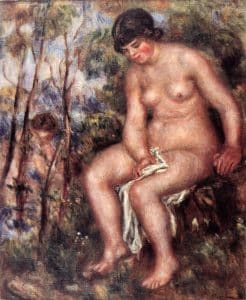
Translated from Serbian: 'Bather' (Kupacica), an oil on canvas by Auguste Renoir from the artist's late period (the museum dates it to approximately 1915). It was among the first paintings purchased for the museum in its new building in 1935, and the museum describes it as one of its most representative works.
“Међу првим откупљеним сликама за музеј у новој згради била је Купачица , уље на платну Огиста Реноара и данас једно од најрепрезентантивнијих дела Народног музеја.”
In the museum’s words — narodnimuzej.rs ↗ · quotation verified against the live page