Museum Nasional Indonesia, Jakarta — 15 works · museum site ↗ · 701 CE–1930
Seen from Jakarta, history is above all sculpture, then treasure & power — a collection opened wide onto other worlds — a window more than a mirror (15 of 15 works are from other civilisations).
Sculpture 7Power 3Ritual 2Craft 2Invention 1
N° 380·III · Faith and Empire
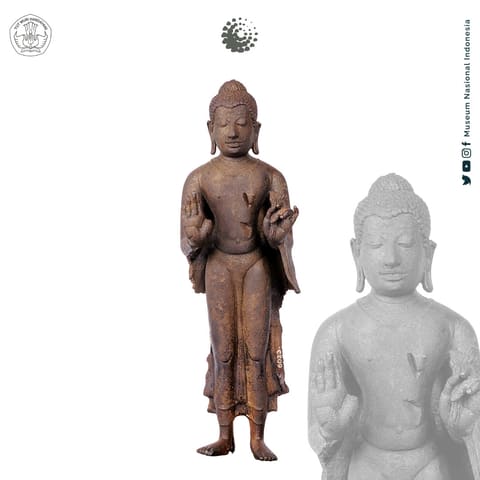
Standing Buddha (Sailendra Style)
Unknown
8th–11th century · Bronze
Sailendra (Srivijaya-era Buddhist) · Sailendra
Translated from Indonesian: A bronze Buddha standing in the samapada pose in the Sailendra style, found at Sungai Komering, Palembang, South Sumatra. The right hand forms the abhaya mudra (warding off danger) while the left holds the edge of a thin robe covering both shoulders. The museum dates it to the 8th–11th century.
“Tangan kanan bersikap abhaya (menolak bahaya), tangan kirinya memegang ujung jubah.”
In the museum’s words — museumnasional.or.id ↗ · quotation verified against the live page
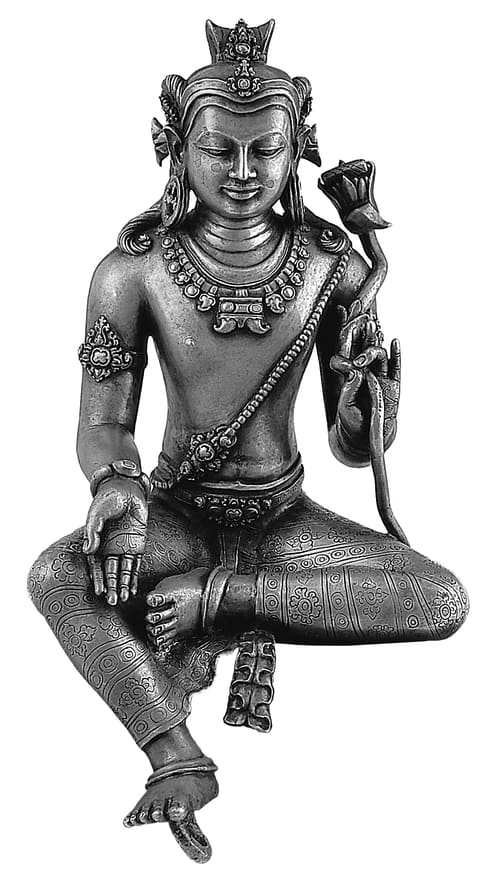
Translated from Indonesian: A silver statue of the Bodhisattva Mañjuśrī as a youth who masters the age to come. The right hand forms the waramudra, the gesture of granting boons, while the left holds the stem of a half-open blue lotus (utpala) topped by a book (pustaka), symbolising enlightenment. The museum's caption records it in silver from Ngemplak, Semarang, Central Java, early 10th century (inv. 5899/A.1105).
“Tangan kanan bersikap waramudra, yang artinya memberi anugerah.”
In the museum’s words — museumnasional.or.id ↗ · quotation verified against the live page
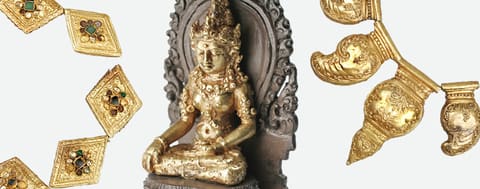
10th–14th century (Sindok to Majapahit era) · Gold and silver
Javanese (Majapahit) · Sindok–Majapahit
Translated from Indonesian: A hoard of gold and silver objects found in 1881 by farmers working fields at Muteran, then in the Surabaya residency of East Java (now in Trowulan district, Mojokerto). The museum presents it as an example of public participation in the discovery of historical artefacts and, from the findspot, attributes it to the period from King Sindok to the Majapahit era, roughly the 10th–14th century.
“tidak sengaja menemukan wadah logam besar berisi berbagai jenis benda dari emas dan perak.”
In the museum’s words — museumnasional.or.id ↗ · quotation verified against the live page
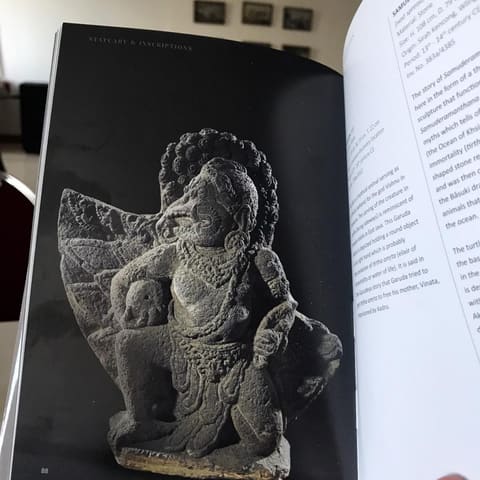
Translated from Indonesian: A stone statue of Garuda, the eagle-like mount (wahana) of the Hindu god Vishnu, whose motif the museum presents as an inspiration for the Garuda Pancasila. Garuda embodies the mind — nothing in the world is faster than thought — and also symbolises the sun, as Vishnu is. The museum's caption records the stone statue with an unknown findspot, dated to the 13th–14th century (inv. 209a/3552).
“Garuda melambangkan pikiran, sehingga keberadaannya bersama Dewa Wisnu menjelaskan bahwa di dunia tidak ada hal yang lebih cepat dari pikiran.”
In the museum’s words — museumnasional.or.id ↗ · quotation verified against the live page
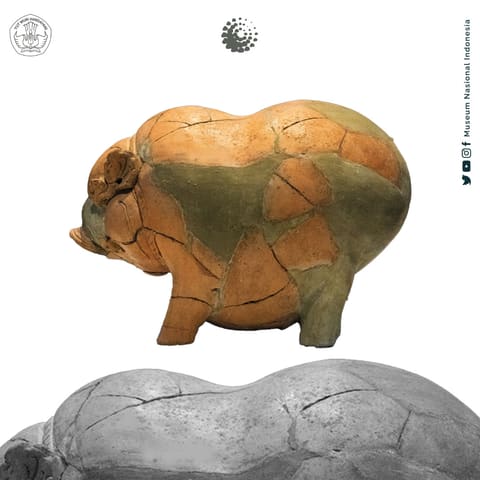
13th–15th century (Majapahit) · Earthenware (terracotta)
Javanese (Majapahit) · Majapahit
Translated from Indonesian: An earthenware money box (celengan) from Mojokerto, East Java, dated to the 13th–15th century. The museum notes that the habit of saving was already known in the Majapahit period, evidenced by these fired-clay money boxes; the word "celengan" derives from "celeng" (wild boar in Old Javanese), an animal regarded as a symbol of fertility and wealth.
“Terbukti ditemukannya celengan terbuat dari tanah liat bakar.”
In the museum’s words — museumnasional.or.id ↗ · quotation verified against the live page
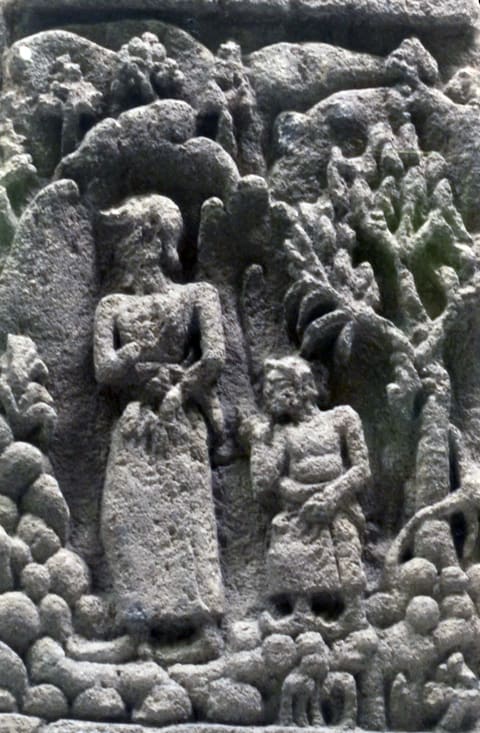
Translated from Indonesian: A stone relief depicting a man in a "tekes" cap identified as Raden Panji with an attendant (kadeyan). The Panji tales are an original Indonesian story cycle that arose from oral tradition in East Java around the 12th century and spread abroad as far as Thailand, Vietnam and Myanmar. The museum records this relief as a 14th-century find from East Java.
“Cerita Panji merupakan cerita asli Indonesia yang berkembang pada masa abad ke-12 Masehi.”
In the museum’s words — museumnasional.or.id ↗ · quotation verified against the live page
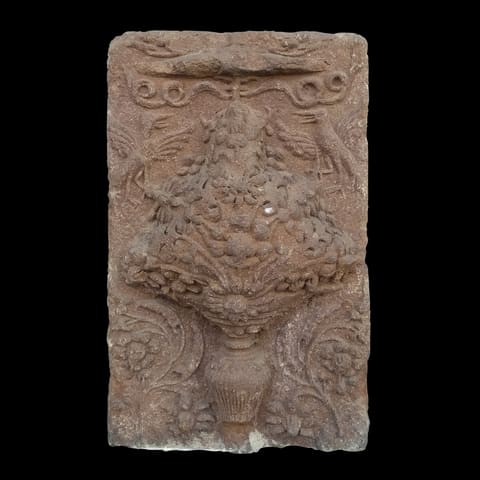
Translated from Indonesian: A stone relief of the tree of life (kalpawreksa), believed to give protection and shelter, to grant life to all living beings and to fulfil every human wish; it is also equated with the kalpataru, the tree of knowledge. The museum records the relief as coming from Candi Gunung Gangsir, East Java, and dates it to the 14th–15th century (inv. 440b/5128).
“Selain itu, Pohon kehidupan juga disamakan dengan kalpataru atau pohon pengetahuan (budi).”
In the museum’s words — museumnasional.or.id ↗ · quotation verified against the live page
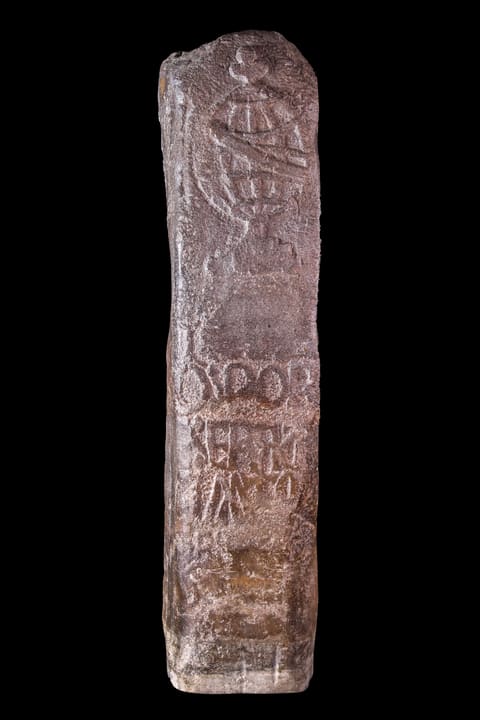
16th century (treaty dated 21 August 1522) · Andesite stone
Sundanese–Portuguese · Sunda Kingdom
Translated from Indonesian: An andesite stone pillar (padrão) commemorating a treaty between the Portuguese and the Sundanese kingdom. In 1522 the Portuguese governor of Malacca, Jorge d'Albuquerque, sent Henrique Leme to open trade relations with the Sunda king titled "Samiam"; the agreement was made on 21 August 1522. The museum records the andesite stone as found on Jalan Cengkeh in Jakarta (formerly Prinsen Straat) and dates it to the 16th century.
“Padrao merupakan batu peringatan perjanjian antara Portugis dan Kerajaan Sunda.”
In the museum’s words — museumnasional.or.id ↗ · quotation verified against the live page
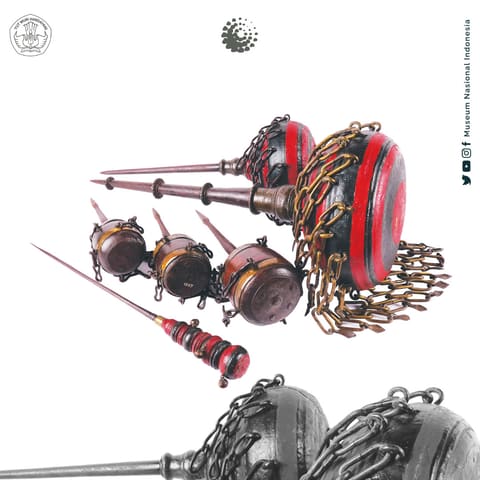
Translated from Indonesian: Metal-and-wood implements used in Debus, a traditional performance art from Banten dated by the museum to the late 16th century. It was already practised in the reign of Sultan Ageng Tirtayasa (1651–1682), and its movements resemble the Arab Rifa'iyah Sufi tradition brought from Aceh in the 16th century; performers fast, pray and train seriously before a performance.
“Debus adalah salah satu permainan tradisional yang sudah ada sejak masa pemerintahan Sultan Ageng Tirtayasa”
In the museum’s words — museumnasional.or.id ↗ · quotation verified against the live page
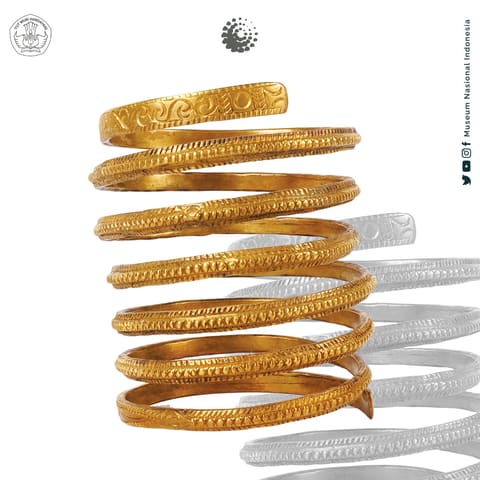
Translated from Indonesian: A brass bracelet from Aceh, early 20th century, worn by Alas women as part of formal traditional dress at customary ceremonies, usually combined with a necklace and earrings.
“Gelang ini dikenakan oleh perempuan Alas sebagai pelengkap dari busana tradisional saat upacara adat yang bersifat formal.”
In the museum’s words — museumnasional.or.id ↗ · quotation verified against the live page
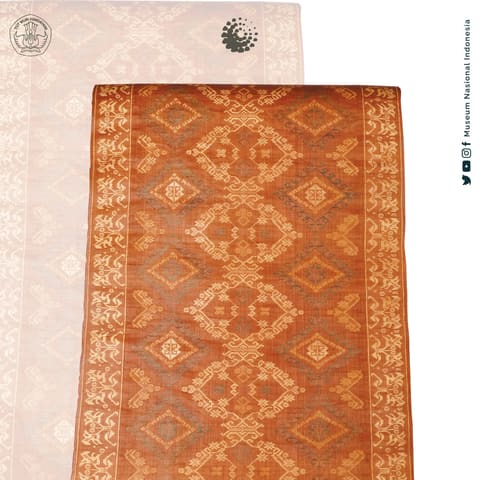
Translated from Indonesian: A textile woven from plant fibre from the Sangihe–Talaud Islands, North Sulawesi, early 20th century. The decoration on the koffo (Talaud) or hote (Sangihe) is made with a supplementary-warp technique on a gedog backstrap loom; patterned koffo served as decoration while plain koffo was used for clothing.
“Ragam hias pada koffo (Talaud) atau Hote (Sangihe) dibuat menggunakan teknik lungsi tambahan dengan alat tenun gedog.”
In the museum’s words — museumnasional.or.id ↗ · quotation verified against the live page
undated (South Sulawesi) · Wood, bamboo, palm leaf and seeds
Bugis (South Sulawesi)
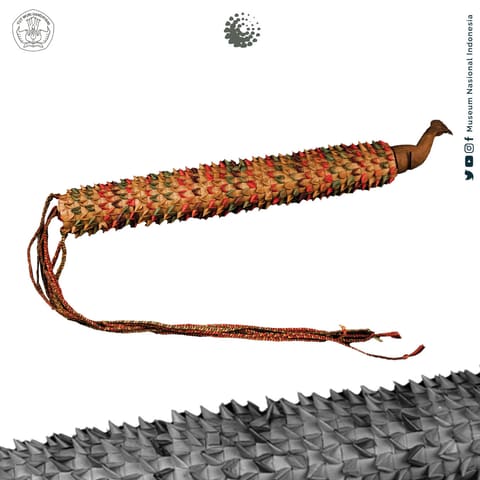
Translated from Indonesian: A tube- or box-shaped percussion rattle (alusu) of wood, bamboo, palm leaf and seeds from South Sulawesi. It plays an important role in the mabissu dance; according to local belief the sound of the alusu accompanies verses of praise offered to Sangiang Serri during ceremonies.
“Alat ini memegang peranan penting dalam tarian mabissu.”
In the museum’s words — museumnasional.or.id ↗ · quotation verified against the live page
N° 1121·Undated
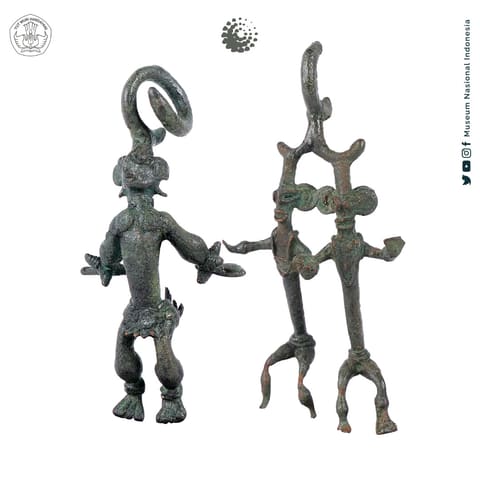
Bronze Figurine of a Dancer (Bangkinang)
Unknown
Paleometallic (Metal Age) · Bronze
Indonesian prehistoric (Metal Age) · Paleometallic
Translated from Indonesian: A dynamic bronze figurine depicting dancers, one of nine statues found at Bangkinang, Riau, and dated by the museum to the Paleometallic (Metal Age). A loop above the head suggests it was worn as a necklace pendant and served as a religious ceremonial object.
“Patung perunggu ini menggambarkan penari-penari yang bergaya dinamis.”
In the museum’s words — museumnasional.or.id ↗ · quotation verified against the live page
N° 1150·Undated
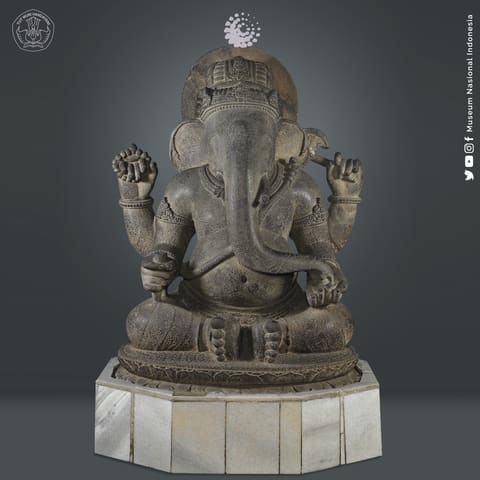
Ganesha of Candi Banon
Unknown
Central Javanese period
Central Javanese (Hindu)
Translated from Indonesian: A statue of Ganesha, the Hindu god of knowledge and wisdom, from Candi Banon in Magelang, Central Java. He grasps the modaka — a bowl of the "liquid of knowledge" — in his front hand, his trunk dipping into it, expressing the idea that knowledge is inexhaustible however deeply it is drawn.
“Modaka digenggam oleh Ganesha di tangan bagian depan dan terdapat belalainya yang masuk ke dalam modaka.”
In the museum’s words — museumnasional.or.id ↗ · quotation verified against the live page
N° 1174·Undated
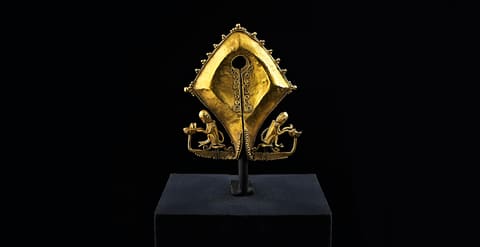
Mamuli
Unknown
undated (Sumbanese ceremonial gold) · Gold
Sumbanese
Translated from Indonesian: A gold ornament (mamuli) from Sumba, East Nusa Tenggara. In Sumbanese life the mamuli is a symbol of a person's identity and social status, so important that it is used in the most sacred customary rituals such as marriage and death.
“mamuli merupakan lambang jati diri seseorang dalam kehidupan.”
In the museum’s words — museumnasional.or.id ↗ · quotation verified against the live page