The Atlas·HU

HU

Museum of Fine Arts, Budapest, Budapest — 17 works · museum site ↗ · 1295 BCE – 1812 60000 BCE2020

Seen from Budapest, history is above all sculpture, then sacred images — a collection split between its own tradition and other worlds (6 of 17 works are from other civilisations).

Sculpture 5 Sacred 4 Portraits 3 Stories 2 Observation 2 Ritual 1
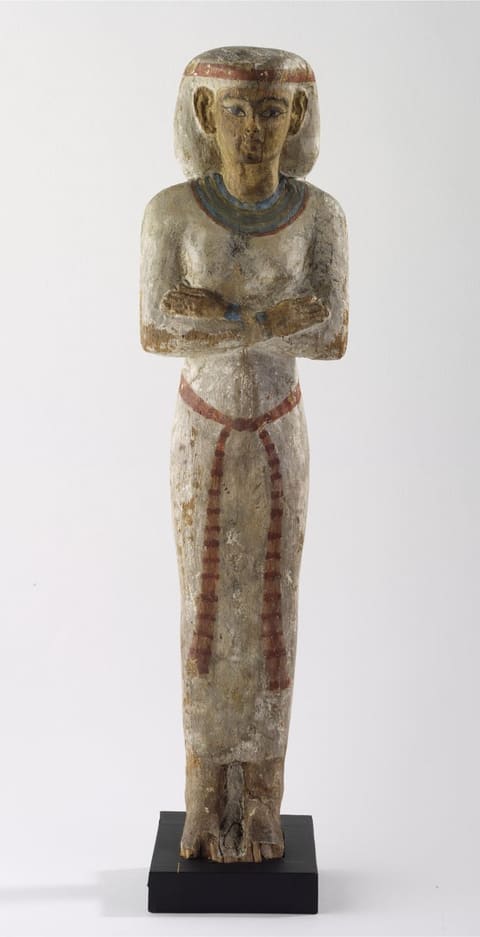
Mourning Statue of Isis or Nephthys
N° 117·I · The First Makers
Mourning Statue of Isis or Nephthys
Unknown
1295-1069 B.C. · Wood, paint
Egyptian · New Kingdom

A finely carved New Kingdom wooden statuette of a slim young woman - one of the mourning goddesses Isis or Nephthys - with exceptionally well-preserved paint, a white khat headdress and a blue wesekh-collar.

“The finely elaborated, small-sized standing female statue carved from one piece of wood represents a slim, young woman.” In the museum’s words — mfab.hu ↗ · quotation verified against the live page

Meanwhile — Houmuwu square cauldron (ding) East Asia · Late Shang (1300–1046 BC)
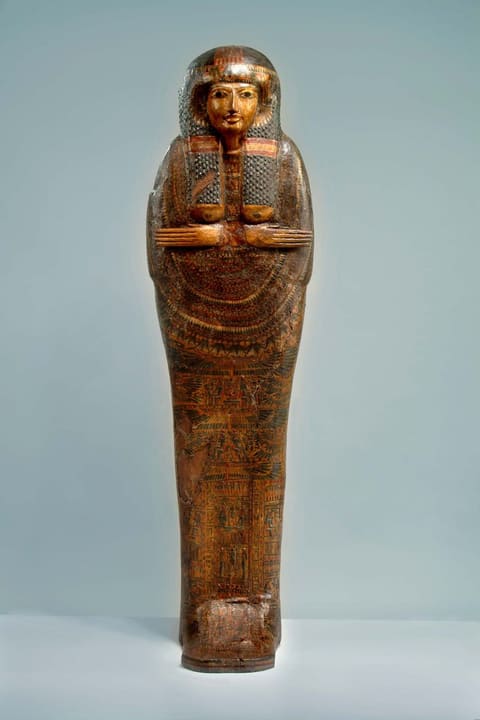
Anthropoid Coffin of an Amun-priestess
N° 133·I · The First Makers
Anthropoid Coffin of an Amun-priestess
Unknown
the first part of the 10th century B.C. · Wood, paint, varnished with resin
Egyptian · Third Intermediate Period

A polychrome anthropoid coffin on a yellow ground, its decorative wig crowned by a vulture headdress of the goddess Nekhbet and its bands of offering scenes centred on Osiris identified with the nocturnal sun.

“The decorative wig is adorned by a vulture headdress representing the protective goddess Nekhbet.” In the museum’s words — mfab.hu ↗ · quotation verified against the live page

Meanwhile — Mask of Duality (Tlatilco) Americas & Oceania · Middle Preclassic (c. 1200–800 BCE)

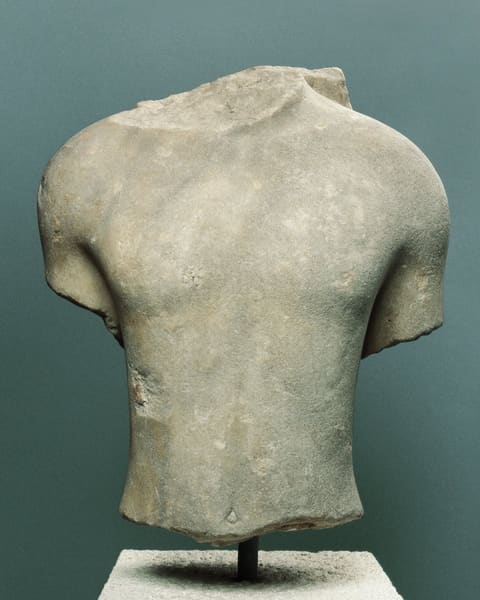
Marble torso of a kouros
N° 167·II · The Classical World
Marble torso of a kouros
Unknown
570-560 B.C. · carved, marble
Greek · Archaic Period

An Archaic Greek kouros torso - the standing male youth type the museum notes the Greeks adopted from Egyptian art - its rigid, symmetrical stance already subtly loosened by the asymmetries of the forward step.

“The Greeks adopted the statue-form of a youth stepping with his left foot forward from Egyptian art.” In the museum’s words — mfab.hu ↗ · quotation verified against the live page

Meanwhile — Gold jewellery of the Stična princess Europe · Late 7th or 6th century BC

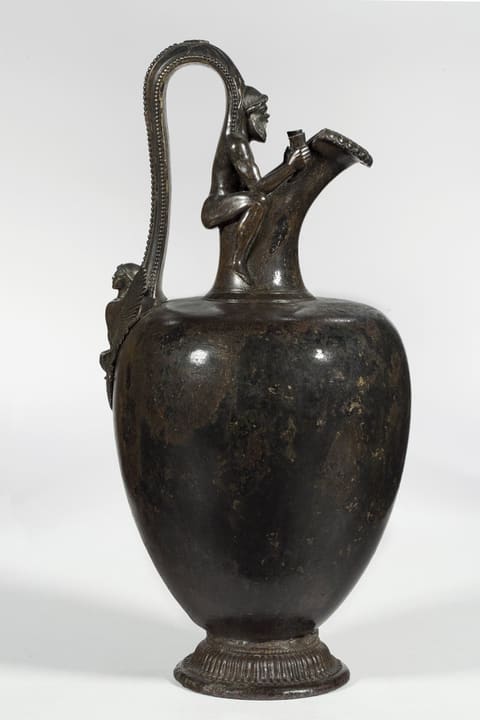
The Grimani jug
N° 184·II · The Classical World
The Grimani jug
Unknown
ca. 450 B.C. · hammered, cast, bronze
Greek · Classical Period

Called by the museum one of the most valuable pieces in its Collection of Classical Antiquities: a Classical Greek bronze jug once in the celebrated Grimani collection in Venice, later acquired via the Fejérváry-Pulszky collection and the Hungarian National Museum.

“One of the most valuable pieces in the Collection of Classical Antiquities had been acquired by a prestigious Venetian family, the Grimanis, between the 16th and 18th centuries, presumably from Greece.” In the museum’s words — mfab.hu ↗ · quotation verified against the live page

Meanwhile — Necklace with a Gorgon's Head Near East · Magharet Tabloun (near Sidon), 5th century B.C.

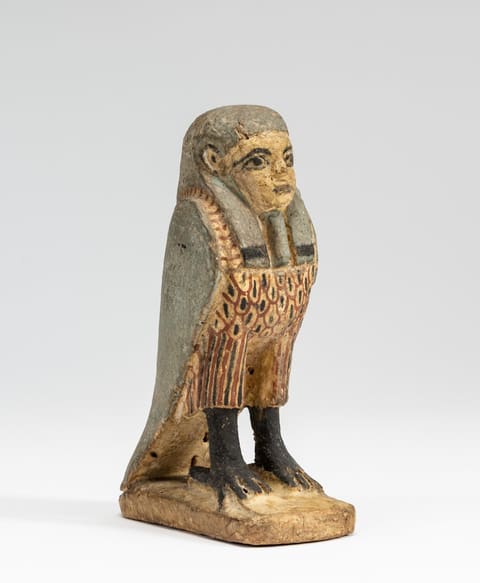
Ba-bird
N° 208·II · The Classical World
Ba-bird
Unknown
4th-1st centuries B.C. (332-30) · wood, paint
Egyptian · Ptolemaic Period

A painted wooden human-headed bird representing the ba, one of the forms a person could take after death; in Egyptian belief the ba retained the vital faculties, above all the power of swift movement.

“The carefully elaborated wooden statuette depicts a human-headed bird standing on a thin rectangular base, representing the ba-form, one of the possible manifestations of the human being after death.” In the museum’s words — mfab.hu ↗ · quotation verified against the live page

Meanwhile — Winged Victory of Samothrace Greek world · 175 BCE

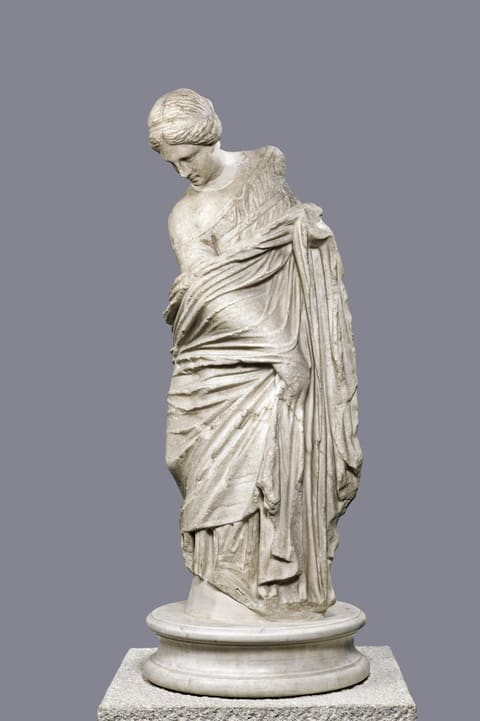
Statue of a Girl ("The Budapest Dancer")
N° 220·II · The Classical World
Statue of a Girl ("The Budapest Dancer")
Unknown
ca. 240-220 B.C. or 150-100 B.C. · carved, Parian marble
Greek · Hellenistic Period

Named by the museum as one of the most famous ancient works in its collection: a Hellenistic marble of a young girl bending forward and drawing her chiton aside, her pose once read as a dance step.

“is one of the most famous ancient works of art in the Museum of Fine Arts.” In the museum’s words — mfab.hu ↗ · quotation verified against the live page

Meanwhile — Gilt-and-silvered Bronze Bamboo-section Incense Burner East Asia · Western Han dynasty, before 136 BCE

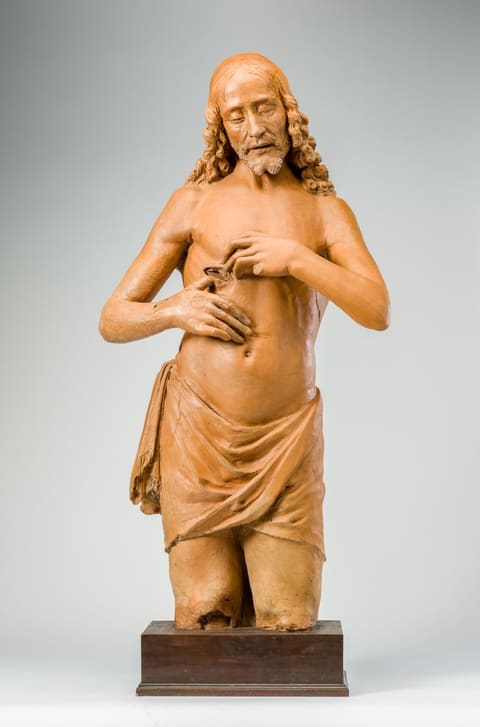
Man of Sorrows (Vir Dolorum)
N° 588·IV · Toward the Renaissance
Man of Sorrows (Vir Dolorum)
Attributed to Andrea del Verrocchio (ca. 1435-1488)
ca. 1470 · terracotta, with small residues of paint
Italian · Early Renaissance

A once-painted terracotta Man of Sorrows showing the wounded Christ rising from the tomb. The museum attributes it to Verrocchio on the basis of clear affinities with the Florentine master's early works in the head type and anatomy.

“The type of the head and the anatomy of the hand and the body show clear affinities with Verrocchio’s early works.” In the museum’s words — mfab.hu ↗ · quotation verified against the live page

Meanwhile — Quipu (knotted-cord recording device), Inka Americas & Oceania · 1400–1532 CE

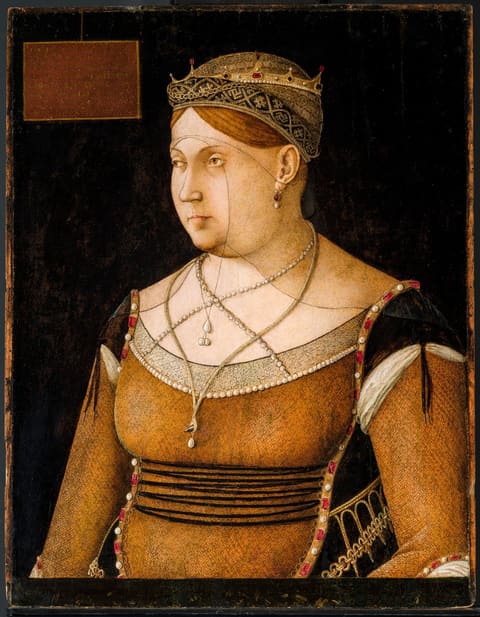
Portrait of Caterina Cornaro, Queen of Cyprus
N° 614·V · The Renaissance
Portrait of Caterina Cornaro, Queen of Cyprus
Gentile Bellini (ca. 1429-1507)
ca. 1500 · oil on wood
Italian · Venetian Renaissance

Gentile Bellini's celebrated portrait of the deposed queen of Cyprus, her gala dress and jewels rendered with cartographic precision; an inscription boasts that Bellini's hand is greater still than the queen it portrays on so small a panel.

“When the leading Venetian master of the time, Gentile Bellini created this celebrated portrait, the bloom of her youthful beauty had waned.” In the museum’s words — mfab.hu ↗ · quotation verified against the live page

Meanwhile — Adorned Buddha South Asia · 15th - 16th century

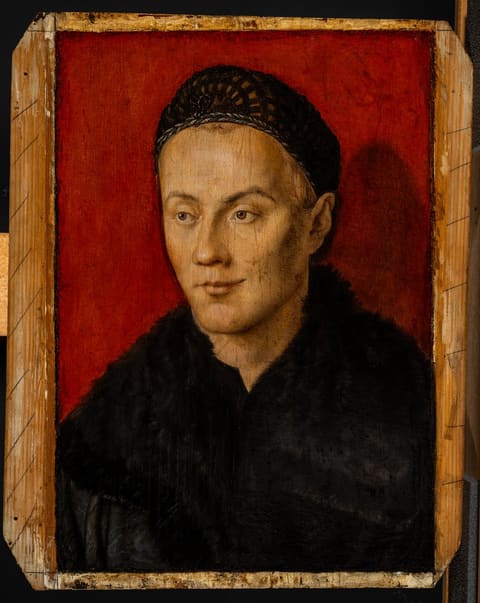
Portrait of a Young Man
N° 616·V · The Renaissance
Portrait of a Young Man
Albrecht Dürer (1471-1528)
ca. 1500-1510 · oil on spruce
German · Northern Renaissance

A small panel portrait by Dürer, whom the museum calls indisputably the greatest sixteenth-century painter north of the Alps; it keeps the sitter's asymmetrical, lopsided smile that gives the face its uncanny, living presence.

“Albrecht Dürer was indisputably the greatest sixteenth-century painter north of the Alps.” In the museum’s words — mfab.hu ↗ · quotation verified against the live page

Meanwhile — Gold ewer with dragon and phoenix design East Asia · Ming Dynasty (1368–1644)

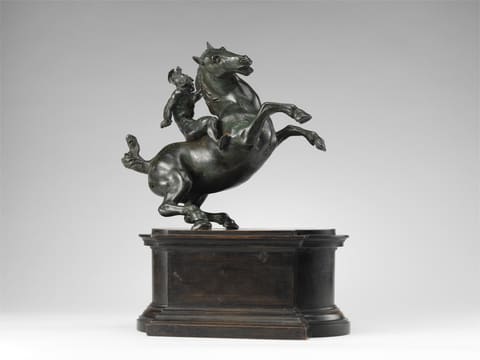
Mounted Warrior
N° 618·V · The Renaissance
Mounted Warrior
Attributed to Leonardo da Vinci (1452-1519)
early 16th century · bronze with green patina
Italian · Renaissance

The 'Budapest Horse and Rider', the museum's famous small bronze linked to Leonardo's lost Battle of Anghiari designs. The museum itself frames the attribution cautiously: the wax model may have been enlarged and cast in the sixteenth century, possibly by one of Leonardo's students or followers.

“The model for the Budapest Horse and Rider may have been such a wax statuette, which was then enlarged and cast into bronze during the sixteenth century, possibly by one of Leonardo’s students or followers.” In the museum’s words — mfab.hu ↗ · quotation verified against the live page

Meanwhile — Dragon and Phoenix Carpet Islamic world · 1450–1600

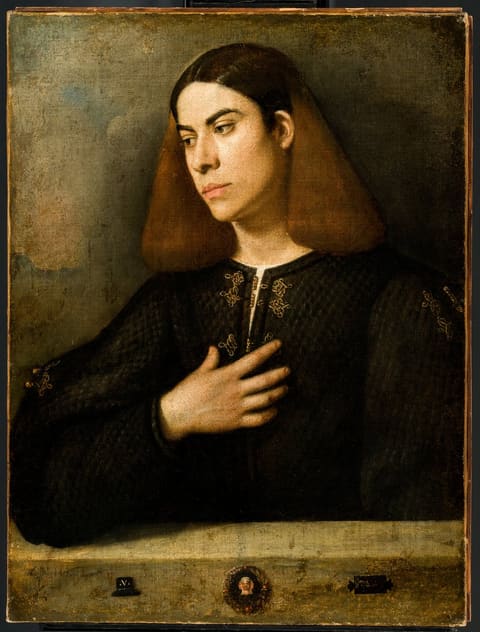
Portrait of a Young Man (The "Broccardo" Portrait)
N° 630·V · The Renaissance
Portrait of a Young Man (The "Broccardo" Portrait)
Giorgione (ca. 1477-1510)
ca. 1503 · oil on canvas
Italian · Venetian Renaissance

An introspective, emotive male portrait — the 'Budapest Youth' — of the type born with Giorgione, who transferred his magical, poetical atmosphere to portraiture; the museum calls it the most perplexing image in its collections and says nobody can resist the picture's spell.

“So was born the introspective, emotive type of male portrait, of which the most inspired example is the Budapest Youth.” In the museum’s words — mfab.hu ↗ · quotation verified against the live page

Meanwhile — View of Ama-no-hashidate East Asia · Japan, Muromachi period, 1501–1506

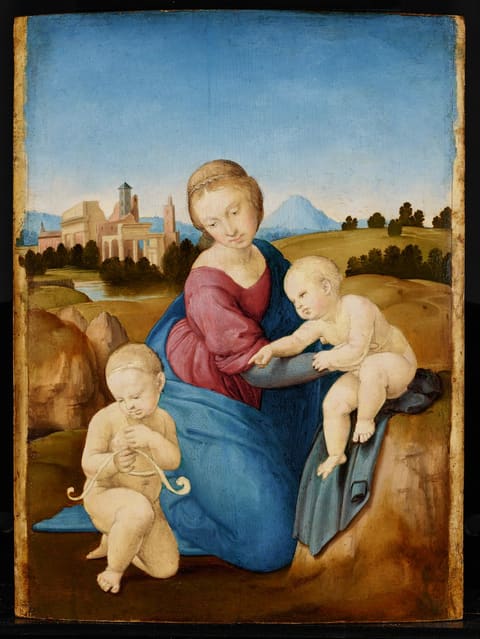
Virgin and Child with the Young Saint John the Baptist (The Esterházy Madonna)
N° 637·V · The Renaissance
Virgin and Child with the Young Saint John the Baptist (The Esterházy Madonna)
Raphael (1483-1520)
ca. 1508 · tempera and oil on wood
Italian · High Renaissance

One of the museum's supreme treasures: Raphael's small, unfinished Madonna of his late Florentine years, its pyramidal grouping of the Virgin, Christ Child and the young John the Baptist derived from Leonardo's ideas. The museum presents it as the culmination of Italian Renaissance harmony.

“The timeless harmony, serene palette and peerless grace of his pictures served as a model for centuries.” In the museum’s words — mfab.hu ↗ · quotation verified against the live page

Meanwhile — Phra Hai Sok (Lanna Buddha) South Asia · Lanna art (base inscription records its arrival in Bangkok in 1856 CE)

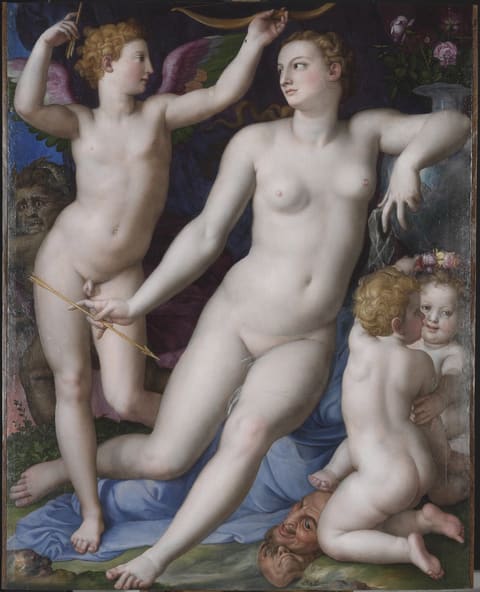
Venus, Cupid and Jealousy
N° 673·V · The Renaissance
Venus, Cupid and Jealousy
Agnolo di Cosimo Bronzino (1503-1572)
ca. 1550 · oil on poplar
Italian · Mannerism

A coldly brilliant Mannerist allegory - the twin of the London National Gallery's Allegory - whose erotic content and marble-hard, bloodless figures the museum describes as still able to jolt the viewer; infrared shows a snarling satyr once stood where the children now appear.

“There is body, but no soul, no instinct, no passion, no torrid arousal.” In the museum’s words — mfab.hu ↗ · quotation verified against the live page

Meanwhile — Tep Pranam South Asia · 16th century

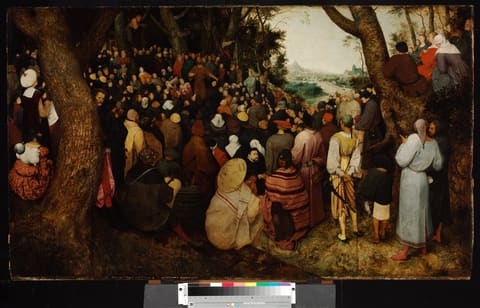
The Preaching of Saint John the Baptist
N° 689·V · The Renaissance
The Preaching of Saint John the Baptist
Pieter Bruegel I (ca. 1525-1569)
1566 · oil on wood
Netherlandish · Northern Renaissance

A key work in Bruegel's oeuvre, described by the museum as gathering the whole world into a densely varied crowd - nobles, peasants, foreigners and outcasts alike - drawn together to hear John the Baptist foretell the coming of Christ.

“Here the whole world draws up, in captivating diversity: nobles, priests, soldiers, burghers, peasants, Flemings, Spaniards, Jews, Gypsies, Turks, the healthy and the infirm.” In the museum’s words — mfab.hu ↗ · quotation verified against the live page

Meanwhile — Tile Panel, Alfiz Islamic world · 1570–1580

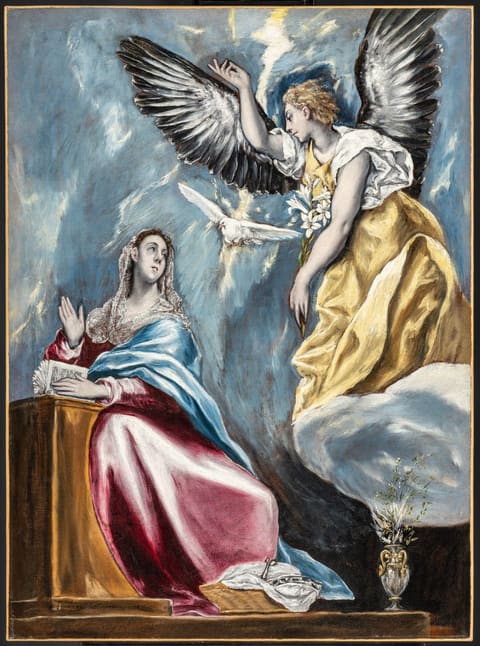
The Annunciation
N° 712·VI · The Baroque Age
The Annunciation
El Greco (Domenikos Theotokopoulos) (1541-1614)
ca. 1600 · oil on canvas
Spanish · Mannerism

A late Annunciation by El Greco in which, the museum notes, the room fills with clouds and flashing lights and the everyday objects around the Virgin are lifted out of real space and saturated with mystic significance.

“the interior of the room is filled with clouds and flashing lights” In the museum’s words — mfab.hu ↗ · quotation verified against the live page

Meanwhile — Aleppo Room Islamic world · 1600–01 and 1603

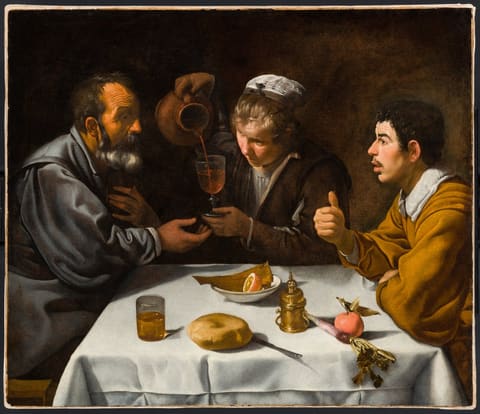
Tavern Scene
N° 740·VI · The Baroque Age
Tavern Scene
Diego Rodríguez de Silva y Velázquez (1599-1660)
ca. 1618-1619 · oil on canvas
Spanish · Baroque

An early Sevillian bodegón (tavern scene) by the young Velázquez, whom the museum ranks with Raphael, Titian and Rembrandt among the very greatest; its startling naturalism predates any contact with Caravaggio's work.

“In the history of western painting, besides Raphael, Titian and Rembrandt only Velázquez belongs in this club.” In the museum’s words — mfab.hu ↗ · quotation verified against the live page

Meanwhile — Water Fowl in the Lotus Pond East Asia · Japan, Edo period, early 17th century

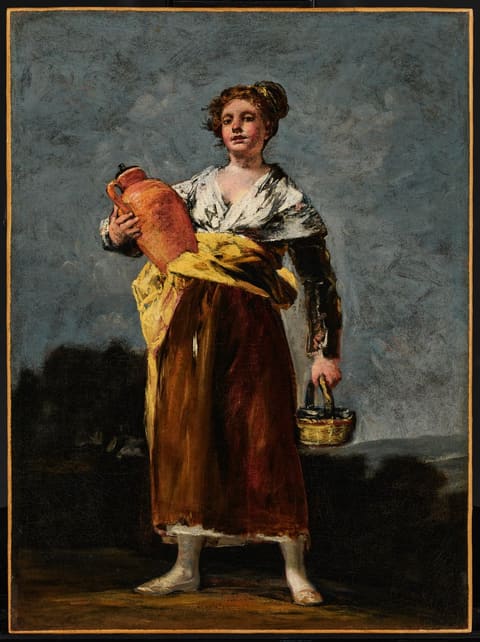
The Water Carrier ("La Aguadora")
N° 865·VIII · The Restless Century
The Water Carrier ("La Aguadora")
Francisco de Goya y Lucientes (1746-1828)
between 1808 and 1812 · oil on canvas
Spanish · Romanticism

Painted during Spain's occupation by Napoleon's troops, Goya's water-carrying girl is read by the museum both as a rustic genre figure and as a monument to the stubborn, ordinary heroism of the defenders of Zaragoza.

“Whether Goya was the last great old master or the first modern genius is a spurious dilemma” In the museum’s words — mfab.hu ↗ · quotation verified against the live page

Meanwhile — Covered bencharong jar with na-khop and garuda-clutching-naga design South Asia · Rattanakosin period, 24th Buddhist century (c. 18th–19th century CE)