The Atlas·TH

TH

Bangkok National Museum, Bangkok — 28 works · museum site ↗ · 200 BCE – 1957 60000 BCE2020

Seen from Bangkok, history is above all sculpture, then treasure & power — a collection opened wide onto other worlds — a window more than a mirror (28 of 28 works are from other civilisations).

Sculpture 11 Power 4 Craft 4 Sacred 4 Invention 3 Ritual 1 Architecture 1
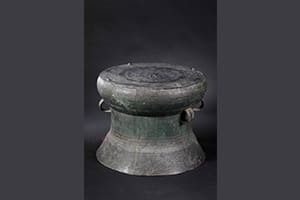
Bronze drum (mahoratuek)
N° 229·II · The Classical World
Bronze drum (mahoratuek)
Unknown
Late prehistoric period (c. 1,000–2,200 years ago) · Bronze
Late prehistoric period

Translated from Thai: A bronze kettle drum of the Heger I type, its body in three clear sections. The tympanum centres on a ten-pointed star or sun ringed by concentric bands of ornament—figures in feathered headdresses, herons flying counter-clockwise and comb patterns—with four cast bronze snail shells on the rim, a fertility symbol. Such drums are thought to have been beaten in rites concerning fertility and death. Excavated at Ban Tha It, Uttaradit, and sent to the museum in 1927.

“กลองมโหระทึก สัมฤทธิ์ รูปทรงกลองแบ่งออกเป็นสามส่วนอย่างชัดเจน” In the museum’s words — finearts.go.th ↗ · quotation verified against the live page

Meanwhile — Moche 14-karat gold headdress frontal ornament with dragons (Adorno Frontal de Oro Mochica) Americas & Oceania · Moche (Mochica), Florescent Era (1 – 800 CE)
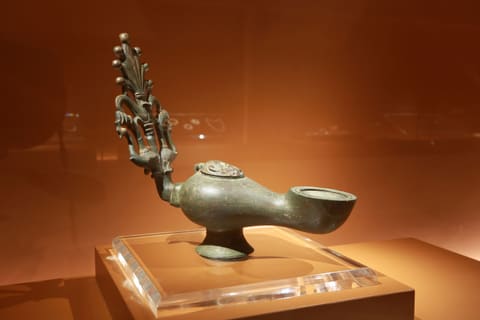
Roman bronze oil lamp from Phong Tuk
N° 257·II · The Classical World
Roman bronze oil lamp from Phong Tuk
Unknown
Roman art, c. 1st–4th century CE (found at Phong Tuk) · Bronze
Roman

Translated from Thai: A cast-bronze Roman oil lamp excavated at Phong Tuk, Tha Maka, Kanchanaburi, and given to the museum by the Royal Institute in 1927. Its hinged lid is cast as the face of the god Silenus (tutor of Dionysus) and the handle as a palm leaf with a pair of facing dolphins. It may have been cast at Alexandria in Roman-ruled Egypt and carried east by Indian traders — evidence of the region's early contact with the Roman world. Displayed in the Asia gallery.

“ตะเกียงโรมัน ขุดพบที่ตำบลพงตึก อำเภอท่ามะกา จังหวัดกาญจนบุรี” In the museum’s words — finearts.go.th ↗ · quotation verified against the live page

Meanwhile — Agate amphoriskoi and dish from Mtskheta Near East · 2nd-3rd century AD

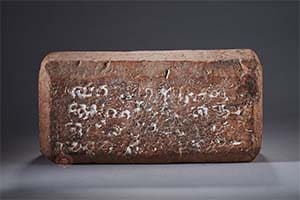
Terracotta brick inscribed with the Ye Dhamma verse
N° 343·III · Faith and Empire
Terracotta brick inscribed with the Ye Dhamma verse
Unknown
Dvaravati period, 12th Buddhist century (c. 7th century CE) · Terracotta (fired clay)
Dvaravati · Dvaravati period

Translated from Thai: A rectangular fired-clay brick with trimmed edges, inscribed in Pallava script and the Pali language with the Ye Dhamma verse, one of the essences of Buddhist doctrine spoken by the monk Assaji. Such Ye Dhamma inscriptions on bricks, stelae, votive tablets and stupas are characteristic of Dvaravati Buddhist culture in what is now Thailand.

“ก้อนอิฐดินเผา ทรงสี่เหลี่ยมผืนผ้า แต่งขอบทั้งสี่ด้าน มีจารึกอักษรปัลลวะ ภาษาบาลี” In the museum’s words — finearts.go.th ↗ · quotation verified against the live page

Meanwhile — Pensive Bodhisattva East Asia · Three Kingdoms period, 6th–7th century

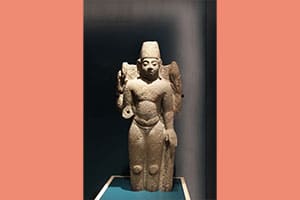
Four-armed Vishnu image
N° 344·III · Faith and Empire
Four-armed Vishnu image
Unknown
12th–13th Buddhist century (c. 7th–8th century CE) · Sandstone
Pre-Angkorian · Pre-Angkorian period

Translated from Thai: A four-armed image of Vishnu carved from sandstone, wearing a tall kiritamukuta crown, with a rounded face, arched brows and a moustache. The upper right hand holds a discus and the upper left a conch (the lower right arm and the feet are lost). The pairing of discus and conch in the upper hands, together with the crown, reflects clear post-Gupta South Indian (Pallava) influence. Found at Wat Tho in Mueang Phetchaburi.

“เทวรูปพระวิษณุสลักจากหินทราย พระเศียรทรงกิรีฏมกุฎ พระพักตร์ค่อนข้างกลม” In the museum’s words — finearts.go.th ↗ · quotation verified against the live page

Meanwhile — Plaque with Buddhas and attendants East Asia · dated 664-665 (Tang dynasty)

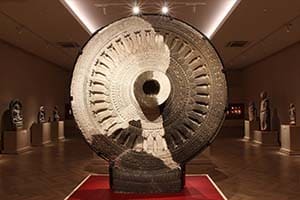
Dharmachakra (Wheel of the Law)
N° 345·III · Faith and Empire
Dharmachakra (Wheel of the Law)
Unknown
Dvaravati period, 12th–15th Buddhist century (c. 7th–10th century CE) · Stone
Dvaravati · Dvaravati period

Translated from Thai: A large carved stone Wheel of the Law (dharmachakra), a Dvaravati-period emblem used in place of an image of the preaching Buddha. Its hub, spokes and rim are carved with lozenges, jewel-and-flower roundels and eight fern-scroll motifs curled like a Thai numeral 1, showing Indian Vakataka/Gupta influence alongside features distinctive to Dvaravati art. Excavated at the base of Phra Pathom Chedi in Nakhon Pathom and brought into the museum in 1928; a missing half was restored in plaster under Silpa Bhirasri (Corrado Feroci).

“ธรรมจักรศิลาสลักลาย ฐานธรรมจักรสลักกลีบบัวคว่ำ” In the museum’s words — finearts.go.th ↗ · quotation verified against the live page

Meanwhile — Changsha bowl with underglaze iron-brown and copper-green decoration East Asia · Tang dynasty (618-906 CE)

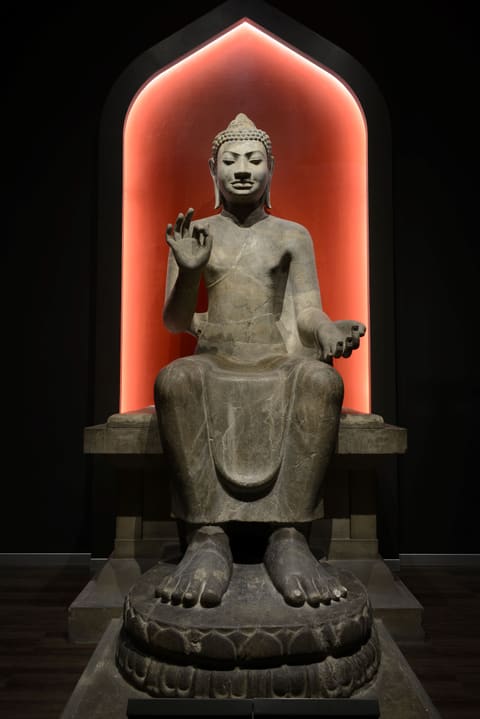
First-Sermon Buddha (Luang Pho Sila Khao)
N° 368·III · Faith and Empire
First-Sermon Buddha (Luang Pho Sila Khao)
Unknown
Dvaravati art, 13th–14th Buddhist century (c. 8th–9th century CE) · White stone
Dvaravati · Dvaravati period

Translated from Thai: A Dvaravati stone Buddha in the first-sermon attitude, seated with legs pendant, assembled from five stone pieces — the head and midriff from Wat Phraya Kong in Ayutthaya, and the chest, lap and feet from Wat Phra Men in Nakhon Pathom — joined by the old mortise-and-tenon technique. Popularly called “Luang Pho Sila Khao” (the white-stone Buddha); the hands were restored in 1966 after the model of a small seated Buddha at the Chao Sam Phraya museum. Displayed in the Prapat Phiphitthaphan building.

“พระพุทธรูปประทับนั่งห้อยพระบาท เป็นพระพุทธรูปที่นำมาประกอบจาก ๕ ส่วน” In the museum’s words — finearts.go.th ↗ · quotation verified against the live page

Meanwhile — Changsha bowl with underglaze iron-brown and copper-green decoration East Asia · Tang dynasty (618-906 CE)

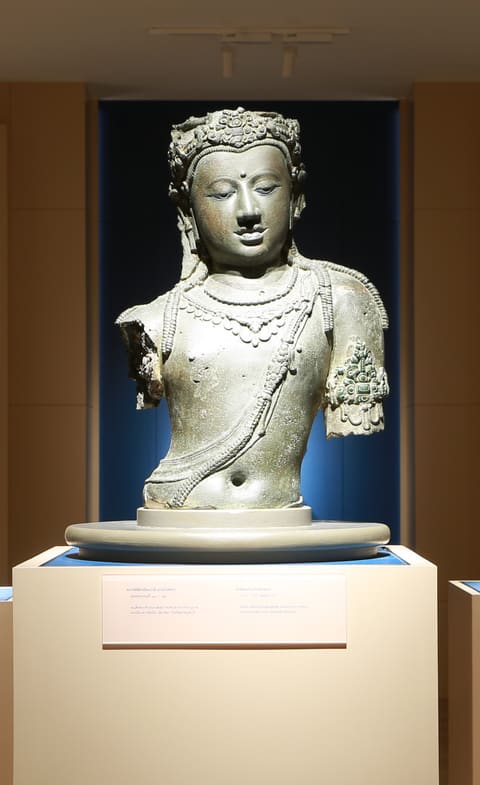
Bodhisattva Avalokiteshvara (Padmapani), upper torso
N° 384·III · Faith and Empire
Bodhisattva Avalokiteshvara (Padmapani), upper torso
Unknown
Srivijaya art, 14th Buddhist century (c. 8th century CE)
Srivijaya · Srivijaya period

Translated from Thai: The surviving upper torso of a two-armed Bodhisattva Avalokiteshvara (Padmapani) in Srivijaya art, found at Wat Wiang, Chaiya, Surat Thani. The body is gracefully flexed, wearing a headdress (its jatamukuta finial lost), a rosary and necklace, with a deerskin looped over the left shoulder. It may be the Padmapani named in the Wat Wiang inscription, in which King Dharmasetu is said to have built three brick sanctuaries dedicated to the Buddha and two bodhisattvas. Displayed in the Srivijaya gallery.

“พระปัทมปาณีโพธิสัตว์หรือพระโพธิสัตว์อวโลกิเตศวร ๒ กร ศิลปะศรีวิชัย อายุประมาณพุทธศตวรรษที่ ๑๔ พบเพียงท่อนบนพระวรกาย” In the museum’s words — finearts.go.th ↗ · quotation verified against the live page

Meanwhile — The Faddan More Psalter Europe · Circa AD 800

Four-armed Ganesha from Candi Singhasari
N° 401·III · Faith and Empire
Four-armed Ganesha from Candi Singhasari
Unknown
East Javanese art, 15th–16th Buddhist century (c. 10th–11th century CE) · Stone (high relief)
East Javanese

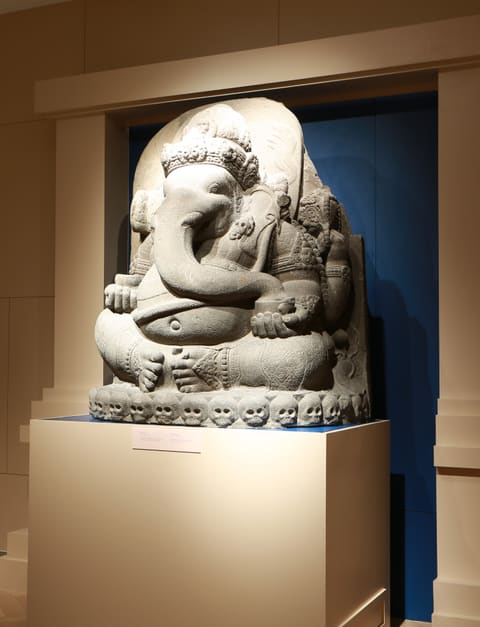
Translated from Thai: A four-armed Ganesha, 172 cm tall, carved in high relief in stone from Candi Singhasari in East Java, Indonesia, seated on a throne of human skulls; the upper right hand holds an axe, the upper left a rosary, and the lower hands a bowl of sweets, while the crown, ornaments, belt and sacred thread (a serpent) are all worked with skull motifs. The Dutch governor of Java presented it to King Chulalongkorn (Rama V) during his visit in 1896. Displayed in the Srivijaya gallery.

“พระคเณศ ๔ กร จากจันทิสิงหส่าหรี เกาะชวา ประเทศอินโดนีเซีย ศิลปะชวาตะวันออก” In the museum’s words — finearts.go.th ↗ · quotation verified against the live page

Meanwhile — Tombstone of the ichirgou-boyla Mostich Europe · Middle - third quarter of the 10th c.

Six-armed Bodhisattva Cunda
N° 402·III · Faith and Empire
Six-armed Bodhisattva Cunda
Unknown
Srivijaya art, 15th–16th Buddhist century (c. 10th–11th century CE)
Srivijaya · Srivijaya period

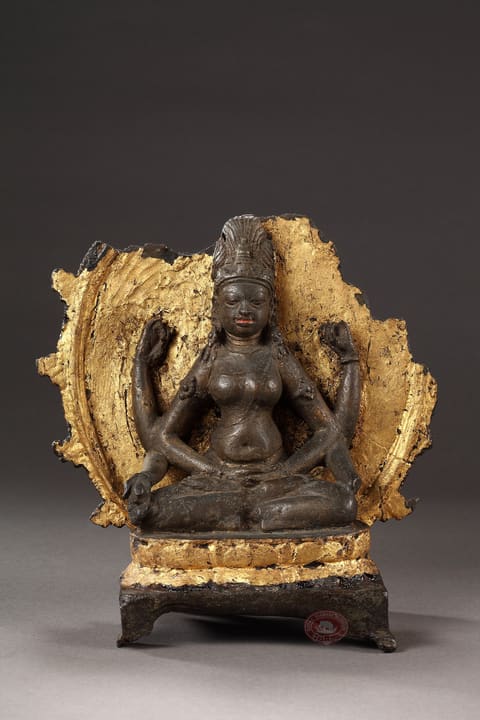
Translated from Thai: An image of the six-armed Bodhisattva Cunda, the hair gathered into a jatamukuta topped by a small stupa and set with a triangular ornament, strands falling to the shoulders, with a rounded face, downcast eyes, prominent nose and red-painted lips. The rear pair of hands is raised and once held attributes, now lost; the front pair is in the meditation gesture (samadhi); of the middle pair the right hand is open-palmed and the left is broken away. It wears a sacred thread (marking ascetic status) and sits in the adamantine posture on a lotus base before a flame-scrolled aureole. Presented by King Prajadhipok (Rama VII) on 17 September 1926 and shown in the Srivijaya gallery.

“รูปพระโพธิสัตว์จุนทา ๖ กร พระเศียรรวบพระเกศาเกล้าขึ้นเป็นมวย” In the museum’s words — finearts.go.th ↗ · quotation verified against the live page

Meanwhile — Tombstone of the ichirgou-boyla Mostich Europe · Middle - third quarter of the 10th c.

Sri Canasa Inscription
N° 427·III · Faith and Empire
Sri Canasa Inscription
Unknown
937 CE (Mahasakarat 859 / BE 1480) · Stone
Khmer · Pre-Angkorian period

Translated from Thai: A lotus-petal-shaped stone stele inscribed in Old Khmer script on both faces (side one in Sanskrit, side two in Old Khmer; its lower part broken away). Side one praises Shiva and lists the rulers of “Sri Canasa,” a polity whose name also appears in the Bo Ika inscription of 868 CE from the Sema area of Nakhon Ratchasima, suggesting the stele was moved from there before reaching Ayutthaya, where it was found near a sanctuary by Chikun bridge.

“จารึกแผ่นศิลา รูปทรงคล้ายกลีบบัว จารึกอักษรเขมรโบราณทั้งสองด้าน” In the museum’s words — finearts.go.th ↗ · quotation verified against the live page

Meanwhile — Ceramic icon of St. Theodore from Patleina Europe · Late 9th - 10th c.

Kendi (ewer) in the form of Ganesha
N° 488·III · Faith and Empire
Kendi (ewer) in the form of Ganesha
Unknown
18th Buddhist century (c. 13th century CE) · Green-glazed earthenware
Khmer · Lopburi period

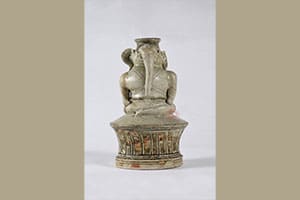
Translated from Thai: A green-glazed earthenware kendi (spouted water vessel) with a round mouth and foot, its body in two parts: a tall tapering lower section and an upper section modelled as a two-armed Ganesha seated in the relaxed cross-legged pose on an inverted-lotus base, the head dressed with a triple lattice pattern, a long trunk reaching the belly, and the right hand holding a broken tusk. Donated to the museum in 2021 and displayed in the Lopburi gallery.

“คนโทดินเผาเคลือบเขียว ปากกลม ฐานกลม ตัวภาชนะแบ่งออกเป็นสองส่วน” In the museum’s words — finearts.go.th ↗ · quotation verified against the live page

Meanwhile — Huastec Effigy Vessel Americas & Oceania · Postclassic (c. 900–1521 CE)

Maitreya (the Future Buddha)
N° 519·III · Faith and Empire
Maitreya (the Future Buddha)
Unknown
Tibetan art, 19th–20th Buddhist century (c. 14th–15th century CE)
Tibetan

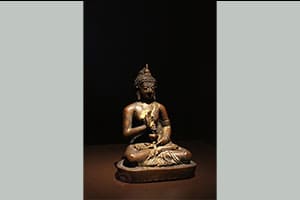
Translated from Thai: An image of Maitreya, the future Buddha, seated in the adamantine (vajra) posture with a rounded flame finial, a raised ushnisha bearing a small stupa, small curls, an urna on the forehead, downcast eyes and the robe worn over one shoulder, the right hand raised in the teaching gesture (vitarka mudra). The stupa alludes to the relic of the elder Kassapa on Mount Kukkutapada, awaited by Maitreya. Acquired by the museum in 1946 in exchange for a maravijaya Buddha image.

“พระพุทธรูปประทับขัดสมาธิเพชร มีพุทธลักษณะสำคัญ คือพระรัศมีเป็นต่อมกลม” In the museum’s words — finearts.go.th ↗ · quotation verified against the live page

Meanwhile — Nakhon Chum Inscription (Inscription No. 3) South Asia · Sukhothai period, 1357 CE (BE 1900)

Ramkhamhaeng Inscription (Inscription No. 1)
N° 523·III · Faith and Empire
Ramkhamhaeng Inscription (Inscription No. 1)
Unknown
Sukhothai period, Ramkhamhaeng Inscription (Inscription No. 1) · Stone
Sukhothai · Sukhothai period

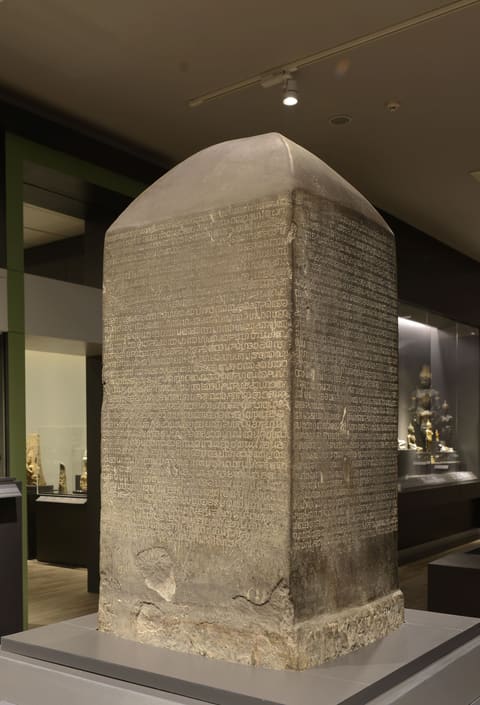
Translated from Thai: The Sukhothai stone inscription of King Ramkhamhaeng (Inscription No. 1). It was found at the old palace mound of Sukhothai — together with the Wat Pa Mamuang inscription and the Manangkhasila stone throne — by the future King Mongkut during his monkhood, around 1833, and he was the first to read it. Its text falls in three parts, the first (lines 1–18) recounting Ramkhamhaeng's life in the first person (“ku”/“I”). Displayed in the Sukhothai gallery.

“ทรงพบศิลาจารึกพ่อขุนรามคำแหงมหาราช ศิลาจารึกวัดป่ามะม่วงและพระแท่นมนังคศิลาบาตร” In the museum’s words — finearts.go.th ↗ · quotation verified against the live page

Meanwhile — Spindle whorl Europe · 1197–1400 AD

Bronze Shiva (Sukhothai)
N° 542·IV · Toward the Renaissance
Bronze Shiva (Sukhothai)
Unknown
Sukhothai art, early 20th Buddhist century (c. mid-14th century CE) · Bronze
Sukhothai · Sukhothai period

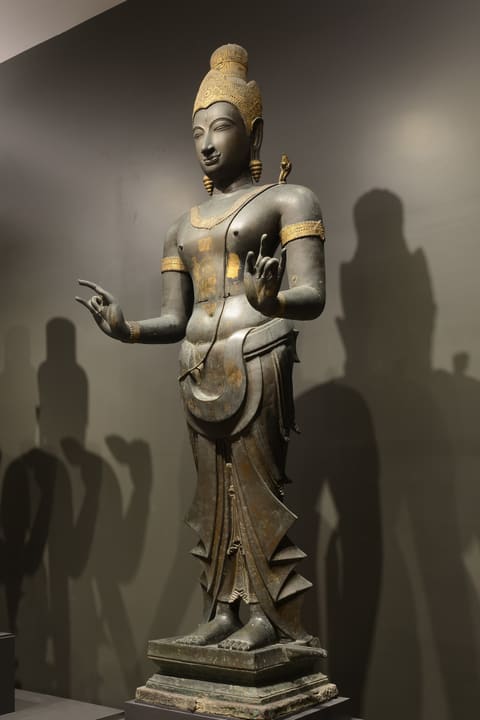
Translated from Thai: A Sukhothai bronze image of Shiva (Ishvara), of the early 20th Buddhist century, said by its history to have come from the Brahmin shrine (Devasathan) in Bangkok. It is thought to be the Maheswara named in the Wat Pa Mamuang inscription, which records that King Mahathammaracha I (Lithai) installed a Shiva together with a Vishnu in the Mahakaset Phiman shrine in 1350. Displayed in the Sukhothai gallery.

“พระอิศวรสำริด สมัยสุโขทัย อายุประมาณต้นพุทธศตวรรษที่ ๒๐ ลักษณะตามประวัติกล่าวว่ารับมาจากเทวสถานโบสถ์พราหมณ์ กรุงเทพฯ” In the museum’s words — finearts.go.th ↗ · quotation verified against the live page

Meanwhile — Gede Ruins Africa · Swahili town, 12th–17th century

Nakhon Chum Inscription (Inscription No. 3)
N° 543·IV · Toward the Renaissance
Nakhon Chum Inscription (Inscription No. 3)
Unknown
Sukhothai period, 1357 CE (BE 1900) · Stone (sandstone and shale)
Sukhothai · Sukhothai period

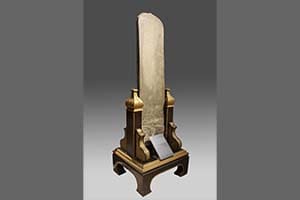
Translated from Thai: A lotus-petal-shaped stone stele, 47 cm wide and 193 cm tall, inscribed on both faces in Sukhothai Thai script and the Thai language (78 lines on side one, 58 on side two). It records that in 1357 King Lithai brought Buddha relics from Lanka to enshrine, and is a principal document of Sukhothai epigraphy. Obtained by Prince Damrong Rajanubhab from Wat Phra Borommathat in Kamphaeng Phet and brought to Bangkok in 1886.

“แผ่นศิลาหินทรายแป้งแทรกสลับกับหินดินดาน มีขนาดกว้าง ๔๗ เซนติเมตร สูง ๑๙๓ เซนติเมตร” In the museum’s words — finearts.go.th ↗ · quotation verified against the live page

Meanwhile — Maitreya (the Future Buddha) East Asia · Tibetan art, 19th–20th Buddhist century (c. 14th–15th century CE)

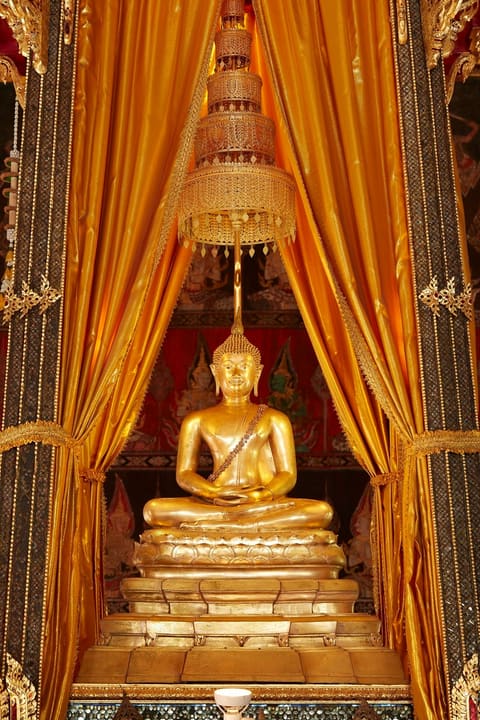
Phra Buddha Sihing
N° 561·IV · Toward the Renaissance
Phra Buddha Sihing
Unknown
Sukhothai–Lanna art, late 20th–21st Buddhist century (c. 15th–16th century CE) · Gilt bronze
Thai · Sukhothai–Lanna

Translated from Thai: One of Thailand's most revered Buddha images: a gilt-bronze Buddha in the meditation posture, 135 cm high including its base, in the Sukhothai–Lanna style. By tradition the Phra Buddha Sihing was enshrined for auspiciousness in successive old Thai royal cities. It was brought from Chiang Mai by the Front Palace prince Maha Surasinghanat in 1795 and is enshrined in the Phra Thinang Phutthaisawan (Buddhaisawan Chapel) of the National Museum Phra Nakhon.

“สมเด็จพระบวรราชเจ้ามหาสุรสิงหนาท ทรงอัญเชิญมาจากเมืองเชียงใหม่” In the museum’s words — finearts.go.th ↗ · quotation verified against the live page

Meanwhile — Madonna and the Child (The Benois Madonna) Europe · 1478–1480

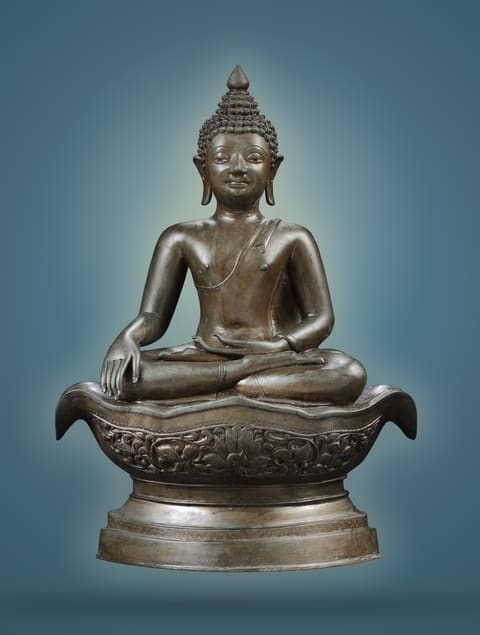
Phra Hai Sok (Lanna Buddha)
N° 584·IV · Toward the Renaissance
Phra Hai Sok (Lanna Buddha)
Unknown
Lanna art (base inscription records its arrival in Bangkok in 1856 CE)
Lanna · Lanna period

Translated from Thai: A Lanna-style Buddha in the maravijaya (subduing Mara) posture, seated in the adamantine pose with both soles visible, a lotus-bud finial, a faint smile and a full body. A Thai inscription on the back of the base records its arrival in Bangkok on 5 April 1856, in the Fourth Reign. It is named “Hai Sok” (“sorrow-dispelling”) after the Lanna custom of naming Buddha images for their protective virtues; it was formerly a royal image used only in state ceremonies. Displayed in the Lanna gallery.

“พระพุทธรูปปางมารวิชัย ศิลปะล้านนา ประทับขัดสมาธิเพชร พระบาทไขว้กันแลเห็นฝ่าพระบาททั้งสองข้าง” In the museum’s words — finearts.go.th ↗ · quotation verified against the live page

Meanwhile — Two-Headed Fountain Europe · 1501–1515

Niello silver bowl with Himavanta animals
N° 774·VI · The Baroque Age
Niello silver bowl with Himavanta animals
Unknown
Ayutthaya art, 23rd–24th Buddhist century (c. 17th–18th century CE) · Silver with niello (thom)
Ayutthaya · Ayutthaya period

Translated from Thai: A silver bowl of flattened form, wide-mouthed and narrow-based, raised in silver and decorated in black niello (thom). The rim bears an inverted-lotus band and the body four kinds of Himavanta creatures—kinnari, apson-siha, khochasi and ratchasi—within redented square frames amid flame-scroll motifs, with a lion in a roundel underneath. An example of Ayutthaya black-niello silverwork; excavated at Lat Khlong Supha, Mueang Phitsanulok.

“ขันถมเงินทรงมะนาวตัด ปากกว้างก้นแคบ ขึ้นรูปด้วยโลหะเงินตกแต่งลวดลายโดยการถมดำ” In the museum’s words — finearts.go.th ↗ · quotation verified against the live page

Meanwhile — Figurines of Chinese Europe · Around 1763

Covered bencharong jar with na-khop and garuda-clutching-naga design
N° 817·VII · The Age of Reason
Covered bencharong jar with na-khop and garuda-clutching-naga design
Unknown
Rattanakosin period, 24th Buddhist century (c. 18th–19th century CE) · Porcelain with overglaze enamels (bencharong)
Rattanakosin · Rattanakosin period

Translated from Thai: A green-ground covered jar edged in red, the lid painted with alternating na-khop (devouring-face) and scrolling-stem motifs and the body with garuda clutching naga within red rice-bud frames, all outlined in gold. It is an example of “lai yang” ware—Thai designs sent to be made by Chinese potters at kilns such as Jingdezhen in Jiangxi—and the garuda pattern is thought to have been reserved for the royal court. A royal loan to the museum in 1927.

“โถฝาเขียวขลิบแดง ฝาเขียนลายหน้าขบสลับกับลายก้านขดพื้นเขียว ตัวโถเขียนลายครุฑยุดนาค” In the museum’s words — finearts.go.th ↗ · quotation verified against the live page

Meanwhile — Napoleon I on his Imperial Throne Europe · 1806

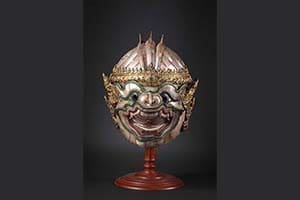
Khon mask head of Hanuman
N° 818·VII · The Age of Reason
Khon mask head of Hanuman
Unknown
Rattanakosin period, 24th Buddhist century (c. 200 years old) · Papier-mâché (khoi paper) with mother-of-pearl inlay
Rattanakosin · Rattanakosin period

Translated from Thai: A khon (masked dance) mask head of Hanuman, the white monkey, its white body-colour rendered in fire-snail mother-of-pearl, the mouth open, wearing a gold diadem with side ornaments. Making a mother-of-pearl khon mask is more elaborate than an ordinary one: a clay model is built up, layered with khoi paper, split off, and inlaid with iridescent shell cut to follow the curves of Hanuman's head and face. An original holding of the museum.

“หัวโขนหนุมานประดับด้วยมุกไฟแทนผิวกายสีขาว” In the museum’s words — finearts.go.th ↗ · quotation verified against the live page

Meanwhile — Napoleon I on his Imperial Throne Europe · 1806

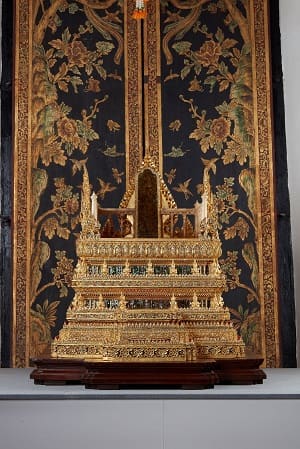
Phutthan throne of the Front Palace
N° 819·VII · The Age of Reason
Phutthan throne of the Front Palace
Unknown
Rattanakosin art, 24th Buddhist century (c. 18th–19th century CE)
Rattanakosin · Rattanakosin period

Translated from Thai: A phutthan royal palanquin throne of the Front Palace (Wang Na), a state conveyance borne by sixteen bearers in royal processions. It is thought to have been given by King Mongkut (Rama IV) to King Pinklao, the second king whose rank equalled that of the sovereign, and later served as a regalia of the viceroy and of the crown prince. Sent to the museum by the Ministry of the Palace.

“พระที่นั่งพุดตาน พระราชยานสำหรับเสด็จกระบวนพยุหยาตรา ใช้พลแบกหาม ๑๖ นาย” In the museum’s words — finearts.go.th ↗ · quotation verified against the live page

Meanwhile — Napoleon I on his Imperial Throne Europe · 1806

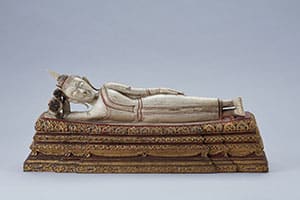
Reclining Buddha in ivory
N° 820·VII · The Age of Reason
Reclining Buddha in ivory
Unknown
Rattanakosin period, 24th Buddhist century (c. 18th–19th century CE) · Ivory, on a gilded and lacquered wood base
Rattanakosin · Rattanakosin period

Translated from Thai: A reclining Buddha carved from ivory, coloured along the robe hems, on a redented wood base that is lacquered, gilded and coloured with panels of guardian and lotus mouldings. The image has a flame finial, a raised ushnisha, small square-latticed curls, an oval face, arched brows and closed eyes. Reclining Buddhas evoke one of the Buddha's postures and episodes such as the subduing of Rahu and the parinirvana. Bought by the Fine Arts Department from the collection of Mom Chao Piyaphakdinat in 1936.

“พระพุทธรูปไสยาสน์แกะสลักด้วยงา ลงสีตามเส้นขอบจีวร ส่วนฐานเป็นไม้แกะสลักลงรักปิดทอง” In the museum’s words — finearts.go.th ↗ · quotation verified against the live page

Meanwhile — Napoleon I on his Imperial Throne Europe · 1806

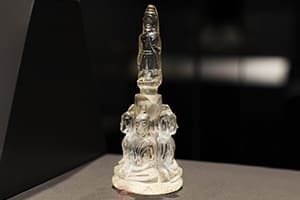
Rock-crystal Buddha image
N° 821·VII · The Age of Reason
Rock-crystal Buddha image
Unknown
Lanna art, 24th Buddhist century (c. 18th–19th century CE) · Rock crystal (quartz)
Lanna · Lanna period

Translated from Thai: A Buddha group carved from clear rock crystal, known as a “dewdrop-glass” Buddha: four Buddhas seated back-to-back in the maravijaya (subduing Mara) posture with flame finials and oval faces, surmounted by a single standing Buddha (in the “forbidding” gesture) that fits by a peg into a socket above them — together representing the Five Buddhas (Kakusandha, Konagamana, Kassapa, Gotama and Maitreya). Rock crystal, a rare semi-precious quartz, was a prized material, and Lanna texts held that making a Buddha of glass or crystal earned special merit. A gift of Mom Chao Ying Chongchitthanom Diskul.

“พระพุทธรูปหินผลึกใส หรือที่เรียกว่าพระพุทธรูปแก้วน้ำค้าง จำหลักเป็นรูปพระพุทธรูปสี่พระองค์” In the museum’s words — finearts.go.th ↗ · quotation verified against the live page

Meanwhile — Napoleon I on his Imperial Throne Europe · 1806

Sandalwood Buddha (Phra Kaen Chan)
N° 822·VII · The Age of Reason
Sandalwood Buddha (Phra Kaen Chan)
Unknown
Rattanakosin period, 24th Buddhist century (c. 200 years old) · Sandalwood, with silver and gilt-copper fittings
Rattanakosin · Rattanakosin period

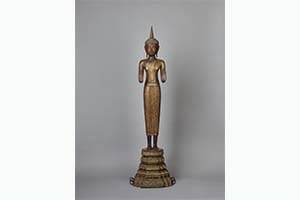
Translated from Thai: A standing Buddha carved from sandalwood, both hands raised in the calming-the-ocean gesture (pang ham samut), with a rounded, serene face, a repoussé silver head-cover and a tall flame finial of gilt copper; the robe is painted vermilion with gold floral patterning, on a redented wood base inlaid with coloured glass. It is thought to have been made by the Front Palace prince Maha Sakdi Phonlasep in the Third Reign, and is enshrined in the Phra Thinang Phutthaisawan (Buddhaisawan Chapel).

“พระพุทธรูปจำหลักจากไม้แก่นจันทน์ ทรงยืนยกพระหัตถ์ทั้งสองข้างแสดงปางห้ามสมุทร” In the museum’s words — finearts.go.th ↗ · quotation verified against the live page

Meanwhile — Napoleon I on his Imperial Throne Europe · 1806

Seven-headed naga sculpture
N° 823·VII · The Age of Reason
Seven-headed naga sculpture
Unknown
Rattanakosin period, 24th Buddhist century (c. 18th–19th century CE) · Stone
Rattanakosin · Rattanakosin period

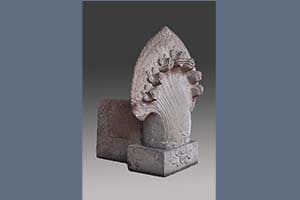
Translated from Thai: A stone seven-headed naga carved in two stacked sections: the upper part a fan of seven naga heads facing forward, the central head bearded, the hoods shaped like bodhi leaves edged with double fern-scroll and centred on an eight-petalled flower, over a lower part carved with an open lotus. One of a pair, it formerly stood before the Phra Thinang Isara Winitchai; it originally came from Wat Ratcha-orasaram in Bangkok and now stands at the entrance of the Prapat Phiphitthaphan building.

“ประติมากรรมนาค ๗ เศียร สลักจากศิลาแบ่งออกเป็นสองส่วนตั้งซ้อนกัน” In the museum’s words — finearts.go.th ↗ · quotation verified against the live page

Meanwhile — Napoleon I on his Imperial Throne Europe · 1806

Ivory carving of Durga slaying Mahishasura
N° 824·VII · The Age of Reason
Ivory carving of Durga slaying Mahishasura
Unknown
Indian art, 24th–25th Buddhist century (c. 18th–20th century CE) · Ivory
Indian

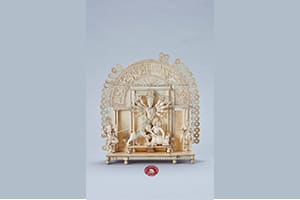
Translated from Thai: An ivory carving of the ten-armed goddess Durga standing on a lion within an architectural frame, slaying the buffalo-demon Mahishasura: her lower left hand grips his hair while her remaining hands hold weapons. The arch above shows figures fighting on mounts beneath a domed building, and a four-armed Ganesha is carved at the left. The subject derives from Brahmanical texts such as the Skanda, Varaha, Vamana and Markandeya Puranas. An original holding of the museum.

“งาช้างจำหลักรูปพระนางทุรคาสิบกรในอิริยาบถทรงยืนบนสิงห์กำลังปราบมหิษาสูร” In the museum’s words — finearts.go.th ↗ · quotation verified against the live page

Meanwhile — Janez Avguštin Puhar, Self-portrait Europe · 1850s or early 1860s

Busabok Kroen throne
N° 837·VII · The Age of Reason
Busabok Kroen throne
Unknown
Rattanakosin period, reign of Rama I (1782–1809) · Carved and gilded wood with glass inlay
Rattanakosin · Rattanakosin period

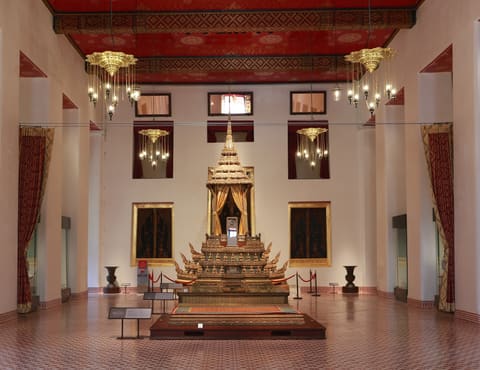
Translated from Thai: A wooden busabok (spired-canopy) throne flanked by kroen (tiered side platforms), carved with yaksha, garuda and thepanom figures, gilded and inlaid with coloured glass, made in the reign of King Rama I. The Front Palace prince Maha Surasinghanat used it to receive officials and conduct affairs of state in the front audience hall. Displayed at the Phra Thinang Isara Winitchai of the museum.

“พระที่นั่งบุษบกเกรินหรือบุษบกราชบัลลังก์ ตั้งอยู่ด้านหน้าพระทวารกลางของพระที่นั่งมุขกระสัน” In the museum’s words — finearts.go.th ↗ · quotation verified against the live page

Meanwhile — The Waterfall Sarpsfossen Europe · 1795

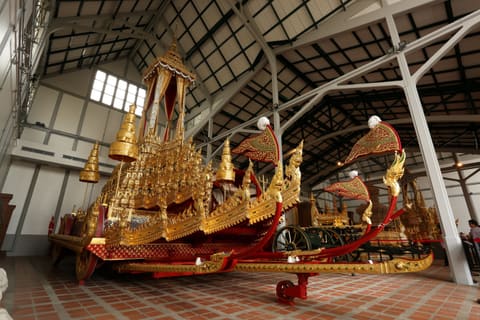
Great Victory Chariot (Phra Maha Phichai Ratcharot)
N° 844·VII · The Age of Reason
Great Victory Chariot (Phra Maha Phichai Ratcharot)
Unknown
Rattanakosin period, built 1795 CE (BE 2338)
Rattanakosin · Rattanakosin period

Translated from Thai: A monumental royal funeral chariot built in 1795 by order of King Rama I: 4.85 m wide, 18 m long (14.10 m for the body alone), 11.20 m high and weighing 13.70 tonnes, drawn by 216 men. Made in the old Ayutthaya royal tradition, it first carried the relics of Rama I's father to cremation and has since borne the remains of kings, queens and senior royalty, most recently in 2017. Displayed in the Royal Chariot Hall (Rong Ratcharot) of the museum.

“พระมหาพิชัยราชรถ เป็นราชรถที่พระบาทสมเด็จพระพุทธยอดฟ้าจุฬาโลกมหาราช โปรดเกล้าฯ ให้สร้างขึ้นเมื่อปี พ.ศ.๒๓๓๘” In the museum’s words — finearts.go.th ↗ · quotation verified against the live page

Meanwhile — The Waterfall Sarpsfossen Europe · 1795