National Museum of Korea, Seoul — 17 works · museum site ↗ · 400 CE–1799
Seen from Seoul, history is above all craft & design, then sculpture — a collection opened wide onto other worlds — a window more than a mirror (17 of 17 works are from other civilisations).
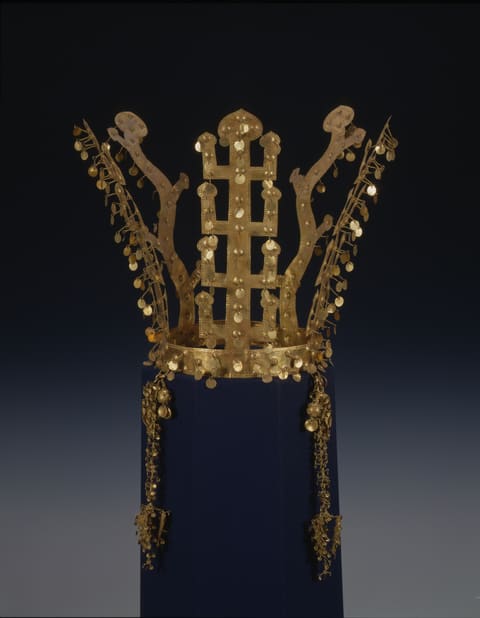
A Silla gold crown (Treasure No. 338) excavated from the Geumnyeongchong Tomb in Gyeongju and now held in Seoul; smaller and plainer than other Silla crowns, with four-tier tree-shaped and antler-shaped uprights, gold spangles and, unusually, no comma-shaped jade beads.
“It has three oppositely branched standing ornaments and a pair of antler-shaped ornaments whose branches were made separately before attaching them to each other using nails.”
In the museum’s words — museum.go.kr ↗ · quotation verified against the live page
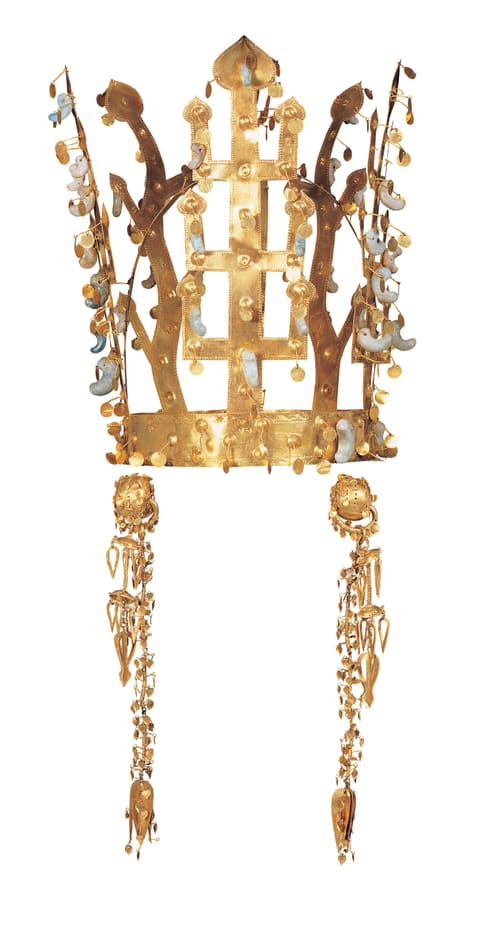
A Silla gold crown (Treasure No. 339) excavated from the Seobongchong Tomb in Gyeongju and now held in Seoul, with five tree- and antler-shaped uprights, gold spangles and long pendants; distinctively it has an inner cap of crossed gold plates topped with tree branches and phoenixes.
“This gold crown of Silla features five standing ornaments made of thin gold strips, three oppositely branching trees and two antler-shaped protrusions.”
In the museum’s words — museum.go.kr ↗ · quotation verified against the live page
Three Kingdoms period, 6th–7th century · Gilt-bronze
Korean · Three Kingdoms Period
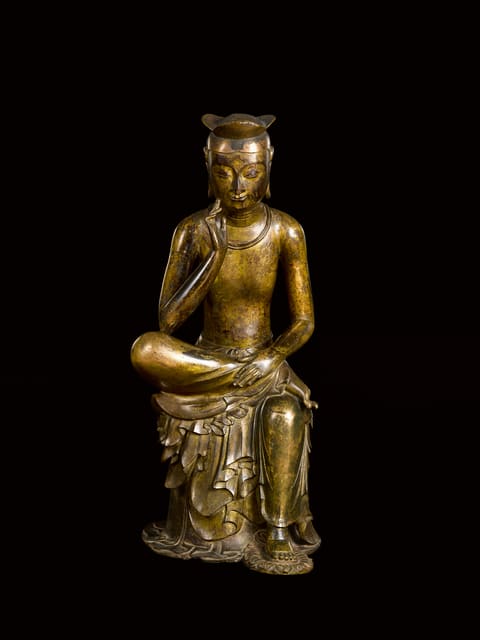
Gilt-bronze pensive bodhisattva, National Treasure No. 83, at 93.5 cm the tallest surviving pensive bodhisattva of the Three Kingdoms period; shown alongside National Treasure No. 78 in the Room of Quiet Contemplation. The museum notes its close resemblance to a wooden bodhisattva at Koryuji Temple in Japan, evidence of early Korea-Japan Buddhist exchange.
“This Pensive Bodhisattva statue (designated National Treasure #83) is 93.5 cm high, making it the tallest of all extant pensive bodhisattvas from the Three Kingdoms period”
In the museum’s words — museum.go.kr ↗ · quotation verified against the live page
Three Kingdoms period, 6th–7th century · Gilt-bronze
Korean · Three Kingdoms Period
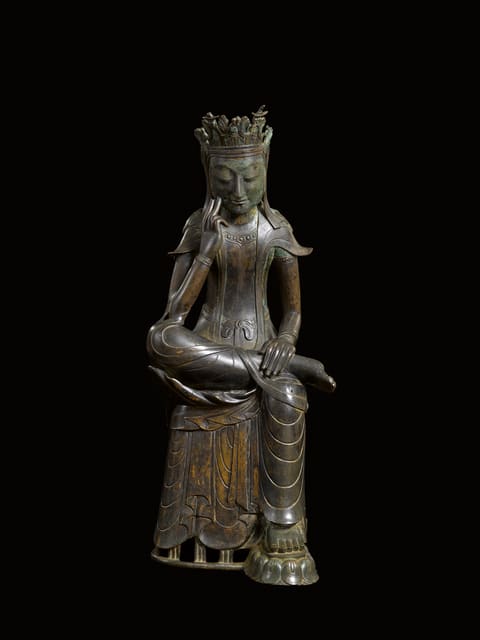
A gilt-bronze half-seated bodhisattva in the classic contemplative pose, one leg over the knee and fingertips to the cheek; designated National Treasure No. 78 and displayed with National Treasure No. 83 in the museum's Room of Quiet Contemplation. The museum notes its sun-and-moon crown of ultimately Sasanian-Persian derivation and an exceptionally thin (about 2 mm) bronze wall.
“This pose is quite common in Buddhist sculpture, and it was derived from the young Indian Prince, Siddhartha Gautama, contemplating the nature of human life.”
In the museum’s words — museum.go.kr ↗ · quotation verified against the live page
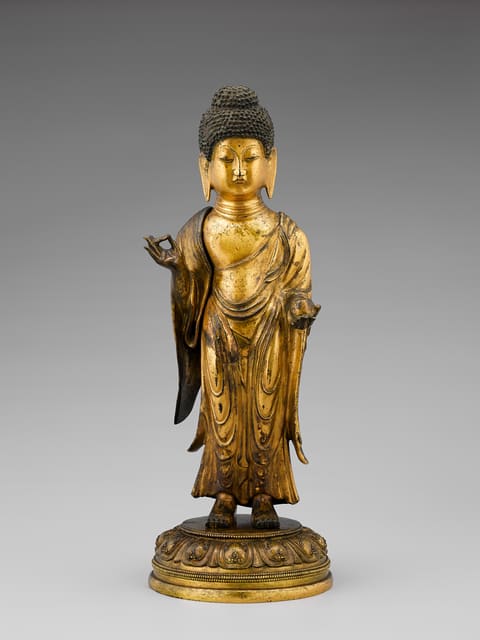
A larger-than-usual gilt-bronze standing Bhaisajyaguru (Medicine) Buddha holding a medicine casket in the left hand with the right hand raised; the museum places its voluminous body and embossed robe folds in the cultural zenith of Unified Silla. Displayed in the Buddhist Sculpture gallery.
“This gilt-bronze standing Bhaisajyaguru Buddha is larger than most of the gilt-bronze Buddha statues dating back to the Unified Silla Period.”
In the museum’s words — museum.go.kr ↗ · quotation verified against the live page
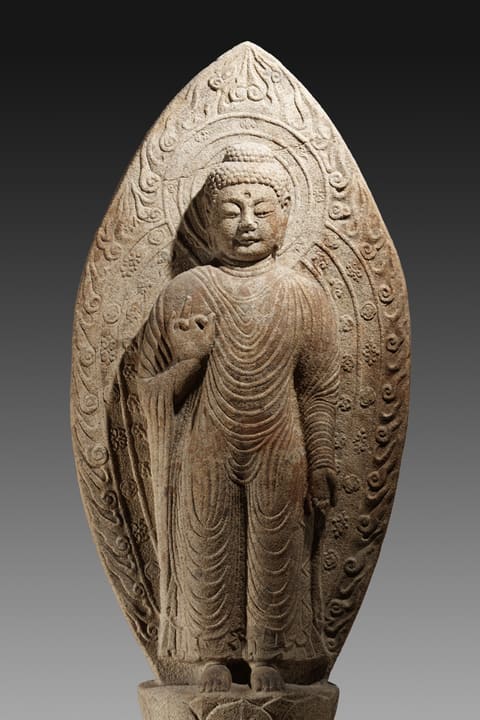
Stone Standing Amitabha Buddha from Gamsansa Temple Site
Unknown
719 (Unified Silla) · Granite
Korean · Unified Silla Period
A 2.75 m granite standing Amitabha Buddha, National Treasure No. 82, one of a Maitreya-and-Amitabha pair moved in 1915 from the Gamsansa Temple site near Gyeongju. Back inscriptions record that the official Kim Ji-seong began them in 719 for his deceased parents; the pair demonstrate the realistic detail and elaborate ornamentation of Unified Silla stone carving.
“In 1915, these two statues of Maitreya and Amitabha were moved from the site of Gamsansa Temple in Gyeongju, once the capital of Silla.”
In the museum’s words — museum.go.kr ↗ · quotation verified against the live page
Meanwhile — The Sinaw HoardIslamic world · coins of 589-841 CE; buried and found 1979
N° 423·III · Faith and Empire
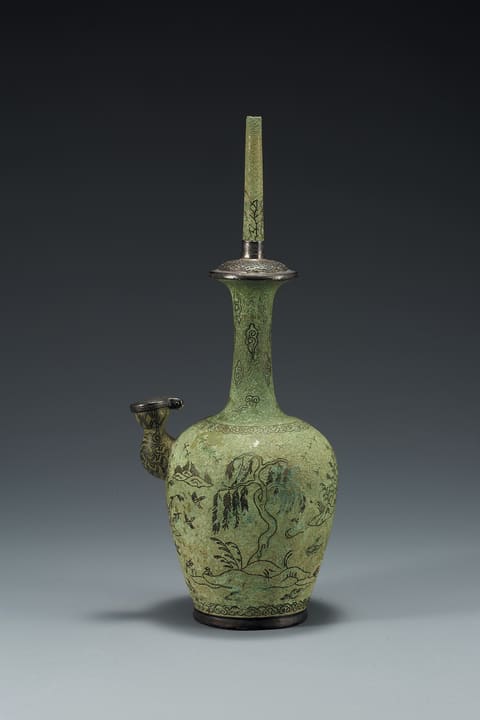
Bronze Kundika with Silver Inlaid Landscape Design
Unknown
Goryeo Dynasty (918–1392) · Bronze with silver inlay
Korean · Goryeo Dynasty
A Goryeo bronze ritual ewer (kundika), National Treasure No. 92, inlaid in silver wire as fine as 0.5 mm with an idyllic waterside landscape of reeds, willows, waterbirds and a fisherman's boat; tarnish has since blackened the silver and greened the bronze.
“This particular ewer is elaborately inlaid with an idyllic waterside landscape, featuring reeds and willows waving in the wind, birds peacefully hovering and floating about, fishermen in a boat, and a nearby hill draped in dense fog.”
In the museum’s words — museum.go.kr ↗ · quotation verified against the live page
Meanwhile — Muteran Treasure HoardSouth Asia · 10th–14th century (Sindok to Majapahit era)
N° 424·III · Faith and Empire
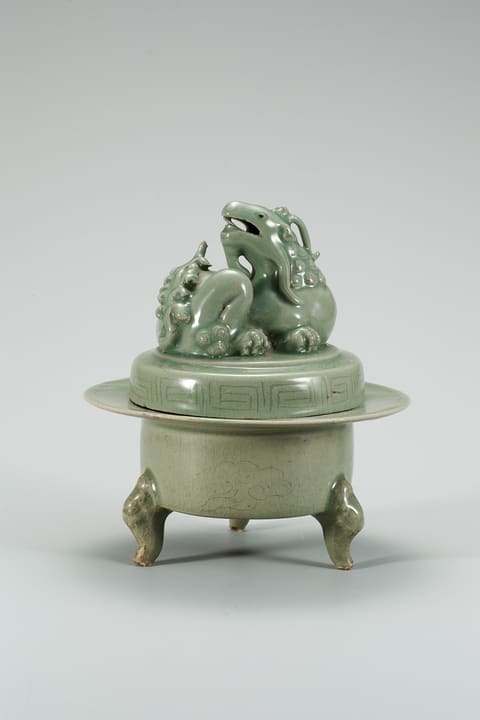
Celadon Incense Burner with Girin Decoration
Unknown
Goryeo Dynasty · Celadon
Korean · Goryeo Dynasty
A Goryeo celadon incense burner whose lid is surmounted by a girin (a mythical hooved creature) that releases incense smoke; the museum cites the Gaoli tujing account of animal-lidded burners used at Goryeo palace rites.
“In this case, an ornament in the shape of a girin, a fictional creature, is placed on top of the lid.”
In the museum’s words — museum.go.kr ↗ · quotation verified against the live page
Meanwhile — Muteran Treasure HoardSouth Asia · 10th–14th century (Sindok to Majapahit era)
N° 425·III · Faith and Empire
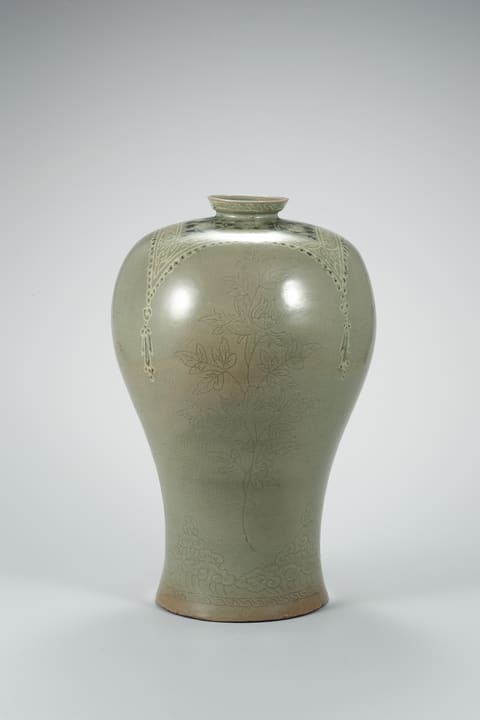
Celadon Lidded Prunus Vase with Incised Peony and Inlaid Wrapping Cloth Design
Unknown
Goryeo Dynasty · Celadon
Korean · Goryeo Dynasty
A lidded Goryeo celadon prunus vase (maebyeong), Treasure No. 342, whose shoulder is inlaid with a square bojagi (wrapping-cloth) pattern imitating a real cloth tied over the shoulders, above incised peony decoration on the body.
“This bottle is inlaid with a square bojagi pattern over the part around the neck, supposedly to create such an effect.”
In the museum’s words — museum.go.kr ↗ · quotation verified against the live page
Meanwhile — Muteran Treasure HoardSouth Asia · 10th–14th century (Sindok to Majapahit era)
N° 426·III · Faith and Empire
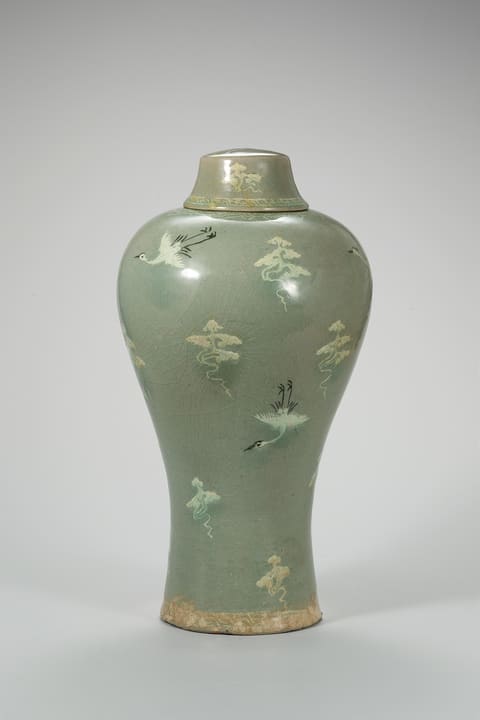
Celadon Lidded Prunus Vase with Inlaid Cloud and Crane Design
Unknown
Goryeo Dynasty · Celadon
Korean · Goryeo Dynasty
A Goryeo inlaid-celadon prunus vase (maebyeong) decorated with cranes and clouds, retaining its lid (which the museum suggests doubled as a cup); bands of thunder-pattern and Anuruddha-head designs frame the inlaid cloud-and-crane field.
“Its top and sides are decorated with inlaid crane and cloud designs.”
In the museum’s words — museum.go.kr ↗ · quotation verified against the live page
Meanwhile — Muteran Treasure HoardSouth Asia · 10th–14th century (Sindok to Majapahit era)
N° 466·III · Faith and Empire
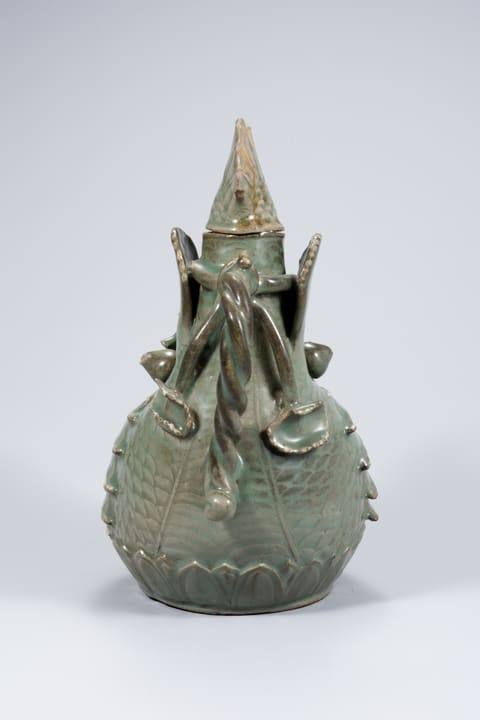
Celadon Fish Dragon-Shaped Ewer
Unknown
12th century · Celadon
Korean · Goryeo Dynasty
A Goryeo celadon ewer, National Treasure No. 61, modeled as a mythical fish-dragon leaping from the water, the dragon's head forming the spout and fins spread along the body. The museum presents it as one of the most representative celadons of the 12th-century peak of Korean celadon and a prime example of sanghyeong (pictorial/shaped) celadon.
“This is one of the most representative celadon wares of the 12th century, the peak of Korean celadon, given its aesthetic dynamism and extraordinary jade-colored glaze.”
In the museum’s words — museum.go.kr ↗ · quotation verified against the live page
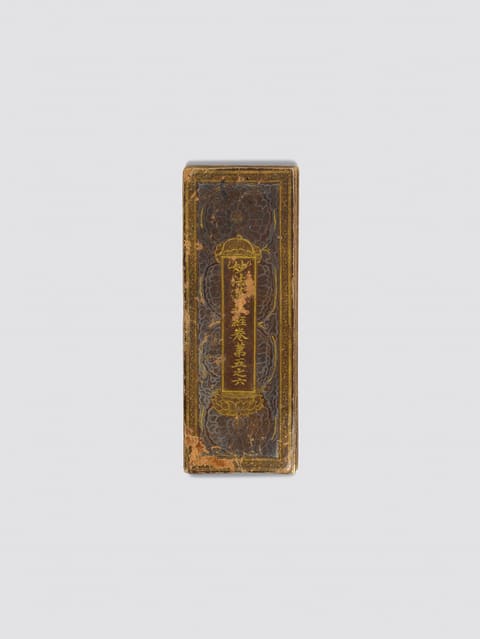
Saddharmapundarika Sutra (The Lotus Sutra) in Silver on Oak Paper, Volumes 5 and 6
Unknown
14th century · Silver on paper
Korean · Goryeo Dynasty
A Goryeo manuscript of the Lotus Sutra (Volumes 5-6), Treasure No. 976, transcribed in silver on dark oak-tinted paper with a gold-and-silver flower design on the cover. Translated into Chinese by Kumarajiva, the Lotus Sutra was among the most influential and widely copied Buddhist scriptures in Korea; the museum dates this copy stylistically to the 14th century.
“It was translated into Chinese by an Indian monk named Kumarajiva during the later Qin Period of China, and was transcribed in silver on oak paper.”
In the museum’s words — museum.go.kr ↗ · quotation verified against the live page
Ten-story Stone Pagoda from Gyeongcheonsa Temple Site
Unknown
1348 · Marble
Korean · Goryeo Dynasty
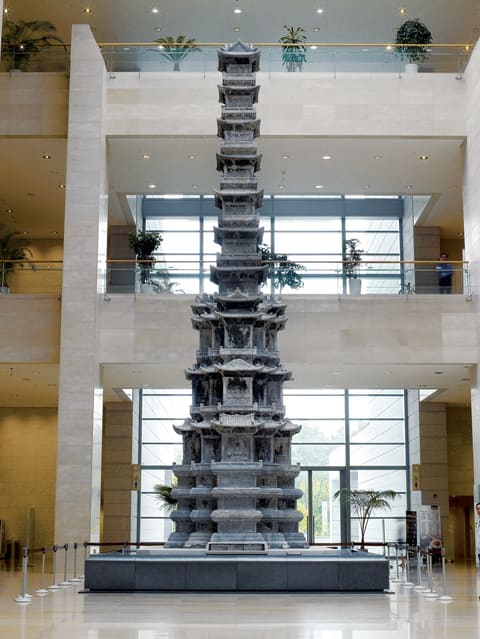
A 13.5 m marble ten-story pagoda inscribed with the date 1348, exceptional as the first known Korean stone pagoda in marble and for its complex tiered plan carved with Buddhas, bodhisattvas and floral designs. Taken to Japan in 1907 and later returned, it now stands on the museum's 'Path to History'. Its eaves reflect Goryeo wooden architecture and it later influenced the Joseon-era Wongaksa pagoda.
“Most Korean stone pagodas were made from granite, but this massive ten-story pagoda is the first one known to be made from marble.”
In the museum’s words — museum.go.kr ↗ · quotation verified against the live page
White Porcelain Jar with Cloud and Dragon Design in Underglaze Iron
Unknown
Early Joseon period, 15th–16th century · White porcelain with underglaze iron-brown
Korean · Joseon Dynasty
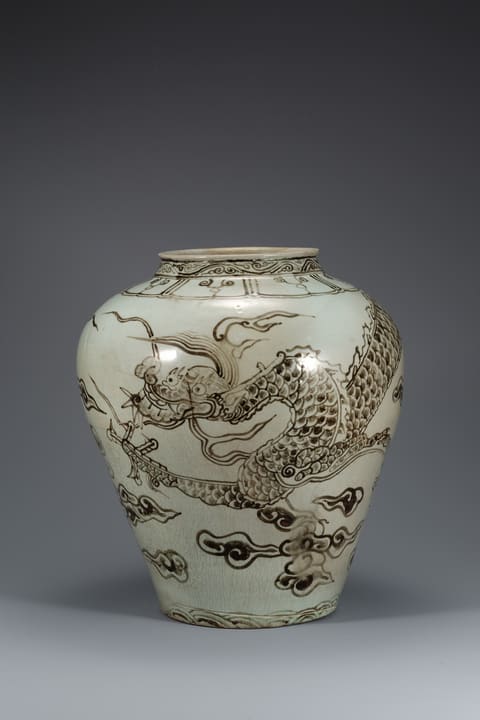
An early-Joseon white porcelain jar with a full, stable body painted in iron-brown underglaze with a dragon chasing a flaming pearl, its whiskers and mane streaming; shown in the Buncheong Ware and White Porcelain gallery.
“The body is decorated with a dragon struggling to catch a magic pearl in a dynamic manner, its whiskers and mane blowing wildly in the wind.”
In the museum’s words — museum.go.kr ↗ · quotation verified against the live page
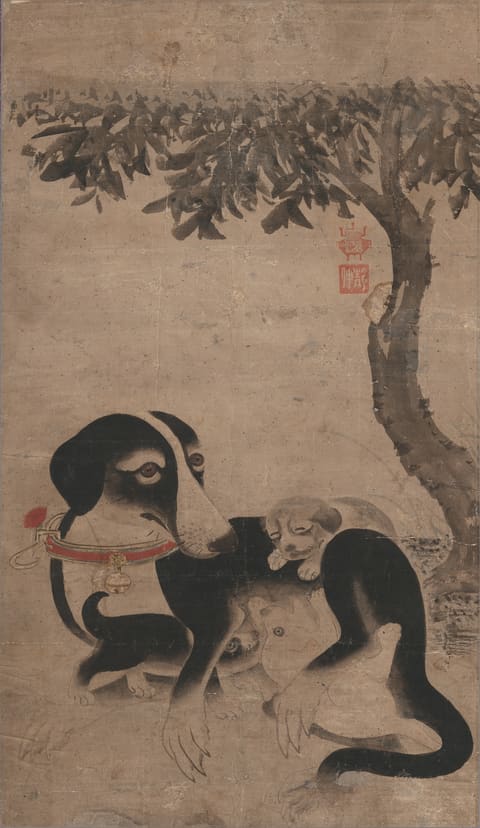
A Joseon hanging-scroll painting of a mother dog and her puppies by Yi Am (b. 1499), known for a distinctively Korean manner; the animals are rendered with warmth while the backdrop trees are only lightly sketched.
“This painting made by Yi Am (1499-?) portrays the warm atmosphere surrounding a dog and her puppies.”
In the museum’s words — museum.go.kr ↗ · quotation verified against the live page
Joseon Dynasty (early 18th century) · Colors on silk
Korean · Joseon Dynasty
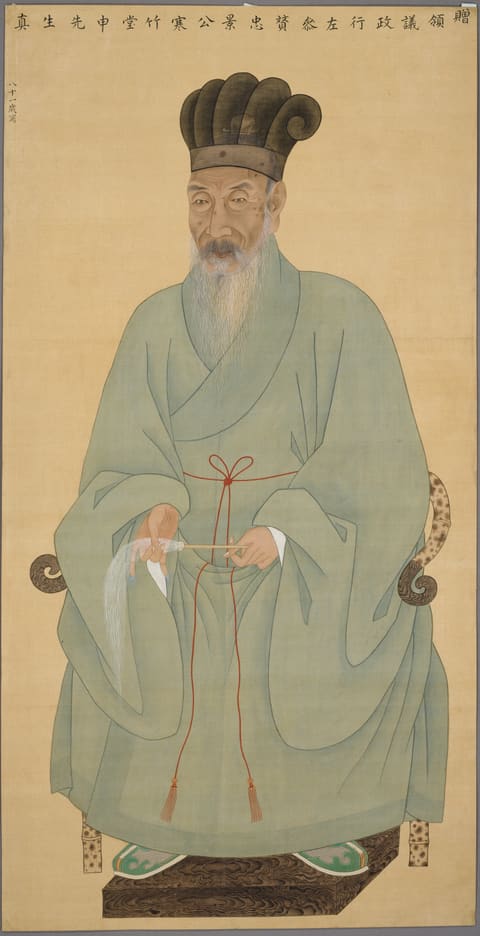
A Joseon portrait of the high official Shin Im (1642-1725), an early example of a full-length portrait in ordinary dress and, unusually for its time, one that shows the sitter's hands.
“It is an early example of a full-length portrait of a person in ordinary clothing, and a rare example of a portrait from that time that includes the hands of the subject.”
In the museum’s words — museum.go.kr ↗ · quotation verified against the live page
Meanwhile — The Akan DrumAfrica · early 18th century
N° 797·VII · The Age of Reason
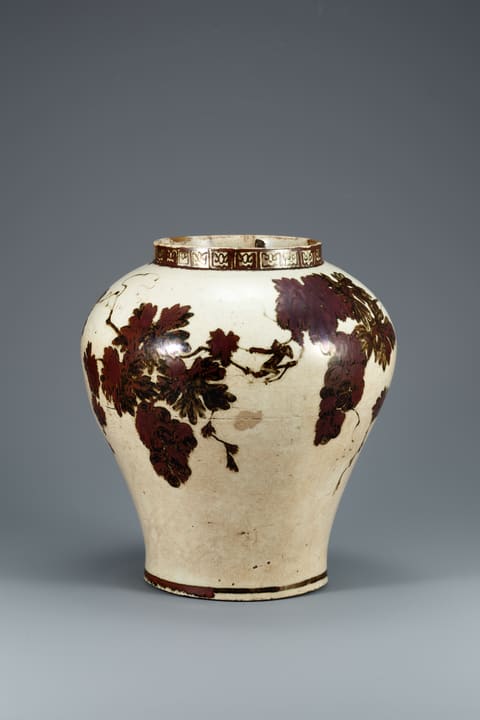
White Porcelain Jar with Grapevine and Monkey Pattern
Unknown
Late Joseon period, 18th century · White porcelain with underglaze iron-brown
Korean · Joseon Dynasty
A late-Joseon white porcelain jar, National Treasure No. 93, painted in iron-brown underglaze with grapevines and monkeys set against generous blank ground; the museum calls it one of the finest such iron-painted porcelains, prized for its milk-white body and refined proportions.
“Grapevines and monkeys are painted on the middle section of the body with sufficient blank space remaining, giving it an overall sense of harmony.”
In the museum’s words — museum.go.kr ↗ · quotation verified against the live page