The Atlas·IS

IS

National Museum of Iceland, Reykjavík — 24 works · museum site ↗ · 900 CE–1930 60000 BCE2020

Seen from Reykjavík, history is above all sculpture, then treasure & power — a collection kept wholly in its own tradition — a mirror.

Sculpture 6 Power 5 Craft 5 Invention 3 Ritual 2 Sacred 1 Portraits 1 Observation 1
Bead necklace
N° 409·III · Faith and Empire
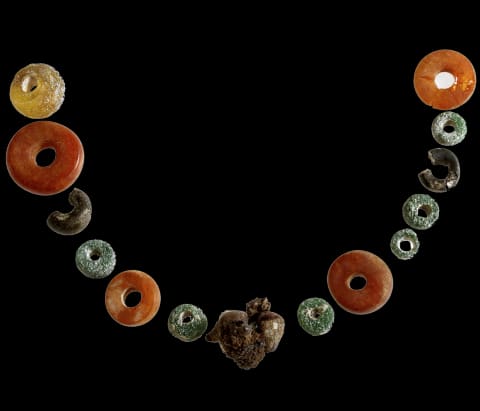
Bead necklace
Unknown
900–1000 AD · Glass, amber
Norse (Viking Age Iceland) · Viking Age

Beads of colourful glass, stone and amber from a necklace found in a pagan grave in Þjórsárdalur (the Þjórsá valley), south Iceland — a valley whose farms were buried under pumice when Mount Hekla erupted in 1104, leaving well-preserved evidence of the early centuries of Iceland's history.

“Beads from a neckless found in a pagan grave in Þjórsárdalur, or Þjórsá Valley.” In the museum’s words — thjodminjasafn.is ↗ · quotation verified against the live page

Meanwhile — Nataraja South Asia · circa 10th Century AD
Brooch for tunics
N° 410·III · Faith and Empire
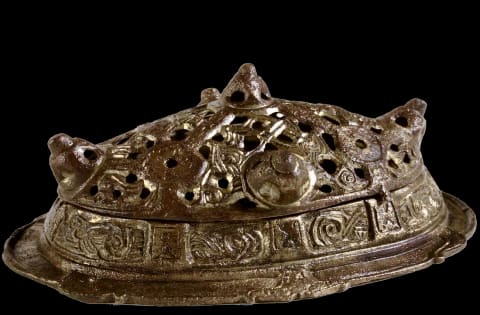
Brooch for tunics
Unknown
900–1000 AD · Bronze
Norse (Viking Age Iceland) · Viking Age / Settlement Era

A 10th-century gilt bronze brooch, its gilding almost intact, of the kind Viking-age women wore in pairs to fasten an over-tunic at each shoulder. Found in a grave at Hrísar in Eyjafjörður, north Iceland.

“A brooch from the 10th century. The gilding is almost intact.” In the museum’s words — thjodminjasafn.is ↗ · quotation verified against the live page

Meanwhile — Nataraja South Asia · circa 10th Century AD
Hnefi, chess piece
N° 411·III · Faith and Empire
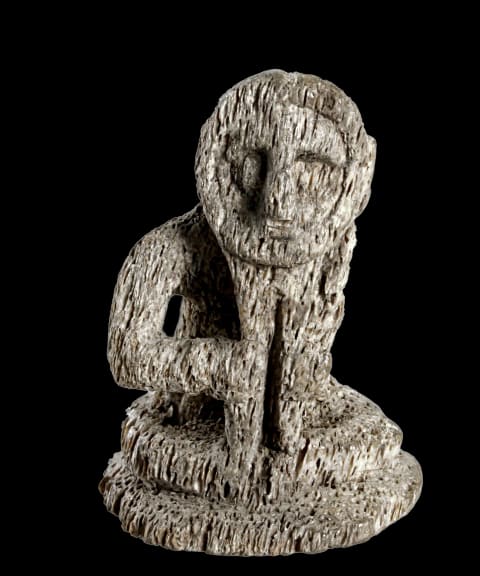
Hnefi, chess piece
Unknown
900–1000 AD · Whale bone
Norse (Viking Age Iceland) · Viking Age / Settlement Era

A whalebone playing-piece from the old Norse board game hnefatafl, believed to be the 'hnefi' — the central, king-like piece that players attacked or defended — carved as a manlike figure holding his split beard in both hands. It was found in a pagan grave (kuml) at Baldursheimur by Mývatn, north Iceland, together with other gaming pieces and grave goods now in the museum.

“Chess piece from an old chess game, 'hnefatafl'. This piece is believed to be the 'hnefi', the centre piece (like the king) that players attacked or defended.” In the museum’s words — thjodminjasafn.is ↗ · quotation verified against the live page

Meanwhile — Nataraja South Asia · circa 10th Century AD
Hammer of Þór (Thor)
N° 431·III · Faith and Empire
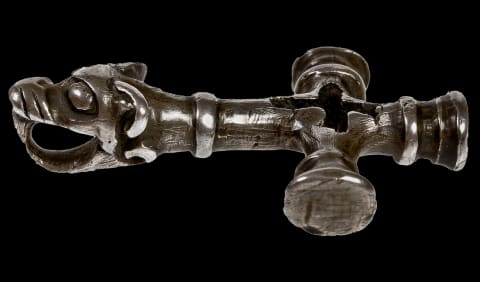
Hammer of Þór (Thor)
Unknown
950–1050 AD · Silver
Norse (Viking Age Iceland) · Viking Age / Settlement Era

A small silver Thor's-hammer amulet, which the museum says is believed to have been crafted abroad, worn on a band or chain around the neck. The museum notes that replicas of the pendant remain popular today. Found at Foss in south Iceland.

“The hammer of Þór (Thor) is believed to have been crafted abroad.” In the museum’s words — thjodminjasafn.is ↗ · quotation verified against the live page

Meanwhile — Mother and Child South Asia · 10th-11th Century AD

Þór (Thor)
N° 440·III · Faith and Empire
Þór (Thor)
Unknown
c. 1000 AD · Bronze
Norse (Viking Age Iceland) · Viking Age / Settlement Era

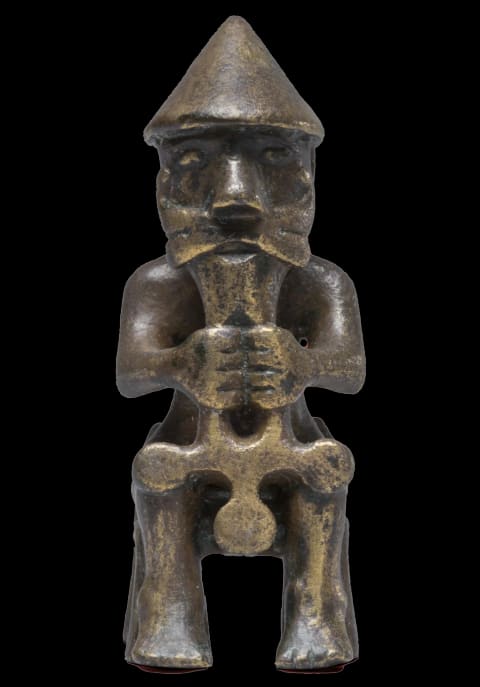
A small bronze seated figure of Þór (Thor), the Norse god of thunder, shown gripping his hammer Mjölnir, which the museum notes is shaped somewhat like a cross. Found in the 19th century at Eyrarland in Eyjafjörður, north Iceland, and dated to around 1000; the museum presents it as one of its most renowned artefacts and the key artefact for the period 800–1000. It was returned from the Danish National Museum in 1930.

“Þór (Thor), the god of thunder, depicted holding his hammer Mjölnir.” In the museum’s words — thjodminjasafn.is ↗ · quotation verified against the live page

Meanwhile — Mother and Child South Asia · 10th-11th Century AD

Bishop's crosier
N° 458·III · Faith and Empire
Bishop's crosier
Unknown
1050–1075 AD · Bronze
Icelandic · Romanesque (Urnes style)

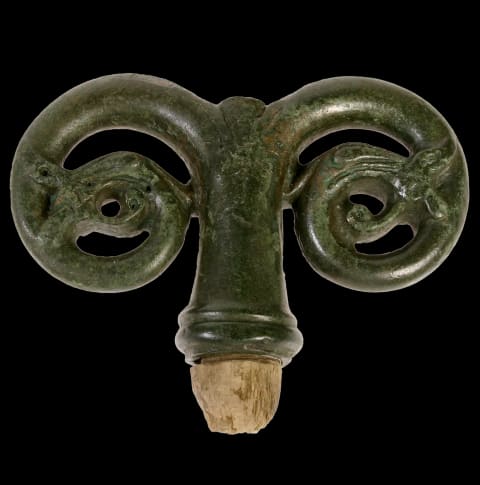
A bronze staff-head, probably a bishop's crosier, found at Þingvellir. The crooks end in animal heads in the Urnes style, dating it to the 11th century; the museum suggests it may have belonged to one of Iceland's early bishops.

“Bronze staff-head, probably a bishop's crosier, found at Þingvellir.” In the museum’s words — thjodminjasafn.is ↗ · quotation verified against the live page

Meanwhile — Early Spring East Asia · 1072, Northern Song dynasty

Ufsakristur, figure of Christ
N° 471·III · Faith and Empire
Ufsakristur, figure of Christ
Unknown
1100–1200 AD · Wood (birch)
Icelandic · Romanesque

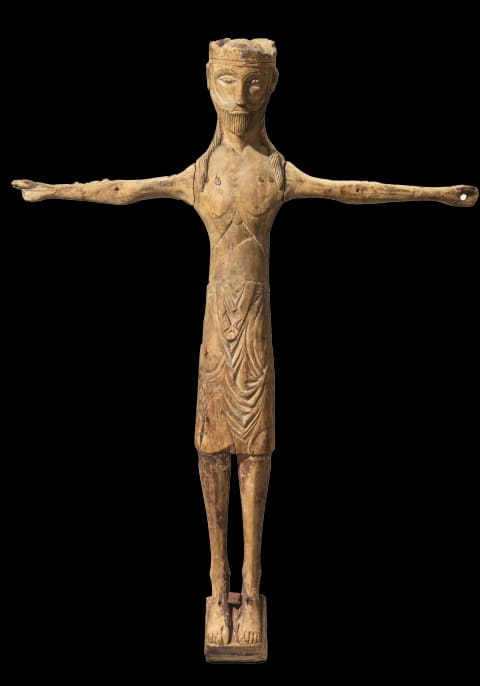
A Romanesque carved birchwood figure of Christ from a lost rood (crucifix), still bearing traces of its original paint. It hung in the church at Ufsir in Svarfaðardalur, from which the name 'Ufsakristur' derives, and is carved in the erect, open-eyed, out-stretched-arm manner typical of Romanesque crosses around 1200. The museum's key artefact for the period 1000–1200.

“A rood, a figure of Christ of a lost cross. The cross hung in the Ufsakirkja church in Svarfaðardalur and the name 'Ufsakristur' is derived from that church.” In the museum’s words — thjodminjasafn.is ↗ · quotation verified against the live page

Meanwhile — Male human figure (Manta culture) Americas & Oceania · 800–1500 CE

Blacksmith's tongs
N° 475·III · Faith and Empire
Blacksmith's tongs
Unknown
1100–1400 AD · Iron
Icelandic · Middle Ages

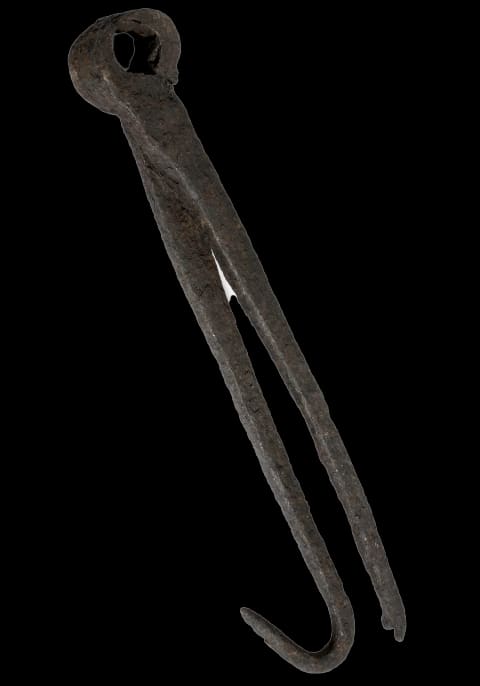
A pair of iron blacksmith's tongs, found with medieval bog iron. The museum notes that iron-smelting from Icelandic bog ore largely died out in the 15th century once cheaper imported iron became available. From Saurar in Helgafellssveit, west Iceland.

“Blacksmith's tongs, found with medieval bog iron. Iron smelting from bog iron ore largely died out in the 15th century, when superior and cheaper iron, smelted from ore, was imported.” In the museum’s words — thjodminjasafn.is ↗ · quotation verified against the live page

Meanwhile — Standing Surya South Asia · 13th century AD

The Valþjófsstaðir door
N° 490·III · Faith and Empire
The Valþjófsstaðir door
Unknown
c. 1175–1200 AD · Pinewood
Icelandic · Romanesque

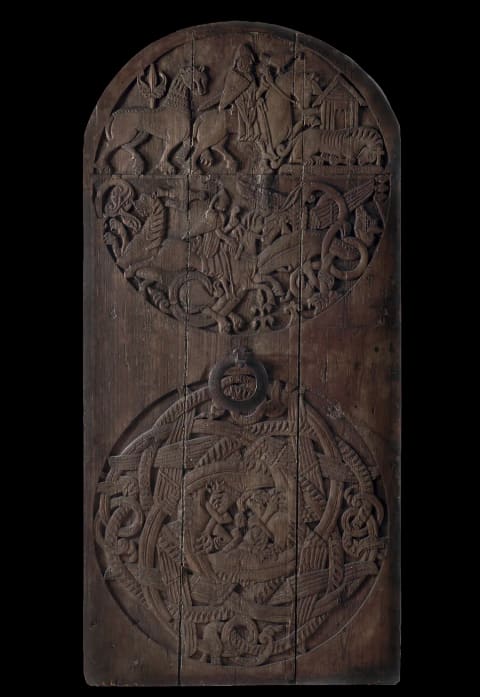
A Romanesque carved pinewood church door, believed to have been made in Iceland about 1200 and, the museum states, the only carved door of its kind still in existence. Its upper roundel depicts the medieval tale Le Chevalier au Lion — a knight slaying a dragon, the grateful lion that follows him, and finally the lion mourning at his grave beneath a runic inscription — while the lower roundel holds four interlaced dragons. It was used in the church at Valþjófsstaður, east Iceland, until 1851, taken to Copenhagen, and returned by Denmark in 1930. The museum's key artefact for the period 1200–1400.

“Valþjófsstaðir door is believed to date back to about 1200 AD.” In the museum’s words — thjodminjasafn.is ↗ · quotation verified against the live page

Meanwhile — El árbol de la Vida (Tree of Life), Chancay culture Americas & Oceania · Período Intermedio Tardío (900–1476 CE)

Spindle whorl
N° 495·III · Faith and Empire
Spindle whorl
Unknown
1197–1400 AD · Stone
Icelandic · Middle Ages

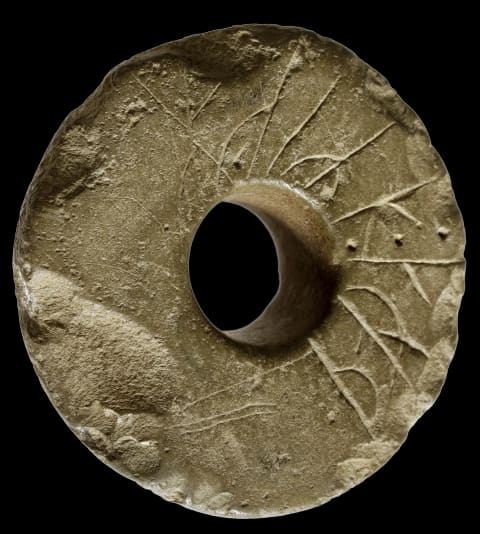
A stone spindle whorl, domed on top and flat beneath, that weighted a spindle to steady its rotation while spinning yarn. Its flat side is inscribed with runes reading 'I belong to Þóra' ('Þóra á mig' in Icelandic). From Hruni in Árnessýsla, south Iceland.

“A spindle whorl was fitted to a spindle to help maintain the spindle's speed of rotation while spinning yarn.” In the museum’s words — thjodminjasafn.is ↗ · quotation verified against the live page

Meanwhile — Cast-Iron Cart-Hub (Tsön) from Kharkhorum East Asia · 13th–14th century

Leaf from a vellum manuscript
N° 496·III · Faith and Empire
Leaf from a vellum manuscript
Unknown
1200–1250 AD · Parchment
Icelandic · Romanesque

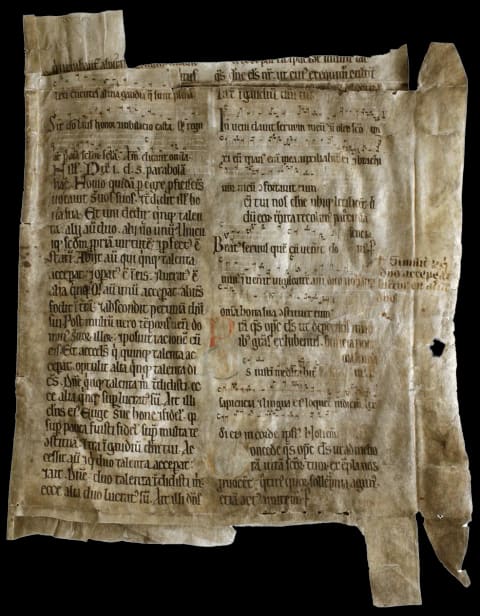
A parchment leaf written in Latin on both sides in large Romanesque script, with red, blue and green initials, carrying part of Psalm 79. At its centre is an ornate drawn letter E about 7 cm across, ending in wolf-heads and filled with Romanesque foliage, beside a biblical scene of an angel and two women. Findspot not known.

“Parchment page, written in Latin on both sides with grand beautiful letters; initial letters are sometimes red, blue, and green, Romanesque.” In the museum’s words — thjodminjasafn.is ↗ · quotation verified against the live page

Meanwhile — Mihrab from Kashan Islamic world · 1226

Drinking horn
N° 527·IV · Toward the Renaissance
Drinking horn
Unknown
1300–1500 AD · Ram horn
Icelandic · Middle Ages

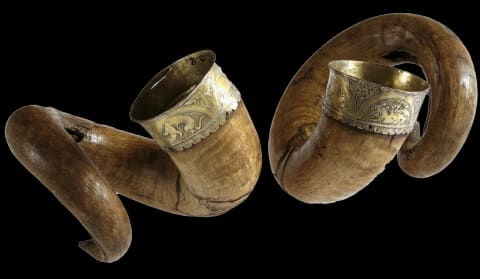
A ram's-horn drinking horn; the museum notes that its pair of horns most likely come from the same ram and were made by the same craftsman. From Skálholt in Biskupstungur, south Iceland.

“The drinking horns are most likely from the same ram and crafted by the same artisan.” In the museum’s words — thjodminjasafn.is ↗ · quotation verified against the live page

Meanwhile — Kalpawreksa Relief South Asia · 14th–15th century

Altar frontal from Draflastaðir
N° 556·IV · Toward the Renaissance
Altar frontal from Draflastaðir
Unknown
1400–1500 AD · Wool on canvas
Icelandic · Late Middle Ages

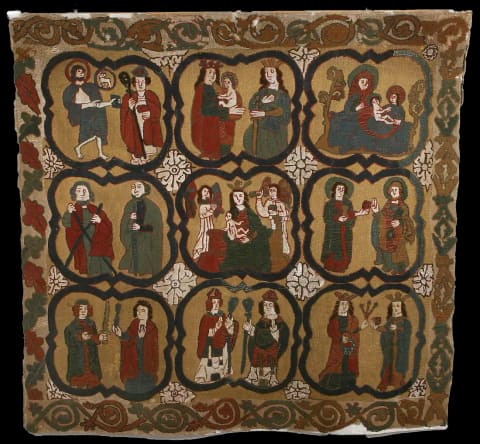
An embroidered altar frontal, one of fifteen surviving Icelandic laid-and-couched embroideries — the same technique as the Bayeux Tapestry — which the museum regards as masterpieces of Icelandic medieval and early-modern art, the work of highly skilled women. Its nine panels depict saints and biblical figures, from John the Baptist and the Virgin and Child to Saints Catherine and Dorothy. From the church at Draflastaðir in Fnjóskadalur, north Iceland.

“The altar frontal is one of fifteen Icelandic historical embroideries sewn in laid-and-couched technique.” In the museum’s words — thjodminjasafn.is ↗ · quotation verified against the live page

Meanwhile — Gaja-Lakshmi South Asia · 15th Century AD

Elf pot
N° 566·IV · Toward the Renaissance
Elf pot
Unknown
1400–1600 AD · Copper
Icelandic · Late Middle Ages / Early Modern

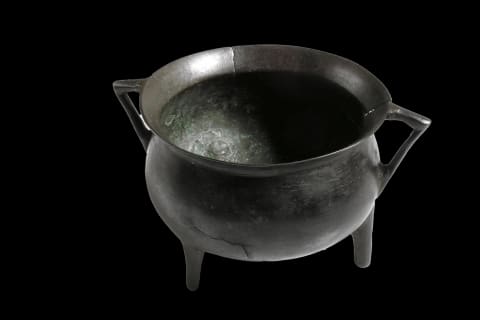
A small cast copper-alloy pot of a type whose fragments are often found at farm sites. The museum recounts 19th-century folklore that the pot had belonged to elves and was taken by a man named Pálmi Guðmundsson, who encountered travelling elves one New Year's Eve. From Garður on Ingjaldssandur, in the Westfjords.

“Fragments of cast bronze pots of this type are often found at farm sites.” In the museum’s words — thjodminjasafn.is ↗ · quotation verified against the live page

Meanwhile — Adorned Buddha South Asia · 15th - 16th century

Holy Mary
N° 582·IV · Toward the Renaissance
Holy Mary
Unknown
1450–1550 AD · Wood
Icelandic · Late Middle Ages

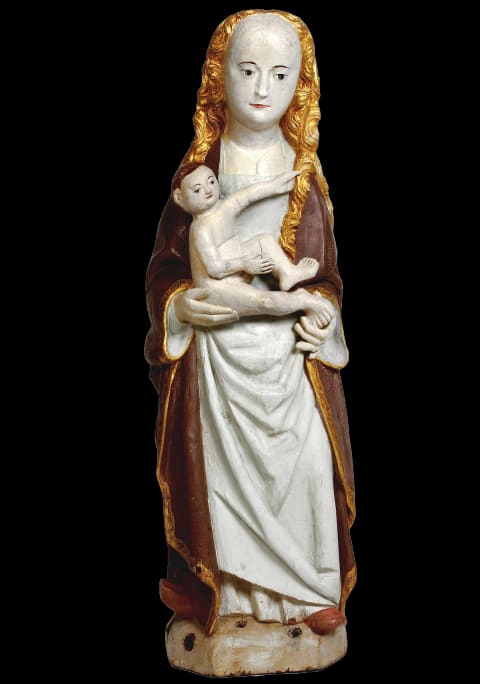
A carved wooden statue of the Virgin Mary from the church at Eyri in Skutulsfjörður, in the Westfjords, which was dedicated to Mary together with John the Apostle. The museum notes that while most saints' images were destroyed after the Reformation, figures of Mary and of Christ on the cross were generally spared.

“A wooden statue from the church at Eyri in Skutulsfjörður in Ísafjarðardjúp.” In the museum’s words — thjodminjasafn.is ↗ · quotation verified against the live page

Meanwhile — Adorned Buddha South Asia · 15th - 16th century

Carved cup
N° 622·V · The Renaissance
Carved cup
Unknown
1500–1600 AD · Bone
Icelandic · Early Modern

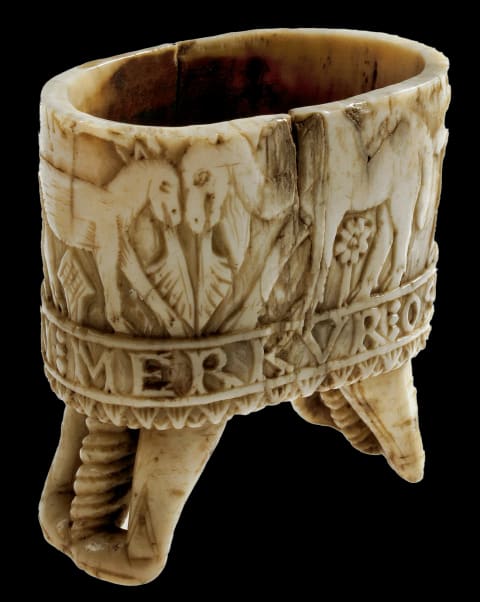
A small drinking cup carved from a tooth, which the museum offers as an example of Icelandic craftsmanship able to rival the best imported luxury goods of the time. From Iceland.

“This drinking cup, carved from a tooth, is an example of that.” In the museum’s words — thjodminjasafn.is ↗ · quotation verified against the live page

Meanwhile — Tep Pranam South Asia · 16th century

Guðbrandur's Bible
N° 697·V · The Renaissance
Guðbrandur's Bible
Guðbrandur Þorláksson
1584 AD · Paper and vellum
Icelandic · Reformation era

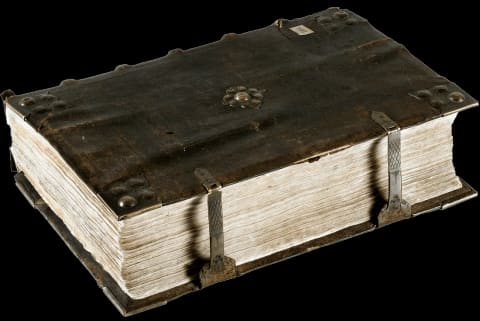
Guðbrandsbiblía, the first Bible printed in Icelandic, produced at Hólar in 1584 under Bishop Guðbrandur Þorláksson, after whom it is named. Five hundred copies were printed over two years, every church required to buy one; the museum calls it a masterpiece of the printer's art. This copy keeps its original leather-and-brass binding and belonged to the bishop's daughter Kristín. The museum's key artefact for the period 1400–1600.

“Guðbrandsbiblía (Guðbrandur's Bible) was the first translation of the Bible printed in Icelandic.” In the museum’s words — thjodminjasafn.is ↗ · quotation verified against the live page

Meanwhile — Pot East Asia · c. 1575–1600

Cana drinking horn
N° 710·V · The Renaissance
Cana drinking horn
Brynjólfur Jónsson
1598 AD · Bull's horn
Icelandic · Early Modern

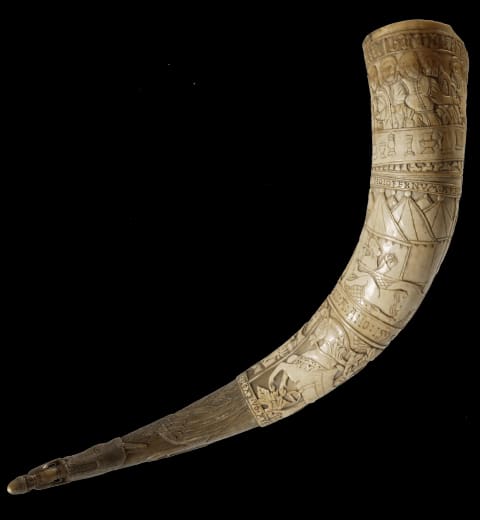
An ornately carved bull's-horn drinking horn made in 1598 by the farmer Brynjólfur Jónsson of Skarð, south Iceland, whom the museum describes as the first Icelandic artist to become nationally known for his work. It is carved with Old and New Testament scenes — the Wedding at Cana, Judith slaying Holofernes, and Joab slaying Absalom — and was commissioned by his brother-in-law Þorleifur Ásmundsson. The museum's key artefact for the period 1600–1800. The page states the horn is the property of the National Museum of Denmark (1427/1943).

“Drinking horn carved by farmer Brynjólfur Jónsson of Skarð, South Iceland, 1598 AD.” In the museum’s words — thjodminjasafn.is ↗ · quotation verified against the live page

Meanwhile — Tachi Sword East Asia · Japan, Momoyama period, dated 1598 (Keichō 3)

Mask from Stóra-Borg
N° 720·VI · The Baroque Age
Mask from Stóra-Borg
Unknown
1600–1700 AD · Wood
Icelandic · Early Modern

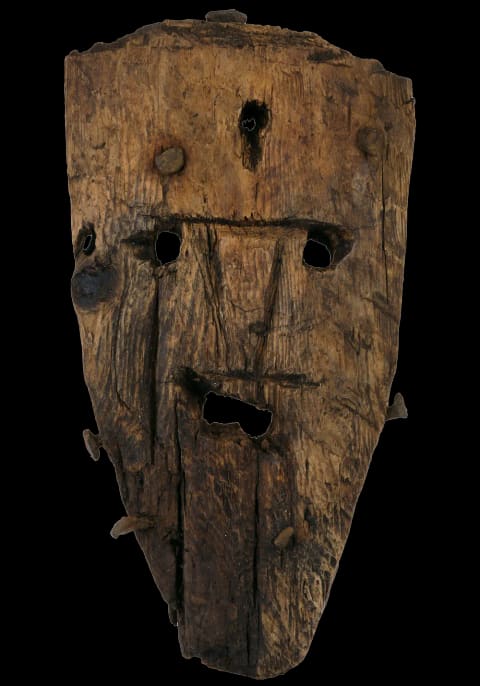
A roughly carved wooden mask of unknown purpose, found during archaeological excavation at the farm site of Stóraborg under Eyjafjöll, south Iceland. The museum suggests it may have been used to colour tales of ghosts, in some kind of performance, or as a child's toy.

“Roughly carved wooden mask. Its purpose is unknown. It may have been used to add colour to imaginative tales of ghosts and other fantastical creatures, or used during some kind of performance.” In the museum’s words — thjodminjasafn.is ↗ · quotation verified against the live page

Meanwhile — Writing Box, Pontoon bridge design in "maki-e" lacquer East Asia · Edo period, 17th century

Calendar (rímtal)
N° 736·VI · The Baroque Age
Calendar (rímtal)
Unknown
1615 AD · Parchment and copper alloy
Icelandic · Early Modern

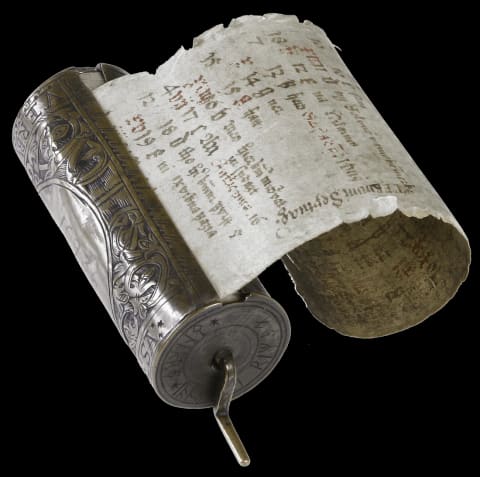
A 'rímtal', a perpetual calendar covering several years, written on a parchment strip wound into a copper-alloy cylinder. It is dated 1615 and bears the name Snorri Jónsson, whose identity is unknown. From Iceland.

“'Rímtal' is a type of calendar that covers several years.” In the museum’s words — thjodminjasafn.is ↗ · quotation verified against the live page

Meanwhile — Hasan’s cloak Islamic world · Last third of the 16th century, reworked mid-17th century

Shark harpoon
N° 878·VIII · The Restless Century
Shark harpoon
Unknown
1830–1930 AD · Iron
Icelandic · 19th–20th century

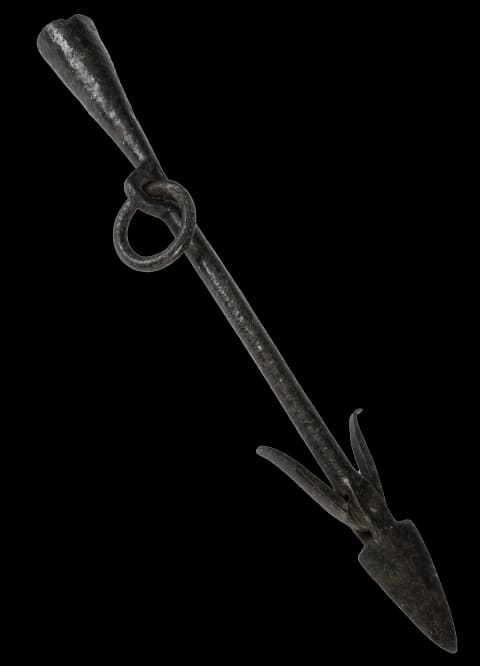
An iron harpoon of the kind used to catch sharks and whales, sharks sometimes being harpooned from open rowing boats. The museum notes that shark was caught mainly for its liver, rendered into an oil that was a valuable export used in European streetlamps. From Iceland.

“Harpoons were used for sharks and whales. Shark was sometimes harpooned from open rowing boats.” In the museum’s words — thjodminjasafn.is ↗ · quotation verified against the live page

Meanwhile — Madame X (Virginie Amélie Avegno Gautreau) Americas & Oceania · 1883–84

Drawing by Sölvi Helgason (Sólon Íslandus)
N° 903·VIII · The Restless Century
Drawing by Sölvi Helgason (Sólon Íslandus)
Sölvi Helgason (1820-1895)
1858–1888 AD · Paper
Icelandic · 19th century

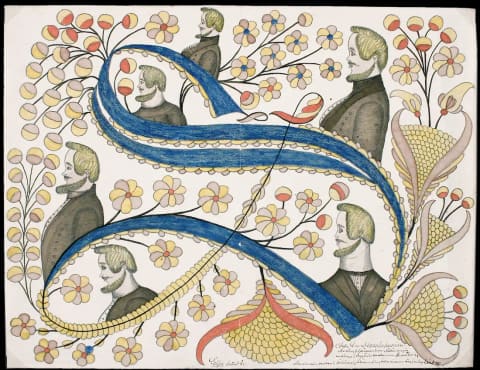
A drawing by Sölvi Helgason (1820–1895), the wandering artist known as Sólon Íslandus, who roamed 19th-century Iceland for more than half a century. The museum describes him as gifted but highly eccentric; his colourful drawings favour floral patterns, initials, and the names of famous philosophers — names he sometimes adopted himself — and some works were intended as self-portraits.

“Sölvi Helgason (1820–1895 AD), also known as Sólon Islandus, was a well-known vagrant in 19th century Iceland.” In the museum’s words — thjodminjasafn.is ↗ · quotation verified against the live page

Meanwhile — Maori girl Americas & Oceania · circa 1874

Festive costume (skautbúningur)
N° 904·VIII · The Restless Century
Festive costume (skautbúningur)
Sigurlaug Gunnarsdóttir
1860 AD · Broadcloth, wool and cotton
Icelandic · 19th century

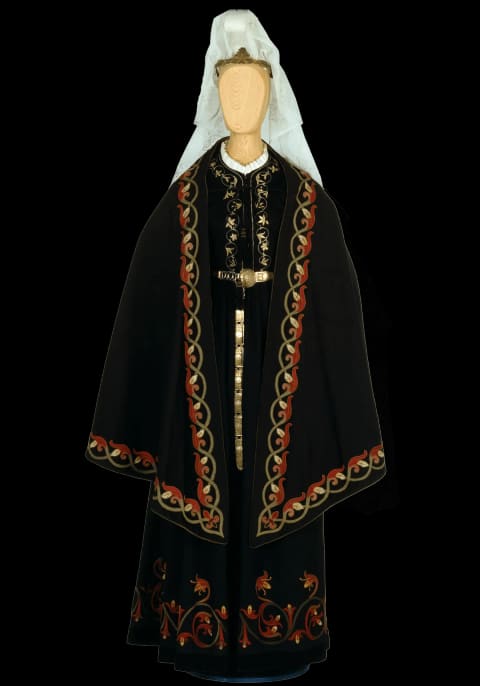
A woman's black broadcloth festive costume, the 'skautbúningur', which the museum says is the oldest surviving example known. It was sewn in 1860 by Sigurlaug Gunnarsdóttir of Ás at Hegranes, north Iceland, to the design of Sigurður Guðmundsson 'the Painter' (1833–1874), who devised the costume to reform Icelandic women's formal dress; the gilded head-dress fillet is the work of goldsmith Sigurður Vigfússon. The style is still worn as formal dress today. The museum's key artefact of the 19th century.

“The festive costume 'skautbúningur' is the key artifact of the 19th century.” In the museum’s words — thjodminjasafn.is ↗ · quotation verified against the live page

Meanwhile — Ivory carving of Durga slaying Mahishasura South Asia · Indian art, 24th–25th Buddhist century (c. 18th–20th century CE)

Life in the Baðstofa
N° 906·VIII · The Restless Century
Life in the Baðstofa
Schiött
1861 AD · Oil paint
Icelandic · 19th century

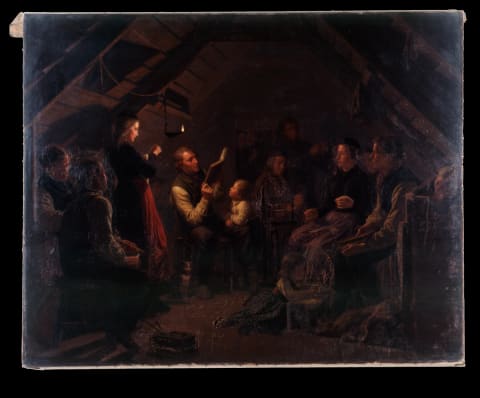
A painting by the Danish artist Schiött, who visited Iceland in 1861, showing an evening in the 'baðstofa' — the multi-purpose living-and-sleeping room of the Icelandic farmhouse — as the master of the house reads aloud by a fish-oil lamp while the household works. The museum notes that reproductions of the picture became very popular and hung in many Icelandic homes for decades.

“Painting by Danish artist Schiött. He visited Iceland in 1861.” In the museum’s words — thjodminjasafn.is ↗ · quotation verified against the live page

Meanwhile — Ivory carving of Durga slaying Mahishasura South Asia · Indian art, 24th–25th Buddhist century (c. 18th–20th century CE)