The Atlas·AR

AR

Museo Nacional de Bellas Artes, Buenos Aires — 19 works · museum site ↗ · 900 CE–1936 60000 BCE2020

Seen from Buenos Aires, history is above all new ways of seeing, then stories & histories — a collection split between its own tradition and other worlds (9 of 19 works are from other civilisations).

New vision 5 Stories 4 Observation 4 Portraits 3 Sacred 2 Craft 1
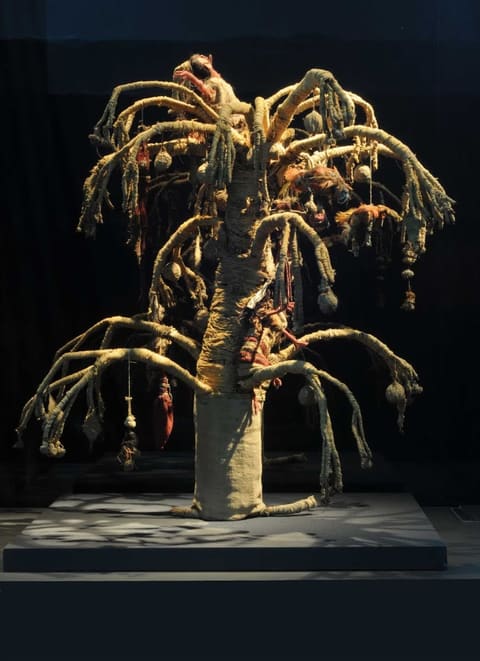
El árbol de la Vida (Tree of Life), Chancay culture
N° 418·III · Faith and Empire
El árbol de la Vida (Tree of Life), Chancay culture
Cultura Chancay
Período Intermedio Tardío (900–1476 CE) · Three-dimensional textile on a support of plant elements
Chancay · Late Intermediate Period

Translated from Spanish: A three-dimensional textile sculpture (97 x 86 x 86 cm, inventory 9274) of the Chancay culture, Late Intermediate Period (900–1476 CE), donated by the museum's friends association (AAMNBA) in 1990 and carrying the museum's own 'Obra Maestra' designation. The museum's commentary places this sacred tree within the pre-Columbian tradition of seeking three-dimensional textile expression — a textile sculpture that flees the loom and wins space, in which myth, art and technique deeply interrelate; the tree, with its dawn, flowers and dusk, stood before people as a metaphor of life. Held in the museum's collection (recorded by the museum as not on exhibition).

“El árbol sagrado es parte de la cultura Chancay y podemos situarlo dentro de la tradición de búsqueda de expresiones textiles tridimensionales de la historia del tejido precolombino.” In the museum’s words — bellasartes.gob.ar ↗

Meanwhile — The Valþjófsstaðir door Europe · c. 1175–1200 AD
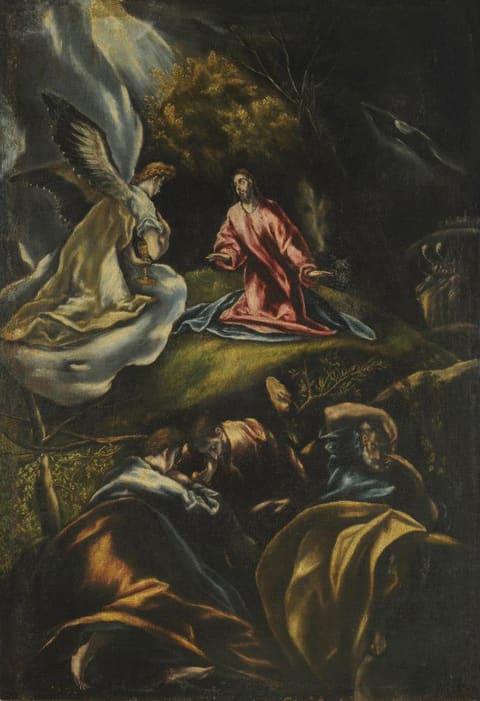
Jesús en el Huerto de los Olivos
N° 714·VI · The Baroque Age
Jesús en el Huerto de los Olivos
El Greco (Doménikos Theotokópoulos)
1600–1607 · Oil on canvas
Spanish · Mannerism

Translated from Spanish: The museum recounts El Greco’s formation in Cretan workshops, his move to Venice around 1566 where he shifted from his post-Byzantine manner toward stronger chromatic contrasts and anatomical and spatial concerns, and finally to Toledo. His "Christ in the Garden of Olives" is assigned to Room 5 in the permanent collection (Mannerism and Baroque).

“El Greco se formó en los talleres cretenses pero hacia 1566 se trasladó a Venecia, donde modificó su manera post-bizantina hacia una pintura con mayor énfasis en los contrastes cromáticos y mayor preocupación por el manejo anatómico y espacial.” In the museum’s words — bellasartes.gob.ar ↗

Meanwhile — Aleppo Room Islamic world · 1600–01 and 1603

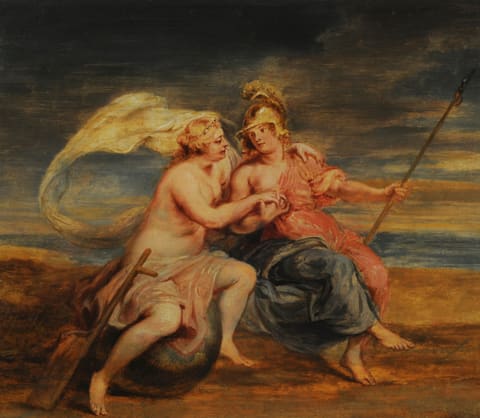
Alegoría de la Fortuna y la Virtud
N° 721·VI · The Baroque Age
Alegoría de la Fortuna y la Virtud
Peter Paul Rubens
Siglo XVII (17th century) · Oil on panel
Flemish · Baroque

Translated from Spanish: The museum sets this Allegory of Fortune and Virtue against the new stage in Rubens’s life opened by his December 1630 marriage to Helena Fourment, the honours conferred by the kings of Spain and England, and his purchase of the Steen estate, amid his ongoing concern for the war dividing the Low Countries. Oil on panel, Hirsch collection, Room 3.

“El año 1630, con su casamiento en diciembre con Helena Fourment, marca para Rubens una nueva etapa en su vida” In the museum’s words — bellasartes.gob.ar ↗

Meanwhile — Writing Box, Pontoon bridge design in "maki-e" lacquer East Asia · Edo period, 17th century

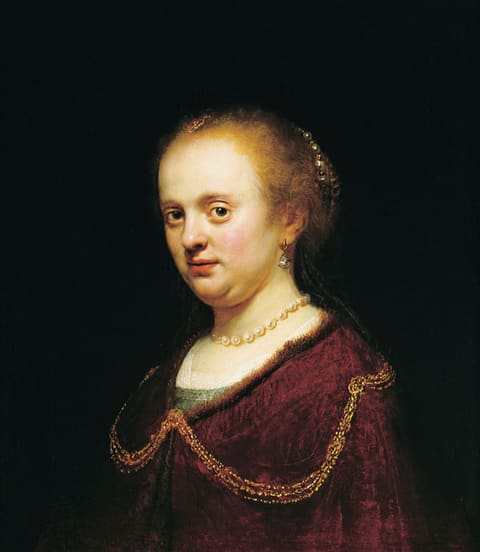
Retrato de mujer joven
N° 753·VI · The Baroque Age
Retrato de mujer joven
Attributed to Rembrandt Harmenszoon van Rijn and workshop
1634 · Oil on canvas
Dutch · Baroque

Translated from Spanish: A bust of a young woman turning to the left, traditionally but (per the museum) baselessly identified as Rembrandt’s sister Lisbeth; the museum classes it as a tronie, a type of small head-study practised by Rembrandt and by his pupils alike — hence its attribution to Rembrandt "and workshop". From the Hirsch collection, assigned to Room 3 in the permanent collection (European art, 15th–18th centuries).

“Este busto de mujer joven que se vuelve hacia la izquierda inclinando ligeramente su cabeza para mirar al observador fue tradicionalmente identificado como el de Lisbeth, hermana de Rembrandt. Lleva una hilera de grandes perlas en su cuello y joyas en su cabellera rubia, además de una triple cadena de oro sobre su abrigo de color rojo vino. Su figura se ilumina con una luz que cae desde un foco alto ubicado a la derecha y contrasta con el fondo oscuro.” In the museum’s words — bellasartes.gob.ar ↗

Meanwhile — Water Fowl in the Lotus Pond East Asia · Japan, Edo period, early 17th century

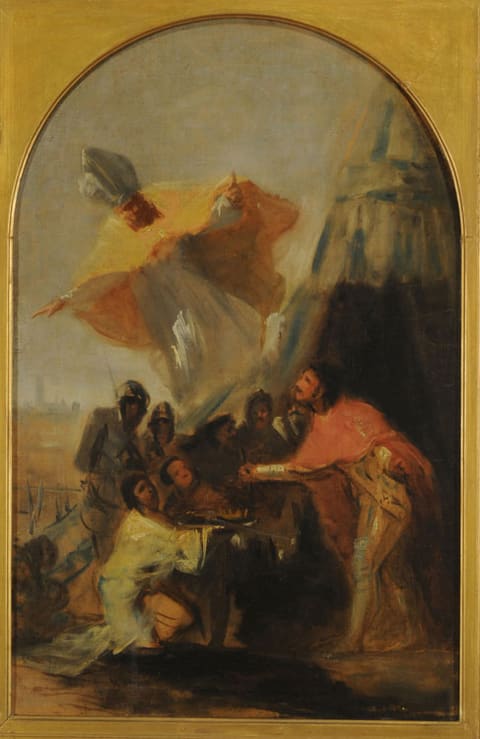
Aparición de San Isidoro al Rey Fernando el Santo ante los muros de Sevilla
N° 849·VII · The Age of Reason
Aparición de San Isidoro al Rey Fernando el Santo ante los muros de Sevilla
Francisco de Goya
1798–1800 · Oil on canvas
Spanish · Romanticism

Translated from Spanish: The museum situates this small religious painting in the late 1790s, after Goya recovered from the 1792 illness that left him deaf, a period showing a profound stylistic change and new freedom of treatment. Assigned to Room 8 in the permanent collection (Francisco de Goya).

“En la segunda mitad de la década de 1790, ya repuesto de la enfermedad sufrida en 1792 que le dejó como secuela la sordera, Francisco de Goya ejecutó obras en las que se observa un profundo cambio estilístico y una nueva libertad en el planteo, en el tratamiento y en la plasmación de los temas.” In the museum’s words — bellasartes.gob.ar ↗

Meanwhile — The Buddhist Protector Mahakala East Asia · 18th–19th century

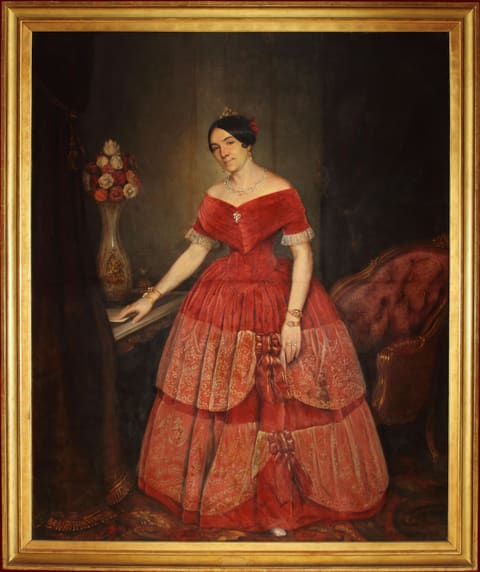
Retrato de Manuelita Rosas
N° 898·VIII · The Restless Century
Retrato de Manuelita Rosas
Prilidiano Pueyrredón
1851 · Oil on canvas
Argentine

Translated from Spanish: Prilidiano Pueyrredón, son of the former Supreme Director Juan Martín de Pueyrredón, painted this portrait of Manuelita Rosas (daughter of Juan Manuel de Rosas) shortly before travelling to Spain; he settled definitively in Buenos Aires in 1854. One of the icons of 19th-century Argentine portraiture, assigned to Room 22 in the permanent collection.

“Poco después de la ejecución del retrato de Manuelita, Pueyrredón viajó a España. Se instaló definitivamente en Buenos Aires en 1854.” In the museum’s words — bellasartes.gob.ar ↗

Meanwhile — At a Window in the Artist's Studio Europe · 1852

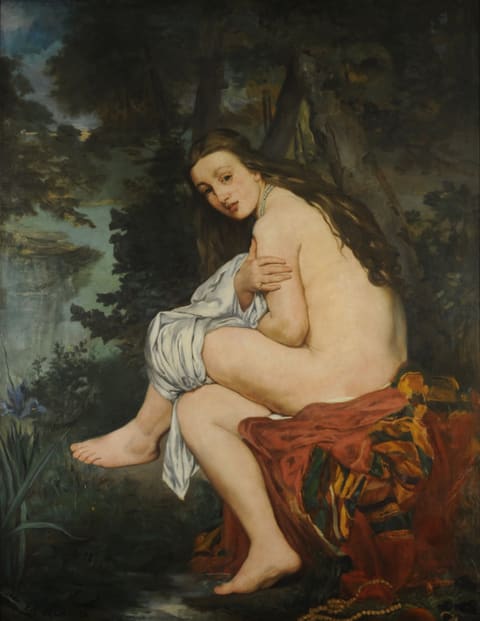
La Nymphe surprise (La ninfa sorprendida)
N° 905·VIII · The Restless Century
La Nymphe surprise (La ninfa sorprendida)
Édouard Manet
1861 · Oil on canvas
French · Realism / early Modernism

Translated from Spanish: The museum describes La Nymphe surprise as opening a key period in Manet’s career and in the history of modernism in French painting; finished in 1861 and sent that year to the Saint Petersburg Academy exhibition, it is considered his first great "tableau-laboratoire". Assigned to Room 13 in the permanent collection (French painting of the later 19th century, pre-Impressionism).

“La nymphe surprise inaugura un período clave de la trayectoria de Édouard Manet y de la historia del modernismo en la pintura francesa” In the museum’s words — bellasartes.gob.ar ↗

Meanwhile — Ivory carving of Durga slaying Mahishasura South Asia · Indian art, 24th–25th Buddhist century (c. 18th–20th century CE)

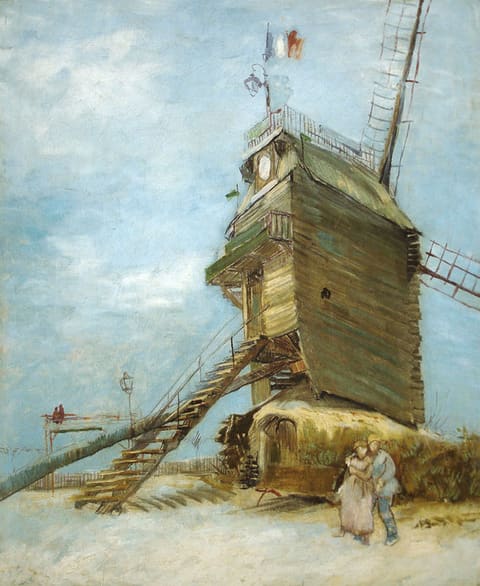
Le Moulin de la Galette
N° 941·VIII · The Restless Century
Le Moulin de la Galette
Vincent van Gogh
ca. 1886–1887 · Oil on canvas
Dutch · Post-Impressionism

Translated from Spanish: The museum places this Moulin de la Galette among an important series of views of Paris painted after van Gogh arrived in the French capital in March 1886 and joined his brother Theo, at a moment of transition dazzled by the surrounding artistic ferment. Assigned to Room 14 in the permanent collection (Impressionism and Post-Impressionism).

“Fueron condiciones muy particulares, podría decirse de transición, las que llevaron a Vincent van Gogh a pintar este Moulin de la Galette , obra que se inscribe en una importante serie de vistas de París.” In the museum’s words — bellasartes.gob.ar ↗

Meanwhile — A Poem on the Anatomy of the Eye (Qasida fi Tashrih al-Ayn) Islamic world · 1305 AH / 1887 CE (copy)

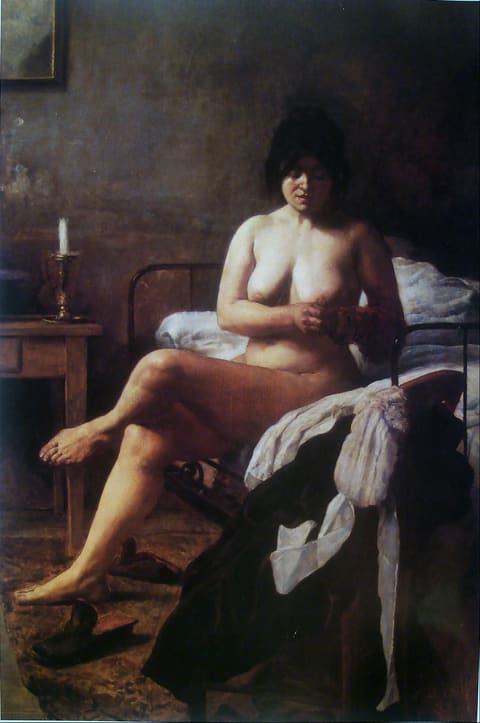
Le lever de la bonne (El despertar de la criada)
N° 945·VIII · The Restless Century
Le lever de la bonne (El despertar de la criada)
Eduardo Sívori
1887 · Oil on canvas
Argentine · Naturalism / Realism

Translated from Spanish: The museum describes this as a naturalist nude that belongs to the genre which throughout the 19th century was a battlefield of modernist daring; there is no narrative, only the body of a young working-class woman. A masterpiece flagged by the museum and assigned to Room 19 in the permanent collection (19th-century Argentine art).

“Le lever de la bonne es un desnudo naturalista. Aun cuando el título y algunos elementos de la composición lo connotan, la pintura pertenece al género que a lo largo del siglo XIX fue campo de batalla de las audacias modernistas.” In the museum’s words — bellasartes.gob.ar ↗

Meanwhile — Fritillaries in a Copper Vase Europe · 1887

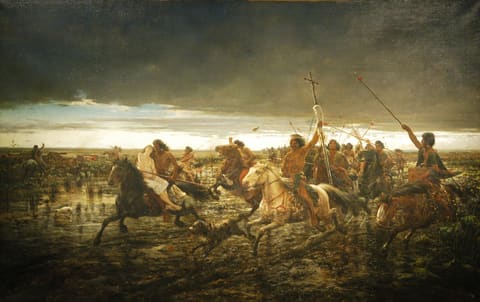
La vuelta del malón
N° 962·VIII · The Restless Century
La vuelta del malón
Ángel Della Valle
1892 · Oil on canvas
Argentine · Academic Naturalism

Translated from Spanish: Della Valle’s large salon canvas of a returning Indian raid was hailed as the "first genuinely national work of art" from its first showing in a shop window on Calle Florida in 1892, and was sent to the 1893 World’s Columbian Exposition in Chicago, where it won a medal. Assigned to Room 24 in the permanent collection (19th-century Argentine art).

“La vuelta del malón fue celebrada como la “primera obra de arte genuinamente nacional” desde el momento de su primera exhibición en la vidriera de un negocio de la calle Florida (la ferretería y pinturería de Nocetti y Repetto) en 1892.” In the museum’s words — bellasartes.gob.ar ↗

Meanwhile — Vahine no te miti (Femme a la mer) Europe · 1892

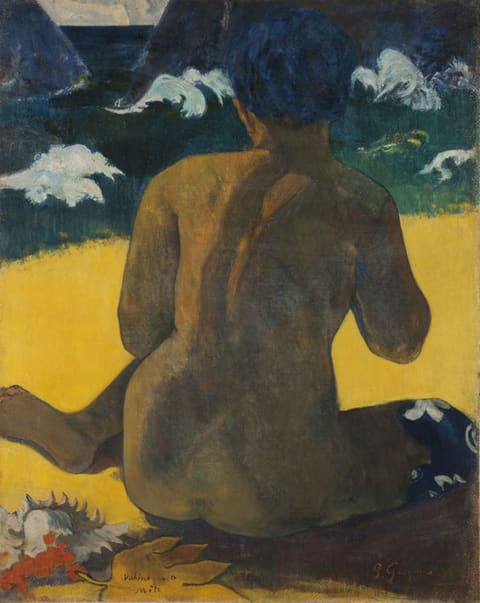
Vahine no te miti (Femme a la mer)
N° 963·VIII · The Restless Century
Vahine no te miti (Femme a la mer)
Paul Gauguin
1892 · Oil on canvas
French · Symbolism / Post-Impressionism

Translated from Spanish: One of two Gauguin bather paintings the museum owns, set not in France but in the South Seas; listed as a "study of a nude back" among works of Gauguin’s first Tahitian stay (noted ca. April 1892 in his Carnet de Tahiti) and painted at Mataiea. Assigned to Room 14 in the permanent collection (Impressionism and Post-Impressionism).

“El MNBA tiene la suerte de poseer dos pinturas de bañistas de Gauguin, ambientada en este caso no en Francia, sino en los mares del Sur.” In the museum’s words — bellasartes.gob.ar ↗

Meanwhile — La vuelta del malón Americas & Oceania · 1892

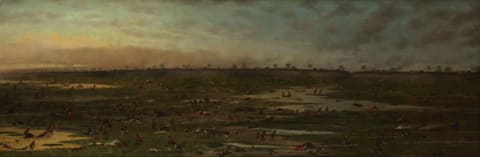
Después de la Batalla de Curupaytí
N° 964·VIII · The Restless Century
Después de la Batalla de Curupaytí
Cándido López
1893 · Oil on canvas
Argentine · Naturalism

Translated from Spanish: A self-taught painter, photographer and soldier who fought until wounded at Curupaytí, Cándido López depicted the War of the Triple Alliance / Paraguayan War (1865–1870) in an analytic, descriptive manner derived from European military-cartographic battle imagery. Its assigned room in the permanent collection is Room 23, dedicated to the artist within the 19th-century Argentine galleries.

“Cándido López representó la guerra del Paraguay (1865-1870), en la que combatió hasta su herida en Curupaytí, mediante una pintura analítico-descriptiva, derivada de la representación de batallas de la cartografía militar europea.” In the museum’s words — bellasartes.gob.ar ↗

Meanwhile — The Scream Europe · 1893

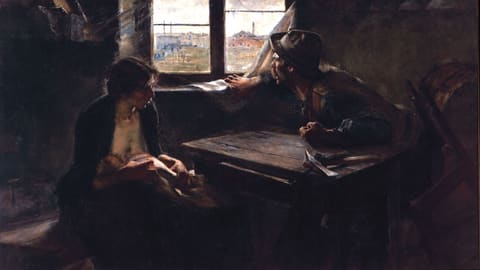
Sin pan y sin trabajo
N° 968·VIII · The Restless Century
Sin pan y sin trabajo
Ernesto de la Cárcova
1894 · Oil on canvas
Argentine · Naturalism / Realism

Translated from Spanish: The museum presents this as the first painting of a working-class subject with a socially critical intent in Argentine art; from its first showing it has been an emblematic work of the national canon, endlessly commented, reproduced and re-appropriated. De la Cárcova painted it in Buenos Aires on returning from study in Turin and Rome. Its assigned room in the permanent collection is Room 24 (19th-century Argentine art).

“Sin pan y sin trabajo es el primer cuadro de tema obrero con intención de crítica social en el arte argentino. Desde el momento de su exhibición ha sido una pieza emblemática del arte nacional: comentado, reproducido, citado y reapropiado por sucesivas generaciones de artistas, historiadores y críticos hasta la actualidad.” In the museum’s words — bellasartes.gob.ar ↗

Meanwhile — Le Lit Europe · 1890s

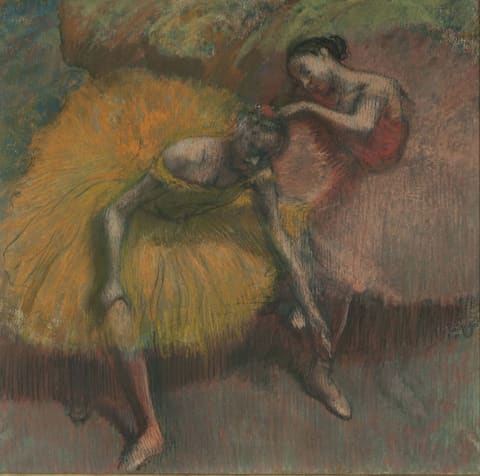
Deux danseuses jaunes et roses (Amarillo y rosa)
N° 974·VIII · The Restless Century
Deux danseuses jaunes et roses (Amarillo y rosa)
Edgar Degas
1898 · Pastel and charcoal on paper
French · Impressionism

Translated from Spanish: The museum notes that Degas worked in turn in oil, drawing, printmaking and sculpture, and turned to pastel as his eyesight weakened, pursuing "the momentary" in subjects such as the ballet and dancers. This pastel of two dancers, from the Mercedes Santamarina collection, is assigned to Room 19 in the permanent collection (19th-century French painting).

“Degas abordó alternativamente la pintura al óleo, el dibujo, el grabado y la escultura. Se acercó al pastel al debilitarse su visión.” In the museum’s words — bellasartes.gob.ar ↗

Meanwhile — Retrato del Sr. Juan Carlos Muñoz Americas & Oceania · 1899

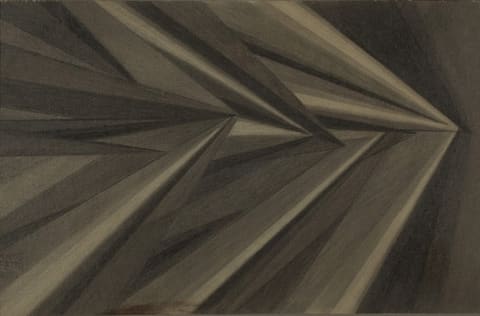
Dinámica del viento
N° 1010·IX · Into Our Time
Dinámica del viento
Emilio Pettoruti
1915 · Graphite on paper
Argentine · Cubism / Regional avant-garde

Translated from Spanish: The museum frames Pettoruti as an unavoidable reference for thinking about the beginnings of abstraction in Argentina, his abstract drawings of 1914–1916 occupying a central place in that history. This graphite drawing is assigned to Room 26 in the permanent collection (Latin American art, 1910–1945: the regional avant-gardes).

“La importancia de Emilio Pettoruti como referente ineludible a la hora de pensar el inicio de la abstracción en la Argentina ha sido revisada en los últimos años en dos exposiciones” In the museum’s words — bellasartes.gob.ar ↗

Meanwhile — Gelang Aceh (Aceh Bracelet) South Asia · Early 20th century

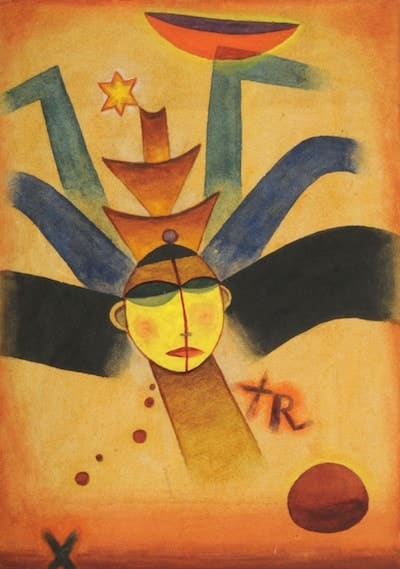
Pupo
N° 1025·IX · Into Our Time
Pupo
Xul Solar
ca. 1920 · Watercolour on paper mounted on card
Argentine · Expressionism / Regional avant-garde

Translated from Spanish: The museum presents Pupo as an exemplary work for approaching the problems of Xul Solar’s European production (1912–1924), including the vexed question of its dating (the attributed 1918 is contradicted by formal features and by the large painted "X" signature). Assigned to Room 26 in the permanent collection (regional avant-gardes).

“Pupo resulta una obra ejemplar para abordar algunas de las problemáticas que plantea la producción europea (1912-1924) de Xul Solar, en particular porque a través de ella se pueden vislumbrar algunas de las líneas de interés que el artista manifestó durante esos años.” In the museum’s words — bellasartes.gob.ar ↗

Meanwhile — Lake Pühajärv Europe · 1918–1921

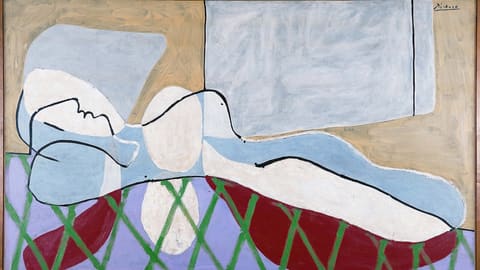
Femme allongée (Mujer acostada)
N° 1044·IX · Into Our Time
Femme allongée (Mujer acostada)
Pablo Picasso
1931 · Oil on canvas
Spanish · Cubism

Translated from Spanish: The museum notes that the nude runs through Picasso’s entire oeuvre, tied both to his formal research and to the personal moments of his life, opening several periods of his work. Femme allongée (1931) is assigned to Room 28 in the permanent collection (international and Argentine art, 1920–1945: the modern languages).

“El tema del desnudo atraviesa toda la obra de Picasso y se vincula tanto a sus investigaciones formales como a los momentos personales de su vida. Las búsquedas en el terreno del arte y en el de las pasiones se entrelazan y potencian inaugurando varios períodos de su obra.” In the museum’s words — bellasartes.gob.ar ↗

Meanwhile — Cinco moças de Guaratinguetá (Five Girls from Guaratinguetá) Americas & Oceania · 1930

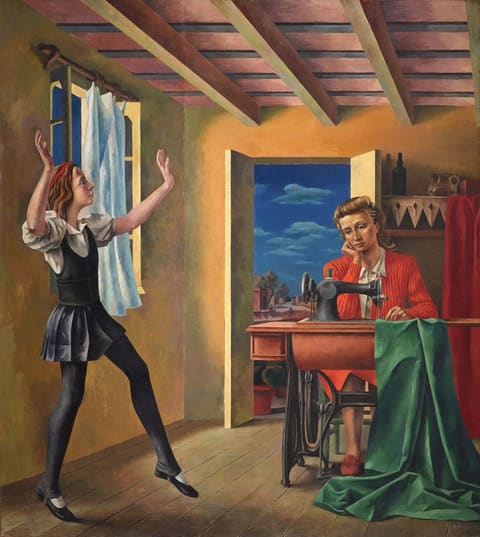
Primeros pasos
N° 1050·IX · Into Our Time
Primeros pasos
Antonio Berni
1936 · Oil on canvas
Argentine · Nuevo Realismo (New Realism)

Translated from Spanish: After a decisive European stay in which he encountered the avant-gardes, the "return to order" and the great figurative traditions, Antonio Berni returned to Rosario at the end of 1931 and moved toward a new realism distinct both from 19th-century precedents and from Soviet socialist realism. Assigned to Room 33 in the permanent collection.

“Luego de una decisiva estadía europea en la que frecuentó las innovaciones de las vanguardias, las tendencias del retorno al orden y las grandes tradiciones figurativas de Occidente, Antonio Berni regresó a Rosario a fines de 1931.” In the museum’s words — bellasartes.gob.ar ↗

Meanwhile — Horror Europe · 1936

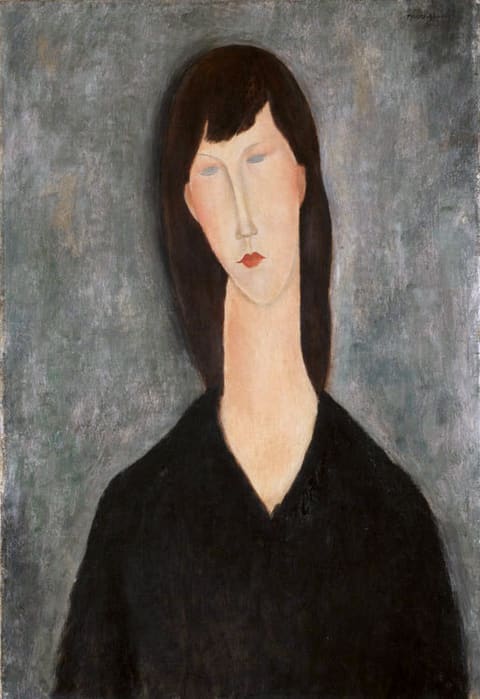
Buste de femme (Busto de mujer)
N° 1126·Undated
Buste de femme (Busto de mujer)
Amedeo Modigliani
Undated · Oil on canvas
Italian · École de Paris

Translated from Spanish: The museum observes Modigliani’s almost singular devotion to the isolated figure, which he called the basic condition of his art ("to make any work I must have a living person… I must be able to see them before me"). Assigned to Room 25 in the permanent collection (international and Argentine art 1900–1920, the passage to the modern).

“A lo largo de su carrera, Modigliani demostró una devoción casi única por la figura aislada, que él mismo explicó como la condición básica de su arte” In the museum’s words — bellasartes.gob.ar ↗