The Atlas·BR

BR

Museu de Arte de São Paulo Assis Chateaubriand, São Paulo — 23 works · museum site ↗ · 618 CE–1953 60000 BCE2020

Seen from São Paulo, history is above all faces & portraits, then sacred images — a collection split between its own tradition and other worlds (8 of 23 works are from other civilisations).

Portraits 7 Sacred 5 Observation 5 New vision 3 Sculpture 2 Stories 1
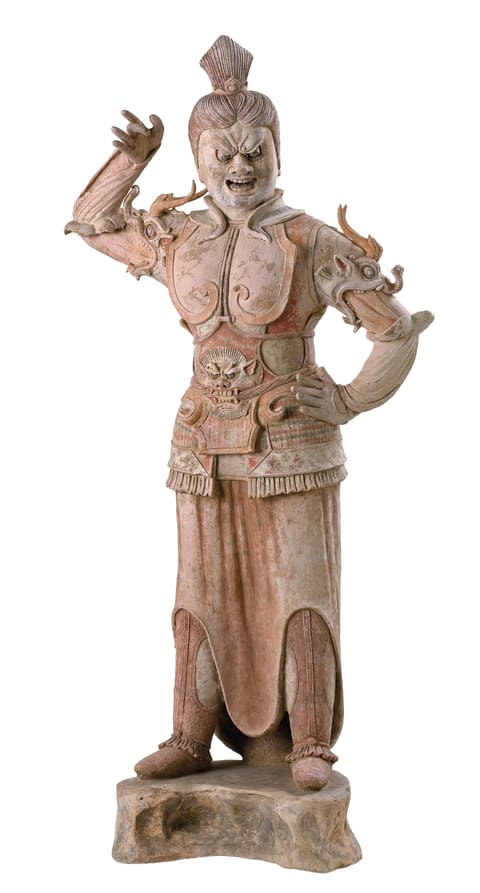
Guardião chinês (Chinese Guardian)
N° 360·III · Faith and Empire
Guardião chinês (Chinese Guardian)
Chinese civilization
618–907 (Tang dynasty) · polychrome terracotta
Chinese · Tang dynasty

Translated from Portuguese: One of a pair of Chinese tomb guardians which the museum's text places in the Tang dynasty (618–907). Called lokapala — guardians who protect sacred places from evil spirits — the polychrome terracotta figures stand in complementary poses, with fearsome expressions, penetrating gazes and armour covering the legs. MASP's collection essay names its 'pair of Chinese warriors' among its notable non-European works.

“Os dois guardiões são do período da dinastia Tang, que unificou a China (618-907 d.C.).” In the museum’s words — masp.org.br ↗ · quotation verified against the live page

Meanwhile — First-Sermon Buddha (Luang Pho Sila Khao) South Asia · Dvaravati art, 13th–14th Buddhist century (c. 8th–9th century CE)
São Jerônimo penitente no deserto (St Jerome Penitent in the Desert)
N° 579·IV · Toward the Renaissance
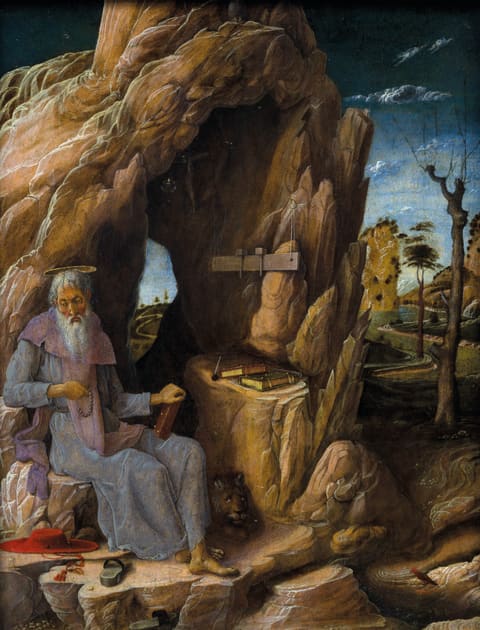
São Jerônimo penitente no deserto (St Jerome Penitent in the Desert)
Andrea Mantegna (1431–1506)
1448–51 · tempera on panel
Italian Renaissance · Early Renaissance

Translated from Portuguese: A small early tempera panel showing St Jerome as a hermit in the Syrian desert, an ascetic and scholar shown with his traditional attributes — the lion, the red cardinal's hat, a lit candle before a crucifix and closed books; MASP dates the panel to 1448–51.

“A pintura do MASP, São Jerônimo penitente no deserto (1448-51), retrata o santo no deserto de Cálcis da Celessíria, na Síria, como exemplo do eremita que busca desenvolvimento intelectual e penitência na solidão.” In the museum’s words — masp.org.br ↗ · quotation verified against the live page

Meanwhile — Domaru Armor Laced with Black Leather Thongs and Purple Red and White Cords East Asia · Japan, Muromachi period, 15th century

Ressurreição de Cristo (The Resurrection of Christ)
N° 612·IV · Toward the Renaissance
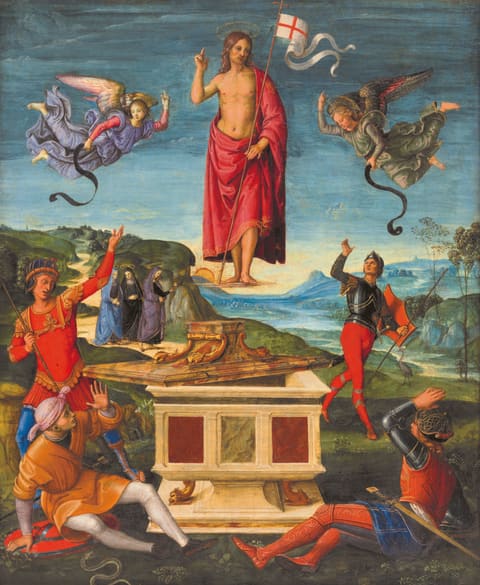
Ressurreição de Cristo (The Resurrection of Christ)
Raphael (1483–1520)
1499–1502 · oil on panel
Italian Renaissance · Renaissance

Translated from Portuguese: An early panel long debated by art historians before being attributed to the young Raphael. The museum notes it carries traits absorbed in Perugino's studio — a rigorous division of vertical and horizontal axes — with Christ's feet marking the centre of the composition above the four gesturing tomb guards.

“A pintura do MASP, Ressurreição de Cristo, foi alvo de grande discussão entre os historiadores da arte, até ser atribuída à juventude de Rafael.” In the museum’s words — masp.org.br ↗ · quotation verified against the live page

Meanwhile — Adorned Buddha South Asia · 15th - 16th century

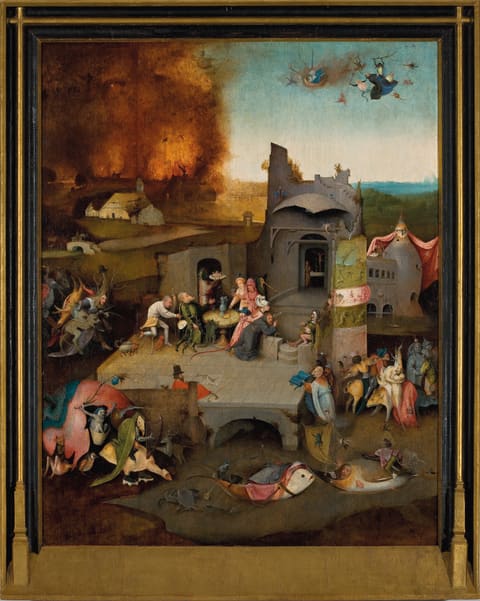
As tentações de santo Antão (The Temptations of St Anthony)
N° 613·V · The Renaissance
As tentações de santo Antão (The Temptations of St Anthony)
Attributed to Hieronymus Bosch (1450–1516)
Circa 1500 · oil on panel
Netherlandish · Northern Renaissance

Translated from Portuguese: The museum frames this panel as one of at least sixteen versions of the triptych The Temptations of St Anthony signed by Bosch and now in the Museu Nacional de Arte Antiga in Lisbon. The MASP panel — together with one in the Barnes Foundation — was accepted as a work of Bosch's own hand by Max J. Friedländer in his 1937 repertory of early Netherlandish painting (and a 1936 opinion, whose copy is in the museum's files, alongside one by the Vienna restorer and Bosch specialist Robert Eigenberger), while later criticism ignored it or devalued it as a lesser, later copy. Dated circa 1500, it shows St Anthony at prayer amid fantastical hybrid creatures in an apocalyptic landscape.

“Entre estas, o painel do Masp, junto com outro existente na Fundação Barnes de Merion, nos Estados Unidos, ocupam um lugar particular, tendo sido aceitos como obras de autoria boschiana por Friedländer em seu repertório da antiga pintura dos Países Baixos, de 1937, e num parecer de 1936, cuja cópia consta da documentação do museu, junto a outro parecer de Robert Eigenberger, restaurador de Viena, especialista em Bosch.” In the museum’s words — masp.org.br ↗ · quotation verified against the live page

Meanwhile — Adorned Buddha South Asia · 15th - 16th century

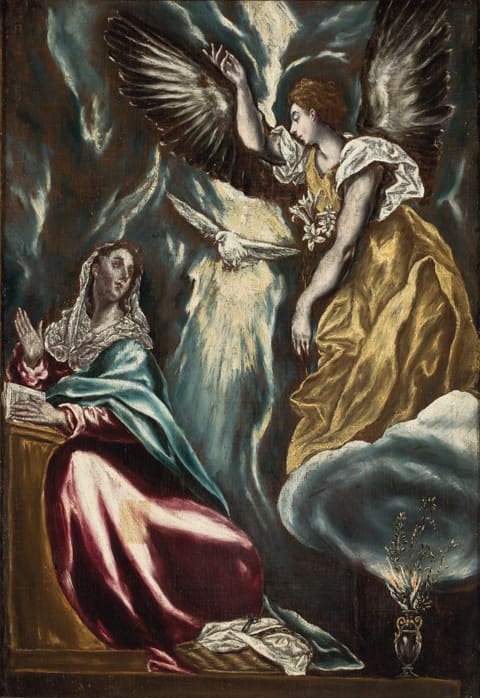
Anunciação (The Annunciation)
N° 708·V · The Renaissance
Anunciação (The Annunciation)
El Greco (1541–1614)
Circa 1600 · oil on canvas
Spanish · Mannerism

Translated from Portuguese: One of about seven nearly identical versions of the Annunciation recorded in the inventory made after El Greco's death (the others now spread between Cuba, the United States, Japan, Spain and Hungary); MASP's canvas shows the exaggeratedly elongated bodies of the Virgin and the angel Gabriel typical of his late Toledo manner.

“A obra Anunciação (circa 1600) é mencionada no inventário feito depois da morte de El Greco junto com outras seis versões quase idênticas, hoje distribuídas entre Cuba, Estados Unidos, Japão, Espanha e Hungria, todas datadas entre 1595-1605.” In the museum’s words — masp.org.br ↗ · quotation verified against the live page

Meanwhile — Aleppo Room Islamic world · 1600–01 and 1603

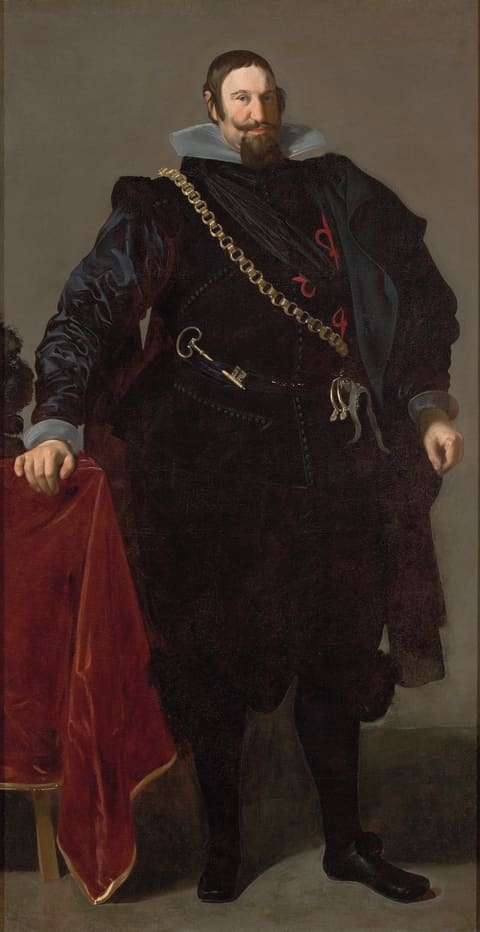
Retrato do conde-duque de Olivares (Portrait of the Count-Duke of Olivares)
N° 744·VI · The Baroque Age
Retrato do conde-duque de Olivares (Portrait of the Count-Duke of Olivares)
Diego Velázquez (1599–1660)
1624 · oil on canvas
Spanish · Baroque

Translated from Portuguese: A state portrait of Gaspar de Guzmán, Count-Duke of Olivares, the powerful chief minister of Philip IV. In it Olivares displays numerous emblems of power — the great key, the two spurs at his waist, the long gold chain and the red cross of the Order of Alcántara. His patronage won Velázquez the post of court painter at just 25.

“No quadro, Olivares exibe numerosos símbolos de poder: a grande chave, as duas esporas na cintura, a longa corrente de ouro” In the museum’s words — masp.org.br ↗ · quotation verified against the live page

Meanwhile — Water Fowl in the Lotus Pond East Asia · Japan, Edo period, early 17th century

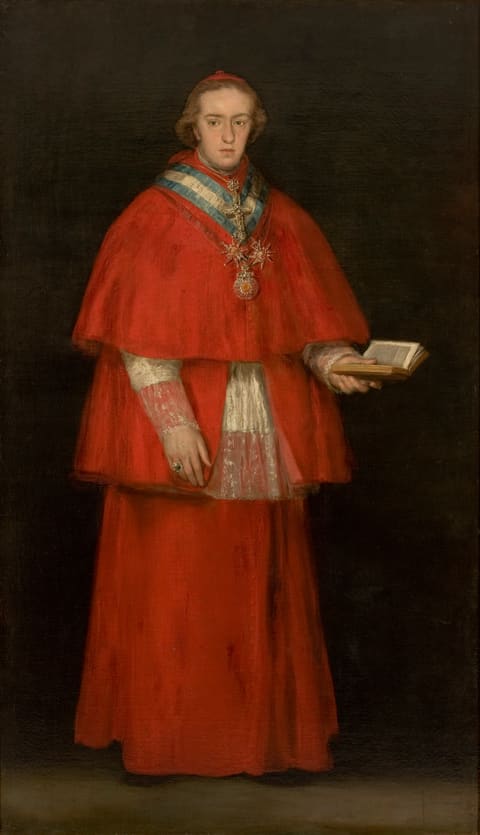
Retrato do cardeal don Luis Maria de Borbon y Vallabriga (Portrait of Cardinal Don Luis María de Borbón y Vallabriga)
N° 850·VII · The Age of Reason
Retrato do cardeal don Luis Maria de Borbon y Vallabriga (Portrait of Cardinal Don Luis María de Borbón y Vallabriga)
Francisco Goya y Lucientes (1746–1828)
1798–1800 · oil on canvas
Spanish · Romanticism

Translated from Portuguese: One of four portraits Goya painted of the cardinal Luis María de Borbón y Vallabriga — a childhood portrait, a family portrait and two made after his elevation in the church. The museum believes this version was made around his appointment as cardinal and archbishop of Seville, when he was about twenty; he carries the insignia of the Orders of Charles III and of the Holy Spirit and an open breviary, the book of the cardinals' daily prayers. Goya, court painter to Charles IV, painted it in 1798–1800.

“O Retrato do cardeal Luis Maria de Borbon y Vallabriga (1798-1800) é um dos quatro pintados por Goya nos quais o religioso aparece, sendo: um retrato de infância, um retrato de família e dois pintados após sua nomeação religiosa.” In the museum’s words — masp.org.br ↗ · quotation verified against the live page

Meanwhile — The Buddhist Protector Mahakala East Asia · 18th–19th century

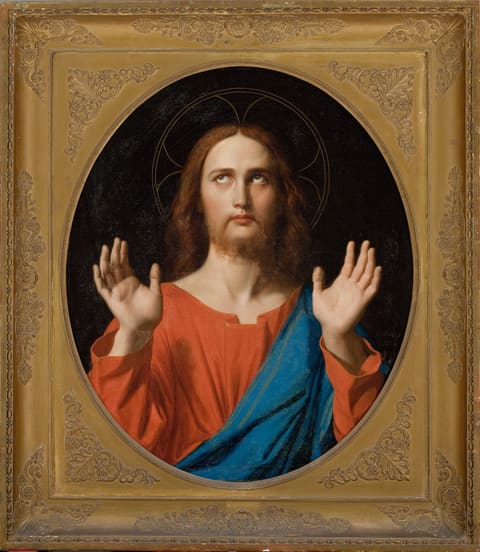
Cristo abençoador (Christ Blessing)
N° 880·VIII · The Restless Century
Cristo abençoador (Christ Blessing)
Jean-Auguste Dominique Ingres (1780–1867)
1834 · oil on canvas
French · Neoclassicism

Translated from Portuguese: One of two religious paintings by Ingres in MASP's collection — the other being The Virgin with the Blue Veil (1827), both commissioned by the Marquis de Pastoret. Christ is shown with his hands open and raised, the traditional pose of Christ Pantocrator; the museum notes this was how early Christianity depicted the gesture with which he taught the Lord's Prayer (the Pater Noster). Ingres, a pupil of Jacques-Louis David and leader of the French classical school, painted it in 1834.

“Duas das obras de Ingres do MASP, Cristo abençoador (1834) e A Virgem do véu azul (1827), representam temas religiosos. Historicamente, os gestos dessas figuras remontam a narrativas bíblicas específicas, mas também têm a função de orientar os fiéis à devoção. As mãos de Cristo, abertas e voltadas para cima, eram assim retratadas nos primórdios do cristianismo; era como ele ensinava a rezar o pai-nosso.” In the museum’s words — masp.org.br ↗ · quotation verified against the live page

Meanwhile — Dusk Scene East Asia · 1833–1834

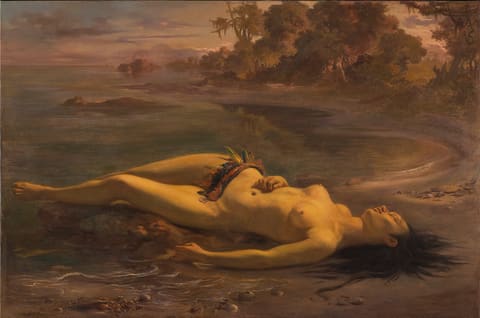
Moema
N° 908·VIII · The Restless Century
Moema
Victor Meirelles (1832–1903)
1866 · oil on canvas
Brazilian · Indianist Romanticism

Translated from Portuguese: A key work of Brazilian Indianist Romanticism depicting Moema, a character from the 1781 epic poem Caramuru, drowned on the beach after swimming after the ship of her love, Diogo Álvares. In MASP's painting Meirelles reworks the European theme of the female nude in a landscape in a tragic register, representing Moema as an indigenous Venus.

“Na pintura do MASP, Meirelles retomou o tema europeu do nu feminino na paisagem em uma dimensão trágica, representando Moema como uma Vênus indígena.” In the museum’s words — masp.org.br ↗ · quotation verified against the live page

Meanwhile — Jo, the Beautiful Irish Girl Europe · signed 1866

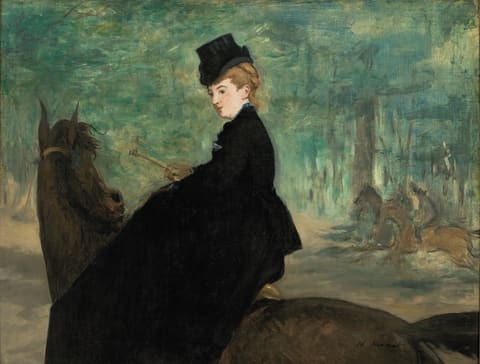
A amazona - Retrato de Marie Lefébure (The Horsewoman - Portrait of Marie Lefébure)
N° 913·VIII · The Restless Century
A amazona - Retrato de Marie Lefébure (The Horsewoman - Portrait of Marie Lefébure)
Édouard Manet (1832–1883)
1870–75 · oil on canvas
French · Impressionism (precursor)

Translated from Portuguese: A portrait of Marie Lefébure on horseback in which the museum notes a strong contrast between the background of diluted, faded greens and the figure of the woman, the volume of her black habit sharply defined; the horse turns toward the depth of the canvas while the rider looks out. Manet, whom MASP calls a precursor of Impressionism, was a pivotal figure between academic and modern art.

“há um forte contraste entre o fundo, com verdes diluídos e esmaecidos, e a figura da mulher, com o volume bem demarcado de sua roupa preta.” In the museum’s words — masp.org.br ↗ · quotation verified against the live page

Meanwhile — Maori girl Americas & Oceania · circa 1874

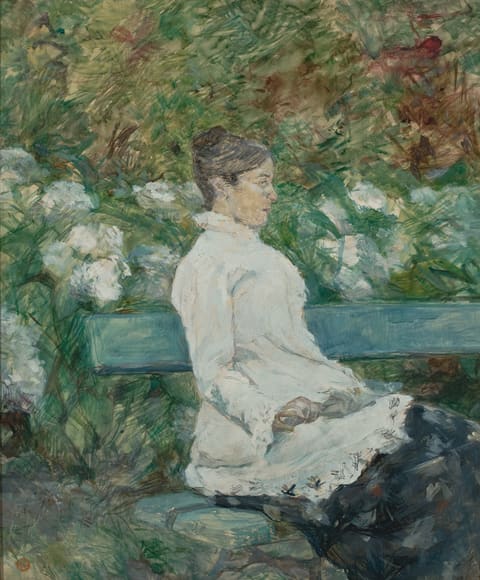
A condessa Adèle de Toulouse-Lautrec (The Countess Adèle de Toulouse-Lautrec)
N° 924·VIII · The Restless Century
A condessa Adèle de Toulouse-Lautrec (The Countess Adèle de Toulouse-Lautrec)
Henri de Toulouse-Lautrec (1864–1901)
1880–82 · oil on canvas
French · Post-Impressionism

Translated from Portuguese: A garden portrait of the artist's mother, Adèle Zoè Tapié de Céleyran (1841–1936), the setting probably the family's Château de Malromé. Toulouse-Lautrec scatters the white of her clothing through the flower beds in a typically impressionist play of light.

“A figura representada é Adèle Zoè Tapié de Céleyran (1841-1936), mãe do artista” In the museum’s words — masp.org.br ↗ · quotation verified against the live page

Meanwhile — Madame X (Virginie Amélie Avegno Gautreau) Americas & Oceania · 1883–84

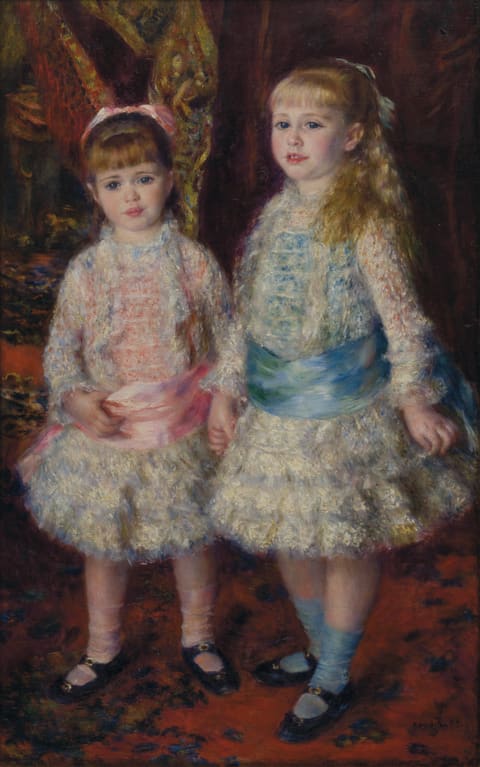
Rosa e azul - As meninas Cahen d'Anvers (Pink and Blue - The Cahen d'Anvers Girls)
N° 926·VIII · The Restless Century
Rosa e azul - As meninas Cahen d'Anvers (Pink and Blue - The Cahen d'Anvers Girls)
Pierre-Auguste Renoir (1841–1919)
1881 · oil on canvas
French · Impressionism

Translated from Portuguese: A double portrait of the daughters of the Cahen d'Anvers family. During the work's showing at the Fondation Pierre Gianadda in Switzerland in 1987, the cruel fate of Elisabeth, the girl in blue, came to light — a nephew who recognised her wrote to MASP that she had died in 1944 on a train to Auschwitz. It is one of twelve Renoirs in MASP's collection.

“Rosa e azul retrata as meninas da família Cahen d’Anvers. Durante a exposição da obra na Fondation Pierre Gianadda, na Suíça, em 1987, revelou‑se o destino cruel de Elisabeth, a garota de azul.” In the museum’s words — masp.org.br ↗ · quotation verified against the live page

Meanwhile — Madame X (Virginie Amélie Avegno Gautreau) Americas & Oceania · 1883–84

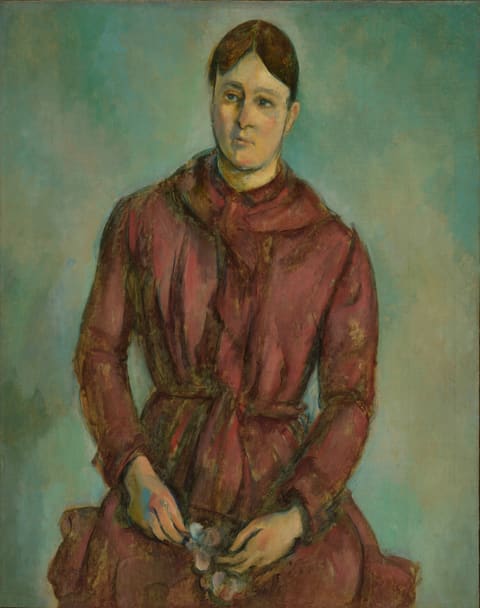
Madame Cézanne em vermelho (Madame Cézanne in Red)
N° 948·VIII · The Restless Century
Madame Cézanne em vermelho (Madame Cézanne in Red)
Paul Cézanne (1839–1906)
1888–90 · oil on canvas
French · Post-Impressionism

Translated from Portuguese: One of the 29 painted portraits Cézanne made of his wife, Hortense Fiquet; she is shown frontally, hair parted in the middle and often seated. Unlike the impressionists chasing changing light, Cézanne reworked the same subject to build an elliptical structure of head, torso and dress along a subtly inclined vertical.

“Ela está sempre em posição frontal, o cabelo repartido ao meio, frequentemente sentada.” In the museum’s words — masp.org.br ↗ · quotation verified against the live page

Meanwhile — Bella Vista Americas & Oceania · 1889

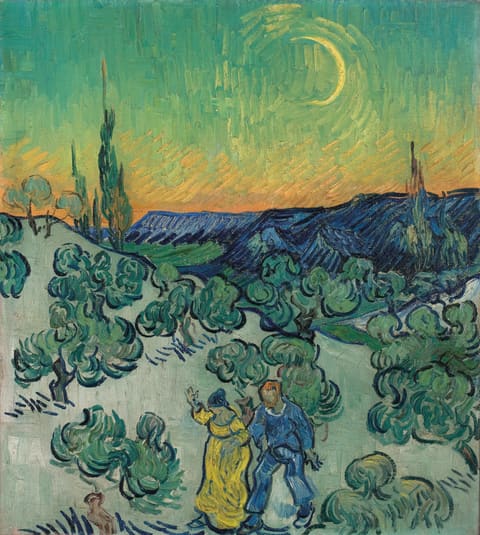
Passeio ao crepúsculo (Evening Promenade)
N° 954·VIII · The Restless Century
Passeio ao crepúsculo (Evening Promenade)
Vincent van Gogh (1853–1890)
1889–90 · oil on canvas
Dutch · Post-Impressionism

Translated from Portuguese: A canvas from Van Gogh's final years in the south of France; the brushstrokes suggest agitation and a strange atmosphere in which sky, plants and figures seem to move, the rhythm intensified by strong, saturated colours. The museum records that Van Gogh described this sky, seen from his asylum window at Saint-Rémy, in a letter to his brother Theo; MASP holds four of his paintings.

“Em Passeio ao crepúsculo, as pinceladas sugerem agitação, excitação, uma atmosfera estranha na qual céu, plantas e personagens parecem se mexer.” In the museum’s words — masp.org.br ↗ · quotation verified against the live page

Meanwhile — Mangaaka Power Figure (Nkisi N’Kondi) Africa · ca. 1880–1900

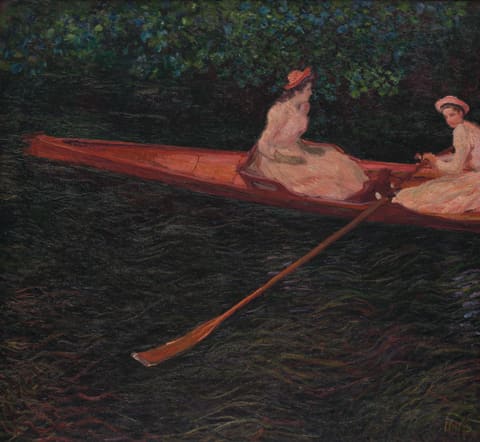
A canoa sobre o Epte (The Canoe on the Epte)
N° 955·VIII · The Restless Century
A canoa sobre o Epte (The Canoe on the Epte)
Claude Monet (1840–1926)
Circa 1890 · oil on canvas
French · Impressionism

Translated from Portuguese: A river scene from Monet's studies of the effects of light on water; its thick layer of pure colours blends when seen from a distance, and the museum notes that the blurred figures and the boat cropped by the canvas edge recall the language of photography.

“A canoa sobre o Epte mostra seu interesse pelos efeitos da luz na superfície da água. A grossa camada de tinta é composta por cores puras que, vistas de longe, se misturam.” In the museum’s words — masp.org.br ↗ · quotation verified against the live page

Meanwhile — Mangaaka Power Figure (Nkisi N’Kondi) Africa · ca. 1880–1900

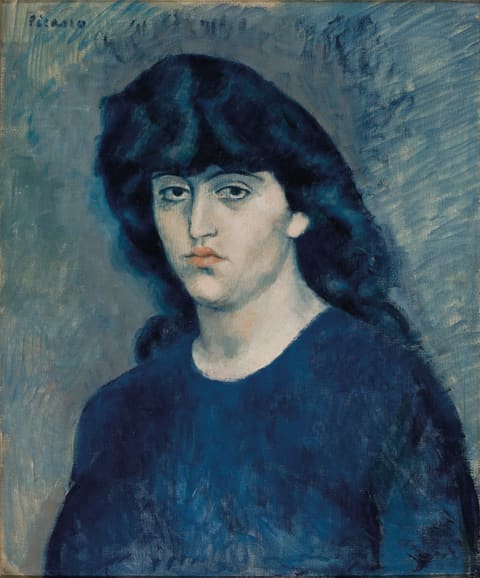
Retrato de Suzanne Bloch (Portrait of Suzanne Bloch)
N° 994·IX · Into Our Time
Retrato de Suzanne Bloch (Portrait of Suzanne Bloch)
Pablo Picasso (1881–1973)
1904 · oil on canvas
Spanish · Blue Period

Translated from Portuguese: A Blue Period portrait from Picasso's first years in Paris. Working with great sobriety of tone, he sought to fuse figure and ground — a unity, the museum notes, that would become one of the dominant motifs of Cubism.

“O Retrato de Suzanne Bloch (1904) faz parte da chamada fase azul, dos primeiros anos de Picasso em Paris.” In the museum’s words — masp.org.br ↗ · quotation verified against the live page

Meanwhile — El Asesinato del Gobernador Bustamante (The Assassination of Governor Bustamante) South Asia · Circa 1904

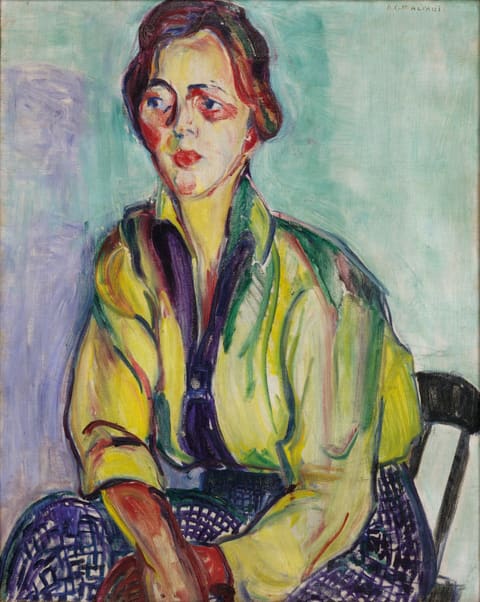
A estudante (The Student)
N° 1011·IX · Into Our Time
A estudante (The Student)
Anita Malfatti (1889–1964)
1915–16 · oil on canvas
Brazilian · Brazilian Modernism

Translated from Portuguese: A painting by Anita Malfatti — one of the few women artists to hold a central place in Brazilian Modernism and a leading figure of the 1922 Modern Art Week in São Paulo. Her German training and contact with radical Expressionist figuration let her use colour intuitively and boldly: in The Student the brushstrokes are broad and marked, and the cooler greens and purples contrast with the red and yellow of the skin and shirt. MASP dates it 1915–16; the artist herself donated it in 1949.

“Em A estudante, as pinceladas são largas e marcadas. Os tons de verde e roxo, mais frios, contrastam com o vermelho e amarelo da pele e da camisa.” In the museum’s words — masp.org.br ↗ · quotation verified against the live page

Meanwhile — Meditation Europe · 1915–1916

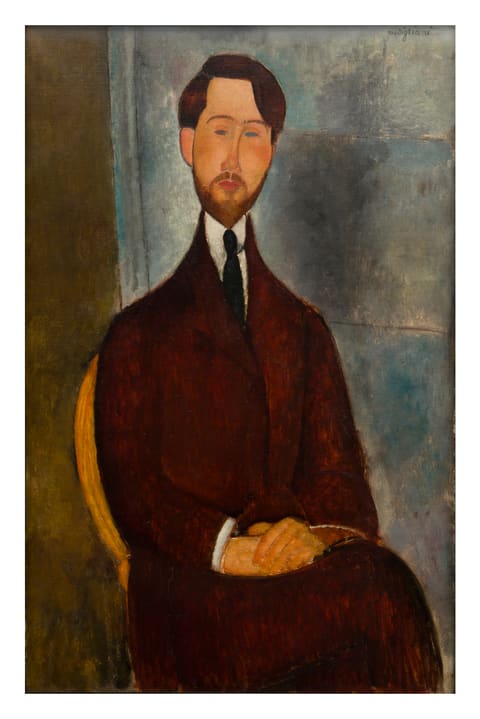
Retrato de Leopold Zborowski (Portrait of Léopold Zborowski)
N° 1014·IX · Into Our Time
Retrato de Leopold Zborowski (Portrait of Léopold Zborowski)
Amedeo Modigliani (1884–1920)
1916–19 · oil on canvas
Italian · École de Paris

Translated from Portuguese: A portrait of the Polish poet Léopold Zborowski — Modigliani's dealer and friend — one of six Modigliani paintings at MASP made between 1915 and 1919, showing his characteristic elongated neck and elliptical, mask-like face.

“O MASP tem em seu acervo seis pinturas do artista, produzidas entre 1915 e 1919. Entre elas está o Retrato de Leopold Zborowski, poeta polonês” In the museum’s words — masp.org.br ↗ · quotation verified against the live page

Meanwhile — Cerro Largo (La Aguada) Americas & Oceania · 1918

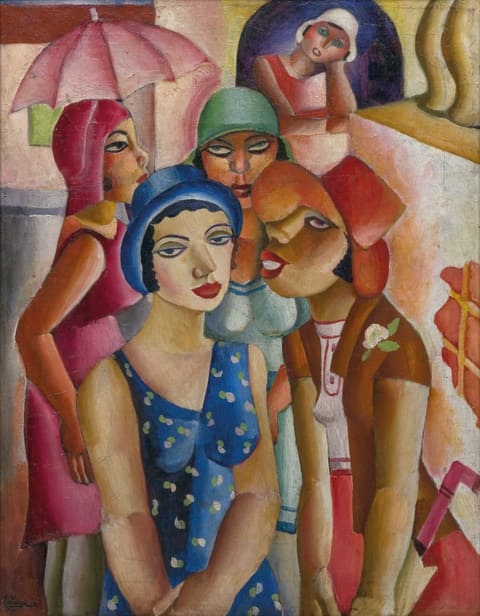
Cinco moças de Guaratinguetá (Five Girls from Guaratinguetá)
N° 1041·IX · Into Our Time
Cinco moças de Guaratinguetá (Five Girls from Guaratinguetá)
Emiliano Di Cavalcanti (1897–1976)
1930 · oil on canvas
Brazilian · Brazilian Modernism

Translated from Portuguese: One of Di Cavalcanti's most important paintings; five upright women with different skin tones and coloured dresses fill every plane of the canvas, each with her own character, in the strongly marked colour areas of his mature 1920s–30s style. Di Cavalcanti was a chief organiser of Brazil's 1922 Modern Art Week.

“Cinco moças de Guaratinguetá é uma de suas obras mais importantes. As cinco figuras aprumadas, com tons de pele e vestidos de diferentes cores, ocupam todos os planos da pintura, cada qual com seu caráter.” In the museum’s words — masp.org.br ↗ · quotation verified against the live page

Meanwhile — Hell (Põrgu) Europe · 1930

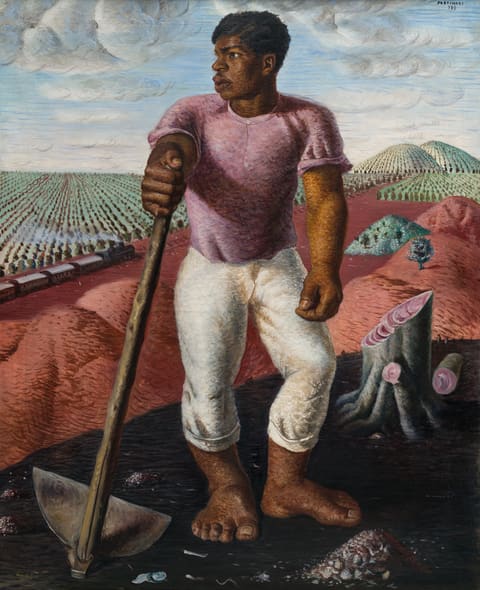
O lavrador de café (The Coffee Farmer)
N° 1046·IX · Into Our Time
O lavrador de café (The Coffee Farmer)
Candido Portinari (1903–1962)
1934 · oil on canvas
Brazilian · Brazilian Modernism

Translated from Portuguese: One of Portinari's most emblematic paintings and, the museum's director writes, a key work of Brazilian Modernism: a strong barefoot Black labourer with enlarged hands and feet, in white trousers and a light-red rolled-up shirt, holding a hoe — the coffee plantation, Brazil's leading export in 1930, on the horizon behind him.

“Candido Portinari é uma figura chave no modernismo brasileiro e seu Lavrador de café é uma de suas pinturas mais emblemáticas. Nela vemos um negro forte, de pés e mãos agigantados, representado descalço, vestindo calças brancas e camisa vermelha clara arregaçadas, segurando uma enxada.” In the museum’s words — masp.org.br ↗ · quotation verified against the live page

Meanwhile — Still Life Africa · 1934–1935

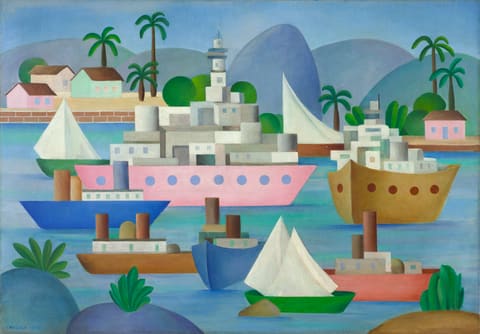
Porto I (Port I)
N° 1068·IX · Into Our Time
Porto I (Port I)
Tarsila do Amaral (1886–1973)
1953 · oil on canvas
Brazilian · Brazilian Modernism (Neo Pau-Brasil phase)

Translated from Portuguese: MASP's artistic director Adriano Pedrosa calls this the most complex of the many boat marinas Tarsila do Amaral painted. A work of her 1950s 'Neo Pau-Brasil' phase, it revisits the style and subjects of her 1924–28 canvases — typically Brazilian motifs and the bright 'caipira' colours of pink, blue and green then thought unfit for refined modern painting. Nine vessels of different shapes and sizes fill almost the whole surface in a figurative yet geometrised composition of triangles, circles, trapezoids and diamonds. The painting is held at MASP on long-term comodato (loan/deposit) from the Banco Central do Brasil, and was featured in the museum's 2019 Tarsila Popular exhibition.

“O exemplar mais complexo é Porto I (1953), obra da chamada fase Neo Pau-Brasil, dos anos 1950, em que a artista revisitou o estilo e os assuntos de telas feitas por ela entre 1924 e 1928, com motivos tipicamente brasileiros e cores “caipiras” — o rosa, o azul e o verde em tons brilhantes, supostamente inadequadas para uma refinada pintura moderna ao gosto da época.” In the museum’s words — masp.org.br ↗ · quotation verified against the live page

Meanwhile — Landscape in the Nude Africa · 1953

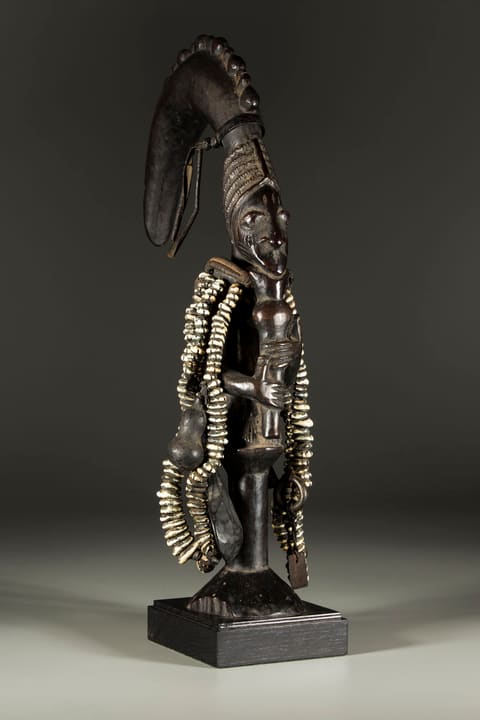
Exu
N° 1145·Undated
Exu
Yoruba peoples
Undated (probably 20th century) · wood, metal, leather and shells
Yoruba

Translated from Portuguese: A Yoruba sculpture of the deity Exu, probably made in the 20th century in the Oyo region of Nigeria. Carved from a single block of wood with shells and leather, it represents one archetype of the deity — a man playing a flute, with a phallic hairstyle and a serpent-like head where his axé (vital force) resides. The essay on MASP's own collection page singles out this African deity sculpture among the museum's non-European holdings.

“Exu, feita com conchas e couro e esculpida em um bloco único de madeira, representa um dos arquétipos dessa divindade: um homem tocando flauta, com penteado fálico e cabeça semelhante à de uma serpente, onde se localiza seu axé (força vital).” In the museum’s words — masp.org.br ↗ · quotation verified against the live page
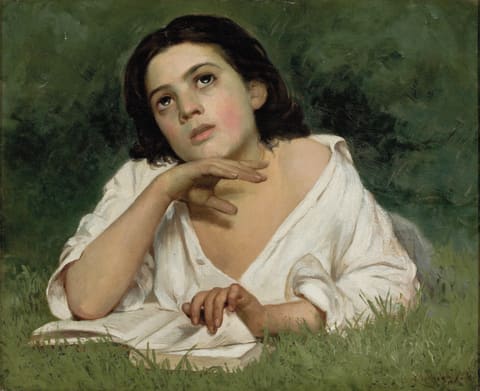
Moça com livro (Young Woman with a Book)
N° 1182·Undated
Moça com livro (Young Woman with a Book)
José Ferraz de Almeida Júnior (1850–1899)
Undated (19th century) · oil on canvas
Brazilian · Brazilian Realism

Translated from Portuguese: A canvas by Almeida Júnior, whose depictions of specifically Brazilian rural types made him a landmark of 19th-century Brazilian culture. MASP places this undated work alongside his Caipira picando fumo (1893) and Amolação interrompida (1894), both in the Pinacoteca do Estado de São Paulo. The museum notes the title Young Woman with a Book is probably mistaken: the haircut and the shirt open at the chest suggest a male adolescent absorbed in reverie as he reads. Donated by Guilherme Guinle in 1947.

“A obra do MASP destaca-se no conjunto de sua produção junto com Caipira picando fumo (1893) e Amolação interrompida (1894), ambas da Pinacoteca do Estado de São Paulo. O título da obra, Moça com livro (sem data), é provavelmente equivocado. O corte de cabelo e a camisa aberta no peito sugerem tratar-se de adolescente do sexo masculino imerso em fantasia durante a leitura.” In the museum’s words — masp.org.br ↗ · quotation verified against the live page