The Atlas·BG

BG

National Archaeological Museum, Sofia — 21 works · museum site ↗ · 5500 BCE – 999 CE 60000 BCE2020

Seen from Sofia, history is above all craft & design, then treasure & power — a collection split between its own tradition and other worlds (5 of 21 works are from other civilisations).

Craft 7 Power 5 Sculpture 5 Invention 2 Ritual 2
Neolithic ceramic altar from the Ginova Tell
N° 013·I · The First Makers
Neolithic ceramic altar from the Ginova Tell
Unknown
Late Neolithic, second half of the 6th millennium BC · Ceramic
Late Neolithic · Late Neolithic

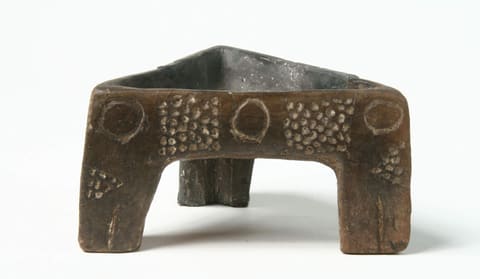
Triangular Late Neolithic ceramic "altar" on three corner legs from the Ginova Tell near Chelopech (excavated 1947), its surface incised with circles and white-filled impressions. The museum notes the debated function of such objects - lamp, censer, or model of a real altar or of the Mother Goddess's womb - while stressing their clear role in prehistoric belief; second half of the 6th millennium BC.

“The altar was discovered in 1947 during archaeological excavations of the Ginova Tell near the village of Chelopech, led by N. Petkov.” In the museum’s words — naim.bg ↗ · quotation verified against the live page

Meanwhile — Goddess Figurine Near East · c. 5000 BC
Composite sickles from Provadia-Solnitsata
N° 015·I · The First Makers
Composite sickles from Provadia-Solnitsata
Unknown
Late Neolithic, 5400-5200 BC (Karanovo III-IV culture) · Antler, flint
Late Neolithic (Karanovo III-IV culture) · Late Neolithic

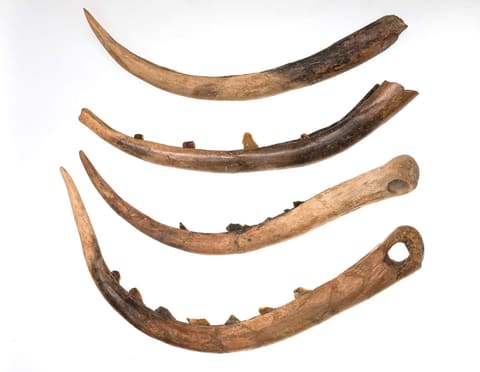
A collective find of composite sickles from a burnt two-storey Late Neolithic dwelling at the prehistoric salt-production centre of Provadia-Solnitsata, recovered from the bottom of a clay granary. The arcuate antler handles retain their inset rows of flint flakes (seven on one, nine on the other), polished from use, with a drilled hole for carrying. Karanovo III-IV culture, 5400-5200 BC.

“The collective find of sickles was discovered during the excavations of a two-storey Late Neolithic dwelling in the prehistoric salt mining centre Provadia-Solnitsa.” In the museum’s words — naim.bg ↗ · quotation verified against the live page

Meanwhile — Goddess Figurine Near East · c. 5000 BC
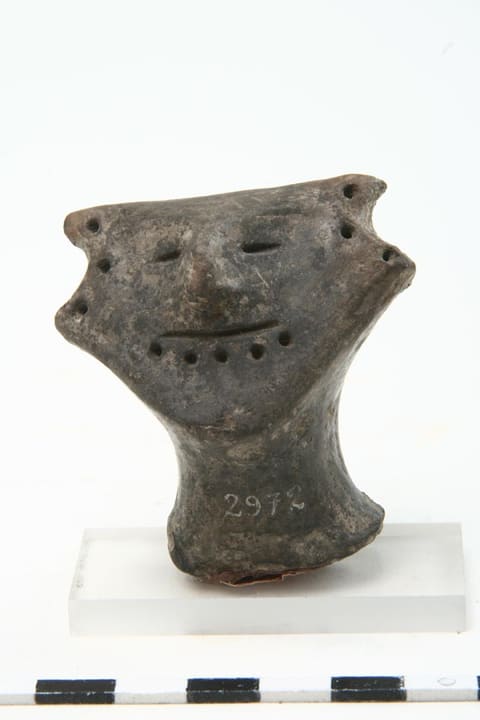
Clay anthropomorphic figure from Galabets, Pomorie
N° 019·I · The First Makers
Clay anthropomorphic figure from Galabets, Pomorie
Unknown
Chalcolithic, 5th millennium BC · Clay
Chalcolithic · Chalcolithic

Small Chalcolithic clay head, 5.2 cm high, from an anthropomorphic figure found at the Tatar kioi locality near Galabets (Pomorie) and shown in the Prehistory Hall. It presents a smiling face with incised dots below the mouth and curved ears each pierced with three holes that probably held pieces of jewellery; the museum groups it with the 5th-millennium-BC gold, clay, bone and stone figures illustrating prehistoric spiritual life.

“A small clay head from an anthropomorphic figure is exhibited in the Prehistory Hall of the National Archaeological Museum.” In the museum’s words — naim.bg ↗ · quotation verified against the live page

Meanwhile — The Earliest Musical Instrument in Oman Near East · 5000-4000 BCE (Late Stone Age)

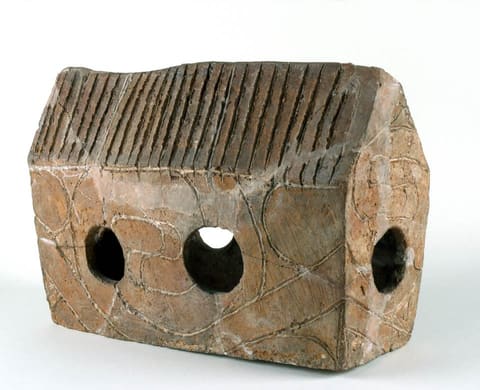
Ceramic house model from Tell Kodzhadermen
N° 025·I · The First Makers
Ceramic house model from Tell Kodzhadermen
Unknown
Late Chalcolithic, second half of the 5th millennium BC · Ceramic
Chalcolithic · Late Chalcolithic

Chalcolithic ceramic model of a gable-roofed house from Tell Kodzhadermen near Shumen, excavated in 1914 - described by the museum as one of the largest and best-preserved artefacts of its kind in the Balkans. Round wall openings read as windows and a door, and incised spirals with red paint reproduce real wall decoration, making the model a source for 5th-millennium-BC architecture.

“Found more than a century ago, in 1914, the house model from Tell Kodzhadermen is still one of the biggest, best preserved, most fascinating and intriguing artifacts of its kind on the Balkans.” In the museum’s words — naim.bg ↗ · quotation verified against the live page

Meanwhile — Painted Pottery Jar with Stork, Fish and Stone Axe Design East Asia · Neolithic, Yangshao Culture (c. 5,000-3,000BC)

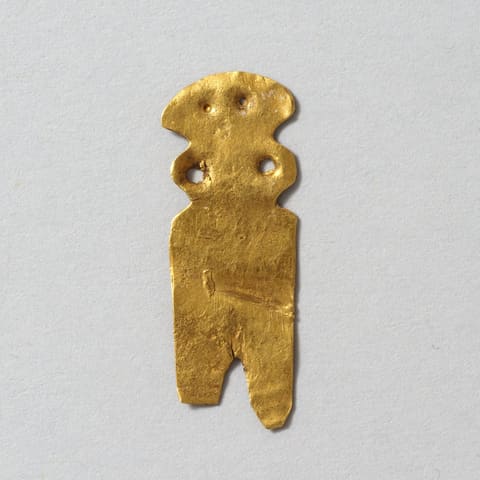
Gold anthropomorphic figurine from Kosharitsa
N° 026·I · The First Makers
Gold anthropomorphic figurine from Kosharitsa
Unknown
Late Chalcolithic, second half of the 5th millennium BC · Gold
Chalcolithic · Late Chalcolithic

Gold anthropomorphic amulet, a schematic female figure with indented eyes and pierced folded arms for suspension, a stray find from a tell near Kosharitsa on the Black Sea coast. The museum places it among the most intriguing finds from the dawn of gold metallurgy, of the period made famous by the Varna Chalcolithic necropolis; second half of the 5th millennium BC.

“The gold anthropomorphic figurine is among the most intriguing finds from the dawn of gold metallurgy.” In the museum’s words — naim.bg ↗ · quotation verified against the live page

Meanwhile — Painted Pottery Jar with Stork, Fish and Stone Axe Design East Asia · Neolithic, Yangshao Culture (c. 5,000-3,000BC)

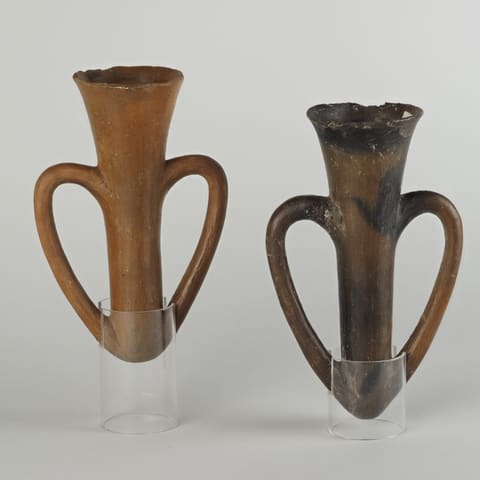
Depas Amphikipellon (Trojan-type cups) from Mihalich
N° 045·I · The First Makers
Depas Amphikipellon (Trojan-type cups) from Mihalich
Unknown
Early Bronze Age, 3rd millennium BC · Ceramic
Early Bronze Age (Thrace) · Early Bronze Age

Two tall two-handled ceramic tankards of the "Trojan type" (Depas Amphikipellon) from the Early Bronze Age settlement of Mihalich on the southern slopes of the Sakar Mountain. The museum recalls the shape's fame from Schliemann's disputed identification with a vessel in Homer's Iliad and suggests the cups are imports from Troy, evidence of 3rd-millennium-BC trade contacts across Thrace, the Aegean and Anatolia. Shown in the Prehistory Hall.

“The two cups from the collection of the National Archaeological Museum are discovered near the Early Bronze Age settlement of Mihalich.” In the museum’s words — naim.bg ↗ · quotation verified against the live page

Meanwhile — Seal showing unicorn with 8 pictograms South Asia · 3rd millennium BCE

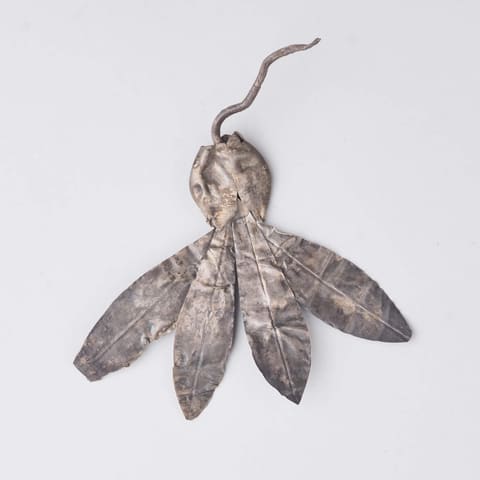
Silver floral earring from the Shumen region
N° 047·I · The First Makers
Silver floral earring from the Shumen region
Unknown
3rd millennium BC · Silver
Early Bronze Age · Early Bronze Age

Silver floral earring, a chance find from the Shumen region shown in the Prehistory Hall, shaped like four olive or oleander leaves on a twisted wire. The museum notes a single parallel from an Early Minoan tomb at Mochlos on Crete and regards the ornament as a direct Cretan import reaching the Lower Danube via inland eastern Thrace in the 3rd millennium BC.

“The adornment resembles four olive (Oliva sativa) or oleander (Nerium oleander) leaves, each decorated with a single relief midline.” In the museum’s words — naim.bg ↗ · quotation verified against the live page

Meanwhile — Seal showing unicorn with 8 pictograms South Asia · 3rd millennium BCE

Early Bronze Age silver hoard from the Petrich region
N° 072·I · The First Makers
Early Bronze Age silver hoard from the Petrich region
Unknown
Early Bronze Age, last third of the 3rd millennium BC · Silver
Early Bronze Age · Early Bronze Age

Early Bronze Age silver hoard from the Petrich region of southwest Bulgaria, which entered the museum in 2003 and is shown in the Prehistory Hall. It comprises five relief-decorated silver appliques, three bracelets and an earring; with a related hoard from nearby Rupite (held by the National Historical Museum) the museum reads it as evidence of a late-3rd-millennium-BC jewellery workshop mediating between Aegean and Balkan metalworking.

“The hoard entered the National Archaeological Institute with Museum in 2003.” In the museum’s words — naim.bg ↗ · quotation verified against the live page

Meanwhile — Necklace from the Karashamb tomb Near East · Middle Bronze Age, 22nd–21st centuries BC

Bronze amphora with strainer from Ruets
N° 185·II · The Classical World
Bronze amphora with strainer from Ruets
Unknown
Second half of the 5th c. BC · Bronze with silver inlays
Thracian

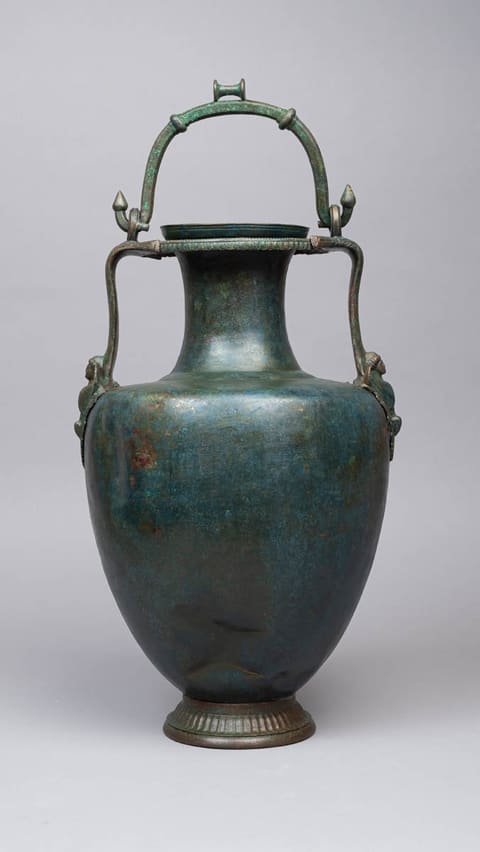
Bronze amphora with silver inlays, its cast vertical handles ending in winged sirens, found in a tumulus near Ruets (Yurukler) together with a matching strainer that seats on the vessel's mouth. Second half of the 5th c. BC; the museum shows it in the Treasury Hall of the National Archaeological Museum.

“The amphora was found together with a strainer that fits on the mouth of the vessel.” In the museum’s words — naim.bg ↗ · quotation verified against the live page

Meanwhile — The Parthenon Sculptures Greek world · 438–432 BC

Gold signet ring from the Svetitsa Tumulus
N° 187·II · The Classical World
Gold signet ring from the Svetitsa Tumulus
Unknown
Late 5th c. BC · Gold
Thracian

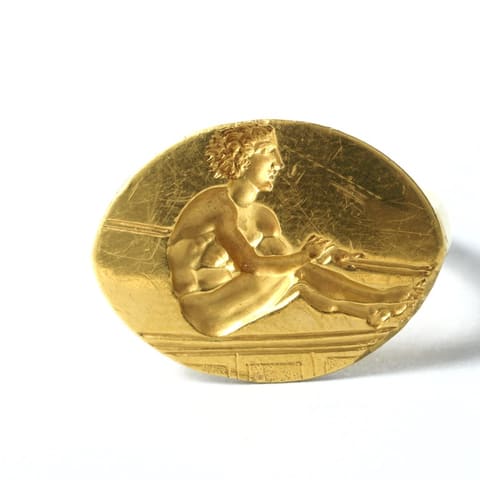
Gold signet ring from a rich Thracian aristocratic burial in the Svetitsa Tumulus near Shipka (excavated 2004). Its oval bezel carries an intaglio of a young athlete seated at rest, holding two javelins, with detailed musculature against an incised gymnasium setting. In the museum's permanent exhibition.

“On the oval plate of the ring a young athlete at rest is represented in negative (carved image), in profile to the right, the upper body is in three-quarters frontal position.” In the museum’s words — naim.bg ↗ · quotation verified against the live page

Meanwhile — Grave Stele of Hegeso Greek world · 410-400 BC

Silver-gilt rhyton from Rozovets
N° 193·II · The Classical World
Silver-gilt rhyton from Rozovets
Unknown
First half of the 4th c. BC · Silver, gilded
Thracian

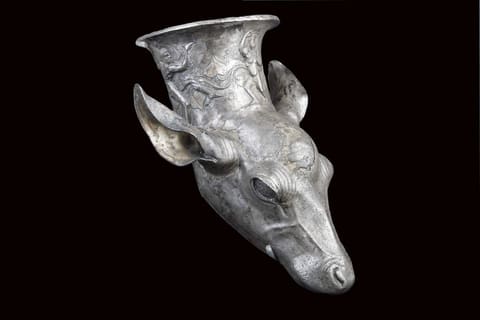
Short-necked silver-gilt rhyton terminating in a deer's head, discovered in 1878 in the Yuznata Mogila mound at Rozovets and part of the museum's founding exposition. A figured frieze of Dionysus' thiasus and an ivy garland run around the neck; the museum calls it among the most valuable examples of ancient toreutics and a vessel bound to Thracian aristocratic and royal ideology.

“The rhyton is a vessel directly associated with the Thracian aristocracy and the local royal ideology.” In the museum’s words — naim.bg ↗ · quotation verified against the live page

Meanwhile — Gold diadem with temple pendants from Vani Near East · First half of the 4th century BC

Silver calyx-cup from Varbitsa
N° 211·II · The Classical World
Silver calyx-cup from Varbitsa
Unknown
Late 4th - first half of the 3rd c. BC · Silver
Thracian

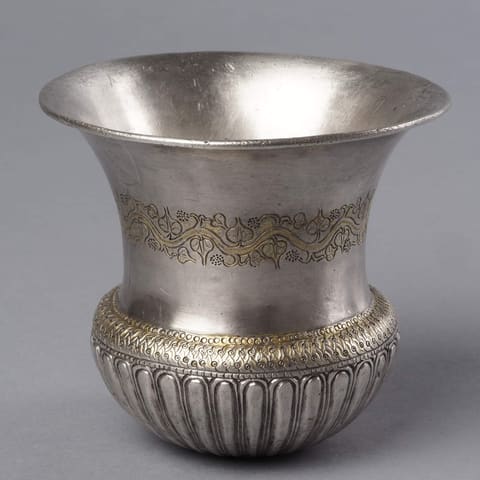
Silver calyx-cup from the inventory of a stone tomb found in 1885 in the Chereshka (Troshka) locality near Varbitsa. Its bipartite body carries a gilded double rosette beneath radiating tongues and an engraved ivy wreath; the museum links it to a high-ranking Thracian warrior burial and dates it to the late 4th - first half of the 3rd c. BC.

“Part of the inventory of a stone tomb discovered in 1885 in Chereshka (Troshka) locality near Varbitsa, Shumen region.” In the museum’s words — naim.bg ↗ · quotation verified against the live page

Meanwhile — Lumbarda Psephisma Greek world · Early 3rd century BCE (Hellenistic)

Bronze bust of Pallas Athena from Svilengrad
N° 252·II · The Classical World
Bronze bust of Pallas Athena from Svilengrad
Unknown
1st c. · Bronze
Roman · Roman Imperial

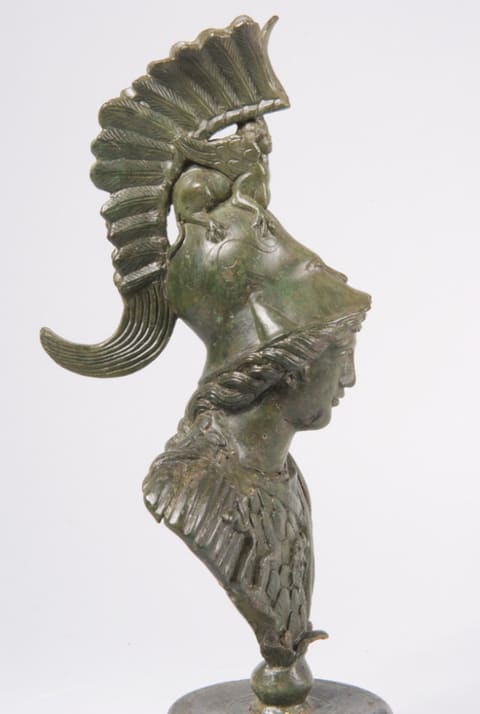
Bronze bust of Athena rising from a flowered cup on a tall base, the goddess in an Italo-Corinthian helmet crowned by a sphinx and a leather cuirass with a Medusa appliqué. A 1st-c. version of the 5th-century-BC "Athena of Velletri" type, found by chance in 1945 near Svilengrad with figurines of Apollo and Tyche and interpreted as a household shrine (lararium).

“The bust was discovered by chance, on December 6, 1945, in the Kinkeliyata locality near the town of Svilengrad, together with three other bronze figurines of Apollo, Tyche and Athena, interpreted as belonging to a home sanctuary (lararium).” In the museum’s words — naim.bg ↗ · quotation verified against the live page

Meanwhile — Whistling bottle: feline and mouse (Vicús) Americas & Oceania · 400 BCE – 500 CE

Terracotta toy (horse and cart) from Suhindol
N° 285·II · The Classical World
Terracotta toy (horse and cart) from Suhindol
Unknown
2nd - 3rd c. · Terracotta
Roman · Roman Imperial

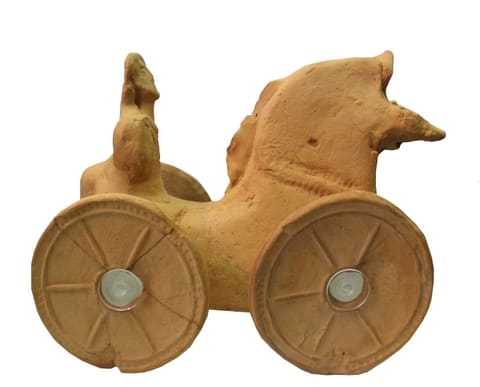
Roman-period terracotta of a horse drawing a four-wheeled cart with a seated, cloaked figure, mould-made of purified ocher clay and finished by hand, from the Suhindol region (Veliko Tarnovo province), 2nd-3rd c. The museum notes parallels across northern Bulgaria - including the Butovo workshop where such moulds were found - and that these terracottas served as toys, most from children's graves. On display in the Central Hall.

“The terracotta represents a horse with a four-wheeled cart and a seated human figure.” In the museum’s words — naim.bg ↗ · quotation verified against the live page

Meanwhile — Agate amphoriskoi and dish from Mtskheta Near East · 2nd-3rd century AD

Statue of a Resting Satyr (Roman copy after Praxiteles)
N° 288·II · The Classical World
Statue of a Resting Satyr (Roman copy after Praxiteles)
Unknown
Roman, Early Antonine period (2nd c.) · Marble
Roman · Roman Imperial (Antonine)

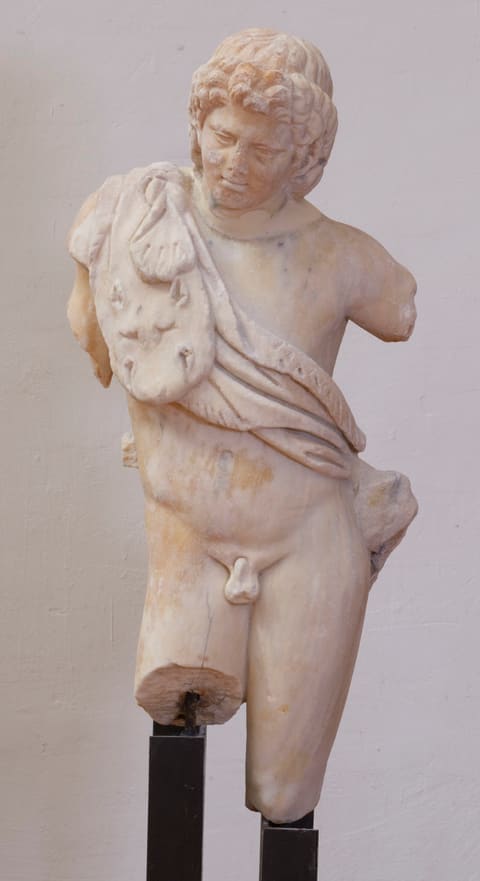
Roman marble copy of the "Resting Satyr" (Periboetos) by Praxiteles, found in a small columned building by the road station of Ad Putea at Riben and connected with the Roman city of Oescus. The satyr stands in the S-shaped Praxitelean pose with a deerskin (nebris) across the body; the museum dates it to the Early Antonine period.

“The statue is a Roman replica of the Relaxing Satyr by Praxiteles.” In the museum’s words — naim.bg ↗ · quotation verified against the live page

Meanwhile — Gold necklace with medallion and scent-flask from Mtskheta Near East · 2nd century AD

Statue of Fortuna from Oescus
N° 290·II · The Classical World
Statue of Fortuna from Oescus
Unknown
Mid-2nd c. (Antonine) · Marble
Roman · Roman Imperial (Antonine)

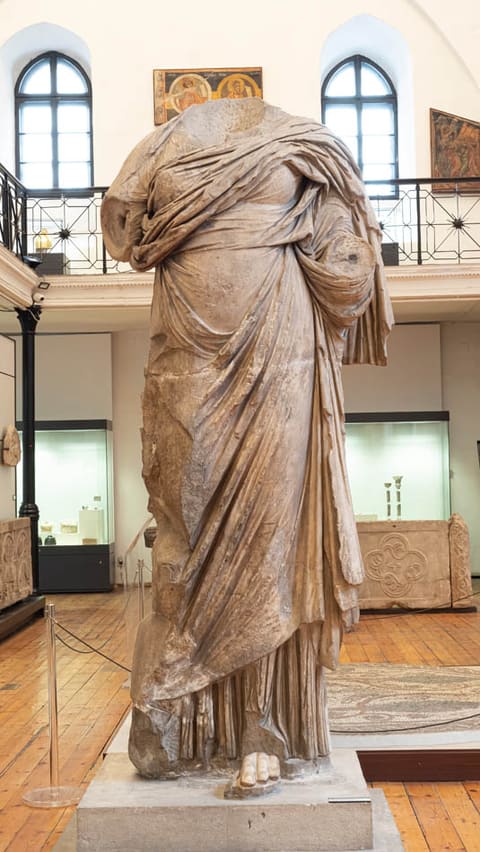
Colossal marble statue of a draped goddess from Gigen (Oescus), some 2.83 m tall, built up from separately worked torso blocks, head and arms as was usual for large ancient sculpture. The museum records no scholarly consensus on the identity - Demeter, Fortuna, Persephone, Kore or a Muse - and dates the work, a master copy after a Praxitelean original, to the middle of the 2nd c.

“The statue represents a colossal standing female figure, wearing a long, deeply draped chiton, falling to the ankles, and a himation, one end winding round her right hand, the other, thrown over her shoulders.” In the museum’s words — naim.bg ↗ · quotation verified against the live page

Meanwhile — Seated Kubera South Asia · 2nd Century AD

Limestone sarcophagus from Ratiaria
N° 291·II · The Classical World
Limestone sarcophagus from Ratiaria
Unknown
Second half of the 2nd c. · Limestone
Roman · Roman Imperial

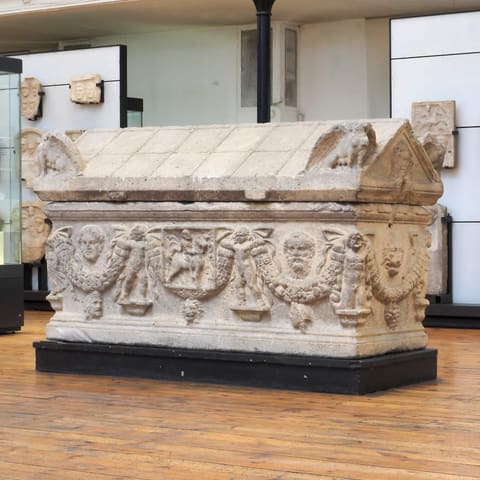
Limestone sarcophagus of the second half of the 2nd c. from the necropolis of Ratiaria at Archar, its lid shaped as a tiled roof with sphinx acroteria and Medusa pediments. The richly carved chest combines Genii of Death, garlands and theatre masks with a central Thracian Horseman riding toward a tree-and-snake altar - Eastern-Mediterranean workshop style with locally added imagery.

“The sarcophagus was is discovered within a brick-built tomb in the necropolis of Ratiaria.” In the museum’s words — naim.bg ↗ · quotation verified against the live page

Meanwhile — Agate amphoriskoi and dish from Mtskheta Near East · 2nd-3rd century AD

Ceramic icon of St. Theodore from Patleina
N° 403·III · Faith and Empire
Ceramic icon of St. Theodore from Patleina
Unknown
Late 9th - 10th c. · Glazed ceramic (Preslav white ware)
Medieval Bulgarian (Preslav) · First Bulgarian Empire

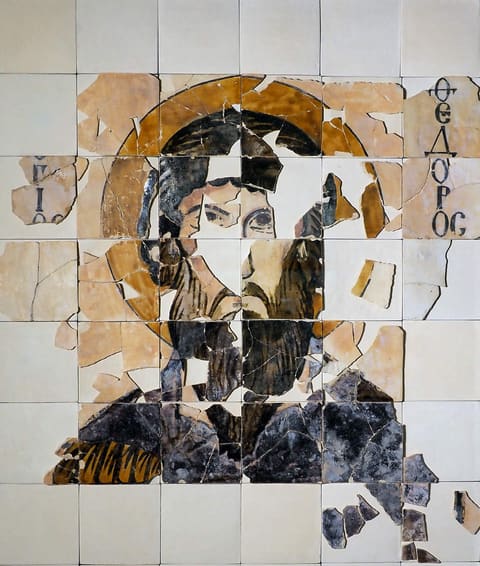
Ceramic icon of St. Theodore from the monastery of St. Panteleimon at Patleina near Veliki Preslav, discovered in 1909 and made up of square painted-and-glazed tiles of Preslav white ware. The museum describes it as the masterpiece of that late-9th/10th-century workshop tradition: the saint frontal and life-sized, with a pale face, large almond eyes and a pointed beard within a circular ochre halo.

“The find was discovered during excavations led by Yurdan Gospodinov in 1909.” In the museum’s words — naim.bg ↗ · quotation verified against the live page

Meanwhile — Sri Canasa Inscription South Asia · 937 CE (Mahasakarat 859 / BE 1480)

Ceramic tablet with Cyrillic inscription from Veliki Preslav
N° 407·III · Faith and Empire
Ceramic tablet with Cyrillic inscription from Veliki Preslav
Unknown
10th c. · Glazed white-kaolin ceramic
Medieval Bulgarian (Preslav) · First Bulgarian Empire

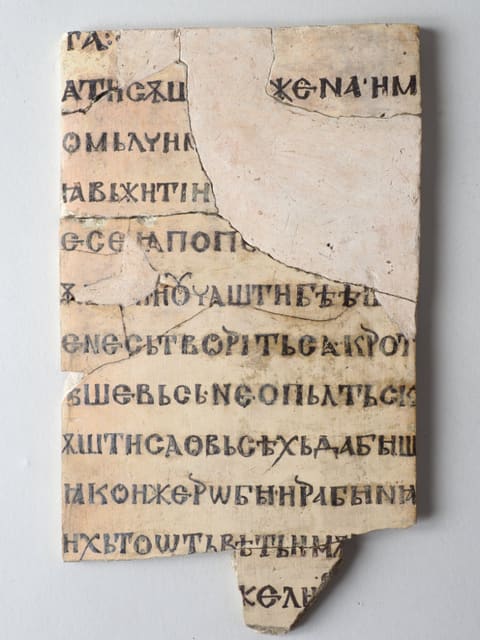
Glazed white-kaolin ceramic tablet inscribed in brown paint with a Cyrillic liturgical text (up to twelve preserved lines), found with other lettered tiles in a painted-pottery workshop east of the Round Church of Veliki Preslav. 10th c.; part of the museum's permanent exhibition in the Middle Ages Hall.

“The tablet is made of white kaolin clay, inscribed with letters drawn with dark brown paint, and covered by a colourless glaze.” In the museum’s words — naim.bg ↗ · quotation verified against the live page

Meanwhile — Celadon Ewer East Asia · China, Five Dynasties–Song dynasty, 10th century

Tombstone of the ichirgou-boyla Mostich
N° 428·III · Faith and Empire
Tombstone of the ichirgou-boyla Mostich
Unknown
Middle - third quarter of the 10th c. · Limestone
Medieval Bulgarian (First Bulgarian Empire) · First Bulgarian Empire

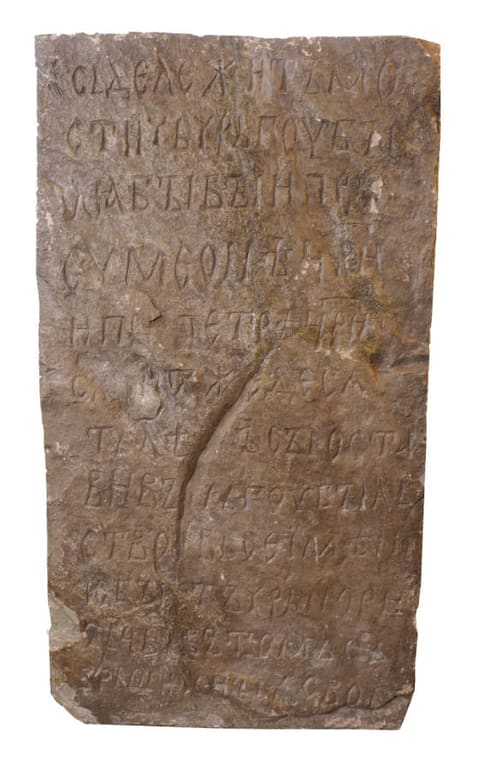
Limestone tombstone of the ichirgou-boyla Mostich, a high dignitary under Tsars Simeon and Peter, found in 1952 in the Selishte locality of Veliki Preslav. Its twelve-line Old Bulgarian Cyrillic inscription records, in translation, that Mostich left his office and property at the age of eighty to become a monk. The museum notes it preserves a pre-Christian office rank in a Christian-age inscription, marking the transition from pagan to Christian Bulgaria.

“Here lies Mostich, who was a chrugouboyl under Tsar Simeon and Tsar Peter.” In the museum’s words — naim.bg ↗ · quotation verified against the live page

Meanwhile — Four-armed Ganesha from Candi Singhasari South Asia · East Javanese art, 15th–16th Buddhist century (c. 10th–11th century CE)

Ceramic medallion with an archangel from Veliki Preslav
N° 1132·Undated
Ceramic medallion with an archangel from Veliki Preslav
Unknown
Medieval, Veliki Preslav (Round Church workshop) · Ceramic
Medieval Bulgarian (Preslav) · First Bulgarian Empire

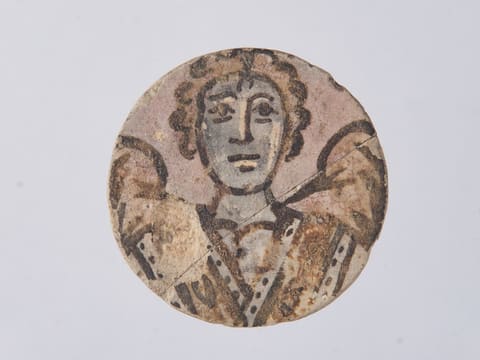
Round ceramic medallion showing an archangel in a frontal, solemn pose in imperial dress with a pearled border and short curled hair, found in 1943 in a painted-pottery workshop at the Round Church of Veliki Preslav. The museum notes such medallions served as inlays for small iconostases and church furniture or as pendants.

“The medallion represents the image of an archangel in a solemn, frontal pose, with large, open eyes and an oval face.” In the museum’s words — naim.bg ↗ · quotation verified against the live page