The Atlas·IN

IN

National Museum, New Delhi, New Delhi — 18 works · museum site ↗ · 3000 BCE – 1830 60000 BCE2020

Seen from New Delhi, history is above all sculpture, then writing & invention — a collection opened wide onto other worlds — a window more than a mirror (18 of 18 works are from other civilisations).

Sculpture 11 Invention 3 Observation 2 Ritual 1 Craft 1
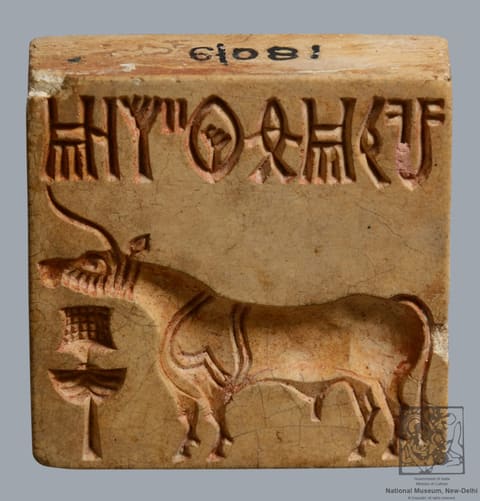
Seal showing unicorn with 8 pictograms
N° 046·I · The First Makers
Seal showing unicorn with 8 pictograms
Unknown
3rd millennium BCE · Steatite
Indus Valley Civilisation

A square steatite stamp seal with a perforated boss on the back, engraved with the so-called "unicorn" (a bull in profile with a single horn) before a ritual standard, above a line of eight Indus pictograms. The one-horned bull is the commonest device on Harappan seals.

“A square white-coloured steatite seal with a perforated boss on the reverse shows an engraved image. The unicorn is facing left, accompanied by an incense burner consisting of two vessels fixed onto a short staff.” In the museum’s words — museumsofindia.gov.in ↗ · quotation verified against the live page

Meanwhile — Depas Amphikipellon (Trojan-type cups) from Mihalich Europe · Early Bronze Age, 3rd millennium BC
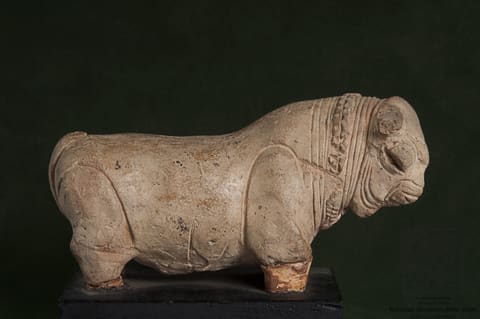
Bull
N° 057·I · The First Makers
Bull
Unknown
Circa 2500 BC · Terracotta
Indus Valley Civilisation

A handmade terracotta bull with a cream slip and a garland or plaited rope around its neck, modelled with knife-cut detail; the museum notes it reflects the vigour and the bull cult of the Harappans, who depicted the animal faithfully and artistically in terracotta.

“This terracotta bull figurine is entirely handmade with cream slip on it. Probably a knife might have been freely used in shaping the parts of body in details. Around the neck is a garland or plaited rope.” In the museum’s words — museumsofindia.gov.in ↗ · quotation verified against the live page

Meanwhile — Depas Amphikipellon (Trojan-type cups) from Mihalich Europe · Early Bronze Age, 3rd millennium BC
Dancing Girl
N° 058·I · The First Makers
Dancing Girl
Unknown
Circa 2500 BC · Bronze
Indus Valley Civilisation

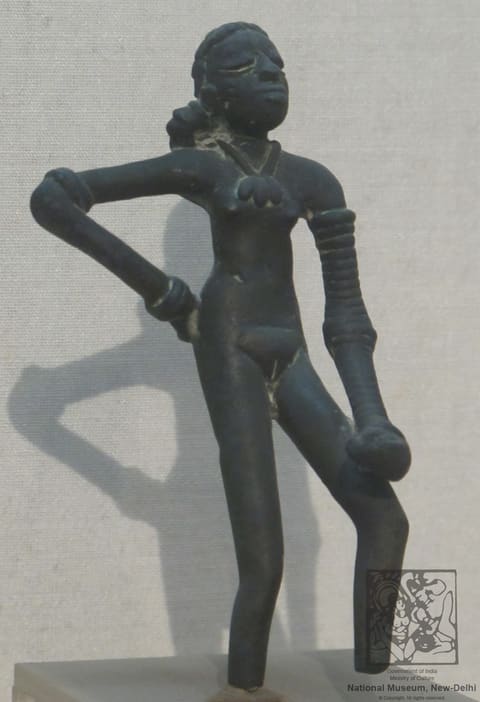
A small lost-wax bronze figurine of a nude young woman in a relaxed standing pose, one hand on the hip and the other arm sheathed in bangles, her hair elaborately plaited; excavated at Mohenjodaro, the museum describes it as one of the highest achievements of the artists of the Indus city. It is among the most celebrated objects of the Indus Valley Civilisation.

“This is one of the highest achievements of the artists of Mohenjodaro. The right hand rests on the hip, the left arm, covered entirely with bangles, hangs loosely, and seems relaxing by the posture of the legs.” In the museum’s words — museumsofindia.gov.in ↗ · quotation verified against the live page

Meanwhile — Depas Amphikipellon (Trojan-type cups) from Mihalich Europe · Early Bronze Age, 3rd millennium BC
Pasupati Seal
N° 059·I · The First Makers
Pasupati Seal
Unknown
Circa 2500 BC · Steatite
Indus Valley Civilisation

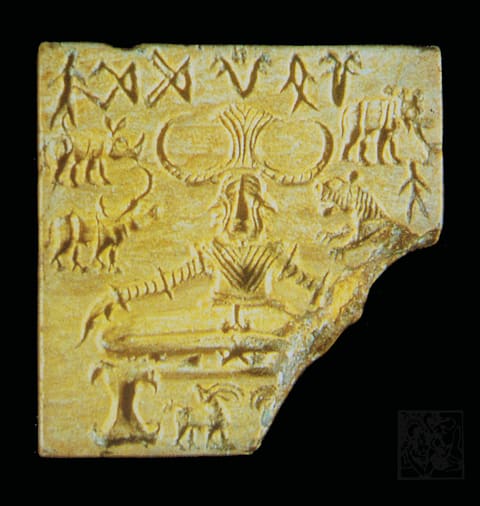
A small steatite seal engraved with a horned figure seated in a yogic posture, surrounded by animals (elephant, tiger, rhinoceros and buffalo) with two deer beneath the seat and a short pictographic inscription above; the museum reads the central figure as probably Shiva-Pashupati. One of the most discussed of all Indus seals. The record gives its find place as Harappa.

“This rare seal shows a seated figure in yogic posture, probably Shiva-Pashupati. It is usually thought that the figure has three faces but some scholars do not subscribe to it.” In the museum’s words — museumsofindia.gov.in ↗ · quotation verified against the live page

Meanwhile — Depas Amphikipellon (Trojan-type cups) from Mihalich Europe · Early Bronze Age, 3rd millennium BC
Seal showing man between two tigers
N° 060·I · The First Makers
Seal showing man between two tigers
Unknown
Circa 2500 BC · Steatite
Indus Valley Civilisation

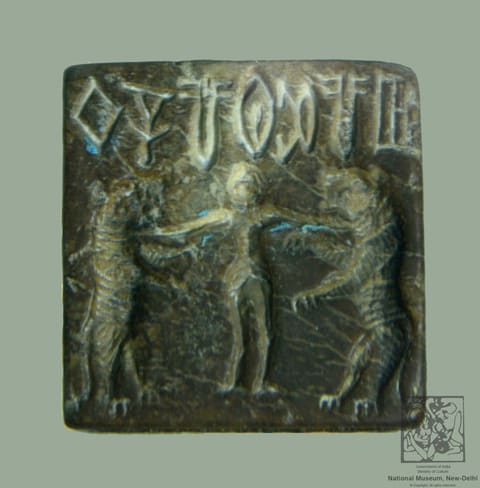
A steatite seal showing a male figure in profile grasping a tiger by the throat on either side, both beasts with open mouths and bared claws, with the usual pictographic inscription; a Harappan treatment of the "master of animals" motif.

“This seal portrays a male figure in profile, gripping a tiger on either side by the throat. Both the figures have open mouth and claws. As usual, it has a pictographic inscription.” In the museum’s words — museumsofindia.gov.in ↗ · quotation verified against the live page

Meanwhile — Depas Amphikipellon (Trojan-type cups) from Mihalich Europe · Early Bronze Age, 3rd millennium BC
Toy Cart
N° 061·I · The First Makers
Toy Cart
Unknown
Circa 2500 BC · Terracotta
Indus Valley Civilisation

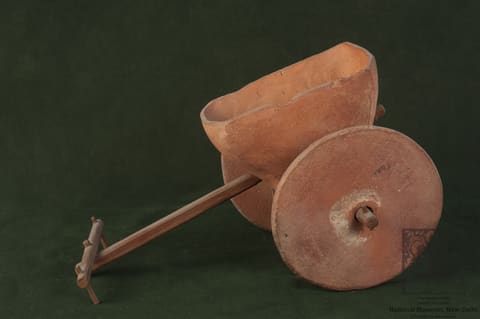
A terracotta toy cart from Harappa, a bowl-shaped body on a rectangular frame with perforations for an axle and two solid hubbed wheels, and a hole for the shaft and yoke; the museum notes such carts, found across Harappan sites, were among the most advanced means of conveyance for carrying passengers and goods.

“Almost every site of the Harappan culture has produced cart models in clay. This toy cart is made in the shape of a bowl with a rectangular frame.” In the museum’s words — museumsofindia.gov.in ↗ · quotation verified against the live page

Meanwhile — Depas Amphikipellon (Trojan-type cups) from Mihalich Europe · Early Bronze Age, 3rd millennium BC
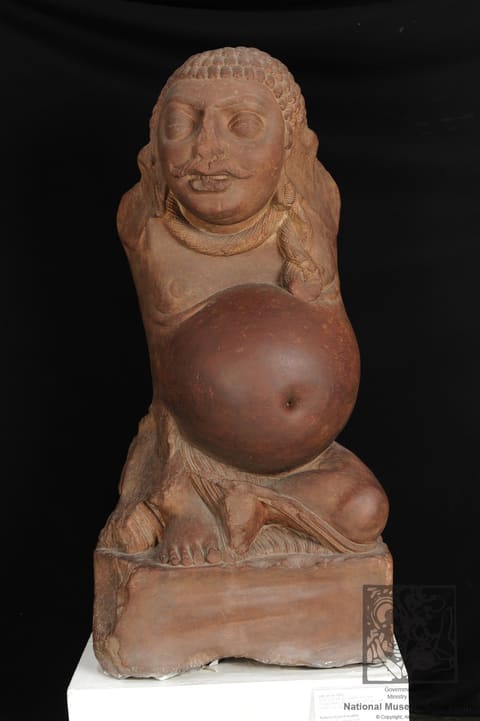
Seated Kubera
N° 282·II · The Classical World
Seated Kubera
Unknown
2nd Century AD · Mottled red sandstone
Indian · Kushana

A mottled red-sandstone figure of a pot-bellied yaksha, probably Kubera the god of wealth, seated at ease on a block pedestal, arms and one leg now lost; a Kushana-period sculpture found at Ahichchhatra, which the museum notes was stylistically executed at Mathura.

“Seated figure of Yaksha, probably Kubera. The god of wealth, seated at ease on a block pedestal. Both arms and right leg are missing, except for the right foot; the ears, nose, lower lip and left foot are damaged.” In the museum’s words — museumsofindia.gov.in ↗ · quotation verified against the live page

Meanwhile — Bronze head of Mithras from Siscia Rome · 2nd century CE

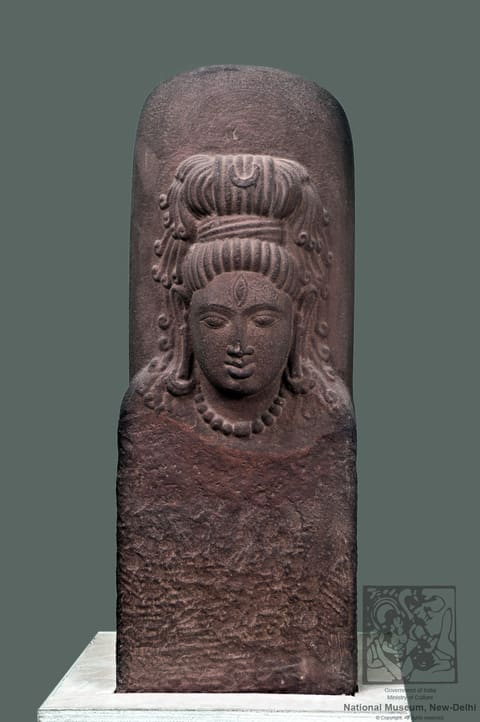
Ekamukha Sivalinga
N° 314·II · The Classical World
Ekamukha Sivalinga
Unknown
5th Century AD · Red sandstone
Indian · Gupta

A red-sandstone ekamukha (one-faced) Sivalinga: the face of Siva carved on one side of the linga, wearing a matted jatamukuta with a crescent moon above, a third eye on the forehead, and ear-rings and necklace; a Gupta-period image from Nachana Kuthera in Madhya Pradesh.

“Ekamukha Sivalinga carved on one side of phallus which is mounted on a high rectangular base. The hair is arranged into a Jatamukuta tied in the middle. Crescent Moon is shown at the top in front.” In the museum’s words — museumsofindia.gov.in ↗ · quotation verified against the live page

Meanwhile — Anthropomorphic stone face (Alamito culture) Americas & Oceania · 300–600 CE

Standing Vishnu
N° 315·II · The Classical World
Standing Vishnu
Unknown
5th Century AD · Red sandstone
Indian · Gupta

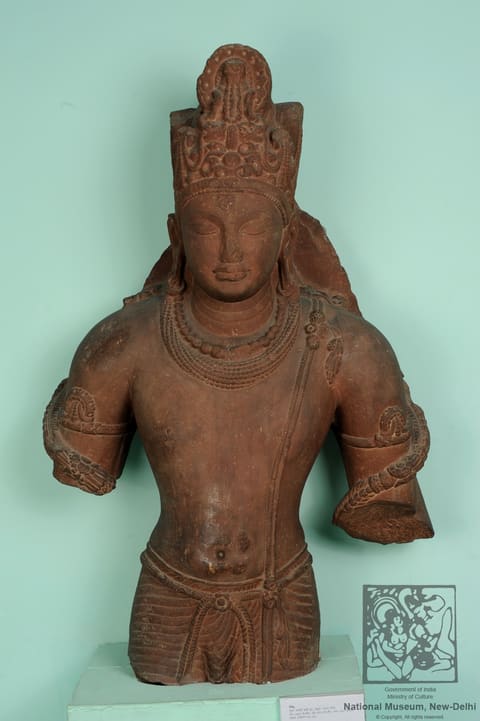
A red-sandstone standing Vishnu, legs and forearms lost, wearing an elaborate crown with mauli-mani, a pearl necklace, a long vanamala garland and a sacred thread, with curly locks on the shoulders and traces of a halo; a classic Gupta-period image from Mathura.

“Standing figure of Vishnu, with legs and fore-arms missing. The upper part of his body is nude, except that he wears an elaborate crown with mauli-mani on the head, a necklace of large pearls and another composed of beaded multi-strings armlets, ear-pendants, yajnopavita and a beautiful vanamala, passing behind the shoulders and over the arms near the elbows.” In the museum’s words — museumsofindia.gov.in ↗ · quotation verified against the live page

Meanwhile — Anthropomorphic stone face (Alamito culture) Americas & Oceania · 300–600 CE

Nataraja
N° 412·III · Faith and Empire
Nataraja
Unknown
circa 10th Century AD · Bronze
Indian · Chola

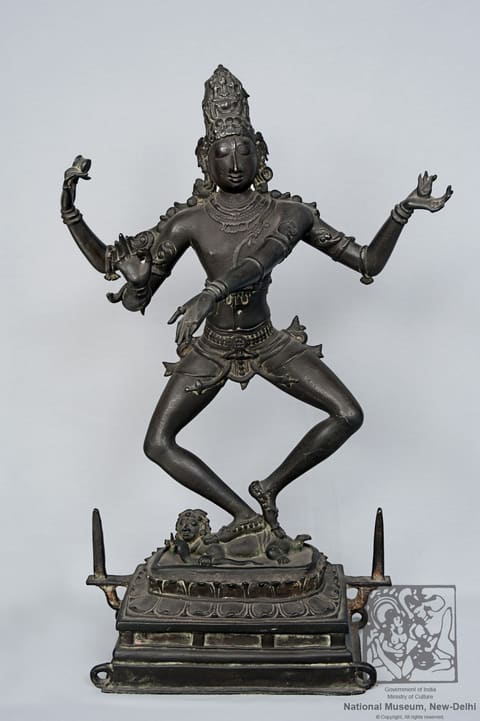
A four-armed, three-eyed bronze of Siva Nataraja dancing the chatura-tandava on the prostrate demon Apasmara, holding the damaru and the flame, hair dressed high with a crescent moon; from Tiruvarangulam in the south, which the museum calls a masterpiece of South Indian bronzes and a unique piece of its kind. An early Chola bronze.

“Three-eyed and four-armed image of Siva Nataraja in chaturtandava pose, dancing with the right foot placed on the prostrate demon Apasmara and the left leg resting on the toes.” In the museum’s words — museumsofindia.gov.in ↗ · quotation verified against the live page

Meanwhile — Bead necklace Europe · 900–1000 AD

Standing Buddha
N° 413·III · Faith and Empire
Standing Buddha
Unknown
10th Century AD · Bronze
Indian · Pala

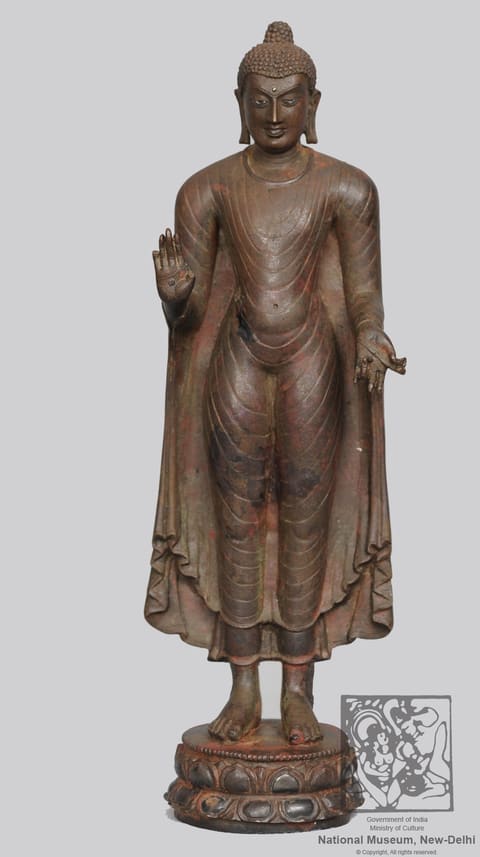
A lost-wax bronze Buddha standing in abhaya-mudra on a double-lotus pedestal, the clinging robe covering both shoulders and the hair in short curls over a prominent ushnisha; a Pala-school bronze from Nalanda, the famed monastic university town in the Patna region.

“Buddha standing in abhaya-mudra (giving assurance) on a circular double lotus pedestal. The right hand is in abhaya-mudra and the left holds the hem of a garment. The robes cover both shoulders and cling closely to the body, revealing the girdle beneath.” In the museum’s words — museumsofindia.gov.in ↗ · quotation verified against the live page

Meanwhile — Bead necklace Europe · 900–1000 AD

Mother and Child
N° 415·III · Faith and Empire
Mother and Child
Unknown
10th-11th Century AD · Brass
Indian

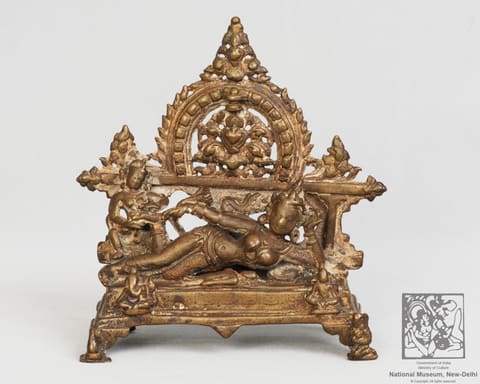
A lost-wax brass group of a mother reclining on a couch beside her newborn, holding a lotus stalk, attended by a female figure, with a seated Ganesha and a miniature Siva-linga worked into the couch and an inscription in Bengali script on the back; from Sunderban in West Bengal, about the 10th-11th century AD.

“Mother and Child on a four-legged rectangular couch. The child is shown lying flat on the back. The mother is reclining on a pillow on her left side supporting her head with the raised left hand.” In the museum’s words — museumsofindia.gov.in ↗ · quotation verified against the live page

Meanwhile — Hammer of Þór (Thor) Europe · 950–1050 AD

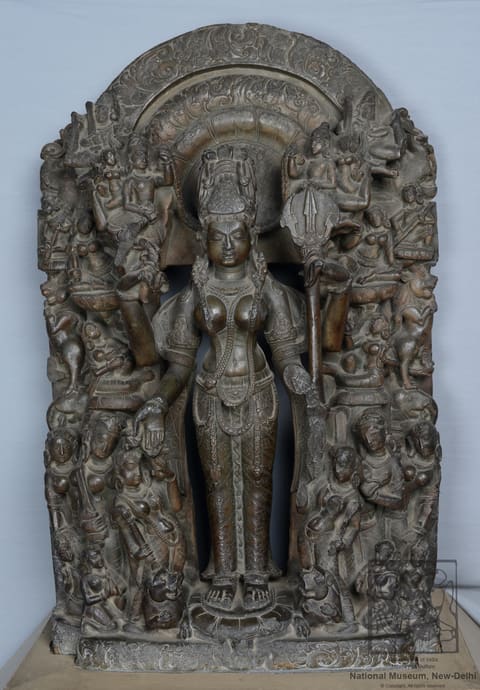
Standing Parvati
N° 444·III · Faith and Empire
Standing Parvati
Unknown
11th Century CE · Stone
Indian · Pratihara

A four-armed stone Parvati standing on a lotus pedestal, holding a lotus and a trident with her lower right hand in the gift-bestowing gesture, richly ornamented and framed by attendants, flying celestials and a floral halo; a Pratihara-period sculpture from Baijnath in the Almora region.

“Image of four-armed Parvati standing on lotus pedestal and surrounded by several attendant figures grouped in the most artistic fashion. In her upper right hand she holds a lotus flower, her lower right with the palm open to the front is in gift bestowing attitude.” In the museum’s words — museumsofindia.gov.in ↗ · quotation verified against the live page

Meanwhile — Wari funerary bundle with gold mask (Fardo Huari) Americas & Oceania · Wari (Huari), Fusional Era (800 – 1300 CE)

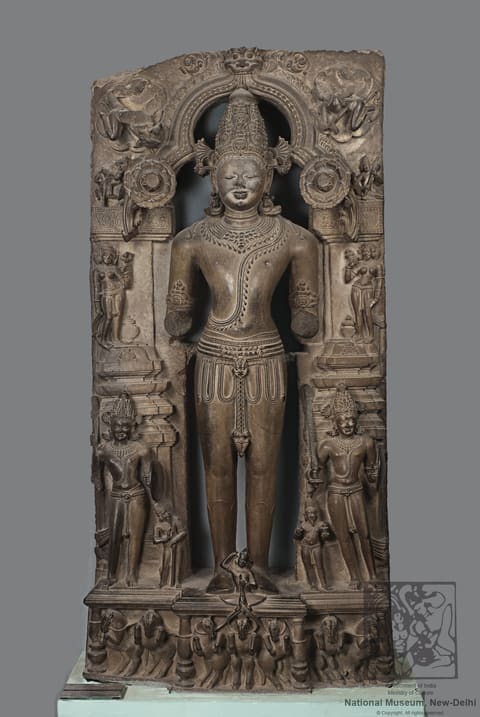
Standing Surya
N° 500·III · Faith and Empire
Standing Surya
Unknown
13th century AD · Chloride stone
Indian

A chloride-stone image of the sun-god Surya standing in full regalia with attendant figures, a kirtimukha above, and his seven horses driven by Aruna carved in niches across the base; from Konarak in Orissa, about the 13th century AD.

“Image of standing Surya complete with pedestal. He wears a profusely ornamented crown, earrings, necklaces yajnopavita, armlets, girdle, uttariya and antariya.” In the museum’s words — museumsofindia.gov.in ↗ · quotation verified against the live page

Meanwhile — Blacksmith's tongs Europe · 1100–1400 AD

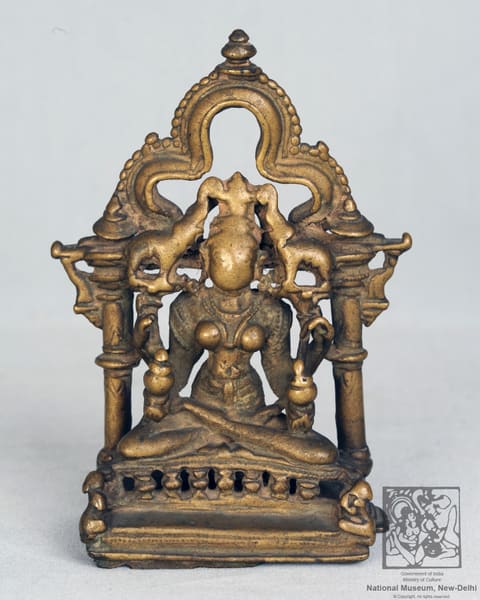
Gaja-Lakshmi
N° 557·IV · Toward the Renaissance
Gaja-Lakshmi
Unknown
15th Century AD · Bronze
Indian

A four-armed bronze of Gaja-Lakshmi seated cross-legged, holding lotuses on which elephants pour lustral water and carrying pot-shaped purna-kalasas in her lower hands, with a row of seven auspicious vases before her and a trefoil arch behind; probably from Gujarat, about the 15th century AD.

“Four armed figure of Gaja-Lakshmi seated cross legged on a rectangular pedestal, with a row of seven purna-kalasa in front, and two devotees seated on either side.” In the museum’s words — museumsofindia.gov.in ↗ · quotation verified against the live page

Meanwhile — Altar frontal from Draflastaðir Europe · 1400–1500 AD

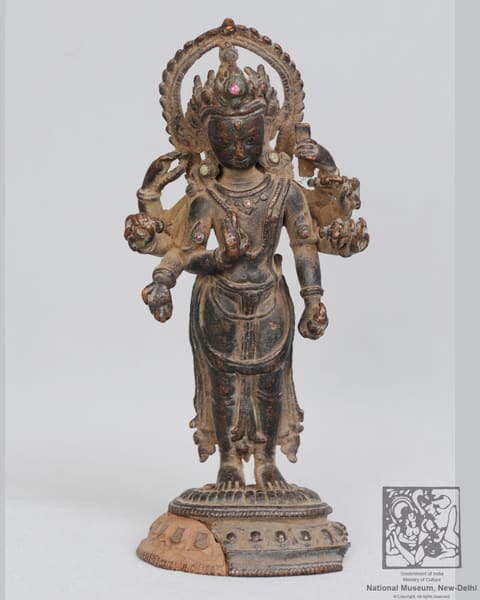
Standing Lokesvara
N° 568·IV · Toward the Renaissance
Standing Lokesvara
Unknown
15th - 16th Century AD · Bronze
Nepalese

A small lost-wax bronze of the eight-armed Bodhisattva Lokesvara (Avalokitesvara) standing slightly bent on a lotus pedestal, holding a rosary, manuscript and lotus with two right hands in the abhaya and varada gestures, an elliptical flaming halo behind the head; a Nepalese bronze of about the 15th-16th century.

“Eight armed Lokesvara standing on a lotus pedestal. He holds the rosary, manuscripts,a lotus, etc. His two right hands are in abhaya and varadha-mudra.” In the museum’s words — museumsofindia.gov.in ↗ · quotation verified against the live page

Meanwhile — Temptations of St. Anthony Europe · c. 1500

Ragamala
N° 877·VIII · The Restless Century
Ragamala
Unknown
1830 AD · Paper
Indian

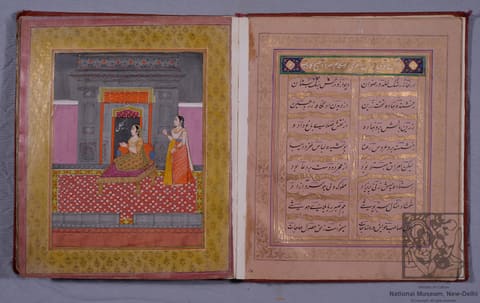
A Ragamala manuscript on the theory of Indian music, written in Persian in Nastaliq script with illustrations of the Lahore school; the text describes the ragas (Gujri, Tori, Malhar, Hindol, Kalyan and others) and their appointed times, and records celebrated musicians. Dated 1830.

“This manuscript of music is written in Persian in the Nastaliq script and its illustrations belong to the Lahore School.” In the museum’s words — museumsofindia.gov.in ↗ · quotation verified against the live page

Meanwhile — Under the Wave off Kanagawa (Kanagawa oki nami ura), or The Great Wave, from the series Thirty-six Views of Mount Fuji (Fugaku sanjūrokkei) East Asia · ca. 1830–32

Mask
N° 1179·Undated
Mask
Unknown
Indus Valley Civilisation · Terracotta
Indus Valley Civilisation

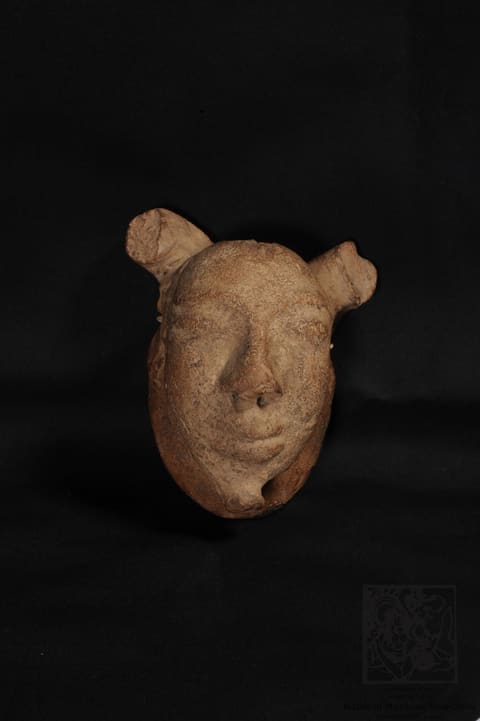
A mould-made terracotta horned mask from Mohenjodaro, hollow at the back and pierced at the edges for tying, still showing traces of a chocolate-colour slip; the museum suggests such masks decorated a wooden structure or were fixed to a house to avert ill-luck.

“A number of terracotta horned masks were found at Mohenjodaro. All of them were made from moulds. These are hollow at the back with holes at the edges on each side for tying.” In the museum’s words — museumsofindia.gov.in ↗ · quotation verified against the live page