N° 225·II · The Classical World
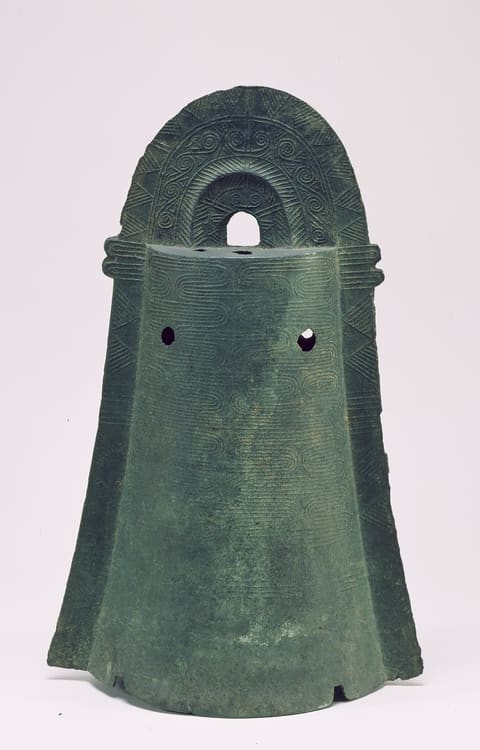
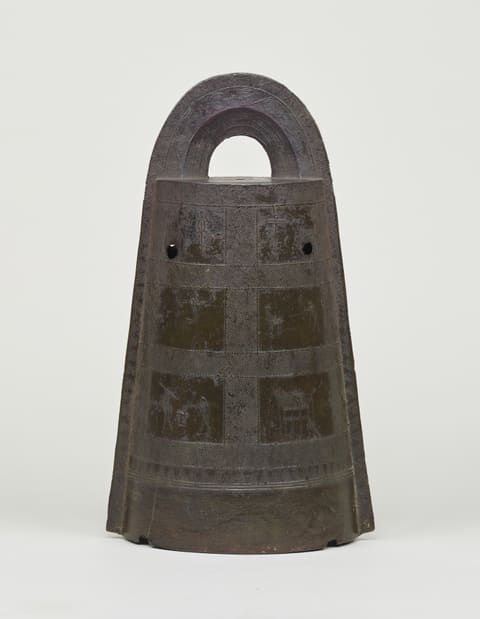
Bronze Bell ("Dōtaku")
Unknown
Yayoi period, 2nd–1st century BC · Bronze
Japanese · Yayoi period
A Yayoi-period ritual bronze bell (dōtaku), reportedly found in Kagawa Prefecture; the museum notes that its cast depictions convey how people of the time lived and prayed. Designated a National Treasure.
“Depictions seen on [dotaku] convey how people lived and prayed at the time.” In the museum’s words — tnm.jp ↗ · quotation verified against the live page
Meanwhile — Silver braided torc Europe · 2nd–1st century BC