The Atlas·NL

Netherlands

Rijksmuseum, Amsterdam — 10 works · museum site ↗ · 1590–1887 60000 BCE2020

Seen from Amsterdam, history is above all faces & portraits, then craft & design — a collection kept wholly in its own tradition — a mirror.

Portraits 4 Craft 2 Stories 2 Observation 2
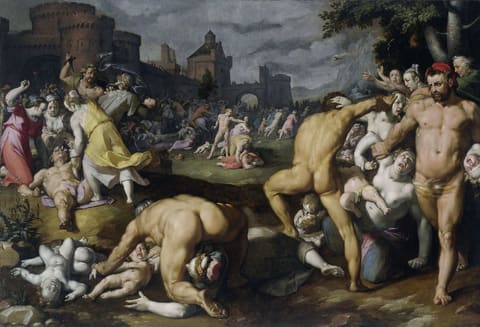
The Massacre of the Innocents
N° 702·V · The Renaissance
The Massacre of the Innocents
Cornelis van Haarlem (1562–1638)
1590 · oil on canvas
Dutch · Dutch Golden Age

A large, violent history painting depicting the biblical slaughter of the innocents in Bethlehem, piling atrocity upon atrocity across the canvas.

“On this large canvas Cornelis van Haarlem depicted the atrocities of the biblical massacre of innocent children in Bethlehem. Atrocity follows upon atrocity. Who would commission such a work? And why?” In the museum’s words — rijksmuseum.nl ↗

Meanwhile — Cypress Trees East Asia · Azuchi-Momoyama period, 1590
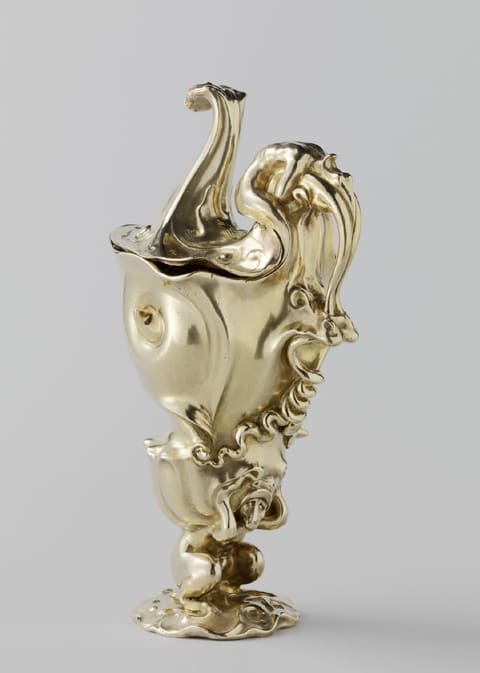
Lidded Ewer
N° 735·VI · The Baroque Age
Lidded Ewer
Adam van Vianen (1568–1627)
1614 · silver-gilt
Dutch · Dutch Golden Age

A silver-gilt ewer in the auricular style, its surface so fluid and intertwined that it looks as though it were modeled from soft globs of whipped cream, rewarding closer inspection with hidden details.

“This famous ewer – in the so-called auricular style – seems to have been made with soft globs of whipped cream. Everything is intertwined. But look more closely and you will discover all sorts of surprises.” In the museum’s words — rijksmuseum.nl ↗

Meanwhile — Hasan’s cloak Islamic world · Last third of the 16th century, reworked mid-17th century

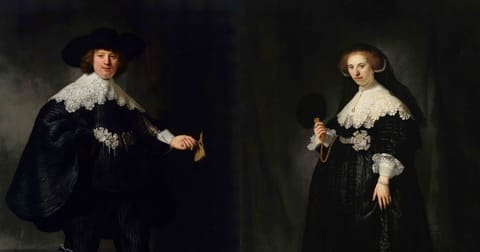
Marten and Oopjen
N° 752·VI · The Baroque Age
Marten and Oopjen
Rembrandt van Rijn (1606–1669)
1634 · oil on canvas
Dutch · Dutch Golden Age

A pair of full-length wedding portraits of a wealthy young Amsterdam couple, notable both for Marten's flamboyant costume and for the paintings' joint purchase by the Dutch and French states.

“Here they are. These two Rembrandts were purchased jointly by the Netherlands and France for 80 million euros apiece. Marten’s outfit is really flashy. Take a look.” In the museum’s words — rijksmuseum.nl ↗

Meanwhile — Water Fowl in the Lotus Pond East Asia · Japan, Edo period, early 17th century

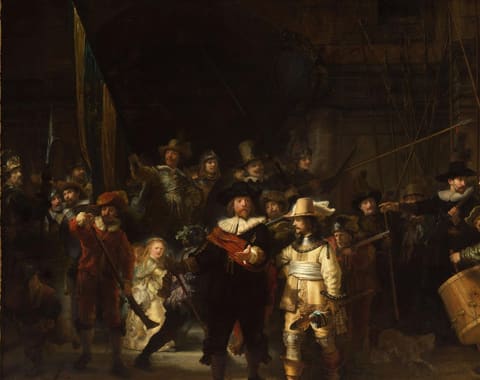
The Night Watch
N° 762·VI · The Baroque Age
The Night Watch
Rembrandt van Rijn (1606–1669)
1642 · oil on canvas
Dutch · Dutch Golden Age

A group portrait of an Amsterdam civic guard company, renowned above all for the dynamic sense of motion Rembrandt brought to what could otherwise have been a static lineup of guardsmen.

“Why is the Night Watch actually so famous? Isn’t it simply a group portrait of Amsterdam civic guardsmen in the 17th century? Look how Rembrandt created motion in this picture.” In the museum’s words — rijksmuseum.nl ↗

Meanwhile — Writing Box, Pontoon bridge design in "maki-e" lacquer East Asia · Edo period, 17th century

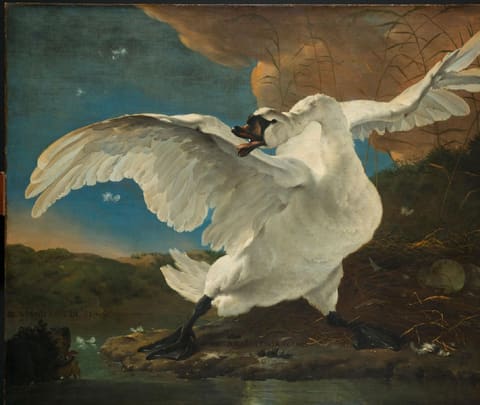
The Threatened Swan
N° 767·VI · The Baroque Age
The Threatened Swan
Jan Asselijn (c. 1610–1652)
c. 1650 · oil on canvas
Dutch · Dutch Golden Age

A swan defends her nest with wings spread wide and feathers flying, a dramatic scene later popularly read as an allegory of a Dutch statesman defending the country.

“If you've ever seen an angry swan, you'll know that this painting isn't exaggerated. Wings heaved wide, feathers flying around, this swan is defending her nest. What’s going on?” In the museum’s words — rijksmuseum.nl ↗

Meanwhile — Writing Box, Pontoon bridge design in "maki-e" lacquer East Asia · Edo period, 17th century

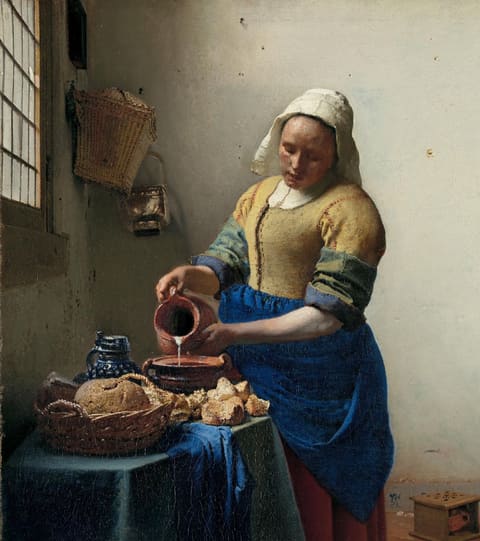
The Milkmaid
N° 777·VI · The Baroque Age
The Milkmaid
Johannes Vermeer (1632–1675)
c. 1660 · oil on canvas
Dutch · Dutch Golden Age

A kitchen maid pours milk with such quiet concentration that the stream from the pitcher seems still to be moving, a showcase of Vermeer's mastery of everyday scenes and light.

“The famous milkmaid. It seems as if the milk is still streaming from the pitcher. How did Johannes Vermeer achieve this effect?” In the museum’s words — rijksmuseum.nl ↗

Meanwhile — Mere pounamu (greenstone striking weapon) "Amokura" Americas & Oceania · Māori, 1500–1820

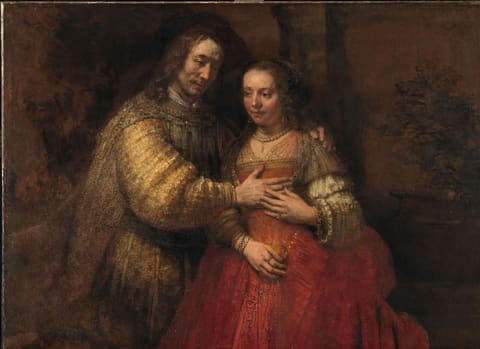
Isaac and Rebecca, Known as 'The Jewish Bride'
N° 780·VI · The Baroque Age
Isaac and Rebecca, Known as 'The Jewish Bride'
Rembrandt van Rijn (1606–1669)
c. 1665–1669 · oil on canvas
Dutch · Dutch Golden Age

A tender double portrait of a couple, their gazes and touching hands conveying quiet affection, set against a striking contrast with Rembrandt's bold, thickly built-up brushwork in their clothing.

“Notice their gazes and the tender way their hands touch. The contrast between the subtle mood and Rembrandt’s bold execution of the clothes is remarkable.” In the museum’s words — rijksmuseum.nl ↗

Meanwhile — Tứ Kỳ Pagoda Stone Incense Pillar (Cây hương chùa Tứ Kỳ) South Asia · 1666, Cảnh Trị reign, Lê Huyền Tông, Lê Trung Hưng period

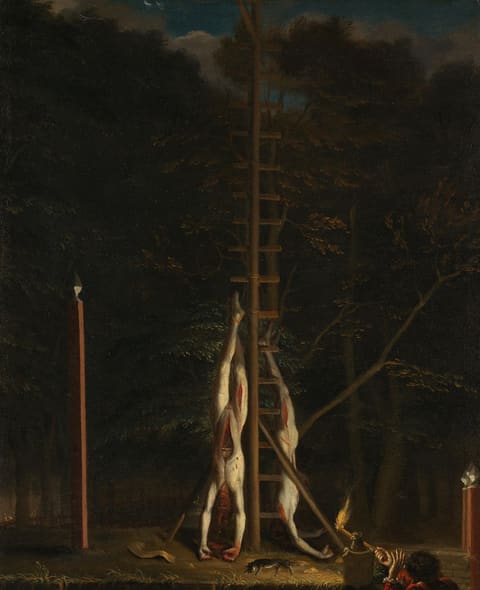
The Corpses of the De Witt Brothers
N° 785·VI · The Baroque Age
The Corpses of the De Witt Brothers
Attributed to Jan de Baen (1633–1702)
c. 1672–1675 · oil on canvas
Dutch · Dutch Golden Age

A grim record of the aftermath of the 1672 lynching of statesmen Johan and Cornelis de Witt, showing their mutilated bodies publicly displayed at The Hague's Groene Zoodje after they were blamed for the disasters of the Dutch Republic's 'Year of Disaster'.

“The ultimate humiliation: the nude, flayed corpses of Johan and Cornelis de Witt on public display in the Groene Zoodje, the execution ground on the Vijverberg in the middle of The Hague. On 20 August 1672 they were assassinated by their political opponents.” In the museum’s words — rijksmuseum.nl ↗

Meanwhile — Nam Giao Temple Stele South Asia · 1679 (4th year of the Vĩnh Trị reign, Lê Hy Tông)

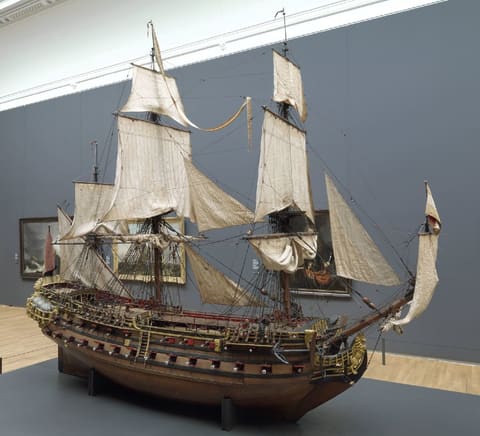
Model of the William Rex
N° 791·VI · The Baroque Age
Model of the William Rex
Adriaen de Vriend, Cornelis Moesman
1698 · wood, brass, iron, glass, rope and textile
Dutch · Dutch Golden Age

A highly detailed model of a Dutch warship as it looked at the end of the 17th century: a 74-gun fighting machine, complete with a full set of anchors, sails and pulleys.

“This is what a Dutch warship looked like at the end of the 17th century. It is a fighting machine, with 74 cannons. This model is fitted with a complete set of anchors, sails and pulleys.” In the museum’s words — rijksmuseum.nl ↗

Meanwhile — Multi-armed Quan Am (Avalokiteshvara) South Asia · 18th century or later

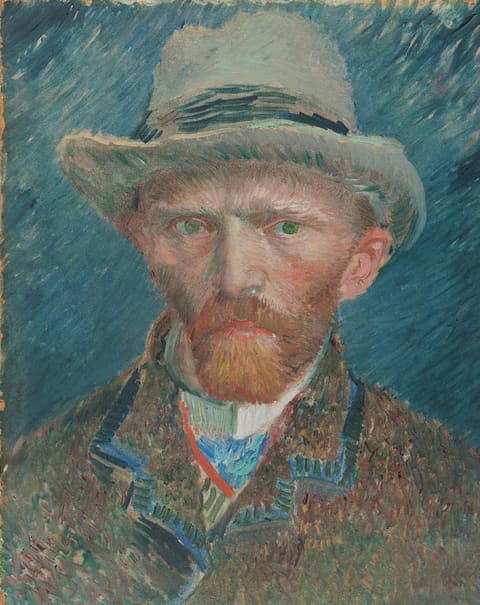
Self-Portrait
N° 946·VIII · The Restless Century
Self-Portrait
Vincent van Gogh (1853–1890)
1887 · oil on cardboard
Dutch

A self-portrait Van Gogh painted soon after moving to Paris, using himself as a testing ground for the new French painting styles he was discovering there.

“You wouldn’t recognize him anymore, wrote Theo van Gogh to his mother. Interested in the new artistic developments in France, Van Gogh went to live in Paris. He tried out this French style on himself.” In the museum’s words — rijksmuseum.nl ↗

Meanwhile — A Poem on the Anatomy of the Eye (Qasida fi Tashrih al-Ayn) Islamic world · 1305 AH / 1887 CE (copy)