The Atlas·SG

SG

Asian Civilisations Museum, Singapore — 17 works · museum site ↗ · 2900 BCE – 1950 60000 BCE2020

Seen from Singapore, history is above all craft & design, then sculpture — a collection opened wide onto other worlds — a window more than a mirror (17 of 17 works are from other civilisations).

Craft 8 Sculpture 7 Power 2
Tripod ewer
N° 049·I · The First Makers
Tripod ewer
Unknown
Late Dawenkou Culture (c. 2900-2400 BCE) · ceramic
Chinese (Dawenkou Culture) · Late Dawenkou Culture

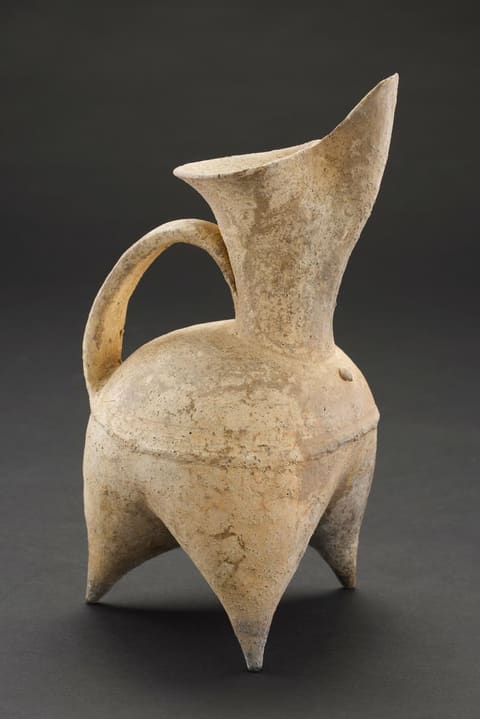
A hand-potted, three-legged lobed ceramic ewer of the Late Dawenkou Neolithic culture of Shandong, the oldest object in this selection. The museum notes that Dawenkou ceramics take elaborate forms, that ordinary vessels could be made more elaborate for ritual use, and that a raised vessel commanded a greater presence appropriate for ceremony.

“Dawenkou Culture (previously known as Longshan to describe Neolithic cultures in the Shandong area) is characterised by elaborate ceramic forms such as this hand-potted, three-legged lobed vessel.” In the museum’s words — roots.gov.sg ↗ · quotation verified against the live page

Meanwhile — Vučedol Dove (bird-shaped vessel from Vučedol) Europe · Vučedol culture, Eneolithic (c. 3000–2200 BCE)
Emaciated Buddha head and torso
N° 300·II · The Classical World
Emaciated Buddha head and torso
Unknown
3rd-4th centuries · schist
Gandharan

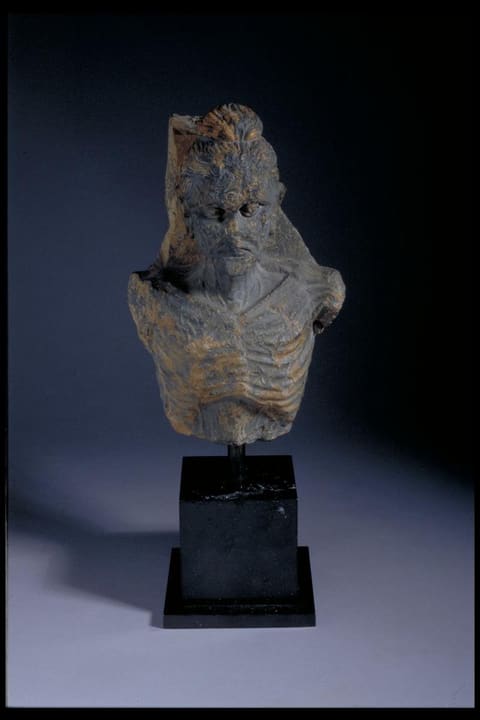
A Gandharan schist sculpture, now only head and torso, of the emaciated fasting Buddha, representing his penance in the forest after renouncing princely life. The museum notes the complete figure would have shown the Buddha seated in padmasana meditating, and that his expression here is not pitiful but full of calm and introspection.

“This sculpture of an emaciated Buddha represents the penance of Buddha. It is broken but the complete figure would have shown Buddha seated in padmasana, the lotus position, meditating.” In the museum’s words — roots.gov.sg ↗ · quotation verified against the live page

Meanwhile — Ivory dolls Rome · Second half of the 3rd century AD

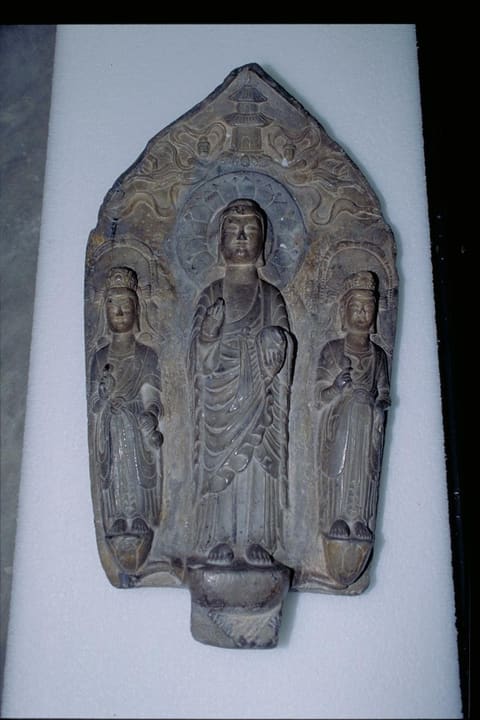
Stele depicting Buddha, Avalokiteshvara and Maitreya
N° 340·III · Faith and Empire
Stele depicting Buddha, Avalokiteshvara and Maitreya
Unknown
Eastern Wei dynasty (534-550 CE) · limestone
Chinese · Eastern Wei dynasty

An Eastern Wei limestone stele showing the Buddha flanked by the smaller, princely bodhisattvas Avalokiteshvara and Maitreya. The museum explains the composition celebrates the revelation of the eternal Buddha who preached the Lotus Sutra, with the Shakyamuni Buddha in flowing robes before a lotus-shaped nimbus, and suggests the stele came from a niche in a cave temple.

“This composition of the three Buddhist figures represents the pagentry celebrating the revelation of the eternal Buddha who preached the Mahayana scripture, the Lotus Sutra.” In the museum’s words — roots.gov.sg ↗ · quotation verified against the live page

Meanwhile — Prestige of the Germanic world – Jewellery and ornaments Europe · 6th century AD

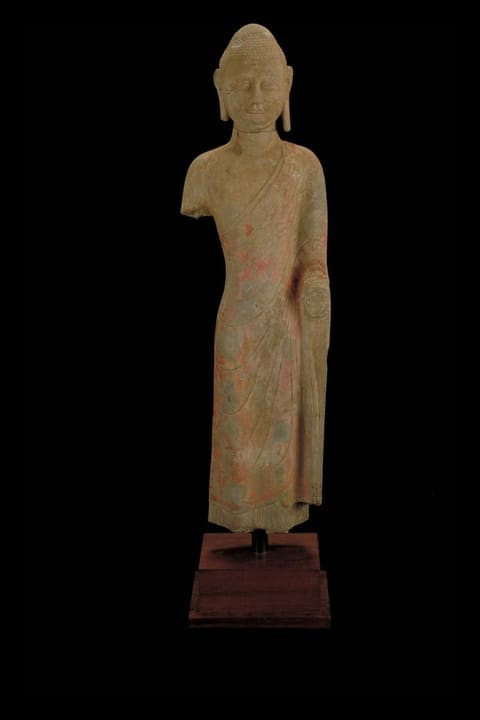
Standing statue of Buddha from Qingzhou
N° 341·III · Faith and Empire
Standing statue of Buddha from Qingzhou
Unknown
Northern Qi dynasty, second half of the sixth century · stone
Chinese · Northern Qi dynasty

A Northern Qi standing Buddha in the Shandong style, probably from Qingzhou, the body subtly modelled beneath a clinging monastic robe in a manner derived from the Indian Gupta style. The museum describes the serene face with a faint smile, aquiline nose, snail-curl hair and elongated ear-lobes, and notes the right arm is missing.

“A stone statue of standing Buddha in northern Qi Shandong style - the body is subtly suggested, after the Indian Gupta style, by the drapery of the monastic robe.” In the museum’s words — roots.gov.sg ↗ · quotation verified against the live page

Meanwhile — Prestige of the Germanic world – Jewellery and ornaments Europe · 6th century AD

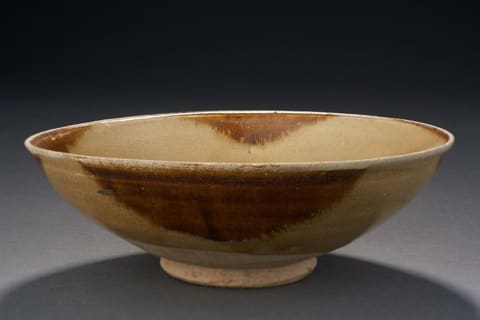
Changsha bowl with underglaze iron-brown and copper-green decoration
N° 353·III · Faith and Empire
Changsha bowl with underglaze iron-brown and copper-green decoration
Unknown
Tang dynasty (618-906 CE) · stoneware
Chinese · Tang dynasty

A Tang-dynasty stoneware bowl from the Changsha (Tongguan) kilns, painted under the glaze with iron-brown and copper-green floral and cloud motifs. The museum describes such wares as signalling the first use of underglaze painted decoration and, with their copper decoration, as among the earliest high-fired examples of the technique, exported widely across Asia and as far as Africa.

“This stoneware bowl has underglaze iron-brown and copper green decoration of floral and cloud motif on the interior and outer walls.” In the museum’s words — roots.gov.sg ↗ · quotation verified against the live page

Meanwhile — First-Sermon Buddha (Luang Pho Sila Khao) South Asia · Dvaravati art, 13th–14th Buddhist century (c. 8th–9th century CE)

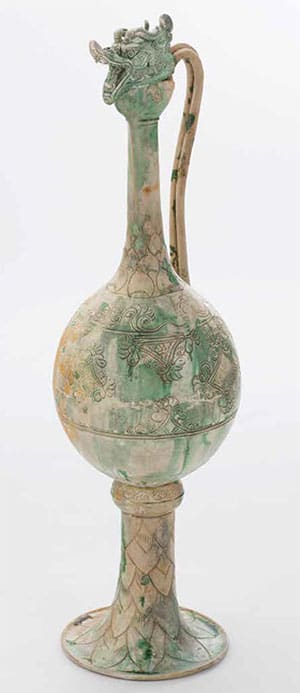
Green Décor Hu Ewer with snake-shaped long handle and dragon head lid
N° 359·III · Faith and Empire
Green Décor Hu Ewer with snake-shaped long handle and dragon head lid
Unknown
Tang Dynasty (618–907) · Ceramic
Chinese · Tang Dynasty

A large Tang-dynasty ceramic ewer from North China with a snake-shaped long handle and a dragon-head lid, part of the Tang Shipwreck Collection. The museum presents it as one of the finest ceramics found in the Tang Shipwreck and the only one of its kind in the world; its incised lozenge motif with leafy fronds is an Iranian design suggesting the cargo was destined for the Middle East, and the ewer's form follows metal prototypes.

“This large ewer is one of the finest ceramics found in the Tang Shipwreck and is the only one of its kind in the world.” In the museum’s words — roots.gov.sg ↗ · quotation verified against the live page

Meanwhile — First-Sermon Buddha (Luang Pho Sila Khao) South Asia · Dvaravati art, 13th–14th Buddhist century (c. 8th–9th century CE)

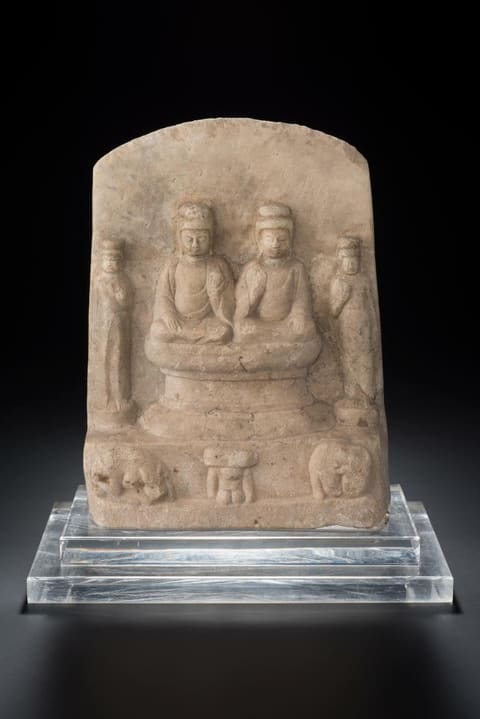
Plaque with Buddhas and attendants
N° 369·III · Faith and Empire
Plaque with Buddhas and attendants
Unknown
dated 664-665 (Tang dynasty) · marble
Chinese · Tang dynasty

An inscribed Tang marble devotional plaque, possibly from Quyang in Hebei, showing the Buddhas Shakyamuni and Prabhutaratna seated side by side on a throne flanked by two bodhisattvas. The museum explains the image of the two seated Buddhas derives from chapter XI of the Lotus Sutra, that ten lines of inscription on the back date it to 664-665, and that the calligraphy resembles that of the famous Longcang Monastery stele of 586.

“The image of two sitting Buddhas derives from The Lotus Sutra, chapter XI” In the museum’s words — roots.gov.sg ↗ · quotation verified against the live page

Meanwhile — Four-armed Vishnu image South Asia · 12th–13th Buddhist century (c. 7th–8th century CE)

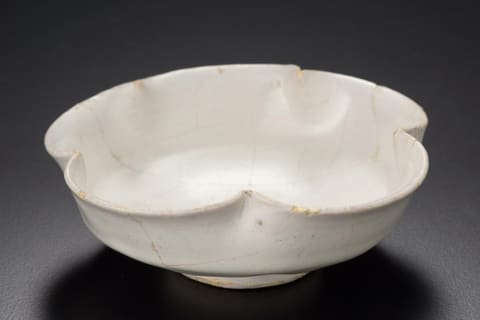
Cusped bowl
N° 390·III · Faith and Empire
Cusped bowl
Unknown
9th-10th century · ceramic
Abbasid (Islamic) · Abbasid period

An opaque white-glazed ceramic bowl with a lobed (cusped) rim, made in present-day Iraq during the early Abbasid period. The museum records that its lobed rim and delicate shape are closely related to Tang metalwork and contemporary Song ceramics and lacquer, illustrating the exchange of style between Tang China and Abbasid Iraq, and that Iraqi opaque white wares began a tradition that spread across the Islamic world and into Europe.

“This bowl is one of the most significant examples of ceramics produced during the early Abbasid period.” In the museum’s words — roots.gov.sg ↗ · quotation verified against the live page

Meanwhile — The Bell of St Patrick and its Shrine Europe · Bell 8th–9th century AD; shrine circa AD 1100

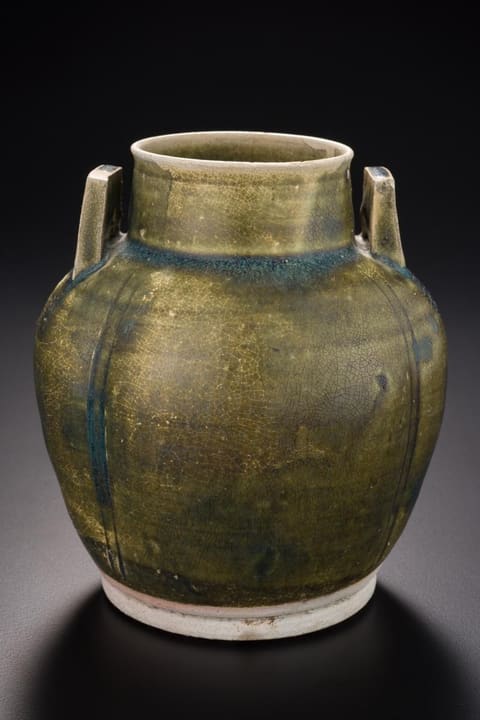
Changsha Ovoid Jar with four indentations and two vertical lugs (green-glazed)
N° 399·III · Faith and Empire
Changsha Ovoid Jar with four indentations and two vertical lugs (green-glazed)
Unknown
Tang dynasty, around 830s · ceramic
Chinese · Tang dynasty

A green-glazed ovoid jar from the Changsha kilns of Hunan, recovered from the Tang Shipwreck. The museum records that the vast bulk of the wreck's cargo, some 57,500 pieces, was made at Changsha, whose potters developed a distinctive green-and-brown glazed style; green-glazed vessels such as this lobed jar were an uncommon Changsha product, with only a few examples found on the ship.

“Green-glazed vessels such as this lobed jar were a much less common product of the Changsha kilns and only a few examples were found on the Tang Shipwreck.” In the museum’s words — roots.gov.sg ↗ · quotation verified against the live page

Meanwhile — Wooden snuff tablet with kneeling figure Americas & Oceania · 700–950 CE

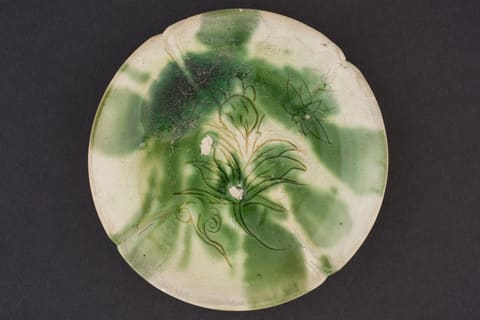
Four-lobed dish with floral design
N° 400·III · Faith and Empire
Four-lobed dish with floral design
Unknown
Tang dynasty, around 830s · ceramic
Chinese · Tang dynasty

A white-glazed ceramic dish splashed with green, recovered from the 9th-century Tang Shipwreck found off Belitung Island. The museum's record notes that green-splashed wares of this kind appealed especially to the Islamic Middle East, that similar wares have been found across the Abbasid Empire, and that most Chinese green-splashed wares were made in the Gongxian kilns of Henan province.

“White ceramics splashed with green such as this dish recovered from the Tang Shipwreck were produced in Chinese kilns.” In the museum’s words — roots.gov.sg ↗ · quotation verified against the live page

Meanwhile — Wooden snuff tablet with kneeling figure Americas & Oceania · 700–950 CE

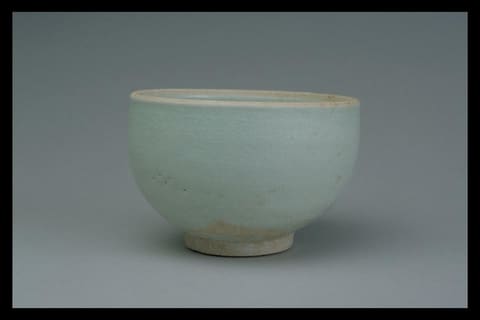
Qingbai bowl
N° 432·III · Faith and Empire
Qingbai bowl
Unknown
Probably Northern Song dynasty (960-1126) · porcelain
Chinese · Northern Song dynasty

An undecorated deep porcelain bowl with a qingbai (shadow-blue) glaze over a white body, probably Northern Song. The museum notes the glaze is likened to clear still water and blue sky, that this bowl was acquired in the Philippines and used as utility ware and for burials, and that qingbai was widely exported into Southeast Asia from the Southern Song through the Yuan and early Ming.

“This undecorated deep bowl has a qingbai glaze and straight sides.” In the museum’s words — roots.gov.sg ↗ · quotation verified against the live page

Meanwhile — Lead seal of Prince Yaroslav the Wise Europe · 11th century

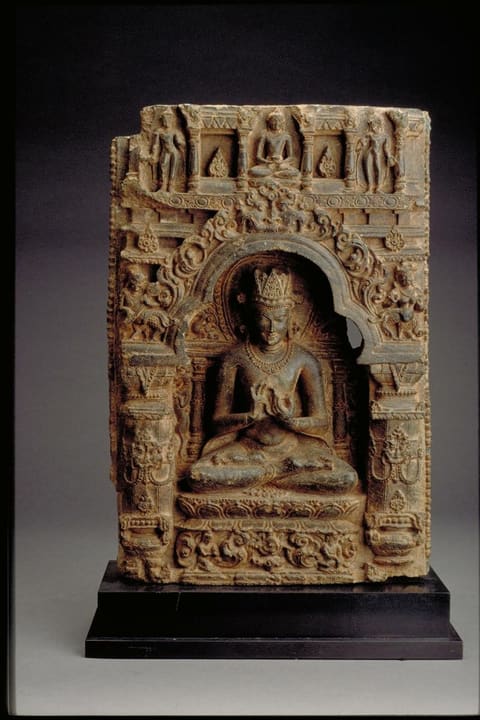
Crowned Buddha in dharmachakra
N° 455·III · Faith and Empire
Crowned Buddha in dharmachakra
Unknown
11th century · black chlorite
Indian (Pala) · Pala period

A Pala-period black chlorite relief from Bihar showing a crowned Buddha seated in padmasana beneath an ornate makara torana, his hands in the dharmachakra-pravartana mudra of teaching. The museum records that three smaller Buddhas above show the gestures of meditation, fearlessness and boon-bestowing, and that such reliefs were set in niches of Buddhist structures like the stupa at Bodhgaya.

“This crowned Buddha seated in the lotus posture (padmasana) under an ornate makara torana (mythical crocodile archway) holds the dharma chakra pravartana mudra, the gesture of teaching.” In the museum’s words — roots.gov.sg ↗ · quotation verified against the live page

Meanwhile — Wari funerary bundle with gold mask (Fardo Huari) Americas & Oceania · Wari (Huari), Fusional Era (800 – 1300 CE)

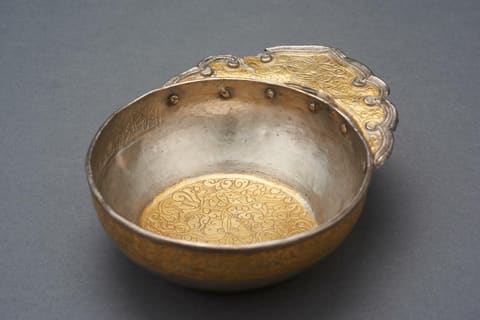
Cup
N° 506·III · Faith and Empire
Cup
Unknown
13th or 14th century · silver
Mongol (Golden Horde) · Golden Horde, Mongol Empire

A shallow gilded silver drinking cup made for an elite traveller on horseback, its engraved and punched decoration showing Central Asian forms adapted to Islamic taste. The museum identifies it as a product of the Golden Horde, a state of the Mongol Empire on the Silk Route, and notes that the multi-religious empire linked China, the Middle East, Central Asia and Europe in the 13th and 14th centuries.

“This shallow cup is a lightweight, easily carried drinking vessel for a person travelling extensively on horseback.” In the museum’s words — roots.gov.sg ↗ · quotation verified against the live page

Meanwhile — Garudhamukha Lancana (Garuda Statue) South Asia · 13th–14th century

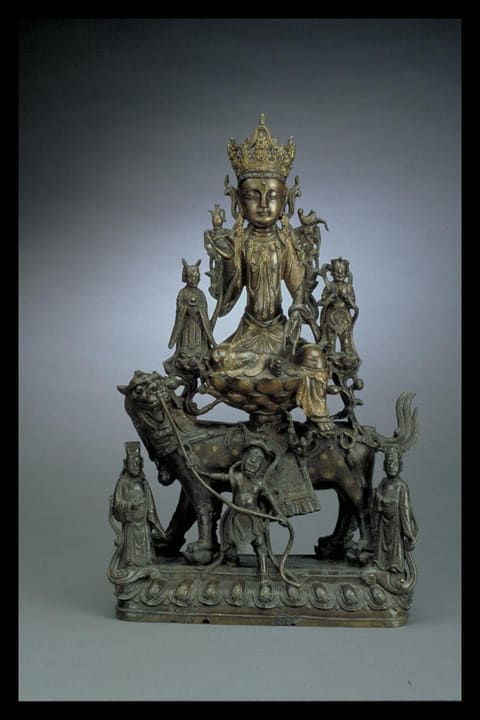
Seated Guanyin riding qilin with acolytes
N° 508·III · Faith and Empire
Seated Guanyin riding qilin with acolytes
Unknown
13th-14th centuries · ormolu, silver
Chinese

A large ormolu (gilt-bronze) and silver figure of the bodhisattva Guanyin, the Chinese form of Avalokiteshvara, seated upon a qilin and flanked by attendant acolytes. The museum's record explains that Guanyin, whose name means 'the Observer of Sound', became the embodiment of compassion in Chinese Buddhism through the Lotus Sutra, and notes that the acolytes here resemble officials and may be Daoist-inspired.

“The cult of Guanyin grew in popularity with the wide acceptance in China of the Lotus sutra.” In the museum’s words — roots.gov.sg ↗ · quotation verified against the live page

Meanwhile — Garudhamukha Lancana (Garuda Statue) South Asia · 13th–14th century

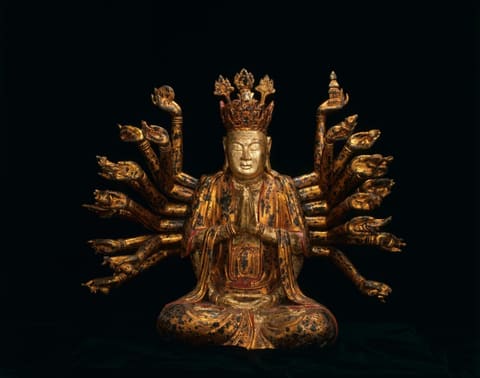
Multi-armed Quan Am (Avalokiteshvara)
N° 793·VII · The Age of Reason
Multi-armed Quan Am (Avalokiteshvara)
Unknown
18th century or later · bronze, lacquer
Vietnamese

A large gilded bronze and lacquer figure of Quan Am, the Vietnamese form of the bodhisattva Avalokiteshvara (known as Guanyin in China), shown with twenty-four arms: two before the chest in the prayer gesture, two in meditation on her lap, and five detachable pairs at each shoulder holding attributes including a lotus, discus, conch, vajra, vase, bell and prayer beads. The museum notes she became highly popular for her powers to relieve suffering.

“She became highly popular due to her universal powers to help alleviate all kinds of suffering.” In the museum’s words — roots.gov.sg ↗ · quotation verified against the live page

Meanwhile — Dead Hare Europe · after 1700

Fragments from 'Nanking Cargo'
N° 816·VII · The Age of Reason
Fragments from 'Nanking Cargo'
Unknown
1752 · porcelain
Chinese · Qing dynasty

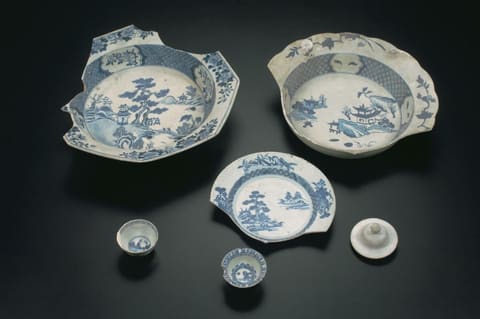
A group of Chinese blue-and-white porcelain dish fragments from the celebrated 'Nanking Cargo', recovered from the Geldermalsen, a Dutch East India Company ship wrecked in the South China Sea in 1752 on its homeward voyage carrying tea, porcelain and gold. The museum records that the cargo held over two hundred thousand porcelain items in high demand in 18th-century Europe.

“This group of blue and white dish fragments was part of the 'Nanking Cargo' retrieved from Geldermalse, a Dutch East India Company ship, wrecked in the South China Sea, on its homeward journey with tea, blue and white porcelain and gold ingots.” In the museum’s words — roots.gov.sg ↗ · quotation verified against the live page

Meanwhile — Glass bracelets, Al Huailah Islamic world · 1700–1800 CE (18th century)

Keris
N° 986·IX · Into Our Time
Keris
Unknown
Early-mid 20th century · metal, wood, gold
Javanese

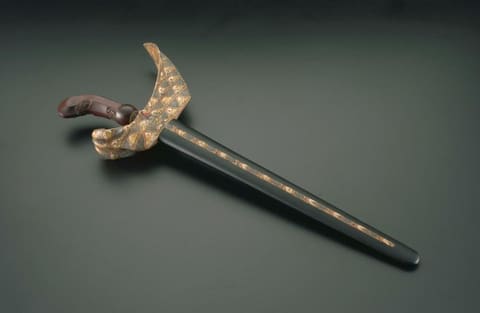
A Central Javanese keris from Surakarta, the asymmetrical double-edged dagger central to the material culture of island Southeast Asia. The museum records that this example has a ladrangan sheath with rare sungingan (painted) decoration, and that its blade carries the blarak ngirid (spread coconut frond) pamor pattern decorated with an applied gold singa barong (mythical lion).

“The Keris is an asymmetrical double-edged dagger unique to island Southeast Asia and a very important part of the material culture of many communities from Sumatra and the Malay Peninsula to Java, Borneo, Sulawesi, Mindanao and as far east as Sumbawa.” In the museum’s words — roots.gov.sg ↗ · quotation verified against the live page

Meanwhile — Candombe Americas & Oceania · c. 1925