The Atlas·RU

Russia

The State Hermitage Museum, Saint Petersburg — 19 works · museum site ↗ · 1850 BCE – 1910 60000 BCE2020

Seen from Saint Petersburg, history is above all sculpture, then sacred images — a collection split between its own tradition and other worlds (4 of 19 works are from other civilisations).

Sculpture 4 Sacred 4 Stories 4 Observation 4 Craft 2 Power 1
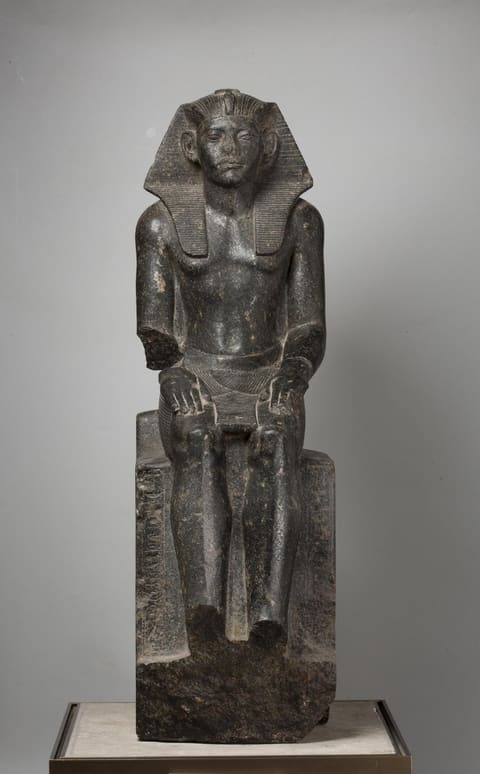
Statue of Amenemhat III
N° 085·I · The First Makers
Statue of Amenemhat III
Unknown Egyptian sculptor
second half of the 19th century BC · black granite
Ancient Egyptian · Middle Kingdom, 12th Dynasty (reign of Amenemhat III)

A black granite statue of the Middle Kingdom pharaoh Amenemhat III seated with hands on his knees, wearing the royal shendit kilt and nemes headcloth with its protective uraeus serpent, its broad face and slightly raised mouth corners matching features the museum's Egyptologists recognize elsewhere in the king's sculpted portraits.

“This statue depicts the king sitting on a cuboid seat with his hands resting on his knees. He is wearing the ritual royal shendit kilt or loincloth and the nemes headcloth with an uraeus sacred asp rearing above the forehead.” In the museum’s words — hermitagemuseum.org ↗ · quotation verified against the live page

Meanwhile — Clay Tablet with Case (Apil-Sin Period) Near East · 19th century BC (reign of Apil-Sin)
Vessel with Scythians
N° 205·II · The Classical World
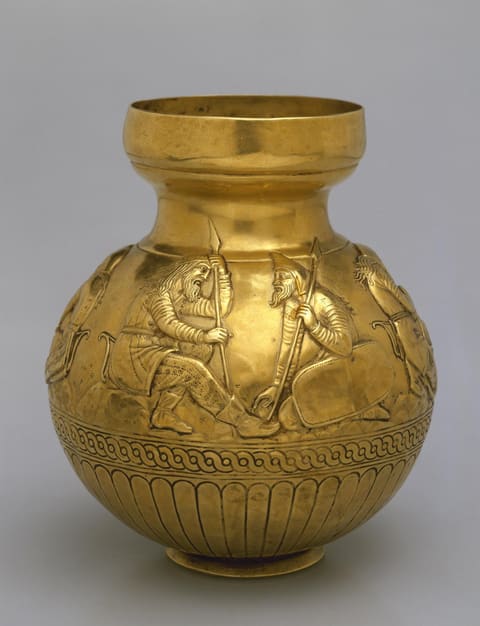
Vessel with Scythians
Unknown Greek craftsman
second half of the 4th century BC · gold
Greco-Scythian (Bosporan Kingdom) · The Bosporan Kingdom

Excavated from the female tomb of the Kul-Oba kurgan near Kerch in Crimea, this gold vessel's relief frieze of Scythian warriors is, per the museum, an outstanding work of ancient jewellery whose ethnographic precision gave the modern world its first real idea of what the Scythians actually looked like.

“This gold vessel bearing a depiction of Scythians was discovered in the female tomb of the Kul-Oba kurgan (burial mound) and is rightly regarded as an outstanding example of the jeweller’s art from the Ancient World. The relief frieze contains three little scenes with pairs of personages plus one single figure of a Scythian warrior stringing his bow.” In the museum’s words — hermitagemuseum.org ↗ · quotation verified against the live page

Meanwhile — Mummy of the priest Nesmin (the Belgrade Mummy) Egypt & Nubia · Ancient Egyptian; the priest Nesmin lived c. 350-300 BCE

Cameo: Portraits of Ptolemy II and Arsinoe II (The Gonzaga Cameo)
N° 215·II · The Classical World
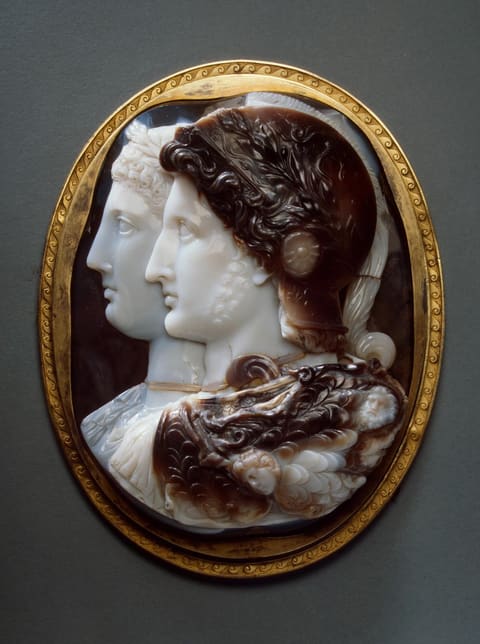
Cameo: Portraits of Ptolemy II and Arsinoe II (The Gonzaga Cameo)
Unknown Alexandrian gem-cutter
3rd century BC (setting - later work) · sardonyx, silver, copper
Hellenistic Greek (Ptolemaic Egypt) · Ptolemaic Egypt

Named for its Renaissance owners, the Gonzaga dukes of Mantua, this large sardonyx cameo pairs the profiles of the Ptolemaic rulers Ptolemy II and Arsinoe II, carved by an Alexandrian master of the 3rd century BC who exploited the stone's banded layers to set a lighter double portrait against a shadowed ground - a work the museum calls one of the most renowned masterpieces of Classical Antiquity.

“Named after its Renaissance owners — the dukes of Mantua of the Gonzaga family- this cameo represents perhaps one of the most renowned masterpieces of Classical Antiquity. In glyptics (miniature carving on coloured stones), cameos (gems carved in high relief from multi-layered coloured stones) first appeared during the Hellenistic period (late 4th-1st centuries BC).” In the museum’s words — hermitagemuseum.org ↗ · quotation verified against the live page

Meanwhile — Bronze statuette of a satyr from Vani Near East · 3rd century BC

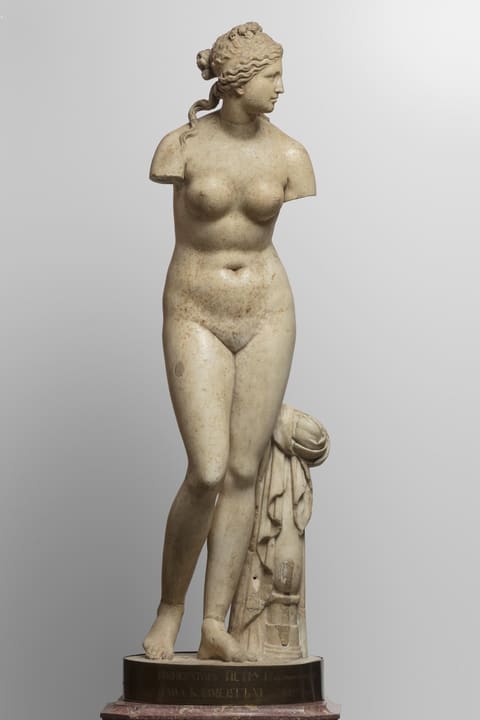
Aphrodite (Venus of Taurida)
N° 289·II · The Classical World
Aphrodite (Venus of Taurida)
Unknown (Roman workshop, after Greek models)
140–150 AD · marble
Ancient Roman · Antonine Dynasty

Acquired by Peter the Great in 1719 as one of the first ancient sculptures to enter Russia - originally displayed in the Summer Garden under armed guard, later moved to the Tauride Palace that gave it its modern name - this marble Aphrodite is now dated by the museum to a Roman workshop of the Antonine period, its type descended from the Venus de' Medici and ultimately Praxiteles' Knidian Aphrodite.

“The statue was acquired by Peter the Great in 1719 and became one of the first antique sculptures to appear in Russia. It was initially placed in a gallery within the Summer Garden, with a sentry posted alongside it for safekeeping.” In the museum’s words — hermitagemuseum.org ↗ · quotation verified against the live page

Meanwhile — Gold necklace with medallion and scent-flask from Mtskheta Near East · 2nd century AD

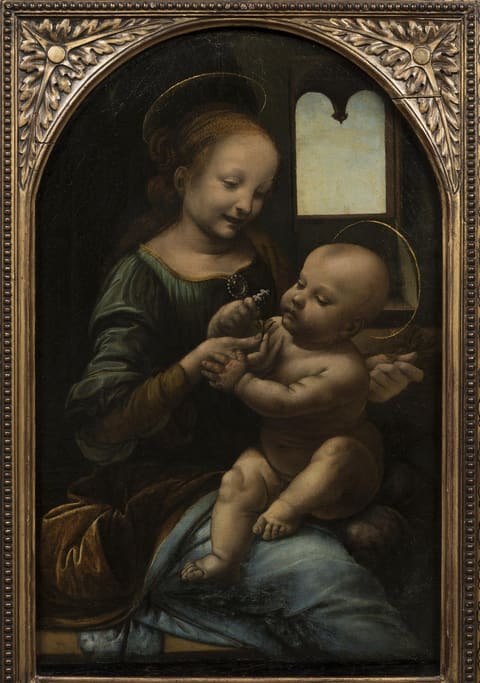
Madonna and the Child (The Benois Madonna)
N° 596·IV · Toward the Renaissance
Madonna and the Child (The Benois Madonna)
Leonardo da Vinci (1452–1519)
1478–1480 · oil on canvas (transferred from panel)
Italian · Italian Renaissance

An early work by Leonardo showing the Virgin playing with the infant Christ - so naturalistic that without the golden halos it might pass for a simple genre scene of a young Italian mother and son - in which she offers him a bitter-cress flower whose cross-shaped petals foreshadow the Crucifixion.

“If it were not for the golden halos, the painting might pass for a genre scene of a young Italian woman playing with her son. Mary’s clothing and hairstyle follow Florentine fashion of the late 15th century. Painted from a specific model, her facial features are far from ideal.” In the museum’s words — hermitagemuseum.org ↗ · quotation verified against the live page

Meanwhile — Phra Buddha Sihing South Asia · Sukhothai–Lanna art, late 20th–21st Buddhist century (c. 15th–16th century CE)

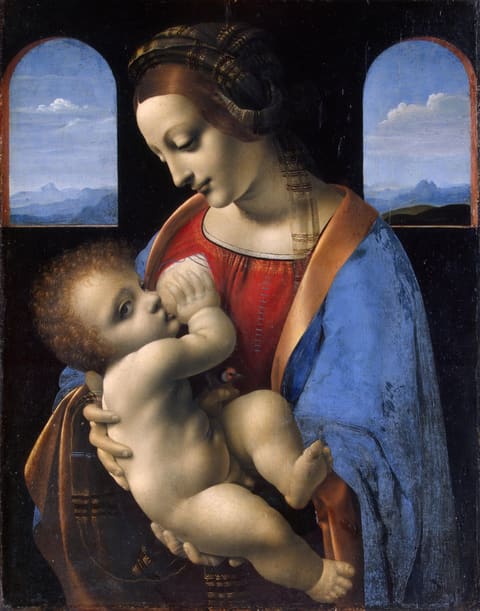
The Madonna and Child (The Litta Madonna)
N° 606·IV · Toward the Renaissance
The Madonna and Child (The Litta Madonna)
Leonardo da Vinci (1452–1519)
mid-1490s · tempera on canvas (transferred from panel)
Italian · Italian Renaissance

Painted in Milan not long after Leonardo settled there, this nursing Madonna's simple, balanced composition and finely modeled light and shade make mother and child read, per the museum, as the epitome of motherhood itself, set against a distant mountain landscape glimpsed through twin windows.

“The beautiful woman feeding her child seems to be the epitome of motherhood and motherly love, perceived as perhaps the greatest human value. The composition is simple and balanced, the figures of the Madonna and the Christ child modelled with the finest use of light and shade.” In the museum’s words — hermitagemuseum.org ↗ · quotation verified against the live page

Meanwhile — Decorated glazed dish Islamic world · 1400–1599 CE

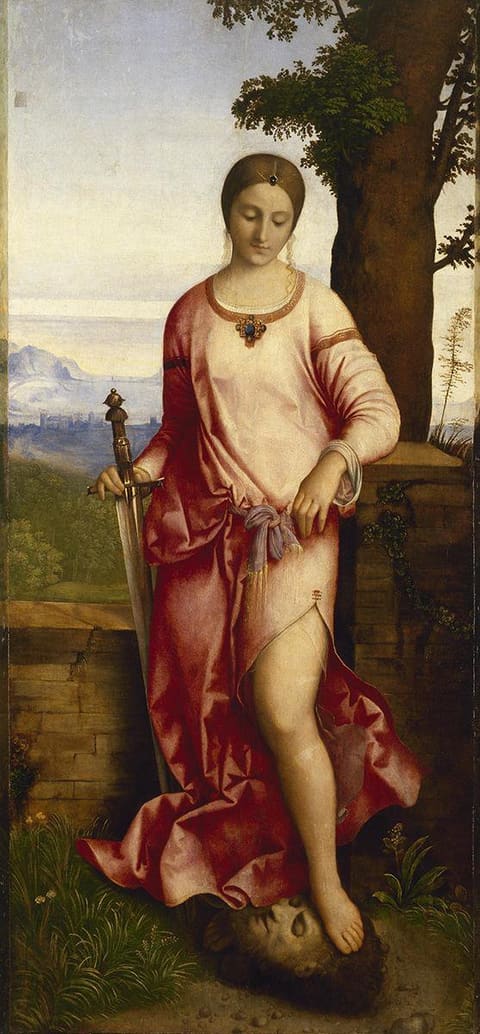
Judith
N° 631·V · The Renaissance
Judith
Giorgione (c. 1478–1510)
1504 · oil on canvas
Italian · Italian Renaissance

One of the very few paintings universally accepted as Giorgione's own work, depicting the biblical heroine Judith who saved her city of Bethulia from the Assyrians; the museum treats it as a poesia, a genre Giorgione pioneered, its lyrical mood undisturbed even by the severed head of Holofernes at her feet.

“There are but a few generally accepted, non-controversial works from his hand and one of these is the Hermitage's Judith. This biblical heroine, who saved her native city of Bethulia from attack by the Assyrians, was extremely popular during the Renaissance” In the museum’s words — hermitagemuseum.org ↗ · quotation verified against the live page

Meanwhile — View of Ama-no-hashidate East Asia · Japan, Muromachi period, 1501–1506

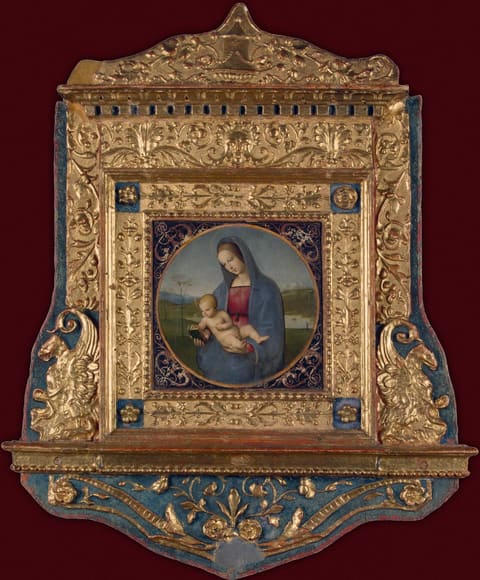
Madonna and Child (The Conestabile Madonna)
N° 632·V · The Renaissance
Madonna and Child (The Conestabile Madonna)
Raphael (1483–1520)
circa 1504 · tempera on canvas (transferred from panel)
Italian · Italian Renaissance

One of Raphael's early works, prized despite his still-developing style for its superb composition, linear rhythm and harmonious colour; it remains in the artist's own original frame, evidently designed by Raphael himself, from which the canvas was only later detached when the painting was transferred from panel.

“The Conestabile Madonna is one of the early works by the master. Despite his still unformed style, the picture is remarkable for its superb composition, the beauty of the linear rhythms, the nobility of the colour harmonies and the perfection of the images - everything which was to be developed to such heights in Raphael's mature work.” In the museum’s words — hermitagemuseum.org ↗ · quotation verified against the live page

Meanwhile — View of Ama-no-hashidate East Asia · Japan, Muromachi period, 1501–1506

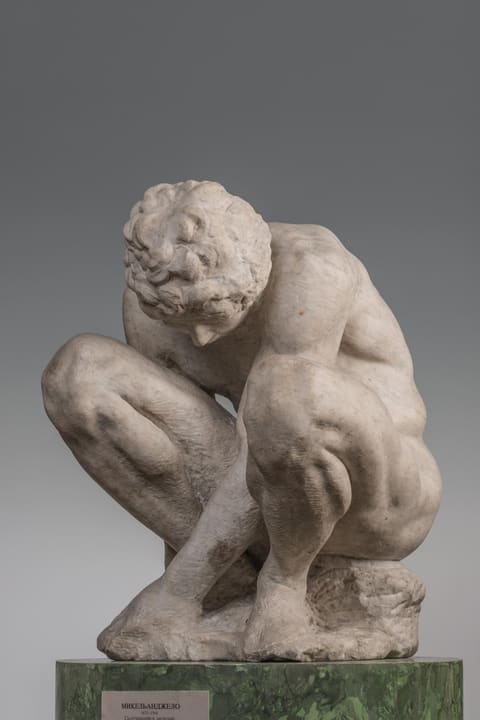
The Crouching Boy
N° 660·V · The Renaissance
The Crouching Boy
Michelangelo Buonarroti (1475–1564)
circa 1530–1534 · marble
Italian · Italian Renaissance

A marble youth conceived alongside Michelangelo's work on the Medici Chapel, carved in the early 1530s in the shadow of the sack of Rome and the fall of the Florentine republic, its bowed, constrained pose part of the darker, tragic imagery the museum says entered Michelangelo's sculpture at the time; it is the only Michelangelo sculpture in Russia.

“The Crouching Boy was created in the 1530s soon after grave events that had shaken Italy: the sacking of Rome by the forces of Emperor Charles V, the fall of the republic and the restoration of Medici tyranny in Florence. Tragic images appeared at that time in Michelangelo’s works.” In the museum’s words — hermitagemuseum.org ↗ · quotation verified against the live page

Meanwhile — Manuscript Page from the Golestan of Sa’di Islamic world · 1526–1530

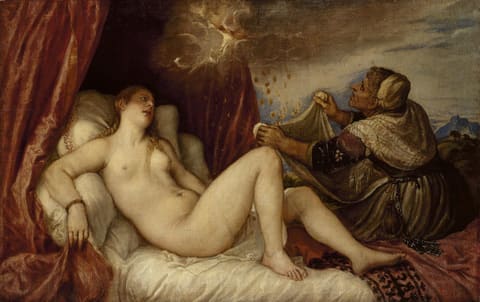
Danae
N° 678·V · The Renaissance
Danae
Titian (c. 1488–1576)
circa 1554 · oil on canvas
Italian · Italian Renaissance

One of five variants Titian painted of the myth of Danaë, showing Zeus arriving as a shower of gold while an old servant tries to catch the coins in her apron, her unflattering figure set as a foil to Danaë's own statuesque, warmly lifelike beauty.

“Titian depicted the moment of this marvellous meeting: Zeus’ head shows through a break in the clouds and gold streams onto the Princess’s bed as the aged servant tries to catch it in her apron. The comic figure of the unattractive old woman sets off the radiant beauty of Danaë, who resembles an ancient statue in her physical perfection.” In the museum’s words — hermitagemuseum.org ↗ · quotation verified against the live page

Meanwhile — Pine Forest East Asia · Azuchi-Momoyama period, 16th century

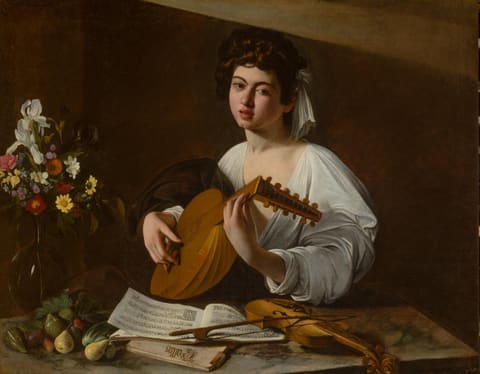
Lute-Player
N° 707·V · The Renaissance
Lute-Player
Caravaggio (1571–1610)
1595–1596 · oil on canvas
Italian · Baroque

An early Caravaggio in which sharp sidelighting gives a young lute player and the still-life objects around him - a bruised pear, a cracked lute, crumpled sheet music of a popular love song - an almost tangible weight, the cracked instrument itself read by the museum as a symbol of love gone wrong.

“The sharp sidelighting and the falling shadows give the objects an almost tangible volume and weight. Caravaggio was interested in the uniqueness of the surrounding world, and there are markedly individual features not only in the youth's face but also in the objects which make up the still life: the damaged pear, the crack in the lute, the crumpled pages of the music.” In the museum’s words — hermitagemuseum.org ↗ · quotation verified against the live page

Meanwhile — Tachi Sword East Asia · Japan, Momoyama period, dated 1598 (Keichō 3)

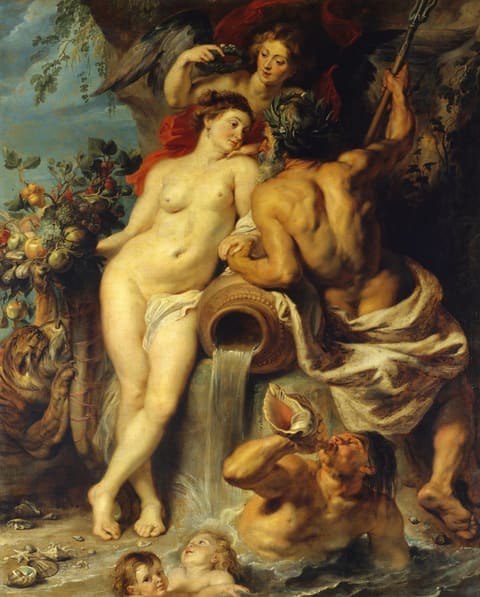
Union of Earth and Water (Antwerp and the Scheldt)
N° 739·VI · The Baroque Age
Union of Earth and Water (Antwerp and the Scheldt)
Peter Paul Rubens, Frans Snyders
circa 1618 · oil on canvas
Flemish · Baroque

Under the guise of a classical allegory of the elements - Neptune for Water, Cybele for Earth, blessed by the goddess of Victory - Rubens and his frequent collaborator Snyders smuggled in a topical political message: the union of Antwerp and the River Scheldt, whose mouth the Dutch had blocked, cutting Flanders off from the sea.

“In turning to the traditional theme of the elements, Rubens filled it with contemporary meaning, linking it with burning contemporary questions of great importance to his native land: in the union of Earth and Water, Rubens depicted the union of Antwerp and the River Scheldt, the mouth of which was then blocked by the Dutch, depriving Flanders of an outlet to the sea.” In the museum’s words — hermitagemuseum.org ↗ · quotation verified against the live page

Meanwhile — Water Fowl in the Lotus Pond East Asia · Japan, Edo period, early 17th century

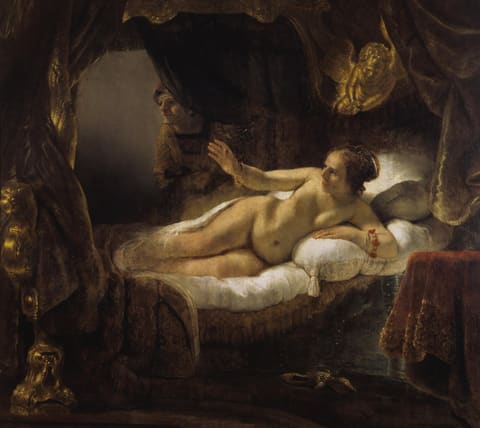
Danaë
N° 756·VI · The Baroque Age
Danaë
Rembrandt van Rijn (1606–1669)
1636 · oil on canvas
Dutch · Dutch Golden Age

Rembrandt's 1636 nude of the mythical princess Danaë awaiting Zeus's arrival as a shower of gold - according to the museum's own account irretrievably damaged at the centre of the canvas by a vandal's attack in 1985, and returned to display only after twelve years of painstaking restoration.

“Sadly today we cannot fully appreciate the amazing fineness of his work: the serious damage that a vandal inflicted on Danaë in 1985 irretrievably destroyed the upper layers of painting in the centre of the canvas, although painstaking work by the restorers over 12 years made it possible to return the picture to display.” In the museum’s words — hermitagemuseum.org ↗ · quotation verified against the live page

Meanwhile — Water Fowl in the Lotus Pond East Asia · Japan, Edo period, early 17th century

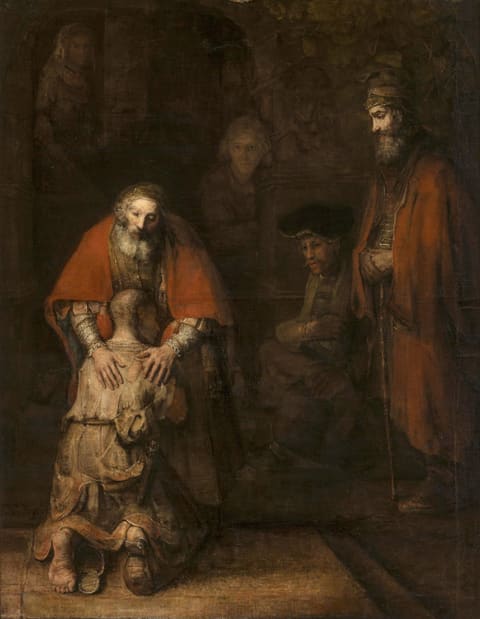
Return of the Prodigal Son
N° 783·VI · The Baroque Age
Return of the Prodigal Son
Rembrandt van Rijn (1606–1669)
circa 1668 · oil on canvas
Dutch · Dutch Golden Age

Painted only months before Rembrandt's own death, this huge canvas shows the biblical prodigal son - once a reckless spendthrift who squandered his inheritance - returned home pale, emaciated and broken, kneeling before a father whose face, lit like a star in the surrounding gloom, offers only love and forgiveness.

“It is hard to recognize the pale, emaciated, shattered man returning to the father whom he left in his youth as that same reckless pleasure-seeker, gambler and spendthrift, who asked his parent for his share of the inheritance and squandered it away down to the last coin.” In the museum’s words — hermitagemuseum.org ↗ · quotation verified against the live page

Meanwhile — Tứ Kỳ Pagoda Stone Incense Pillar (Cây hương chùa Tứ Kỳ) South Asia · 1666, Cảnh Trị reign, Lê Huyền Tông, Lê Trung Hưng period

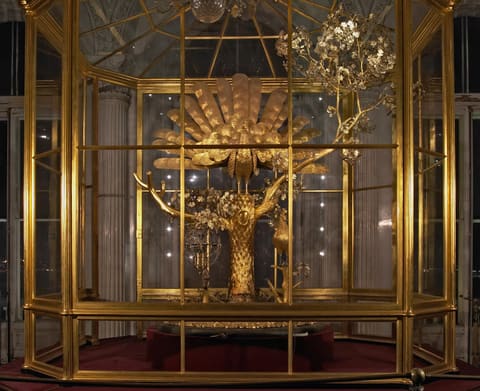
The Peacock Clock
N° 826·VII · The Age of Reason
The Peacock Clock
James Cox (1723–1800)
1766–1772 · bronze, gilding, wood, enamel, silver (base), glass (base), foil (base)
British

Commissioned by Catherine the Great's favourite, Prince Grigory Potemkin, and made in gilded bronze and silver by the English jeweller James Cox, this automaton's peacock, cockerel and owl are all fitted with moving mechanisms; shipped to Russia in pieces, it was assembled and set running by the Russian mechanic Ivan Kulibin, and the museum's own text calls it the only large 18th-century automaton to survive to the present day in functioning condition.

“The clock was commissioned by Catherine II’s favourite, Prince Grigory Potemkin, for the Empress’s Hermitage. It was brought to Russia in parts that were assembled and put in working order by the celebrated Russian mechanic Ivan Kulibin. Today this is the only large 18th-century automaton that has come down to use altered and in functioning condition.” In the museum’s words — hermitagemuseum.org ↗ · quotation verified against the live page

Meanwhile — Revolving Vase with Swimming Goldfish East Asia · Qianlong reign, Qing dynasty, 1736–1795

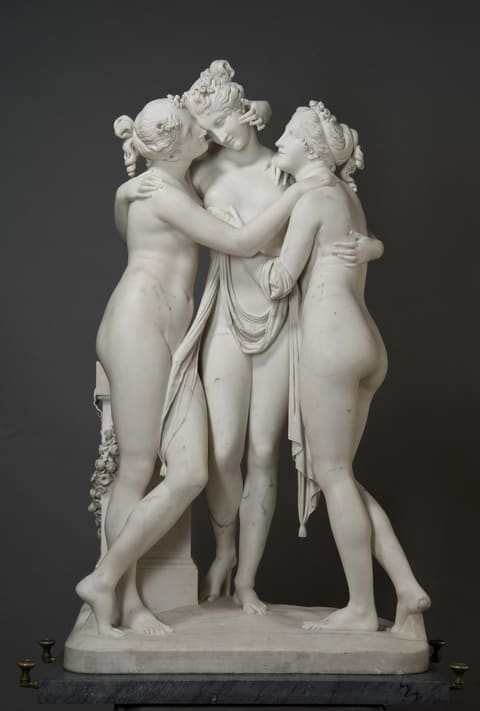
The Three Graces
N° 866·VIII · The Restless Century
The Three Graces
Antonio Canova (1757–1822)
between 1813 and 1816 · marble
Italian · Neoclassicism

A late Neoclassical marble in which Canova breaks with ancient tradition by having all three Graces face inward and embrace, united by joined hands and a single scarf draped between them; contemporaries, per the museum, said the group was 'more beautiful than beauty itself.'

“Unlike compositions which derived from Classical Antiquity - where the outer figures turn out towards the viewer and the central figure embraces her friends with her back to us - Canova's figures stand side by side, all facing each other. The three slender female figures become one in their embrace, united not simply by their joined hands, but also by the scarf which drops from the hand of one of them.” In the museum’s words — hermitagemuseum.org ↗ · quotation verified against the live page

Meanwhile — Australia's first bank note Americas & Oceania · Issued 8 April 1817

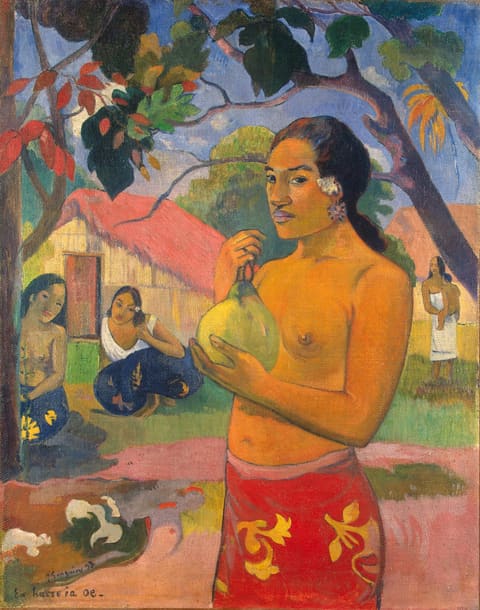
Woman Holding a Fruit; Where Are You Going? (Eu haere ia oe)
N° 967·VIII · The Restless Century
Woman Holding a Fruit; Where Are You Going? (Eu haere ia oe)
Paul Gauguin (1848–1903)
1893 · oil on canvas
French · Post-Impressionism

Painted during Gauguin's first stay in Tahiti (1891-1893), this canvas turns an ordinary island scene into an image of harmony between man and nature, its foreground Tahitian girl cast, in the museum's own words, as 'the Eve of that eastern Paradise.'

“An everyday episode in the islanders' life is here turned into the embodiment of the eternal rhythm of life, of harmony between man and nature. Standing in the foreground is a Tahitian girl with a fruit in her hand - the Eve of that eastern Paradise.” In the museum’s words — hermitagemuseum.org ↗ · quotation verified against the live page

Meanwhile — Después de la Batalla de Curupaytí Americas & Oceania · 1893

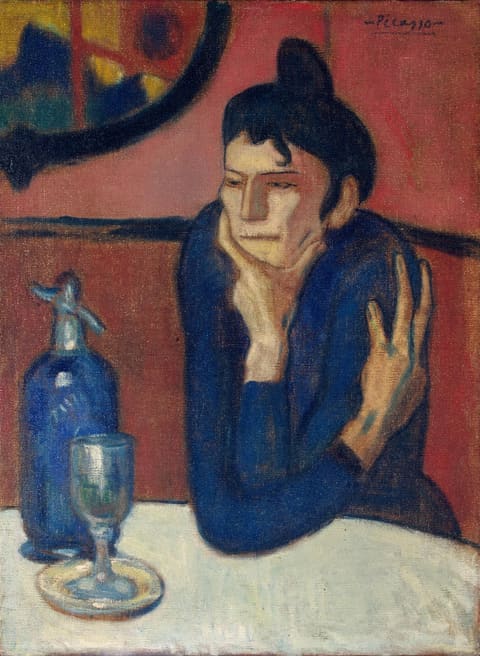
Absinthe Drinker
N° 988·IX · Into Our Time
Absinthe Drinker
Pablo Picasso (1881–1973)
1901 · oil on canvas
Spanish · Blue Period

Painted in autumn 1901 during Picasso's second stay in Paris, when he was just 22, this picture of a solitary café drinker uses flattened space and bluish tones to press in around her, turning an observed café scene into what the museum calls a generalized, timeless symbol of life's tragedy.

“Emphasizing the flatness of the canvas, the colour of the walls and the bluish tone of the marble table seem to press the space inwards, around the woman, enclosing her in her hopeless loneliness.” In the museum’s words — hermitagemuseum.org ↗ · quotation verified against the live page

Meanwhile — Kinnari Box South Asia · 19th - 20th century

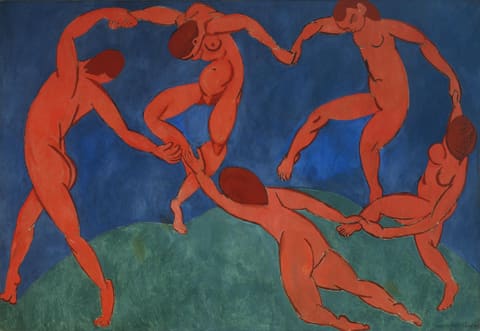
Dance
N° 1003·IX · Into Our Time
Dance
Henri Matisse (1869–1954)
1909–1910 · oil on canvas
French

Commissioned in 1910 by the Moscow collector Sergei Shchukin, this canvas of five dancing figures - not real people but symbols of a mythical 'golden age' of humanity - fuses red, blue and green into what the museum calls a bacchanalian frenzy uniting Man, Heaven and Earth.

“The frenzy of the pagan bacchanalia is embodied in the powerful, stunning accord of red, blue and green, uniting Man, Heaven and Earth. How rightly has Matisse captured the profound meaning of the dance, expressing man's subconscious sense of involvement in the rhythms of nature and the cosmos!” In the museum’s words — hermitagemuseum.org ↗ · quotation verified against the live page

Meanwhile — The hilltop Americas & Oceania · circa 1908