The Atlas·AU

AU

Australian Museum, Sydney — 23 works · museum site ↗ · 1778–1929 60000 BCE2020

Seen from Sydney, history is above all craft & design, then treasure & power — a collection opened wide onto other worlds — a window more than a mirror (23 of 23 works are from other civilisations).

Craft 6 Power 5 Sculpture 4 Observation 4 Ritual 3 Invention 1
Cook's Hawaiian feathered cape
N° 835·VII · The Age of Reason
Cook's Hawaiian feathered cape
Unknown
Presented to Captain James Cook, 1778–1779 · feathers of native birds
Hawaiian (Polynesian)

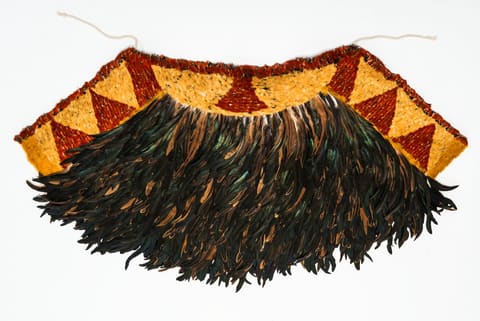
A superb Hawaiian feathered cape given to Captain James Cook on his final voyage to the Pacific by the Hawaiian chief Kalani‘ōpu‘u, probably in 1778 or January 1779, shortly before the altercation that led to Cook's death. The museum describes the gift as a sign of great respect: feathered capes were the preserve of chiefs, worn during ceremonies and in battle, and made from the feathers of native birds. It is one of the 200 Treasures of the Australian Museum; the museum has stored the original cape in its collections area to protect it from light and vibration, and displays a hand-made replica in its place.

“This superb feathered cape on the right was given to Captain James Cook on his final voyage to the Pacific by Hawaiian chief Kalani‘ōpu‘u.” In the museum’s words — australian.museum ↗ · quotation verified against the live page

Meanwhile — Jadeite Cabbage East Asia · Qing dynasty, 1644–1911
Australia's first bank note
N° 868·VIII · The Restless Century
Australia's first bank note
Unknown
Issued 8 April 1817 · engraving on paper
Colonial New South Wales

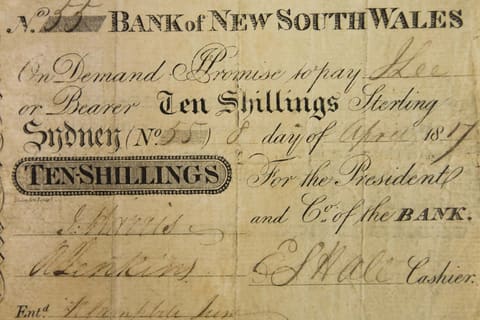
Held by the Australian Museum and shown in its 200 Treasures exhibition in the Westpac Long Gallery, this is one of the colony of New South Wales's first bank notes — note no. 55 of the Bank of New South Wales, for ten shillings, an engraving on paper measuring 9.6 x 13.6 cm. It was issued on 8 April 1817, the first day of the bank's operation, and is the first bank note issued in Australia. The museum presents it as a symbol of the establishment of economic order in the fledgling colony, following Governor Lachlan Macquarie's founding of the colony's first bank.

“Our first treasure is one of colony’s first banknotes, issued on 8 April 1817, the first day of the bank’s operation.” In the museum’s words — australian.museum ↗ · quotation verified against the live page

Meanwhile — Classical Composition: Bacchanal Europe · Undated (early 19th century)

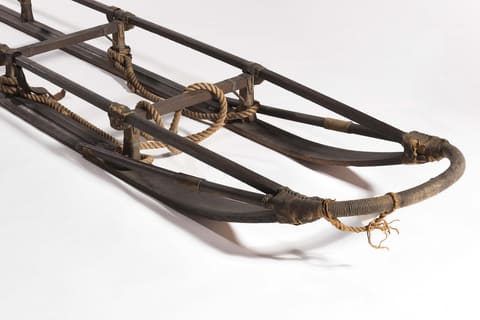
Mawson's sledge
N° 1004·IX · Into Our Time
Mawson's sledge
Unknown
Used on the Australasian Antarctic Expedition, 1911–1914 · wood
Australia

A wooden sledge from the Australasian Antarctic Expedition, one of over 30 that Douglas Mawson and his team hauled across Antarctica's icy surface, laden with food, equipment and scientific specimens. Lasting from 1911 to 1914 and led by the geologist Sir Douglas Mawson, the expedition resulted in Australia's claim to a large part of Antarctica; Mawson's team of thirty scientists explored over 3000 kilometres of coastline and collected thousands of specimens. The sledges were hauled by dogs or men and fitted with sun compasses and sledgemeters to aid navigation and mapping.

“This wooden sledge is one of over 30 that Douglas Mawson and his team hauled across Antarctica’s icy surface, laden with food, equipment and scientific specimens. Lasting from 1911 to 1914, the Australasian Antarctic Expedition resulted in Australia’s claim to a large part of Antarctica.” In the museum’s words — australian.museum ↗ · quotation verified against the live page

Meanwhile — Amorpha. Fugue in Two Colors Europe · 1912

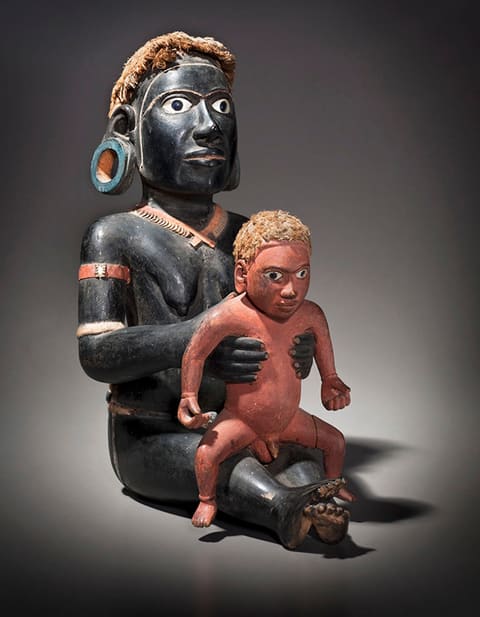
Mother and child figure (Solomon Islands)
N° 1026·IX · Into Our Time
Mother and child figure (Solomon Islands)
Unknown
Made in the Solomon Islands in the 1920s
Solomon Islands (Melanesian)

A sculpture of a seated mother and child made in the Solomon Islands in the 1920s, held by the Australian Museum among its Melanesian collections. The museum notes it has a more realistic style than traditional Solomon carvings, reflecting the profound changes brought by the arrival of Europeans and Christianity: the young boy has paler skin than the woman and may represent a local light-skinned baby, or possibly the child of a white settler with his nanny.

“In the centre of the showcase, is a sculpture of a seated mother and child. Made in the Solomon Islands in the 1920s, it has a more realistic style than traditional Solomon carvings.” In the museum’s words — australian.museum ↗ · quotation verified against the live page

Meanwhile — Keris South Asia · Early-mid 20th century

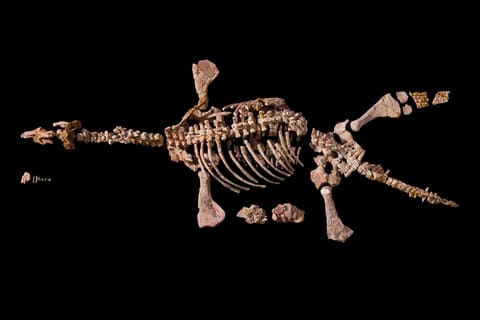
'Eric' the opalised pliosaur (Umoonasaurus demoscyllus)
N° 1105·Undated
'Eric' the opalised pliosaur (Umoonasaurus demoscyllus)
Unknown
Cretaceous, about 120–100 million years ago; discovered 1987 · opal (opalised skeleton)

'Eric' is a near-complete opalised skeleton of a small pliosaur (Umoonasaurus demoscyllus) in the Australian Museum's palaeontology collections. It swam in a vast inland sea that covered much of Australia during the Cretaceous Period, about 120–100 million years ago; as the sea retreated, Eric's bones — and the fish bones in his stomach — gradually turned to opal, Australia being the only place on Earth where opalised animal fossils have been found. Discovered in 1987 by opal miner Joe Vida and reconstructed over more than 450 hours, Eric was secured for the Museum in 1992 through a public 'Save Eric' appeal.

“This fossilised pliosaur, known affectionately as Eric after a song by British comedy team Monty Python, swam in a vast inland sea during the Cretaceous Period, about 120–100 million years ago.” In the museum’s words — australian.museum ↗ · quotation verified against the live page
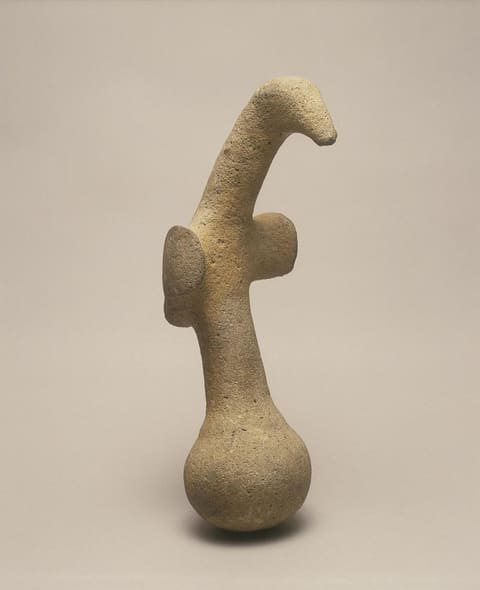
Bird-shaped stone pestle
N° 1118·Undated
Bird-shaped stone pestle
Unknown
Made c. 3000–8000 years ago · stone
Papua New Guinea

An ancient stone pestle made in Papua New Guinea sometime between 3000 and 8000 years ago, from a region with one of the oldest histories of food production in the world. A tool for pounding plants, it is formed in the shape of a bird and may represent a spiritual being — birds, particularly birds of paradise, being central to many traditional cultures of Papua New Guinea. Rather than everyday food preparation, it may have been used to pound healing remedies or prepare ritual substances.

“This ancient stone pestle was made in Papua New Guinea sometime between 3000 and 8000 years ago. New Guinea has one of the oldest histories of food production in the world. Humans began exploiting plants like yams and taro soon after arriving there over 40,000 years ago, and began growing crops as early as 9000 years ago. A tool for pounding plants, the pestle is formed in the shape of bird, and may represent a spiritual being.” In the museum’s words — australian.museum ↗ · quotation verified against the live page
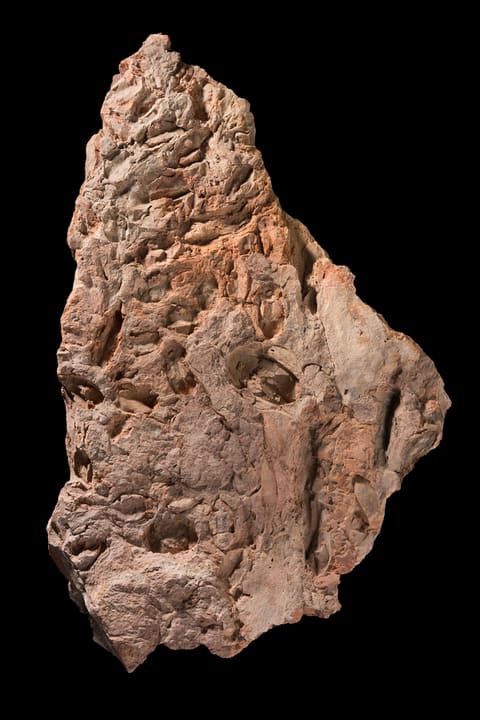
Canowindra fish fossils
N° 1129·Undated
Canowindra fish fossils
Unknown
Upper Devonian, about 370–360 million years ago; slab uncovered 1955 · rock slab with fish fossils

A large rock slab of spectacularly preserved fish fossils uncovered at Canowindra, New South Wales, in 1955, held by the Australian Museum. Since then, 4000 fossils of eight different fish species have been recovered from the site; this slab shows four of them, including Mandageria fairfaxi, New South Wales's state fossil emblem. The fish lived during the upper Devonian, about 370–360 million years ago — the 'Age of Fishes' — before vertebrates had emerged onto land.

“The large rock slab with spectacularly preserved fish fossils was uncovered at Canowindra in 1955.” In the museum’s words — australian.museum ↗ · quotation verified against the live page
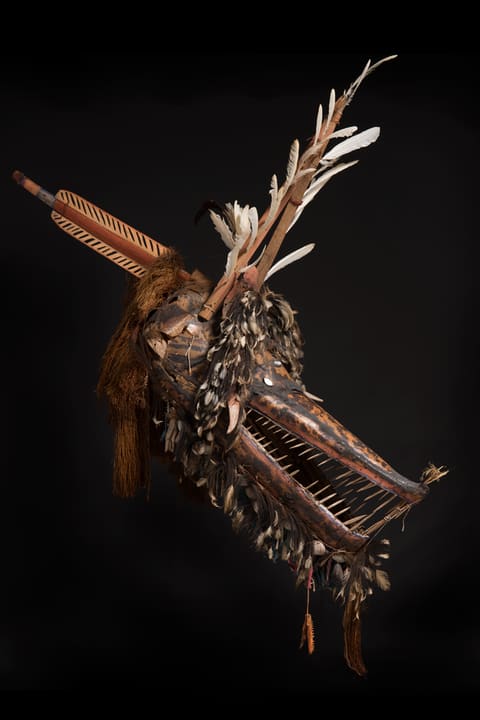
Crocodile turtle-shell mask
N° 1139·Undated
Crocodile turtle-shell mask
Unknown
Collected 1907 · turtle shell, wood and bird feathers
Torres Strait Islander

Made from turtle shell, wood and bird feathers and designed to transform its wearer into a crocodile, this striking Torres Strait Islander mask reflects the strong cultural, economic and spiritual links between the islanders and their 'sea country'. The crocodile is an important totem on the islands, and crocodile masks are worn by male dancers in funerary rites and other ceremonies. It was collected on the Australian Museum's 1907 expedition to Torres Strait by Charles Hedley and Allan McCulloch; while collected on the eastern island of Mer, the mask-making tradition it comes from is of the western Torres Strait.

“Made from turtle shell, wood and bird feathers, and designed to transform its wearer into a crocodile, the striking mask at the centre of this display reflects the strong cultural, economic and spiritual links between the Torres Strait Islanders and their ‘sea country’. The crocodile is an important totem on the islands, and crocodile masks are worn by male dancers in funerary rites and other ceremonies.” In the museum’s words — australian.museum ↗ · quotation verified against the live page
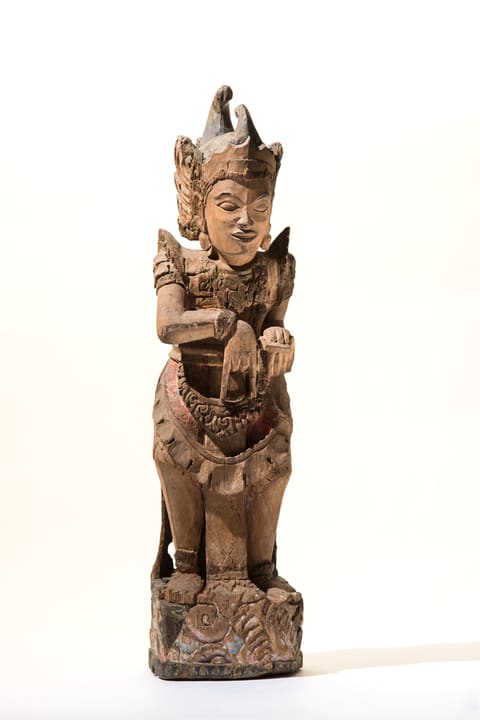
Figure of Arjuna
N° 1147·Undated
Figure of Arjuna
Unknown
Bali, late 19th or early 20th century · wood and pigment
Balinese (Hindu tradition)

A carved wooden figure (77 x 20 x 20 cm, wood and pigment) representing the Hindu god Arjuna, purchased in Bali in the 1930s and held in the Australian Museum's Asian Collection (E069946, donated by Melbourne Ward in 1972). In the epic Mahabharata, Arjuna was the son of Indra and defended the gods against evil forces. The figure was most likely intended as a devotional item for a temple or home; its traditional style suggests it was made before the 1920s, before avant-garde artists such as Walter Spies and Rudolf Bonnet settled in Bali and transformed local artistic practice.

“The carved wooden figure in this showcase, purchased in Bali in the 1930s, is a representation of the Hindu god Arjuna.” In the museum’s words — australian.museum ↗ · quotation verified against the live page
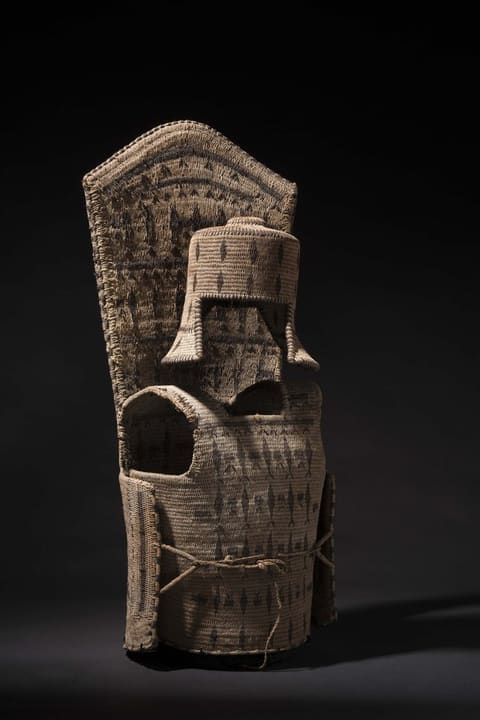
Kiribati armour (te tana)
N° 1164·Undated
Kiribati armour (te tana)
Unknown
Kiribati coconut-fibre armour · coconut palm fibre and human hair
Kiribati (Tungaru), former Gilbert Islands

A suit of Kiribati armour, described by the Australian Museum as the most sophisticated form of traditional body protection in the Pacific. Used in ritualised battles to settle disputes and worn by champions chosen to fight on behalf of their group, the body armour is woven from coconut palm fibre on a netted frame, with darker patterning depicting sharks, tuna and frigate birds made of human hair. It is strong enough to deflect spears, shark-tooth weapons and even steel knives and bayonets; the accompanying sword is studded with shark's teeth.

“The body armour is woven from coconut palm fibre on a netted frame, while the darker patterning, depicting sharks, tuna and frigate birds, is made of human hair.” In the museum’s words — australian.museum ↗ · quotation verified against the live page
Krefft's chair
N° 1166·Undated
Krefft's chair
Unknown
Belonged to Gerard Krefft, Museum curator 1864–1874
Colonial Australia

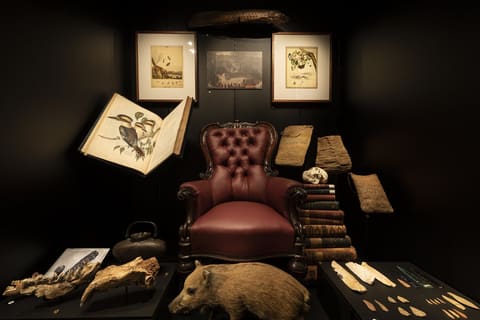
This chair belonged to Gerard Krefft, curator of the Australian Museum from 1864 to 1874 and, in the museum's words, a central figure in Australian science in the 19th century — a renowned zoologist, prolific specimen collector and accomplished scientific illustrator. His support for Darwin's theory of evolution brought him into conflict with the Museum's trustees, and he was dismissed in 1874. Refusing to leave, he barricaded himself in his living quarters in the Museum; the trustee Edward Smith-Hall hired two prize fighters to carry him out, still seated in this chair.

“It belonged to Gerard Krefft, curator of the Museum from 1864 to 1874 and a central figure in Australian science in the 19th century. Krefft was a renowned zoologist, a prolific specimen collector, and an accomplished scientific illustrator. But his support for Darwin’s theory of evolution saw him come into conflict with many of the Museum’s trustees and he was dismissed in 1874.” In the museum’s words — australian.museum ↗ · quotation verified against the live page
Maitland Bar Gold Nugget
N° 1171·Undated
Maitland Bar Gold Nugget
Unknown
Discovered 15 June 1887 · gold (with milky quartz)

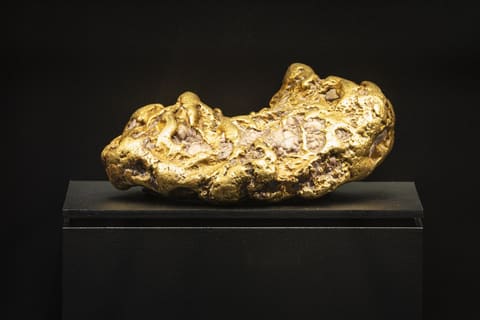
The Maitland Bar Gold Nugget — also known as the Jubilee nugget — is described by the Australian Museum as the only remaining documented example of a large gold nugget from the gold-rush years of New South Wales, and one of the most pure in the world. An alluvial nugget found by Jonathan Thorpe, Isaac Holmes and Frederick Leader at a depth of 3.4 m in an abandoned shaft beside Meroo Creek, near Mudgee, New South Wales, it weighs 10.7 kg and was discovered on 15 June 1887, the year of Queen Victoria's Golden Jubilee. Purchased by the New South Wales Colonial Government, it is featured in the museum's Westpac Long Gallery.

“It weighs 10.7 kg. Discovered on 15 June 1887, the year of Queen Victoria’s Golden Jubilee, it is also known as the Jubilee nugget.” In the museum’s words — australian.museum ↗ · quotation verified against the live page
Malagan figures (Marumarua)
N° 1173·Undated
Malagan figures (Marumarua)
Unknown
Marumarua malagan ceremonial carvings · carved wood with shell, cloth and pigment
New Ireland, Papua New Guinea

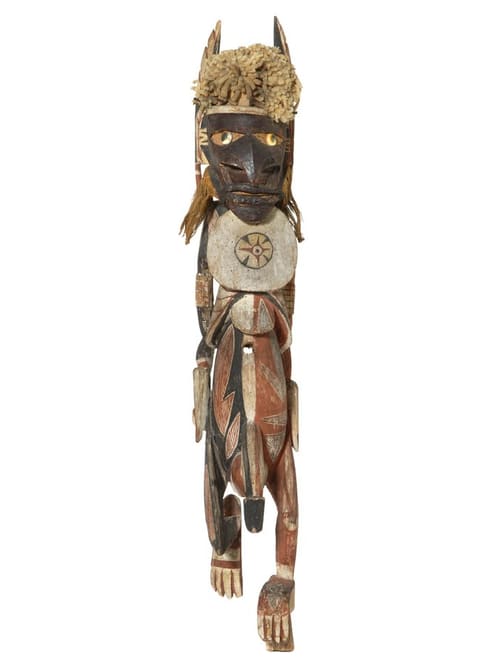
Marumarua malagan ceremonial carvings from New Ireland in Papua New Guinea, part of the Australian Museum's large collection of Malagan material. Malagan figures are used in ceremonies to mark the stages of life; these Marumarua figures were made for commemorative ceremonies to honour the spouses of the dead, and are associated with an ancestral life force known as tadar that is passed on to the next generation during the malagan ceremony. Specialised craftsmen carve malagan figures from wood, adorned with materials including shell, cloth and pigment.

“These Marumarua malagan figures were made for commemorative ceremonies to honour the spouses of the dead. A marumarua is associated with an ancestral life force known as tadar which is passed on to the next generation during the malagan ceremony.” In the museum’s words — australian.museum ↗ · quotation verified against the live page
Morning star pole
N° 1183·Undated
Morning star pole
Unknown
Yolngu morning star pole (Banumbirr) · wood and feathers
Yolngu (Dhüwra), Elcho Island

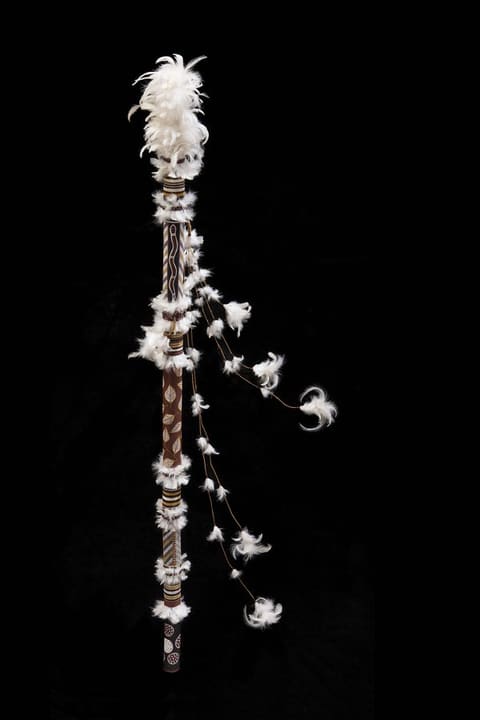
A morning star pole from Elcho Island in the Northern Territory, held by the Australian Museum and displayed among its collections of Indigenous Australian cultural objects. In the mythology of the Dhüwra Yolngu, Banumbirr — the morning star — came from the east across the sea, creating the land and the animals as she passed, and gathers up the souls of the dead. The feathers on top of the pole represent the star, its long arms the trail of light, and the short arms the cradle from which the spirits overlook the earth; Banumbirr ceremonies are timed to the appearance of Venus before sunrise.

“Pointing heavenwards in the centre of this showcase is a morning star pole from Elcho Island in the Northern Territory. In the mythology of the Dhüwra Yolngu, Banumbirr, the morning star, came from the east across the sea, creating the land and the animals as she passed.” In the museum’s words — australian.museum ↗ · quotation verified against the live page
Platypus skin rug
N° 1193·Undated
Platypus skin rug
Unknown
Donated to the Museum in 1947 · platypus skins

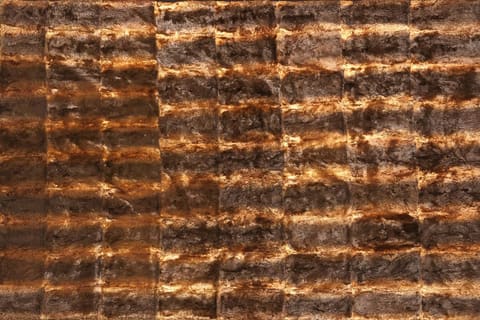
Made from the skins of 75 platypuses and measuring 188 x 163 cm, this rug was donated to the Australian Museum by E. Hill in 1947 and hangs in the museum's 200 Treasures exhibition. The museum presents it as the object that best captures the changing treatment of Australia's native animals: platypuses were often considered pests and were hunted for their fur until the practice was outlawed in 1905.

“It is made from the skins of 75 Platypuses, a creature which so astonished scientists when the first specimen arrived in Europe that many believed it to be an elaborate hoax, created by an unscrupulous prankster stitching a duck’s beak onto the body of a mole.” In the museum’s words — australian.museum ↗ · quotation verified against the live page
Rainforest shields
N° 1195·Undated
Rainforest shields
Unknown
Aboriginal rainforest shields, far north Queensland · rainforest fig-tree wood with natural pigments
Koko-Yellani (Aboriginal Australian), Cape York

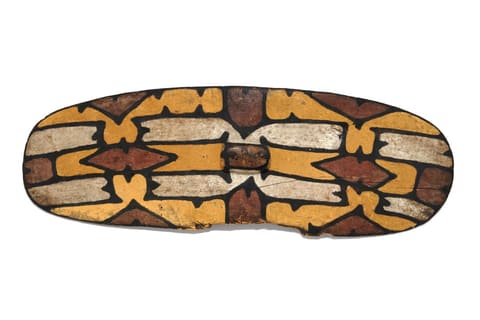
Three Aboriginal shields from the rainforests of far north Queensland, made by the Koko-Yellani people of Cape York, who cut them from the wood of rainforest fig trees and painted them with natural pigments taken from the environment around them. The Australian Museum presents them among objects from tropical North Queensland, one of the world's most biodiverse regions, where Aboriginal people drew extensive knowledge of local plants and animals; the shields were used for ceremonial fighting.

“These three shields were made by the Koko-Yellani people of Cape York, who cut them from the wood of rainforest fig trees and painted them with natural pigments taken from the environment around them.” In the museum’s words — australian.museum ↗ · quotation verified against the live page
Raven head mask
N° 1197·Undated
Raven head mask
Unknown
Acquired by the Museum in 1912
Kwakwaka'wakw (Kwa-guilth), Northwest Coast, Canada

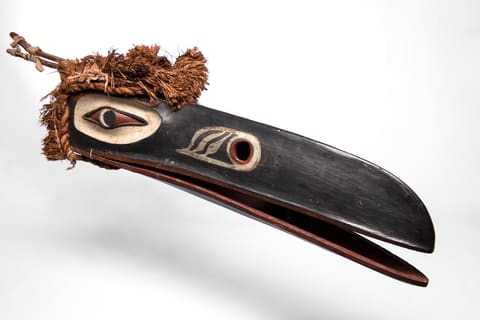
A large raven head mask made by the Kwakwaka'wakw (Kwa-guilth) people of Canada's west coast, held by the Australian Museum. In 1910 a group of Indigenous Canadian performers was brought to Australia for a Wild West-style show; when the venture failed, their costumes and artefacts were sold to fund their return to Canada, and a dealer sold the collection — including this mask — to the Museum in 1912. The mask was made for traditional ceremonial use at a time when the Canadian government was trying to stamp out indigenous practices. From 1987 the Museum worked with the Canadian Museum of History and the Kwa-guilth people to repatriate some of these rare artefacts.

“A dealer sold this collection to the Museum in 1912, including the large raven head mask hanging in this showcase.” In the museum’s words — australian.museum ↗ · quotation verified against the live page
Roro feather headdress
N° 1200·Undated
Roro feather headdress
Unknown
Collected 1923 · feathers and natural materials
Roro people, Central Province, Papua New Guinea

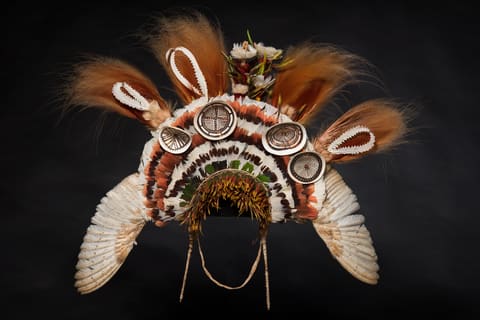
An elaborate ceremonial headdress made by the Roro people of Central Province, Papua New Guinea, and collected in 1923 by photographer Frank Hurley on an Australian Museum expedition. Ceremonial headdresses are worn by Roro men of high status, with the number of feathers signifying the owner's achievements and social rank; they are still worn today at special ceremonies. Made from a variety of natural resources in patterns unique to each clan, such headdresses illustrate the intimate relationship of the Roro people to their environment.

“This elaborate headdress, made by the Roro people of Central Province, New Guinea, was collected in 1923 by photographer Frank Hurley on an Australian Museum expedition. Ceremonial headdresses are worn by Roro men of high status, with the number of feathers signifying the owner’s achievements and social rank.” In the museum’s words — australian.museum ↗ · quotation verified against the live page
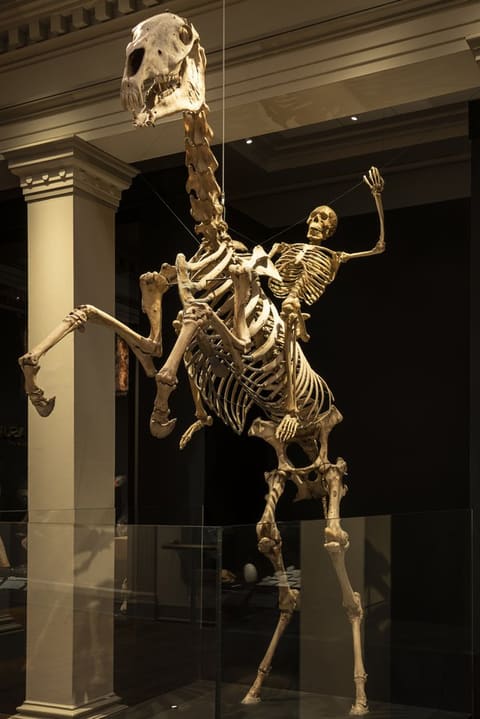
Skeleton of 'Sir Hercules' and a rider (the 'Bone Ranger')
N° 1210·Undated
Skeleton of 'Sir Hercules' and a rider (the 'Bone Ranger')
Unknown
Sir Hercules bred 1843, died 1865; skeleton presented to the Museum 1870 · horse skeleton (bone)
Colonial Australia

The mounted skeleton of a rearing horse and rider, affectionately known as the 'Bone Ranger', is presented by the Australian Museum as a symbol of the importance of horses and horsemanship to Australian history. The horse is the skeleton of Sir Hercules, one of Australia's foundation thoroughbreds, bred in 1843 at Clifton Stud on the Hawkesbury River. Although he never raced, he sired 18 big-race winners, including The Barb (Melbourne Cup, 1866) and Yattendon (first Sydney Cup, 1866). Sir Hercules died at a stud near Bathurst in 1865; his remains were later exhumed and his skeleton was presented to the Australian Museum in 1870.

“Sir Hercules died at a stud near Bathurst, in 1865. His remains were later exhumed, and his skeleton was presented to the Australian Museum in 1870.” In the museum’s words — australian.museum ↗ · quotation verified against the live page
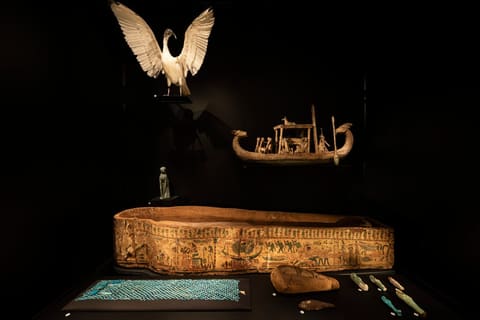
Theban mummy and coffin
N° 1223·Undated
Theban mummy and coffin
Unknown
Ancient Egyptian; excavated at Thebes (now Luxor) · human remains and painted wooden coffin
Ancient Egyptian

An ancient Egyptian mummy and its painted coffin, part of the Australian Museum's significant Egyptian collection acquired in the early 1900s. Excavated from a tomb in Thebes (now Luxor), the mummy was originally thought to be a middle-aged man who died about 2500 years ago. In 2004 it underwent CT scanning at the nearby Royal Prince Alfred Hospital; the scan surprisingly revealed the body of a woman, who had been mummified some 300 years earlier than previously thought.

“This Egyptian mummy was excavated from a tomb in Thebes (now Luxor) and was originally thought to have been the body of a middle-aged man who died about 2500 years ago. In 2004, the mummy underwent CT scanning at nearby Royal Prince Alfred Hospital. The scan surprisingly revealed the body of a woman, who was mummified 300 years earlier than previously thought.” In the museum’s words — australian.museum ↗ · quotation verified against the live page
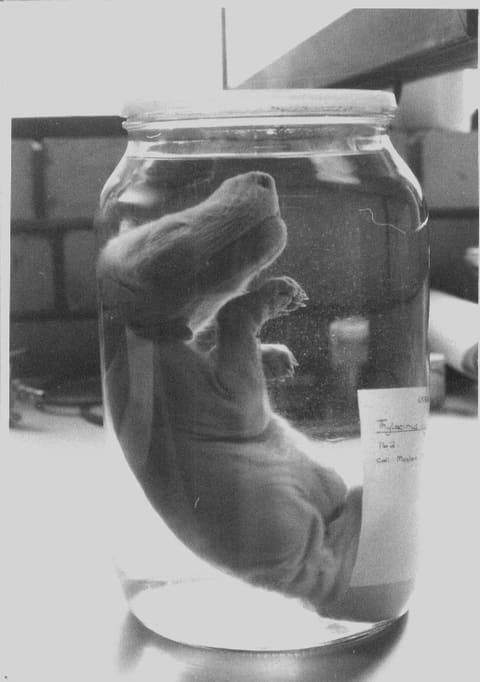
Thylacine ('Tasmanian tiger') pup
N° 1224·Undated
Thylacine ('Tasmanian tiger') pup
Unknown
Sent to the Australian Museum in 1866

A thylacine ('Tasmanian tiger') pup preserved in a jar, described by the Australian Museum as one of the most valuable items in its collection. Taken from its mother's pouch, the naked pup has the appearance of a foetus, with the species' characteristic stripes clearly visible on its back. The museum states it was sent to the Australian Museum in 1866 — probably, it suggests, as a trade with the Tasmanian institution — some 70 years before the last known thylacine died in Hobart Zoo. The specimen remains of particular scientific interest: under Mike Archer's direction the museum attempted to extract the thylacine's DNA to see whether the extinct species could be rebooted.

“The Tasmanian tiger pup, one of the most valuable items in our collection, also known of course as the thylacine pup.” In the museum’s words — australian.museum ↗ · quotation verified against the live page
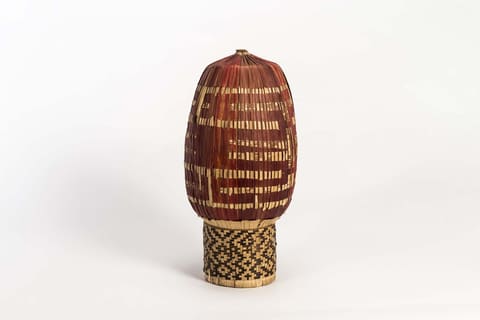
Upe hats
N° 1227·Undated
Upe hats
Unknown
Sacred initiation hats (upe), Bougainville · woven pandanus leaves
Bougainville, Papua New Guinea

Two sacred hats, or upes, from Bougainville in Papua New Guinea, woven from the leaves of the pandanus tree. They are traditionally worn by adolescent boys in Bougainville to protect their growing hair throughout their long initiation: when the boys are 10 years old they go into a secluded part of the forest to learn the skills and knowledge they will need in manhood, and contact with females is forbidden. The Australian Museum presents them among cultural objects from the islands east of the New Guinea mainland.

“are woven from the leaves of the pandanus tree. They are traditionally worn by adolescent boys in Bougainville to protect their growing hair throughout their long initiation.” In the museum’s words — australian.museum ↗ · quotation verified against the live page
Zulu shields
N° 1235·Undated
Zulu shields
Unknown
Collected during the Anglo–Zulu Wars, late 1870s; acquired 1884 · Nguni cattle hide
Zulu (South Africa)

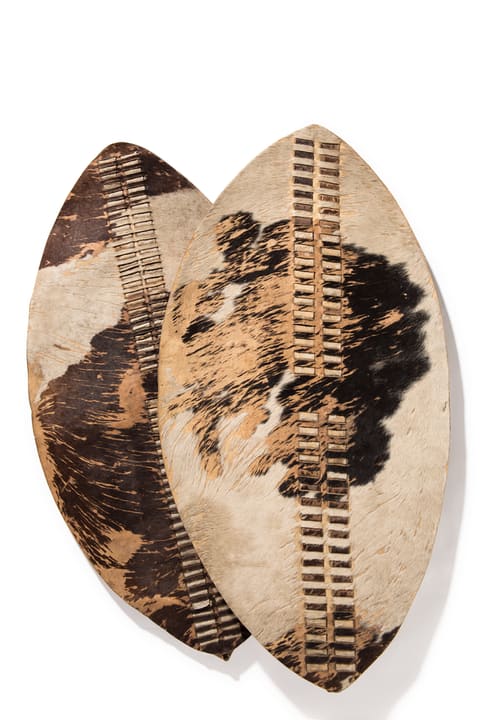
Two Zulu shields, made from the distinctive patterned hides of native Nguni cattle and acquired by the Australian Museum in 1884. The Zulu assembled one of the most organised and disciplined indigenous armies in Africa; the shields were collected during the Anglo–Zulu Wars of the late 1870s, which led to the British annexation of the Zulu kingdom. The king's cattle herd was bred especially to produce shields with particular colour patterns — large shields were used for combat, smaller ones for ceremonial purposes.

“Made from the distinctive patterned hides of native Nguni cattle, these impressive Zulu shields were acquired by the Museum in 1884. The Zulu assembled one of the most organised and disciplined indigenous armies in Africa, and fought famously brutal battles against neighbouring tribes and colonial forces. The shields were collected during the Anglo–Zulu Wars of the late 1870s which led to the British annexation of the Zulu kingdom.” In the museum’s words — australian.museum ↗ · quotation verified against the live page