N° 484·III · Faith and Empire
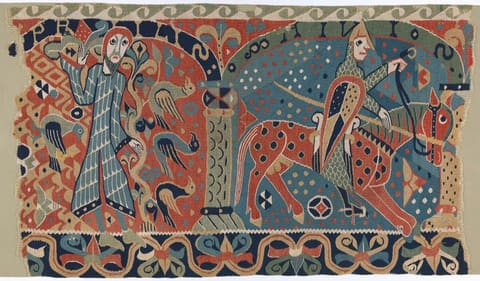
Baldishol tapestry
Unidentified
c. 1150–1190 · Wool and linen (Gobelin/tapestry-weave technique)
Norwegian (medieval; possibly woven in France or England) · Romanesque
Discovered by chance in 1879 as a dirty rolled-up rag under the floorboards of the demolished Baldishol Church near Lake Mjøsa, and recognised for what it was only after a neighbouring family cleaned it; museum director H. A. Grosch bought it in 1887. Woven in wool and linen, radiocarbon-dated to 1040-1190 with the motifs themselves placed around 1180-1190, it depicts the months of April (a bearded man in a tunic) and May (an armoured knight on horseback) in a Romanesque style, and was probably once part of a longer twelve-month frieze. Whether it was woven in Norway or at a workshop abroad is not established.
“The Baldishol Tapestry is one of the very few tapestries made with the Gobelin technique prior to 1200 that have survived in Europe, and the only one of its kind in the Nordic countries.” In the museum’s words — nasjonalmuseet.no ↗
Meanwhile — Tales of Hungry Ghosts (Gaki zōshi) East Asia · Japan, Heian period, late 12th century