Canadian Museum of History, Gatineau — 12 works · museum site ↗ · 1603–2013
Seen from Gatineau, history is above all craft & design, then sculpture — a collection opened wide onto other worlds — a window more than a mirror (11 of 12 works are from other civilisations).
Craft 6Sculpture 3Observation 2Invention 1
N° 727·VI · The Baroque Age
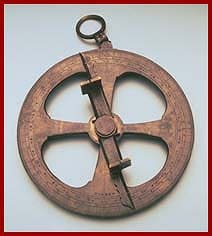
Astrolabe attributed to Samuel de Champlain
Unknown
1603 · Brass
French
A mariner's astrolabe traditionally thought to have belonged to the French explorer Samuel de Champlain, who travelled up the Ottawa River in 1613. Found by a fourteen-year-old farm boy, Edward Lee, in 1867 and acquired for the Museum in 1989, it is — as the Museum notes — the smallest of the thirty-five mariner's astrolabes surviving from the early seventeenth century and the only one from France. One of the must-see objects of the Canadian History Hall (989.56.1).
“It is the smallest of the thirty-five mariner's astrolabes surviving from the early part of the seventeenth century, and the only one from France.”
In the museum’s words — historymuseum.ca ↗ · quotation verified against the live page
Meanwhile — Aleppo RoomIslamic world · 1600–01 and 1603
N° 874·VIII · The Restless Century
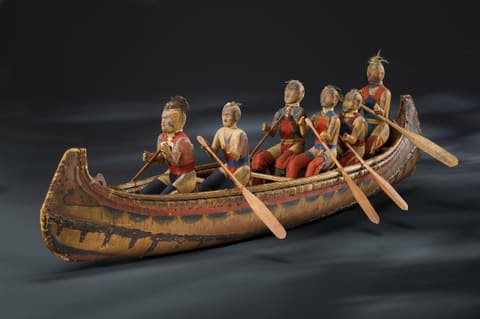
Model canoe made by the Odawa chief Assiginak
Assiginak
about 1825
Odawa
A model canoe carrying carved figures that represent individual Indigenous warriors and leaders, made by the Odawa chief Assiginak in about 1825; presented among the must-see objects of the Museum's Canadian History Hall (NMH III-M-10).
“Model canoe with figures representing individual Indigenous warriors and leaders, made by the Odawa chief, Assiginak, in about 1825.”
In the museum’s words — historymuseum.ca ↗ · quotation verified against the live page
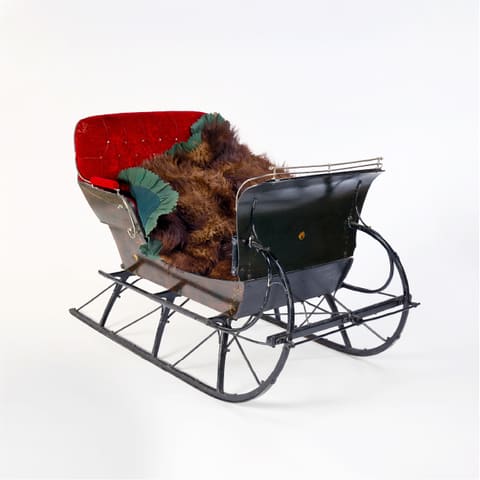
A black wooden sleigh made around 1896 by the McLaughlin Carriage Company in Oshawa, Ontario, featured on the Museum's collection-highlights page (2010.233.2).
“This black wooden sleigh was made around 1896 by the McLaughlin Carriage Company in Oshawa, Ontario.”
In the museum’s words — historymuseum.ca ↗ · quotation verified against the live page
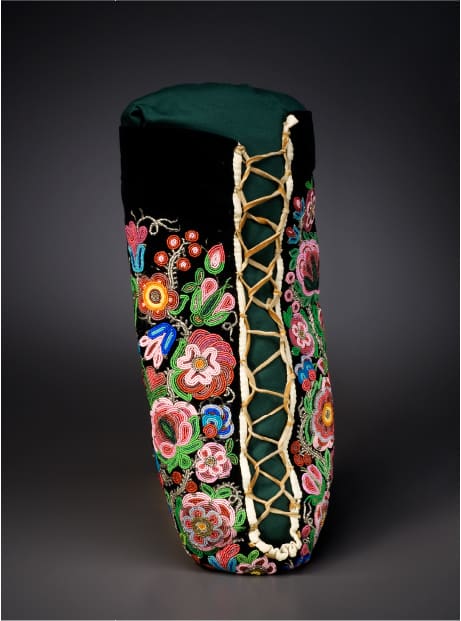
An elaborately beaded moss bag baby carrier made around 1900 by a Gwich’in artisan, featured on the Museum's collection-highlights page (VI-I-5).
“This elaborately beaded moss bag baby carrier was made around 1900 by a Gwich’in artisan.”
In the museum’s words — historymuseum.ca ↗ · quotation verified against the live page
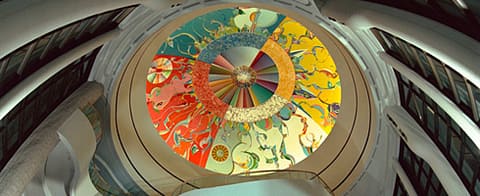
A vast circular dome mural painted by Alex Janvier in 1993, adorning the Museum's Haida Gwaii Salon. Rising seven storeys above the salon and covering some 418 square metres, it illustrates the history of the land from the artist's Dene Suline perspective and expresses a hope of mutual respect.
“Janvier completed the work in just over three months, with the help of his son Dean.”
In the museum’s words — historymuseum.ca ↗ · quotation verified against the live page
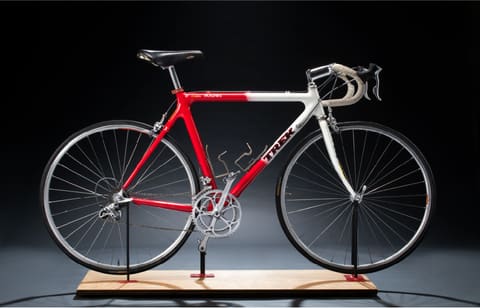
The red and white bicycle used by Olympian Clara Hughes in the 1996 Summer Games in Atlanta, Georgia, featured on the Museum's collection-highlights page in the Order of Sport Collection (2021.126.3064).
“This red and white bicycle was used by Olympian Clara Hughes in the 1996 Summer Games in Atlanta, Georgia.”
In the museum’s words — historymuseum.ca ↗ · quotation verified against the live page
2001 · Foam, fiberglass resin, oil paint, canvas and metal
Haudenosaunee
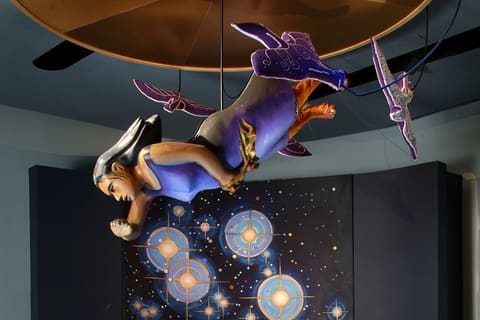
Shelley Niro's (Haudenosaunee) suspended sculpture of Sky Woman, shown as a falling female figure; made in 2001 of foam, fiberglass resin, oil paint, canvas and metal, it is one of the iconic artworks the Museum highlights in the First Peoples Hall.
“iconic artworks like Sky Woman by Shelley Niro”
In the museum’s words — historymuseum.ca ↗ · quotation verified against the live page
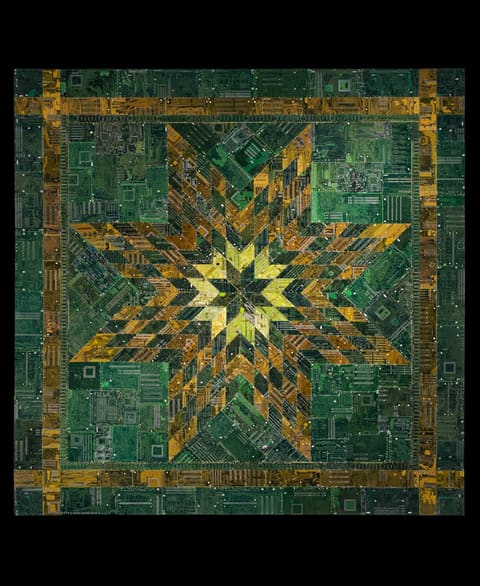
A large star-blanket design that Wally Dion (Saulteaux, Yellow Quill First Nation) built in 2007 from metal, copper, brass, plastic and lead; displayed among the contemporary works of the First Peoples Hall (V-F-275).
“Wally Dion (Saulteaux, Yellow Quill First Nation), Starblanket II, 2007, metal, copper, brass, plastic, lead, Canadian Museum of History V-F-275.”
In the museum’s words — historymuseum.ca ↗ · quotation verified against the live page
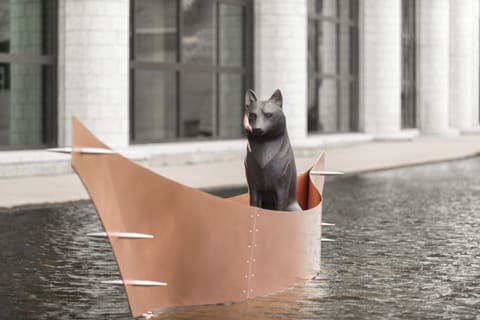
A bronze wolf standing in a copper canoe. Mary Anne Barkhouse ('Namgis, Kwakwaka'wakw) based the 2013 work on a story her grandfather Fred Cook told her, of helping a wolf cross a treacherous body of water in a boat; its title means 'to travel in a boat together', and the Museum notes its copper and bronze speak to both Kwakwaka'wakw tradition and contemporary ingenuity (VII-E-1106).
“is inspired by a story told to the artist, Mary Anne Barkhouse, by her grandfather Fred Cook.”
In the museum’s words — historymuseum.ca ↗ · quotation verified against the live page
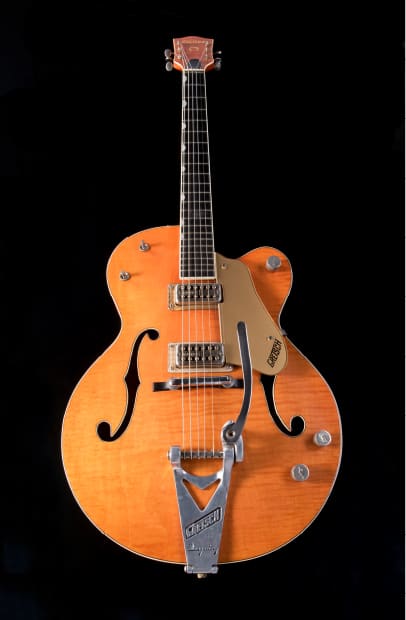
The electric guitar Randy Bachman played while recording hits with The Guess Who and Bachman-Turner Overdrive, among them "These Eyes" and "Takin' Care of Business"; displayed among the iconic objects of the Canadian History Hall (95-26).
“Guitar played by Randy Bachman, of The Guess Who and Bachman-Turner Overdrive, while recording hits such as “These Eyes” and “Takin’ Care of Business.””
In the museum’s words — historymuseum.ca ↗ · quotation verified against the live page
N° 1157·Undated
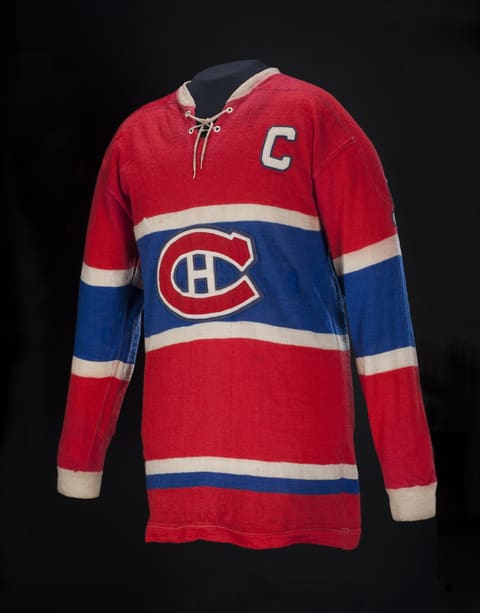
Hockey jersey of Maurice "Rocket" Richard
Unknown
Mid-20th century
Canadian
A hockey jersey worn by the Montreal Canadiens legend Maurice "Rocket" Richard, shown among the iconic, must-see objects of the Museum's Canadian History Hall (2002.81.44).
“A hockey jersey belonging to Maurice “Rocket” Richard.”
In the museum’s words — historymuseum.ca ↗ · quotation verified against the live page
N° 1221·Undated
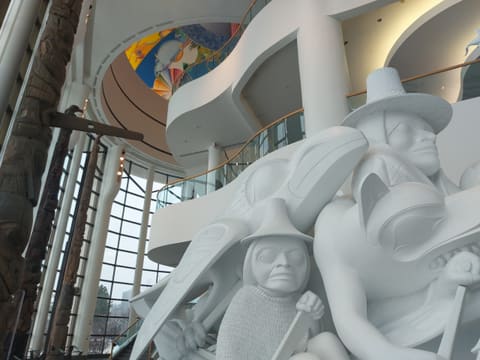
The Spirit of Haida Gwaii
Bill Reid (1920-1998)
20th century
Haida
Bill Reid's monumental sculpture of a Haida canoe crowded with human, animal and supernatural passengers, displayed in the Museum's Grand Hall, home to a large collection of historic monumental poles.
“Bill Reid’s iconic sculpture of a canoe carries human, animal and supernatural beings as passengers.”
In the museum’s words — historymuseum.ca ↗ · quotation verified against the live page