The Atlas·TZ

TZ

National Museum of Tanzania, Dar es Salaam — 6 works · museum site ↗ · 1545–1979 60000 BCE2020

Seen from Dar es Salaam, history is above all treasure & power, then the world observed — a collection opened wide onto other worlds — a window more than a mirror (6 of 6 works are from other civilisations).

Power 2 Observation 2 Architecture 1 Stories 1
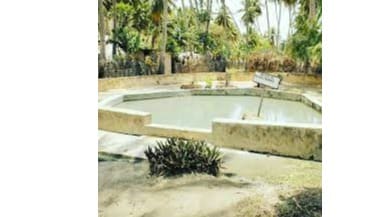
Haikata Arabic Well (Kisima cha Asili cha Haikataa)
N° 669·V · The Renaissance
Haikata Arabic Well (Kisima cha Asili cha Haikataa)
Unknown
attributed to Arab settlers, 1545
Swahili Coast (Arab Mikindani)

The Haikata Arabic Well at Mikindani, discovered by Arab settlers in 1545, whose water irrigated the coconut trees they planted; the Germans drew on it for their construction work in 1895 and in 1949 the British built a wall around it. Its water is notably salt-free, and the well was also used as a place to perform worship or rituals, and was believed to be protected by beetles and snakes living in the tree at its edge.

“This well was discovered by the Arabs in 1545, its water was used to watering the coconut trees planted by the Arabs when they arrived in Mikindani.” In the museum’s words — nmt.go.tz ↗ · quotation verified against the live page

Meanwhile — Portrait of Eleonora di Toledo with her son Giovanni Europe · c. 1545
The Hanging Place of the Maji Maji War Heroes (Eneo la manyongeo, Songea)
N° 997·IX · Into Our Time
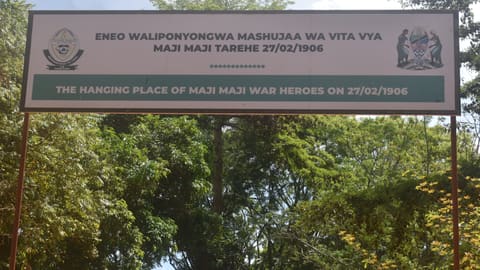
The Hanging Place of the Maji Maji War Heroes (Eneo la manyongeo, Songea)
Unknown
site of the executions of 27 February 1906
Maji Maji War

Translated from Swahili: Known locally as the 'manyongeo', this historic site in the town of Songea is where 66 heroes who fought in the Maji Maji War were hanged by the Germans (on 27 February 1906, per the site marker). It has become a place of remembrance for the people of Songea and the wider Ruvuma region — the ground where residents gathered and witnessed their forefathers, fathers, uncles and other relatives being put to death — and the Maji Maji Memorial Museum keeps a piece of the rope/noose used in the hangings, and the fighters' mass grave (kaburi la halaiki) is part of the site's remembrance.

“Eneo hili linafahamika zaidi kama manyongeo ni eneo maarufu na la kihistoria unapofika ndani ya mji wa Songea katika eneo hili ndio mahali palipotumika tangu enzi za ukoloni na ndio eneo ambalo lililotumika kunyongea mashujaa 66 waliopigana kipindi cha vita vya Majimaji” In the museum’s words — nmt.go.tz ↗ · quotation verified against the live page

Meanwhile — Woman in a Chemise Europe · 1906

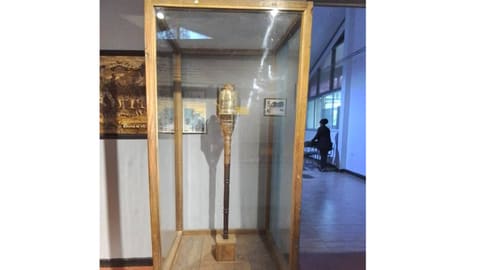
The original Uhuru Torch (Mwenge halisi wa Uhuru)
N° 1078·IX · Into Our Time
The original Uhuru Torch (Mwenge halisi wa Uhuru)
Unknown
Union Torch relayed 1964–1979; received by the museum 9 December 1979
Independent Tanzania

Translated from Swahili: The original Uhuru (Freedom) Torch, famously known as the Union Torch, which was run from 1964 to 1979; it was handed over to the Arusha Declaration Museum in Arusha on 9 December 1979, where it is now held (shown in a glass display case).

“Mwenge halisi wa uhuru maarufu kama mwenge wa muungano uliokimbizwa kuanzia mwaka 1964 hadi 1979. Mwenge huu ulikabidhiwa Makumbusho ya Azimio la Arusha tarehe 9/12/1979.” In the museum’s words — nmt.go.tz ↗ · quotation verified against the live page

Meanwhile — THE HEARTH (Feuerstätte) Europe · 1968–1974

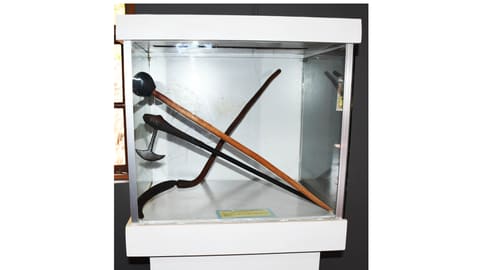
Authentic Maji Maji War weapons and tools (shields, war axes, clubs and spears)
N° 1112·Undated
Authentic Maji Maji War weapons and tools (shields, war axes, clubs and spears)
Unknown
used during the Maji Maji War (c. 1905–1907)
Maji Maji War (Ngoni and allied peoples)

Translated from Swahili: The Maji Maji Memorial Museum is the only museum in Tanzania that preserves the history of the Maji Maji War together with some of the original, authentic weapons and tools used in it — including shields (ngao/vikopa), war axes (shoka za vita/vinjenje), clubs (vilabu/vibonga) and spears (mikuki/migoha). It also keeps authentic photographs of the fighters hanged on 27 February 1906 and historic places such as the mass grave, Chief Songea's grave, and the ground used to hang the Maji Maji fighters in Songea.

“Makumbusho ya Kumbukumbu ya vita vya Majimaji ndiyo makumbusho pekee nchini Tanzania ambayo yanahifadhi na kulinda historia ya vita hiyo na baadhi ya silaha na zana halisi za asili zilizotumika wakati wa Vita vya Majimaji ikiwemo ngao (vikopa,) shoka za vita (vinjenje), vilabu (vibonga), na mikuki (migoha).” In the museum’s words — nmt.go.tz ↗ · quotation verified against the live page
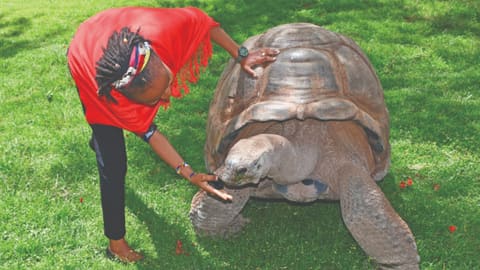
Babu Baruti, the giant Aldabra tortoise
N° 1114·Undated
Babu Baruti, the giant Aldabra tortoise
Unknown
brought to Arusha in the early 1920s; estimated to be over 150 years old

Translated from Swahili: 'Babu Baruti', a giant Aldabra tortoise estimated to be over 150 years old, was brought to Arusha together with two other tortoises from Australia in the early 1920s. A living highlight of the National Natural History Museum in Arusha, where visitors come to see him, photograph him and learn more about him.

“Kobe mkubwa wa Aladabra, Babu Baruti aliletwa Arusha pamoja na kobe wengine wawili kutoka Australia mwanzoni mwa miaka ya 1920.” In the museum’s words — nmt.go.tz ↗ · quotation verified against the live page
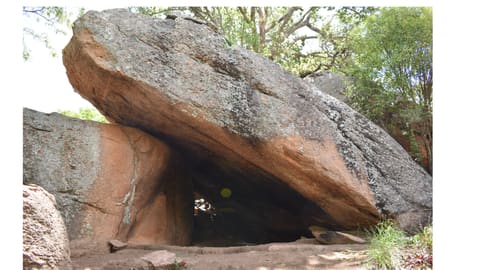
The Chandamali Mountain Caves (Mapango ya mlima Chandamali)
N° 1216·Undated
The Chandamali Mountain Caves (Mapango ya mlima Chandamali)
Unknown
Maji Maji War period (used c. 1905–1907)
Maji Maji War (Ngoni, Songea)

Translated from Swahili: The caves of Mount Chandamali, just outside the grounds of the Maji Maji Memorial Museum in Songea, were used strategically by the Maji Maji war leader Nduna Songea Mbano as a hideout; from above the caves he would sit and watch for his enemies at a distance. Traditional rites were, and still are, performed there, and the site is said to be home to a traditional great snake dating from the time of the war. It was one of the places the Germans failed to penetrate to capture the Maji Maji fighters.

“Mapango ya mlima Chandamali ni moja ya sehemu iliyotumiwa kimkakati na kiongozi wa vita vya Majimaji Nduna Songea Mbano” In the museum’s words — nmt.go.tz ↗ · quotation verified against the live page