The Atlas·RO

RO

National Museum of Romanian History, Bucharest — 13 works · museum site ↗ · 4050 BCE – 1922 60000 BCE2020

Seen from Bucharest, history is above all treasure & power, then faith & ritual objects — a collection split between its own tradition and other worlds (3 of 13 works are from other civilisations).

Power 7 Ritual 2 Sculpture 2 Craft 1 Portraits 1
Cucuteni Cult Altar from Trușești
N° 029·I · The First Makers
Cucuteni Cult Altar from Trușești
Unknown (Cucuteni culture)
Cucuteni culture (5th–4th millennium BC) · modelled fired clay
Cucuteni · Chalcolithic

An exceptional Cucuteni-culture modelled-clay cult complex (“altar”) from the prehistoric settlement of Trușești-Țuguieta — the largest prehistoric settlement ever fully excavated in Romania. Found in dwelling no. XXIV, it is unique in Europe; the two figures modelled on it express an elaborate Cucuteni conception of the world in which humans hold a central, cosmically charged place. (Translated and condensed from the museum’s Romanian text.)

“Exponatul lunii martie este o piesă excepţională de cult – un altar descoperit în aşezarea preistorică cucuteniană de la Trușești – Țuguieta, (jud. Botoșani).” In the museum’s words — mnir.ro ↗

Meanwhile — Jade Dragon East Asia · Neolithic, Hongshan Culture
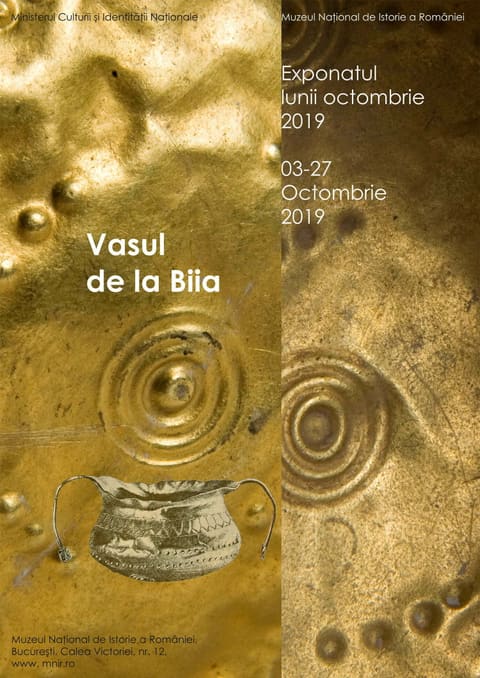
Prehistoric Gold Vessel from Biia
N° 136·I · The First Makers
Prehistoric Gold Vessel from Biia
Unknown
10th–8th century BC · gold (~144 g)
Late Bronze Age – Early Iron Age (Transylvania)

A unique small prehistoric gold vessel (~144 g), hammered from a single thick gold sheet into a slightly flattened hemispherical bowl and decorated with concentric circles, small bosses and incised zig-zags. Found in the bed of the Târnava Mică, it entered the Brukenthal Museum in 1895 and was transferred to the newly founded museum in 1973; recent opinion dates it to the 10th–8th centuries BC. (Translated and condensed from the museum’s Romanian text.)

“Prin combinația dintre diverse elemente morfologice și ornamentale, vasul de la Biia – descoperit în albia Târnavei Mici, ajuns în 1895 în patrimoniul Muzeului Brukenthal și apoi transferat în 1973 în patrimoniul nou înființatului Muzeu Național de Istorie a României – ocupă o poziție aparte în ambianța repertoriului de forme și decoruri al veselei preistorice.” In the museum’s words — mnir.ro ↗

Meanwhile — Miniature sculpture of a chariot Near East · Early Iron Age, 9th century BC

Getic Gold Helmet from Coțofenești
N° 196·II · The Classical World
Getic Gold Helmet from Coțofenești
Unknown (Geto-Dacian goldsmith)
4th century BC · gold (760‰), 726 g
Geto-Dacian (Thraco-Getic) · Second Iron Age

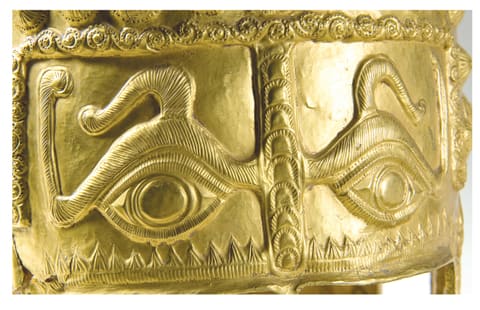
A princely Getic gold helmet of the 4th century BC, one of the most spectacular pieces of Thraco-Getic goldwork: a rounded conical cap with conical rosettes, a rectangular frontal bearing a pair of protruding apotropaic eyes, cheek-guards with sacrifice scenes (a warrior slaughtering a ram), and a neck-guard with friezes of fantastic animals; weighs 726 g and has been displayed in the museum’s Historic Treasury since 1972. (Translated and condensed from the museum’s Romanian text.)

“Celebrul coif princiar getic din aur de la Coţofeneşti este unul dintre artefactele cele mai spectaculoase, cu o valoare arheologică, istorică şi artistică excepţională, din expoziţia „Tezaurul Istoric” de la Muzeul Național de Istorie a României.” In the museum’s words — mnir.ro ↗

Meanwhile — Fish dish from Nymphaion Greek world · 4th century BCE

Thraco-Getic Silver Rhyton from Poroina Mare
N° 200·II · The Classical World
Thraco-Getic Silver Rhyton from Poroina Mare
Unknown
4th–3rd century BC · silver, partly gilded
Thraco-Getic

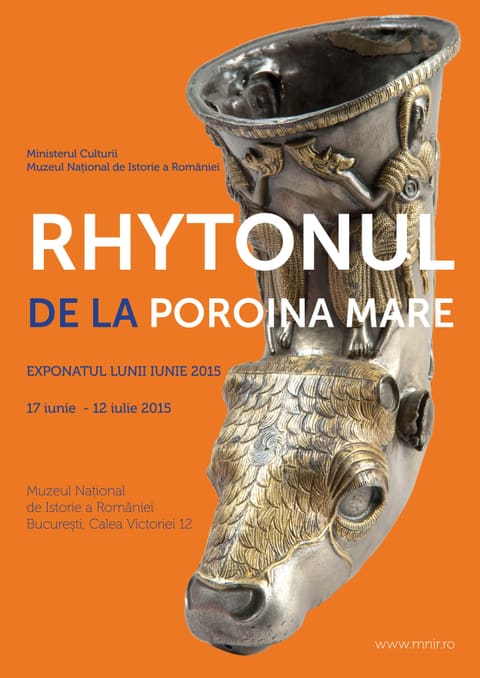
An exceptional piece of Thraco-Getic silverwork: a silver, partly gilded ceremonial drinking-horn (rhyton) dated to the 4th–3rd century BC, used in religious ceremonies and comparable to the finds at Panagyurishte in Bulgaria. It was found by chance and entered the collection of the former National Museum of Antiquities in 1883. (Translated and condensed from the museum’s Romanian text.)

“Rhytonul din argint, parţial aurit, a fost descoperit întâmplător şi a intrat în colecţia fostului Muzeu Naţional de Antichităţi în 1883.” In the museum’s words — mnir.ro ↗

Meanwhile — Mummy of the priest Nesmin (the Belgrade Mummy) Egypt & Nubia · Ancient Egyptian; the priest Nesmin lived c. 350-300 BCE

The Ciumești Helmet (Celtic, with bird-of-prey crest)
N° 219·II · The Classical World
The Ciumești Helmet (Celtic, with bird-of-prey crest)
Unknown (Celtic)
late 3rd – early 2nd century BC · iron and bronze
Celtic · La Tène

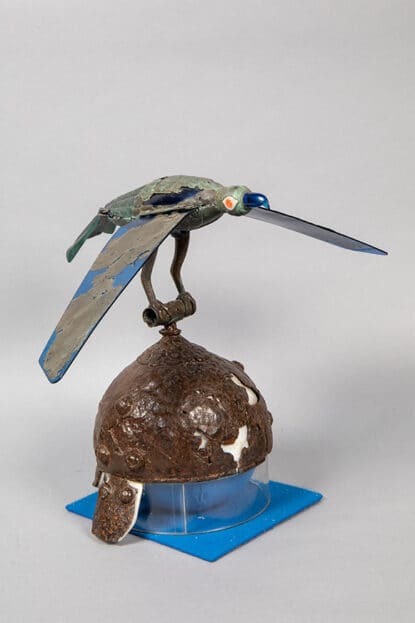
An iron Celtic helmet surmounted by a bronze bird of prey with wide-open wings — the wings hinged so they could move as the wearer walked, suggesting flight — its eyes inlaid with white and coral-red enamel. It was found in the grave of a Celtic military chief in the cremation cemetery at Ciumești and dates to the second half of the 3rd – early 2nd century BC, an exceptionally important find for Celtic civilization in Central and South-Eastern Europe. (Translated and condensed from the museum’s Romanian text.)

“Muzeul Național de Istorie a României (MNIR) prezintă în cadrul proiectului Exponatul lunii, o piesă spectaculoasă – coiful de la Ciumești. Obiectul de patrimoniu, realizat din fier, este surmontat de reprezentarea unei păsări de pradă, cu aripile larg deschise, realizată din tablă de bronz, cu ochii încrustați cu email alb și roșu-coral.” In the museum’s words — mnir.ro ↗

Meanwhile — Ceremonial textile from the Río Loa Americas & Oceania · 500 BCE – 100 CE (Formative)

Dacian Gold Spiral Bracelets from Sarmizegetusa Regia
N° 243·II · The Classical World
Dacian Gold Spiral Bracelets from Sarmizegetusa Regia
Unknown (Dacian goldsmiths)
last decades of the 1st century BC · gold (78–92.9%)
Dacian · Kingdom of Dacia

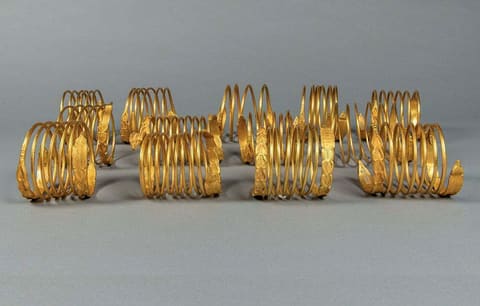
Multi-coiled gold spiral bracelets with flat terminals decorated with palmettes and zoomorphic (serpent-head) protomes — an emblematic prestige ornament of classical Dacian civilization, worked from a single hammered gold bar. The series was looted from near the sacred zone at Sarmizegetusa Regia between 1999 and 2001 and subsequently recovered by the Romanian state; individual bars reach nearly 3 m unrolled and around 1 kg. (Translated and condensed from the museum’s Romanian text.)

“Piesa face parte din seria brățărilor dacice din aur descoperite la Sarmizegetusa Regia, între anii 1999 și 2001, în urma unor activități ilegale de braconaj arheologic.” In the museum’s words — mnir.ro ↗

Meanwhile — The Temple of Dendur Egypt & Nubia · completed by 10 B.C.

The Biertan Donarium
N° 311·II · The Classical World
The Biertan Donarium
Unknown
4th century AD · cast bronze
Daco-Roman (Early Christian)

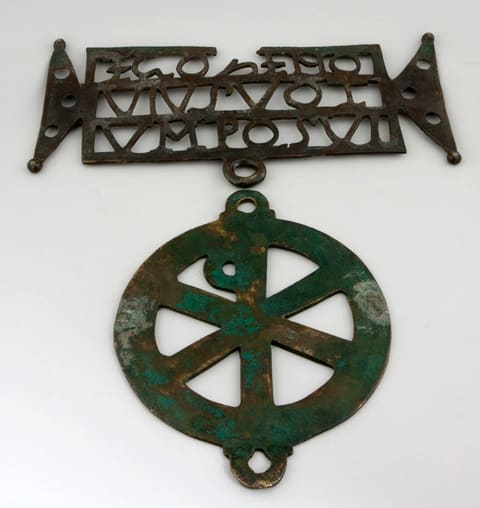
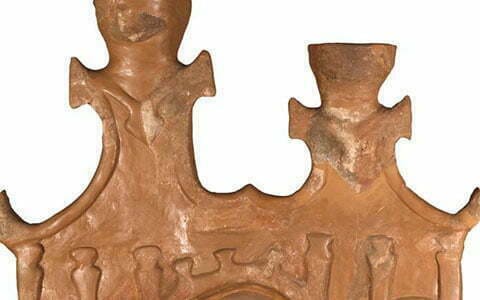
A 4th-century Early Christian votive tablet (donarium) of cast bronze in tabula-ansata form, discovered near Biertan in 1775. Its openwork Latin inscription reads EGO ZENOVIUS VOTUM POSUI (“I, Zenovius, made this offering”) and it carries a disc with the Chi-Rho monogram of Christ; scholars date it to the 4th century and see it as key evidence for the antiquity of Daco-Roman Christianity and the persistence of a Latin-speaking population. (Translated and condensed from the museum’s Romanian text.)

“În anul 1775 a fost descoperit lângă satul Biertan, la sud-est de Mediaş (judeţul Sibiu), un donarium creştin şi un disc.” In the museum’s words — mnir.ro ↗

Meanwhile — White Jade Belt Buckle (Xianbeitou) with Dragon Design East Asia · Jin dynasty (attributed)

The Pietroasa Treasure („Cloșca cu puii de aur”)
N° 313·II · The Classical World
The Pietroasa Treasure („Cloșca cu puii de aur”)
Unknown (Late Antique / Gothic goldsmith)
buried around the mid-5th century AD · gold and precious stones
Late Antiquity (Gothic milieu)

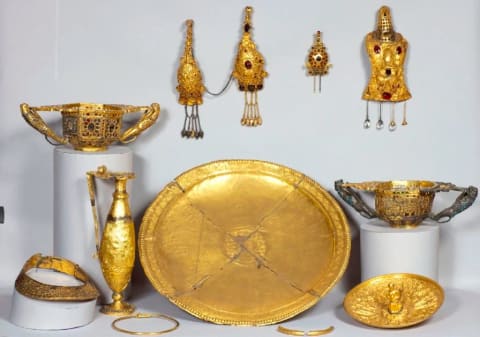
Romania’s most celebrated gold hoard, popularly “the Hen with the Golden Chicks,” discovered in spring 1837 at Pietroasele. Of an original 22 pieces only 12 were recovered, totalling nearly 19 kg — among them a great gold platter, an oenochoe, a relief patera with a central statuette, an inscribed torc and large gem-set fibulae; it is kept in the museum’s Historic Treasury. (Translated and condensed from the museum’s Romanian text.)

“Tezaurul de la Pietroasa, cunoscut şi sub numele popular de „Cloşca cu puii de aur” a fost descoperit în martie-aprilie 1837 de doi ţărani în timp ce luau piatră de pe dealul Istriţa (750 m).” In the museum’s words — mnir.ro ↗

Meanwhile — Huehuetéotl Brazier (Teotihuacan) Americas & Oceania · Classic period (c. 200–650 CE)

Princely Tombs of Apahida (Gepid)
N° 324·II · The Classical World
Princely Tombs of Apahida (Gepid)
Unknown
late 5th century AD · gold, garnet cloisonné, silver
Gepid (Germanic) · Migration Period

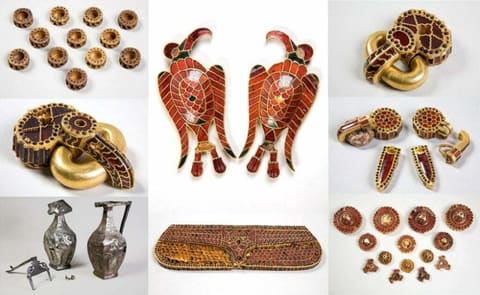
Three richly furnished princely graves attributed to the Germanic Gepids, discovered successively at Apahida in 1889, 1968 and 1979. Their gold grave-goods — an onion-knobbed crossbow fibula, signet and inscribed rings, garnet cloisonné belt buckles, and gold-repaired glass vessels — point to ties with the Roman, Scandinavian and Merovingian worlds; the surviving pieces were transferred to the museum. (Translated and condensed from the museum’s Romanian text.)

“La Apahida, în apropierea oraşului Cluj-Napoca, fosta Napoca romană, s-au descoperit pe rând, în 1889, 1968 şi 1979, trei morminte princiare atribuite neamului germanic al gepizilor.” In the museum’s words — mnir.ro ↗

Meanwhile — Dowry Deed of a Married Woman (Albertini Tablet) Rome · 493 CE

The Dinogetia Engolpion (Gold Reliquary Cross)
N° 445·III · Faith and Empire
The Dinogetia Engolpion (Gold Reliquary Cross)
Unknown (Byzantine)
11th century AD · gold
Byzantine

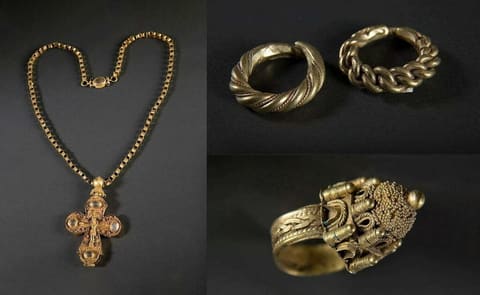
A gold reliquary cross (engolpion) of the Byzantine period, found in 1950 during archaeological research on the Bisericuța-Garvăn mound (Dinogetia) in northern Dobruja. It belongs to the era when, under the theme of Paradounavon, the Lower Danube flourished as part of the Byzantine Empire, which yielded numerous reliquary crosses and amulets. (Translated and condensed from the museum’s Romanian text.)

“Exponatul lunii aprilie îl reprezintă ”Engolpionul de la Dinogetia”, o cruce relicvar lucrată din aur, descoperită în 1950 cu ocazia cercetărilor arheologice de pe popina Bisericuța-Garvăn (sat Garvăn, comuna Jijila, jud. Tulcea) din nordul Dobrogei.” In the museum’s words — mnir.ro ↗

Meanwhile — Wari funerary bundle with gold mask (Fardo Huari) Americas & Oceania · Wari (Huari), Fusional Era (800 – 1300 CE)

The “Flag of Stephen the Great” (St George Embroidery)
N° 558·IV · Toward the Renaissance
The “Flag of Stephen the Great” (St George Embroidery)
Unknown (Byzantine embroidery workshop)
15th century · embroidery (silk and metal thread)
Moldavian / Byzantine

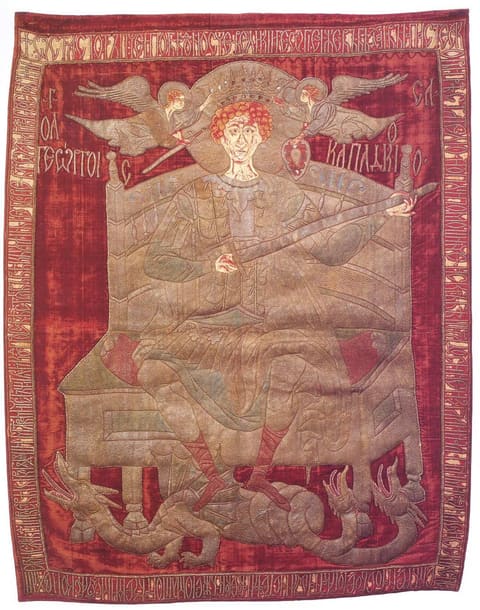
A 15th-century Byzantine liturgical embroidery depicting St George the Great Martyr enthroned, his feet resting on a three-headed winged dragon, with Slavonic and Greek inscriptions. It is traditionally known as the battle-flag of Stephen the Great, but the museum states this attribution is doubtful: the absence of the Moldavian coat of arms, characteristic of military standards, does not support that hypothesis. (Translated and condensed from the museum’s Romanian text.)

“Exponatul amintit este o broderie bizantină realizată în secolul al XV-lea care îl înfăţişează pe Sfântul Mare Mucenic Gheorghe, socotit un simbol al biruinţei militare.” In the museum’s words — mnir.ro ↗

Meanwhile — Gaja-Lakshmi South Asia · 15th Century AD

Votive Fresco of Neagoe Basarab and His Family
N° 619·V · The Renaissance
Votive Fresco of Neagoe Basarab and His Family
Attributed to Dobromir (attributed)
16th century (c. 1526) · fresco
Wallachian (Romanian medieval)

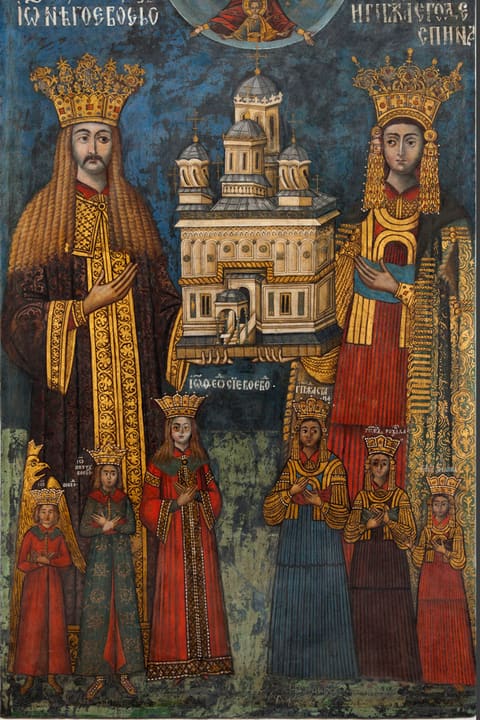
A 16th-century fresco — the famous votive panel showing Prince Neagoe Basarab, Princess Despina and their six children — detached from the episcopal church of Curtea de Argeș during 1875–1886 restorations. Of the Dobromir frescoes only two are today held by the museum (this votive panel and the portrait of Prince Radu cel Mare); most of the others are at the National Museum of Art of Romania. (Translated and condensed from the museum’s Romanian text.)

“În prezent, majoritatea frescelor se află la Muzeul Naţional de Artă, în afară de două, care sunt în patrimoniul Muzeului Naţional de Istorie a României (celebrul tablou votiv al lui Neagoe Basarab și al familiei sale şi portretul domnitorului Radu cel Mare)” In the museum’s words — mnir.ro ↗

Meanwhile — Supper at Emmaus Europe · 1525

The Coronation Crown of Queen Marie
N° 1029·IX · Into Our Time
The Coronation Crown of Queen Marie
Maison Falize, Paris (design by Costin Petrescu)
1922 · Transylvanian gold
Romanian · Kingdom of Romania

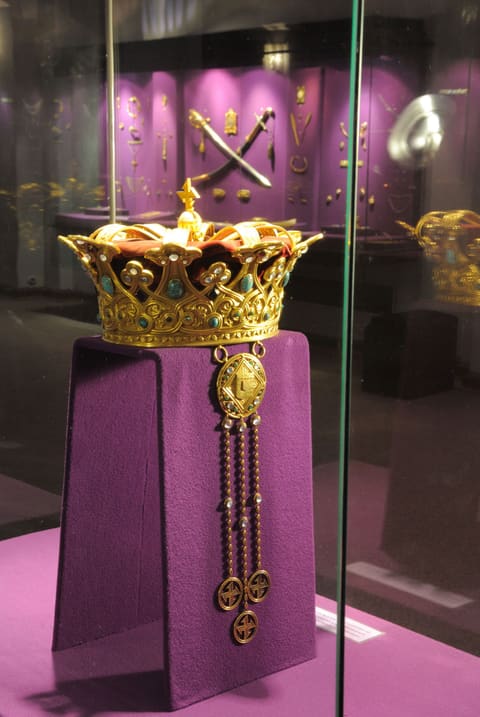
The crown made for Queen Marie of Romania, commissioned by the Romanian Parliament for the 1922 coronation at Alba Iulia. It was made in Paris by the Falize jewellery house from Transylvanian gold; the Byzantine-style design with vegetal motifs was conceived by Costin Petrescu after the crown of Princess Despina Milița (wife of Neagoe Basarab), and its lateral prependoulia pendants bear the arms of the Kingdom of Romania and of the House of Edinburgh. (Translated and condensed from the museum’s Romanian text.)

“Coroana a fost realizată la Paris de către casa de bijuterii Falize din aur transilvănean, dându-i astfel o simbolistică aparte.” In the museum’s words — mnir.ro ↗

Meanwhile — On the Hills of Liptov Europe · 1922