The Atlas·ZW

ZW

National Museums and Monuments of Zimbabwe, Harare — 15 works · museum site ↗ · 1000–1870 60000 BCE2020

Seen from Harare, history is above all architecture & ornament, then the world observed — a collection opened wide onto other worlds — a window more than a mirror (15 of 15 works are from other civilisations).

Architecture 9 Observation 3 Stories 2 Sculpture 1
Great Zimbabwe
N° 453·III · Faith and Empire
Great Zimbabwe
Unknown
flourished 11th-15th century CE · dry-stone granite walling
Shona (Bantu civilization)

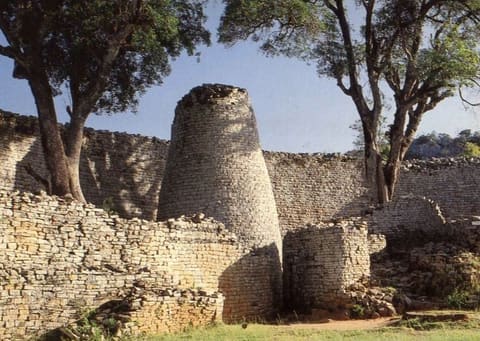
Great Zimbabwe is administered by the National Museums and Monuments of Zimbabwe as a National Monument and UNESCO World Heritage Site in the Southern Region, 27 km south-east of Masvingo. NMMZ describes it as 'a unique testament to the Bantu civilization of the Shona, which existed between the eleventh and fifteenth centuries AD' and as the largest and most impressive of the more than 300 Zimbabwe-type dry-stone walled structures scattered across Zimbabwe and southern Africa; it is southern Africa's largest pre-colonial settlement. Its mortarless dry-stone granite walls form the Hill Complex, the Great Enclosure — whose girdle wall encloses the famous conical tower — and the Valley Ruins. UNESCO inscribed it as a cultural World Heritage Site in 1986.

“Great Zimbabwe is a unique testament to the Bantu civilization of the Shona, which existed between the eleventh and fifteenth centuries AD.” In the museum’s words — nmmz.co.zw ↗ · quotation verified against the live page

Meanwhile — Mihrab from the Beyhekim Mosque, Konya Islamic world · 13th century
The Zimbabwe Birds
N° 522·III · Faith and Empire
The Zimbabwe Birds
Unknown
soapstone; from Great Zimbabwe, which flourished 1290-1450 CE · soapstone
Shona (Great Zimbabwe civilization)

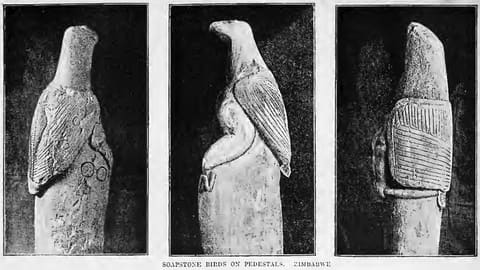
Curated by the National Museums and Monuments of Zimbabwe (NMMZ) at the Great Zimbabwe site museum in the Southern Region near Masvingo, the Zimbabwe Birds are the famous eight soapstone birds carved by the Shona builders of Great Zimbabwe. According to NMMZ, six were found in the Eastern Enclosure of the Hill Complex, one on a balcony facing the Western Enclosure, and the most aesthetically appealing in the Valley enclosures. One of the birds is used as the national emblem of Zimbabwe, appearing on the coat of arms, the national flag, all coins and as a watermark on the banknotes. Most of the birds were exported to South Africa and Europe in the late 19th century, but NMMZ states that all except one are today on display in the site museum. (No image of the birds is published on the NMMZ website, so this record ships imageless.)

“Among these artefacts are the famous eight zimbabwe birds which are carved on soapstone.” In the museum’s words — nmmz.co.zw ↗ · quotation verified against the live page

Meanwhile — Bronze Shiva (Sukhothai) South Asia · Sukhothai art, early 20th Buddhist century (c. mid-14th century CE)

Dhlodhlo / Danan'mombe National Monument
N° 790·VI · The Baroque Age
Dhlodhlo / Danan'mombe National Monument
Unknown
Rozvi state capital c.1693 to the early 1800s; declared National Monument No. 5 in July 1937 · Khami-type dry-stone walling and terracing
Rozvi (Khami dry-stone tradition; earlier Torwa)

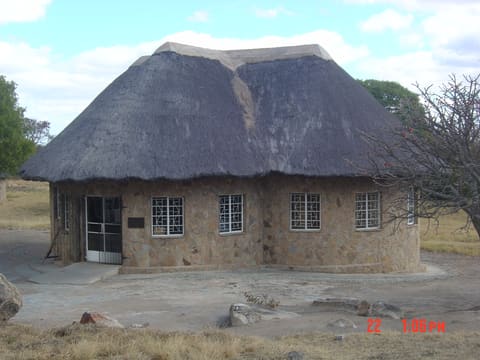
Dhlodhlo (also called Danan'mombe) is a National Monument on the National Museums and Monuments of Zimbabwe (NMMZ) Central Region (Gweru) page, lying about 86 km south-west of Gweru. NMMZ records that 'Dhlodhlo was declared a National Monument Number 5 in July 1937' and that Danan'ombe 'was the capital of the Rozvi state from about 1693 to the early 1800's', becoming the Rozvi capital after Changamire defeated the Torwa dynasty at Khami near Bulawayo; at its peak it must have accommodated between 6,000 and 10,000 people. Among its major attractions NMMZ lists a 'Site Museum with outstanding artefacts from Danan'mombe and related sites', Khami-type stone walling and terracing, and exposed house structures and grain bins. The Dhlodhlo site museum exhibits artefacts excavated from the site and from nearby National Monuments such as Naletale and Regina; NMMZ notes that Danan'mombe was renamed Dhlodhlo by the Ndebele after one of their sub-chiefs. This record is an immovable heritage monument with a site museum in NMMZ's care. (The only image of Dhlodhlo on the NMMZ page is an inline data-URI JPEG in the 'Dhlodhlo Site Museum' block, showing the stone-built site museum on the monument grounds; it has been decoded from the museum's own page bytes and included here.)

“Dhlodhlo was declared a National Monument Number 5 in July 1937.” In the museum’s words — nmmz.co.zw ↗ · quotation verified against the live page

Meanwhile — Kostanjevica goblet Europe · 1749

Old Bulawayo
N° 911·VIII · The Restless Century
Old Bulawayo
Unknown
royal town of King Lobengula; established 1870 · beehive structures (Zulu-style architecture)
Ndebele

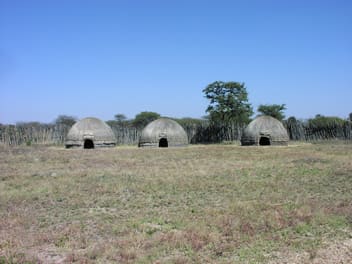
Old Bulawayo, presented by NMMZ in the Western Region, was the royal town built for King Lobengula, the second and last king of the Ndebele people, before the capital shifted to the present city of Bulawayo. NMMZ records that it was established in 1870, about 22 km south of modern Bulawayo, and that its major attractions include the distinctive beehive (Zulu-style) architecture, the Indaba tree, the intra-settlement pattern and a nearby Jesuit mission. This record is an immovable heritage site presented in NMMZ's care.

“The first city of Bulawayo that was built for King Lobengula, the second and last king of the Ndebele people before it shifted to the present city.” In the museum’s words — nmmz.co.zw ↗ · quotation verified against the live page

Meanwhile — Peace and War (copy after Rubens) Europe · c. 1870

Chiremba Balancing Rocks
N° 1133·Undated
Chiremba Balancing Rocks
Unknown
granite balancing-rock formation; declared a National Monument in 1994 · granite (natural balancing-rock formation)

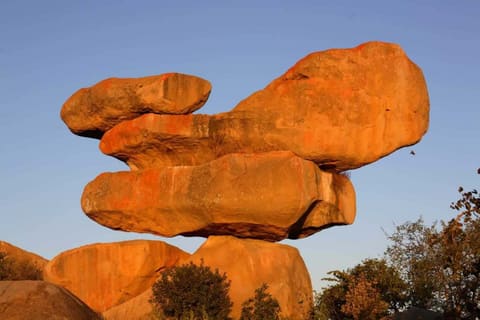
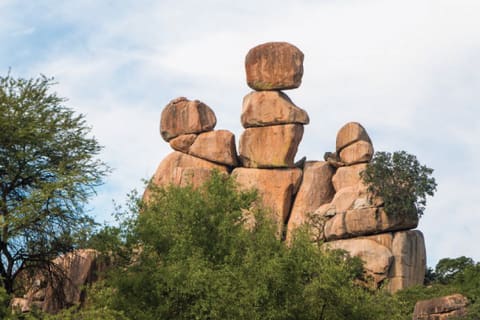
The Chiremba Balancing Rocks — which NMMZ records were 'declared a national Monument in 1994' — stand about 13 km south-east of Harare in Epworth (Northern Region). This formation of naturally balanced granite rocks is one of Zimbabwe's most recognisable landmarks: NMMZ notes that during the colonial period it was adopted as a motif on Rhodesian paper currency and that the image has continued on post-colonial currency, and it says the rocks symbolise the peace and stability of the nation's economy. This record is an immovable natural-heritage monument in NMMZ's care.

“Chiremba Balancing Rocks was declared a national Monument in 1994 and is located 13 kilometers south east of Harare in Epworth.” In the museum’s words — nmmz.co.zw ↗ · quotation verified against the live page
Coelacanth (Latimeria chalumnae)
No image in the collection — see the museum’s page
N° 1134·Undated
Coelacanth (Latimeria chalumnae)
Unknown
natural-history specimen of the coelacanth, a 'living fossil' lineage · preserved fish specimen

This record is a natural-history specimen: the coelacanth (Latimeria chalumnae — printed on the museum's own site with the typo 'Lsitimeria chalumnae') held in the National Fish Collection of the Natural History Museum of Zimbabwe in Bulawayo (NMMZ Western Region). NMMZ describes it as 'the sole living representative of a very ancient vertebrate group' and records that the discovery of the coelacanth — a fish thought to have been extinct for 70 million years — surprised scientists all over the world. The collection holds over 6,000 fish specimens. (No image of the specimen is published on the NMMZ website, so this record ships imageless.)

“These include the Coelacanth Lsitimeria chalumnae, which is the sole living representative of a very ancient vertebrate group and provides us with an invaluable window into the past.” In the museum’s words — nmmz.co.zw ↗ · quotation verified against the live page
Diana's Vow Rock Paintings
N° 1140·Undated
Diana's Vow Rock Paintings
Unknown
rock-art National Monument; friezes of masked human figures · rock painting (pigment on rock)
Zimbabwean rock art

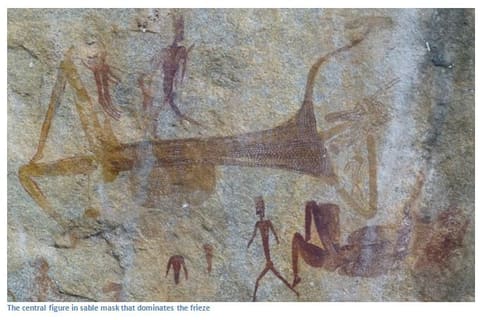
Diana's Vow Rock Paintings is one of two Rock Art National Monuments in the Eastern Region, presented by the National Museums and Monuments of Zimbabwe (NMMZ) at Diana's Vow hill near Rusape (Manicaland). NMMZ writes that 'The remaining portion of this complex but detailed painting is one of the finest and unique examples of Zimbabwean Rock Art.' The main scene depicts two long friezes of human figures embellished with white pigment dots and stripe details; several are masked, surrounded by a wealth of detail depicting domestic artefacts, edible fruits and items such as baskets with handles, skins, bows and quivers. NMMZ records two main traditions represented at the hill — the early Iron Age pottery of Ziwa and the Inyanga terrace tradition — and that the rock-art site and the stone walls on the hill are well preserved. This record is an immovable rock-art monument in NMMZ's care. The paired image (from the monument's own section on the page) shows the central masked figure in a sable mask that dominates the frieze.

“The remaining portion of this complex but detailed painting is one of the finest and unique examples of Zimbabwean Rock Art.” In the museum’s words — nmmz.co.zw ↗ · quotation verified against the live page
Domboshava National Monument
N° 1142·Undated
Domboshava National Monument
Unknown
rock-art and rain-making site; under NMMZ custody since 1936 · granite hill with rock-art panels
Zimbabwe rock art / Shona rain-making tradition

Domboshava National Monument, which NMMZ records 'came under the custodianship of National Museums and Monuments of Zimbabwe in 1936,' lies approximately 30 km north of Harare (Northern Region). A granite rock-art and rain-making site, its attractions include an interpretive centre / site museum, beautiful rock-art panels and a scenic environment; NMMZ describes it as a venerated rain-making ceremony site whose natural features have acquired cultural significance over time. This record is an immovable heritage monument in NMMZ's custody. (No image of Domboshava is published on the NMMZ website, so this record ships imageless.)

“The Monument came under the custodianship of National Museums and Monuments of Zimbabwe in 1936.” In the museum’s words — nmmz.co.zw ↗ · quotation verified against the live page
Khami Ruins
N° 1163·Undated
Khami Ruins
Unknown
Zimbabwe dry-stone monument; World Heritage Site · dry-stone walling
Zimbabwe dry-stone civilization

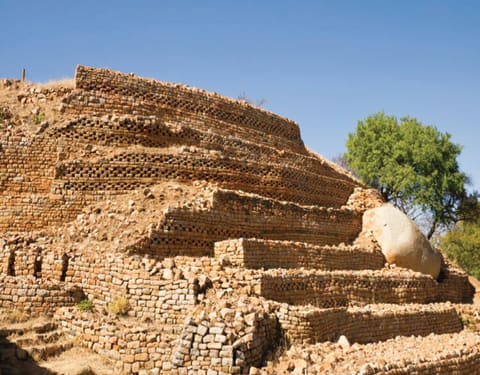
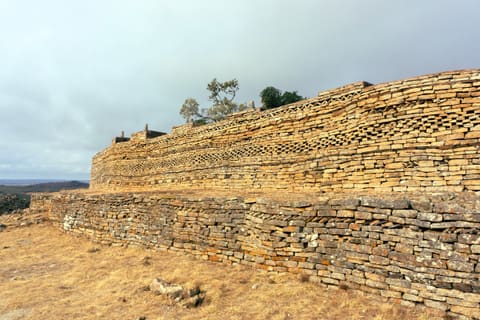
Khami (the Khami Ruins), administered by NMMZ as a National Monument and World Heritage Site 22.5 km west of Bulawayo (Western Region), belongs to the same Zimbabwe dry-stone building tradition as Great Zimbabwe. Its terraced dry-stone walls give the impression of a wedding cake and the site has the longest decorated stone wall in the country. On the NMMZ world-heritage page, Khami's significance is tied to the chronological development of Zimbabwe civilization from Mapungubwe (South Africa) through Great Zimbabwe. (NMMZ's regional page inconsistently calls Khami both the predecessor and the successor to Great Zimbabwe; the world-heritage chronology places it in the later Great-Zimbabwe-tradition sequence.) This record is an immovable heritage monument in NMMZ's care.

“Khami National Monument and a World Heritage Site is the predecessor of the famous Great Zimbabwe and is only 22.5km west of Bulawayo along the Khami road.” In the museum’s words — nmmz.co.zw ↗ · quotation verified against the live page
Matendera Monument
N° 1180·Undated
Matendera Monument
Unknown
Zimbabwe-style dry-stone enclosure with herringbone and dentelle decoration and two monoliths · Zimbabwe-style dry-stone enclosure walling (herringbone and dentelle decoration; two monoliths)
Zimbabwe dry-stone tradition

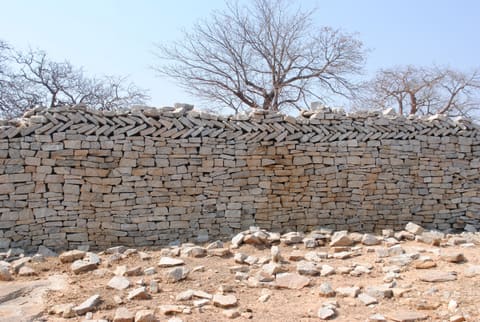
Matendera Monument is presented by the National Museums and Monuments of Zimbabwe (NMMZ) on its Eastern Region (Mutare) page. NMMZ describes it as 'an extensive, impressive and spectacular Zimbabwe style enclosure located on an extensive low lying dwala in Buhera South, 50km south-south of Murambinda Growth Point', and records that 'The site is famous for its herringbone and dentelle decorations plus two monoliths at the top on the perimeter wall.' NMMZ calls it an excellent example of the country's heritage. This record is an immovable heritage monument in NMMZ's care. (No image of Matendera is published on the NMMZ website, so this record ships imageless.)

“This is an extensive, impressive and spectacular Zimbabwe style enclosure located on an extensive low lying dwala in Buhera South, 50km south-south of Murambinda Growth Point. The site is famous for its herringbone and dentelle decorations plus two monoliths at the top on the perimeter wall.” In the museum’s words — nmmz.co.zw ↗ · quotation verified against the live page
Matobo Hills
N° 1181·Undated
Matobo Hills
Unknown
cultural landscape; rock paintings within the last 10,000 years (WHS inscribed 2003) · granite landscape with rock-art panels
San hunter-gatherer rock art; Mwari religious tradition

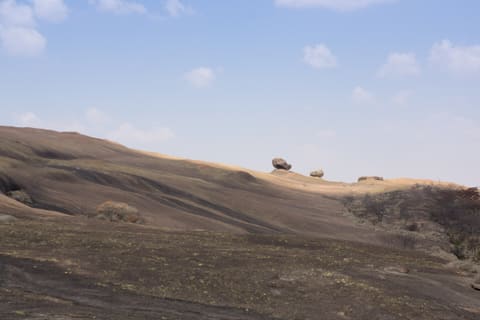
The Matobo Hills are a World Heritage Site administered by NMMZ in the Western Region (Matabeleland South Province, south-western Zimbabwe) — a granite cultural landscape whose spatial extent NMMZ gives as 3,100 sq km. NMMZ records that interaction between people and the landscape began at least 500,000 years ago and that within the last 10,000 years people made rock paintings of outstanding beauty and intricate detail. The Mwari religion regards the Matobo rocks as the seat of God and of ancestral spirits, and the hills were chosen for the memorialization of historical figures such as King Mzilikazi, Cecil John Rhodes and Leander Starr Jameson. UNESCO inscribed the Matobo Hills as a mixed cultural landscape in 2003. This record is an immovable heritage landscape presented in NMMZ's care.

“The Matobo Hills are located in the Matebeleland South Province, in south western Zimbabwe.” In the museum’s words — nmmz.co.zw ↗ · quotation verified against the live page
Naletale
N° 1185·Undated
Naletale
Unknown
Rozvi-tradition dry-stone monument decorated with five wall patterns · dry-stone walling
Rozvi (Khami / Zimbabwe dry-stone tradition)

Naletale is a Rozvi-tradition dry-stone walled monument (a 'zimbabwe') presented by the National Museums and Monuments of Zimbabwe (NMMZ) on its Central Region (Gweru) page, standing among the Rozvi zimbabwes near the Dhlodhlo/Danan'mombe National Monument. NMMZ writes that, despite its aerial extent, Naletale 'is architecturally the most satisfying of all the monuments not only in the region but in the entire country', its ruin decorated with five different patterns — the chevron, check, herringbone, dentelle and cord. NMMZ adds that it is believed to have been a retreat for the Royal Family, where the King relaxed or retired from his daily state of affairs, and records that Naletale was probably known as Nhandare or Nharetare. This record is an immovable heritage monument in NMMZ's care. (No usable image of Naletale is published on the NMMZ website, so this record ships imageless.)

“is architecturally the most satisfying of all the monuments not only in the region but in the entire country. This ruin decorated with five different patterns i.e. the chevron, check, Herringbone, Dentelle and Cord.” In the museum’s words — nmmz.co.zw ↗ · quotation verified against the live page
National Heroes Acre
N° 1187·Undated
National Heroes Acre
Unknown
national shrine of independent Zimbabwe (from 1980)
Modern Zimbabwe (liberation heritage)

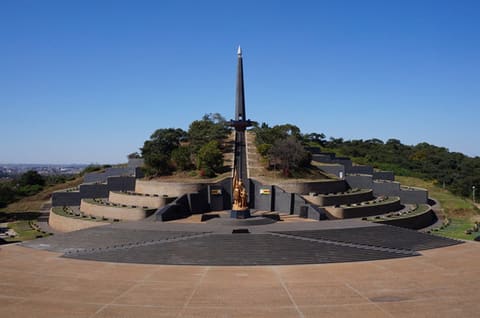
The National Heroes Acre, described by NMMZ as 'our revered shrine' and 'the pride of the people of Zimbabwe,' is a national monument in Harare (the NMMZ site's Northern Region / capital) commemorating those who fell in Zimbabwe's liberation war. All heroes' acres are administered by the Department of Museums and National Monuments (NMMZ). At its centre towers the Tomb of the Unknown Soldier, the symbolic resting place of the tens of thousands of Zimbabweans who died in the 16-year war of liberation that culminated in the declaration of independence in April 1980; national heroes designated by the President are interred at the shrine. This record is an immovable heritage monument administered by NMMZ.

“The National Heroes Acre, our revered shrine, is the pride of the people of Zimbabwe.” In the museum’s words — nmmz.co.zw ↗ · quotation verified against the live page
Victoria Falls (Mosi-oa-Tunya)
N° 1228·Undated
Victoria Falls (Mosi-oa-Tunya)
Unknown
natural waterfall; World Heritage Site (inscribed 1989) · waterfall on the Zambezi River

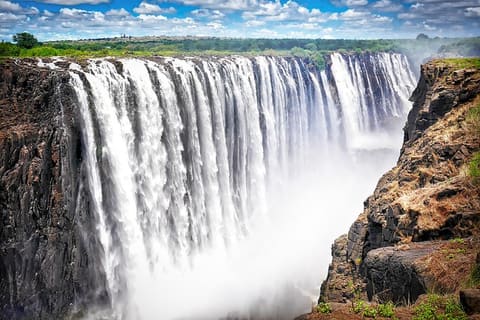
Victoria Falls (Mosi-oa-Tunya, 'the smoke that thunders') is presented by NMMZ among the World Heritage Sites in its care, on the Zambezi River which separates Zimbabwe and Zambia (Western Region). On its world-heritage page NMMZ calls it the most spectacular waterfall in the world and the largest curtain of falling water — 1,708 m wide, with drops of up to 99 m (Rainbow Falls). UNESCO declared Victoria Falls a World Heritage Site in 1989. This record is an immovable natural heritage site presented in NMMZ's care; the falls straddle the Zimbabwe/Zambia border.

“The Victoria Falls (Mosi-oa-Tunya-smoke that thunders) is one of the great natural resource features of the world situated on the Zambezi River, which separates Zimbabwe and Zambia.” In the museum’s words — nmmz.co.zw ↗ · quotation verified against the live page
Ziwa Monument, Nyanga
N° 1234·Undated
Ziwa Monument, Nyanga
Unknown
archaeological agricultural landscape (Nyanga tradition): terraces, enclosures, pit-structures, hill forts · stone terraces, enclosures, pit-structures and hill forts (dry-stone)

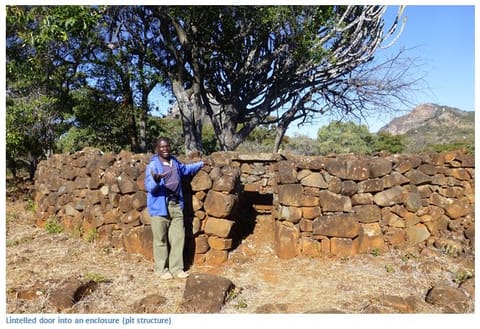
Ziwa Monument is an archaeological landscape presented by the National Museums and Monuments of Zimbabwe (NMMZ) on its Eastern Region (Mutare) page, at Ziwa near Nyanga in Manicaland Province (the Eastern Highlands). NMMZ records that the archaeological property on the estate consists of terraces, enclosures, pit enclosures, hill forts, passages, smelting furnaces, grinding places, clearance cairns and other remains, with terraces and enclosures most dominant, and states that 'The Ziwa estate is the largest protected piece of the agricultural landscape in Nyanga.' NMMZ adds that the site has the potential to answer research questions on the archaeology and agricultural history of Nyanga and that it is under consideration to be on the World Heritage List. It is described as a living cultural site: the Sanyangare community of Nyangare village keeps a religious shrine (Rutumba) to the west of the estate, and some of the community regard Ziwa and Hamba mountains as sacred. This record is an immovable heritage site in NMMZ's care. The paired image (from the monument's own section on the page) shows a lintelled door into a dry-stone pit-structure enclosure at Ziwa.

“The Ziwa estate is the largest protected piece of the agricultural landscape in Nyanga.” In the museum’s words — nmmz.co.zw ↗ · quotation verified against the live page